


Victorian Ebonised Side Chair
A victorian ebonised side chair brings dark elegance and refined nineteenth-century craftsmanship to any interior.
Victorian Ebonised Side Chair
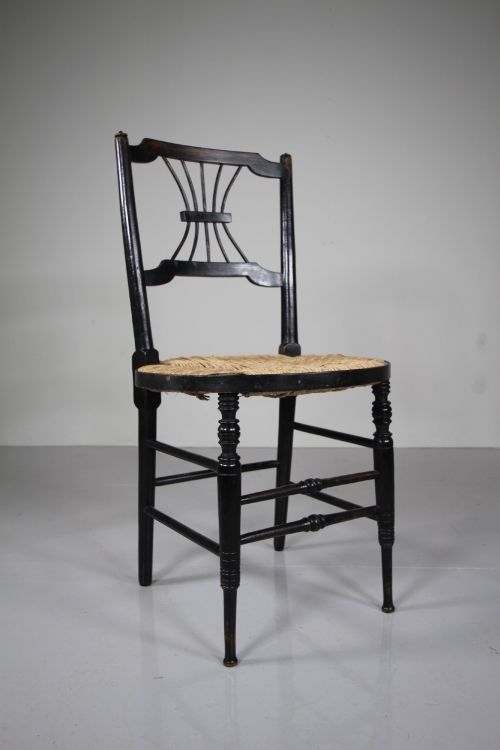
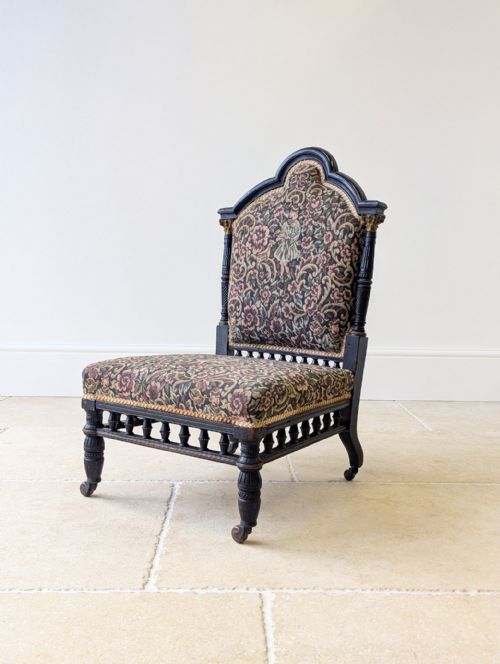
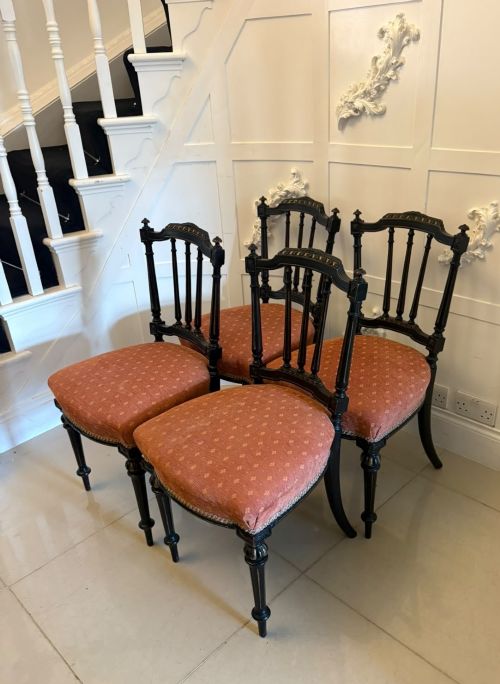
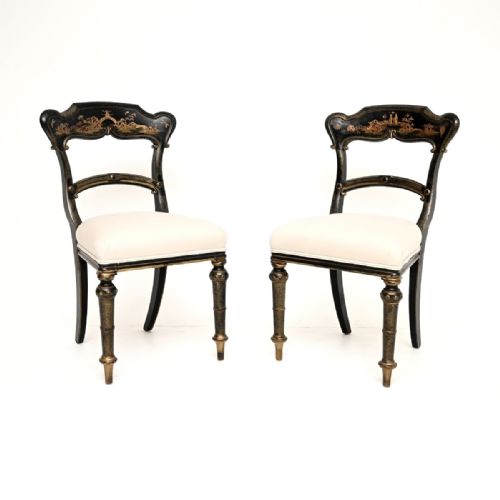
A victorian ebonised side chair encompasses a variety of seating forms produced during the nineteenth century, most frequently appearing as low salon chairs, dining chairs, and occasional chairs. These pieces often reflect the design influences of the Aesthetic Movement, Arts and Crafts, and Victorian Gothic Revival.
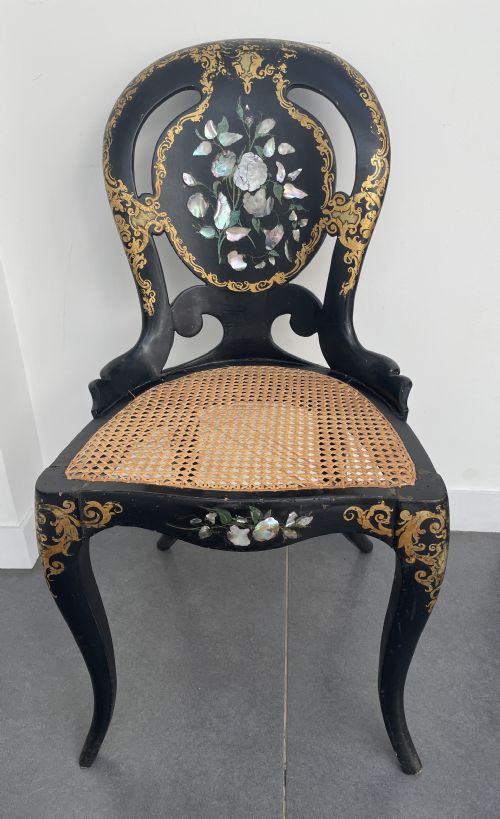
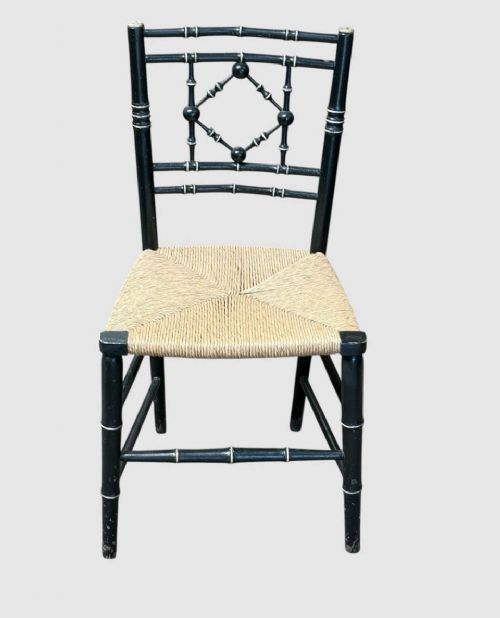
Makers and designers of the period adapted traditional seating to suit changing domestic interiors, incorporating rush, cane, and upholstered seats into ebonised frames. Examples range from simple spindle-backed designs to elaborately decorated pieces with mother of pearl inlay or lacquered finishes.
Materials and construction
Makers utilised dense timbers such as oak, finished with a dark ebonised surface to imitate more costly exotic woods like ebony. This black finish frequently served as a backdrop for gilt highlights, painted Chinoiserie motifs, or inlaid mother of pearl.
Structural elements varied widely according to the intended use and stylistic movement, employing turned spindles, carved wooden details, and bobbin-turned framing. Seats were fitted with rush, woven cane, or upholstered pads covered in fabric or velvet.
Some Victorian children clearly ruled the parlour, judging by the surviving miniature armchairs scaled down just for them.
Assessing quality
The standard of a victorian ebonised side chair rests upon the crispness of its carved detailing, the precision of any mother of pearl inlay, and the integrity of the ebonised finish. Pieces associated with notable designers or firms often display superior joinery and more ambitious stylistic ambition.
Original surface preservation heavily influences the character of each piece, distinguishing workshop creations from standard commercial production. The harmony between the frame's decoration and the seating material, whether cane, rush, or upholstery, defines the overall balance of the object.
William Morris·Collier and Plucknett·Bruce J Talbert·E W Godwin·Liberty of London·Ford Madox Brown·Philip Webb·Jennens and Bettridge·Lamb of Manchester
The Victorian Ebonised Side Chair Glossary
- Ebonised
- Wood treated with stain, paint, or polish to simulate the dark, dense appearance of ebony. This finish became immensely popular during the Victorian era for furniture inspired by Japanese design.
- Side Chair
- A lightweight, armless chair designed for dining or occasional use around a room. These pieces were easily moved to accommodate guests in nineteenth-century drawing rooms.
- Nursing Chair
- A low-seated chair designed for comfort, traditionally used in nurseries or bedrooms. Their reduced height made them suitable for tasks requiring a seated position close to the floor.
- Mother of Pearl
- The iridescent internal layer of certain mollusc shells, utilised for decorative inlay. Craftsmen cut thin pieces into floral or geometric shapes to adorn lacquered surfaces.
Victorian Ebonised Side Chair: Frequently Asked Questions
Where were these chairs placed in Victorian homes?
These seating pieces found homes in drawing rooms, parlours, and bedrooms, serving as decorative accents or functional dining furniture. Lighter forms could be repositioned easily for conversation or music recitals.
Their dark finishes contrasted sharply with lighter Victorian wall treatments, making them visual focal points within formal reception spaces.
How do I identify an Aesthetic Movement design?
Aesthetic Movement pieces discard heavy Victorian ornamentation in favour of cleaner lines, ebonised surfaces, and Japanese-inspired motifs. Look for structural simplicity paired with subtle gilt decoration or turned spindle work.
Many of these designs were championed by progressive architects and designers who sought to elevate everyday domestic objects into works of art.
What is the difference between a salon chair and a side chair?
Salon chairs were intended for entertaining and social gatherings, often featuring lower seats and more decorative frames. They prioritised visual elegance and comfort within a drawing room setting.
Side chairs were typically more rigid and upright, serving primarily around dining tables or positioned against walls when not in active use.
Are cane and rush seats original to these chairs?
Many nineteenth-century chairs utilised woven cane or rush seating to provide lightweight durability. These natural materials complemented the organic aesthetic favoured by Arts and Crafts designers.
Surviving examples often retain their original weave, though professional restoration frequently preserves the historical integrity of the piece.