



Traditional Low Bedroom Seating
Traditional low bedroom seating brings compact comfort to a chamber, offering low profiles designed for dressing or resting beside the hearth.
Traditional Low Bedroom Seating
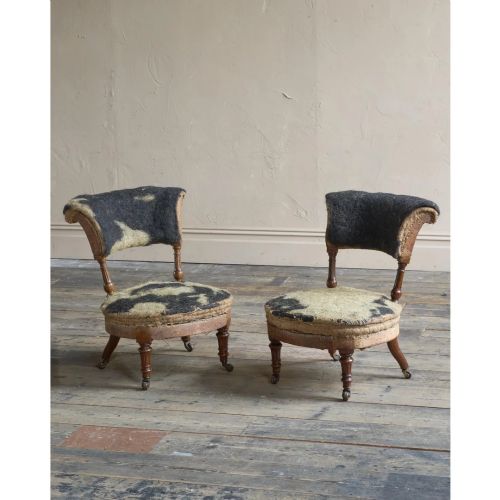
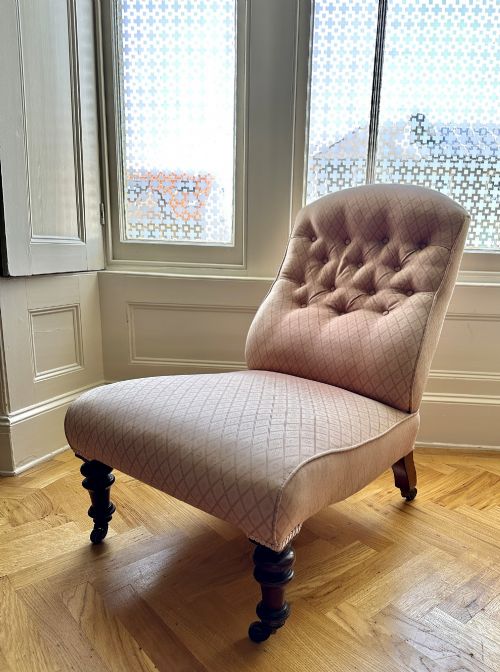
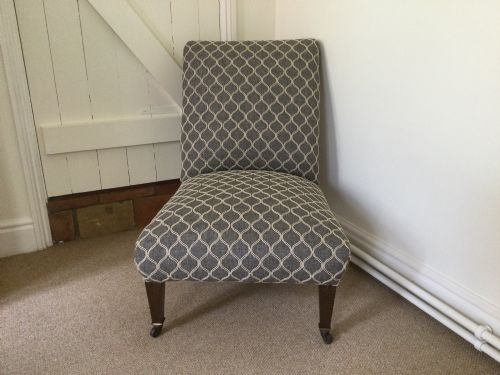
Traditional low bedroom seating encompasses diverse low-slung forms such as nursing chairs, slipper chairs, and dressing stools. These pieces originate predominantly from the nineteenth and early twentieth centuries, spanning Victorian, Edwardian, and William IV periods.
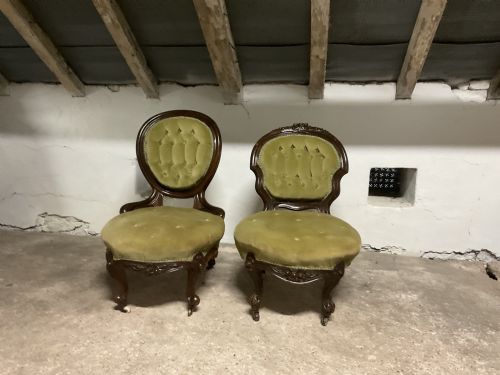
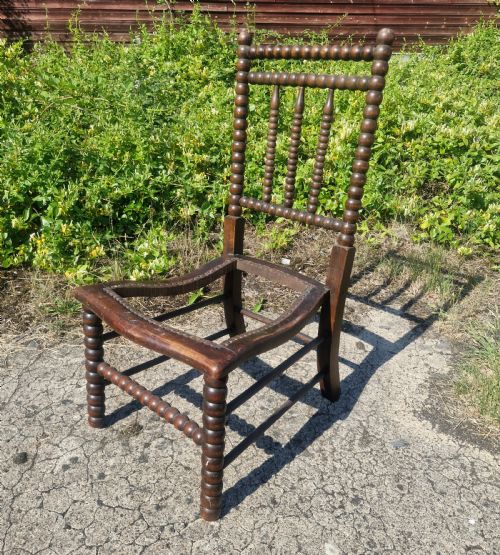
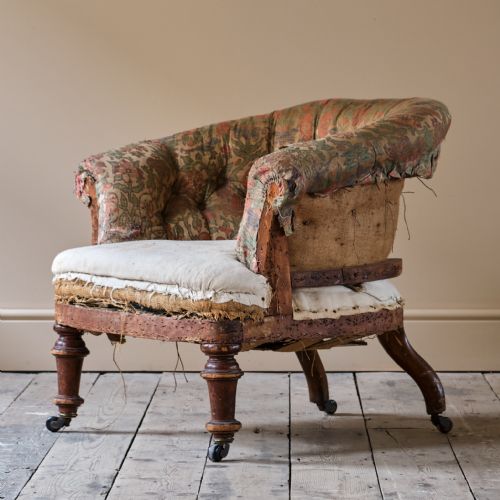
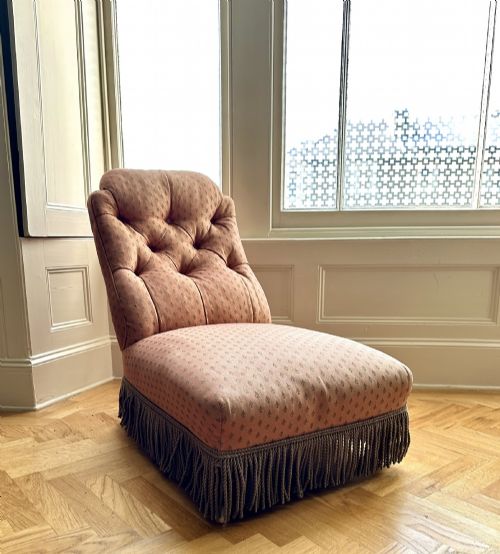
Buyers encounter forms designed specifically for domestic chambers, including button-backed armchairs, round-seated nursing chairs, and low bobbin-framed bedroom chairs. Object types range from compact stools to tub-backed armchairs and fireside seating.
The selection reflects varied stylistic revivals, notably Queen Anne Style and Chippendale Revival, alongside simpler vernacular woodwork. Each piece provides the characteristic low stance suited to nineteenth-century dressing routines and bedroom comfort.
How they were made
Frames rely on traditional timbers such as mahogany, oak, walnut, rosewood, and general wood or timber. These structural woods are shaped into bobbin frames or sturdy supports beneath upholstered bodies.
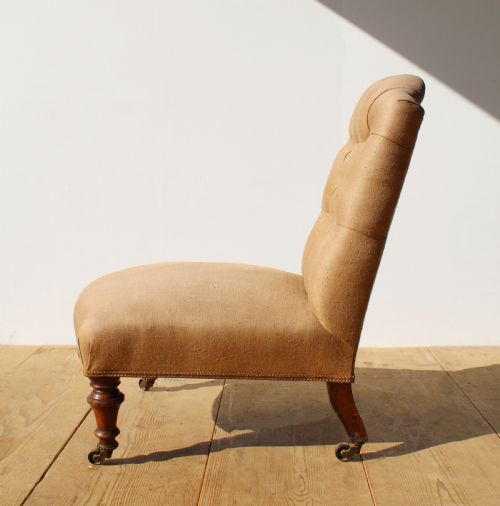
Upholstery techniques utilise fabric, velvet, vintage linen, Hessian, and brass details. Button-backed padding, decorative fringing, and exposed wooden frames complete the construction of these low chairs and stools.
The listings span from the Victorian and William IV eras through the Edwardian period up to the 1930s, using mahogany, oak, walnut, and rosewood.
What varies in quality
Quality rests upon the integrity of the timber frame and the sophistication of the upholstery work. Pieces featuring resilient hardwoods like mahogany or walnut demonstrate greater durability than simpler timber constructions.
The refinement of the upholstery finish distinguishes individual pieces, seen in precise button-tufting, quality fabric choices such as velvet or vintage linen, and the presence of makers' stamps on the frame.
Howard and Sons
The Traditional Low Bedroom Seating Glossary
- Slipper chair
- A low-seated upholstered chair originally designed for a bedroom to allow a lady to sit comfortably while putting on shoes or slippers. These pieces sit close to the floor and usually lack arms.
- Nursing chair
- A low chair traditionally used by mothers for feeding infants, featuring a compact frame and a low seat. They often appear in Victorian and nineteenth-century forms with upholstered backs.
- Bobbin frame
- A wooden structure turned on a lathe to resemble a series of rounded bobbins or spools linked end-to-end. This decorative turning technique appears frequently on nineteenth-century bedroom seating.
- Button back
- An upholstery style where buttons are pulled deep into the padding at regular intervals to create a diamond pattern. This method secures the internal stuffing while adding texture to the backrest.
Traditional Low Bedroom Seating: Frequently Asked Questions
What is a traditional low bedroom chair used for?
These low seats served practical purposes in nineteenth-century chambers, such as assisting with dressing or nursing infants by the hearth.
Their compact proportions allowed them to fit neatly into smaller dressing rooms and bedrooms without obstructing space.
How do you date a Victorian nursing chair?
Dating relies on examining the timber frame, upholstery techniques, and stylistic clues such as turned legs or carved walnut details.
Victorian examples often combine mahogany or rosewood frames with button-backed fabric or traditional Hessian support.
Are slipper chairs and nursing chairs the same?
While both offer a low seating position, slipper chairs are typically armless and designed for dressing rooms.
Nursing chairs often feature slightly more supportive backs and were historically tailored for sitting close to the nursery fire.
Where should I place a dressing stool?
Dressing stools work well positioned beneath a dressing table or vanity unit where their low height allows them to tuck away.
They also function as accent seating in corners or beside a bedroom fireplace.