


Victorian Damask Armchair
A victorian damask armchair brings upholstered comfort and historic character to a room, combining patterned fabric with period timber frames.
Victorian Damask Armchair
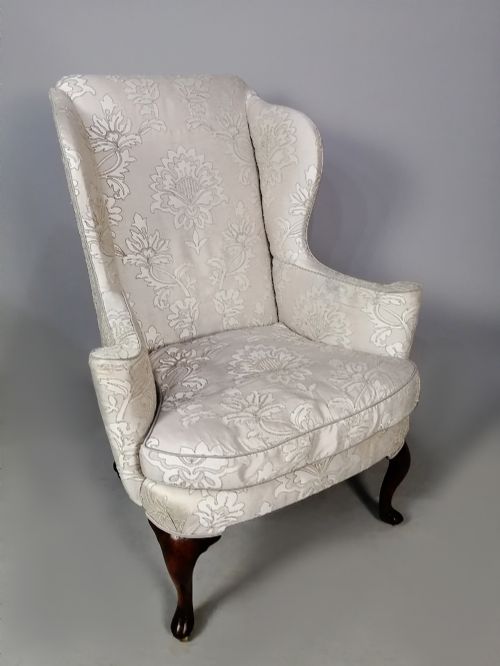
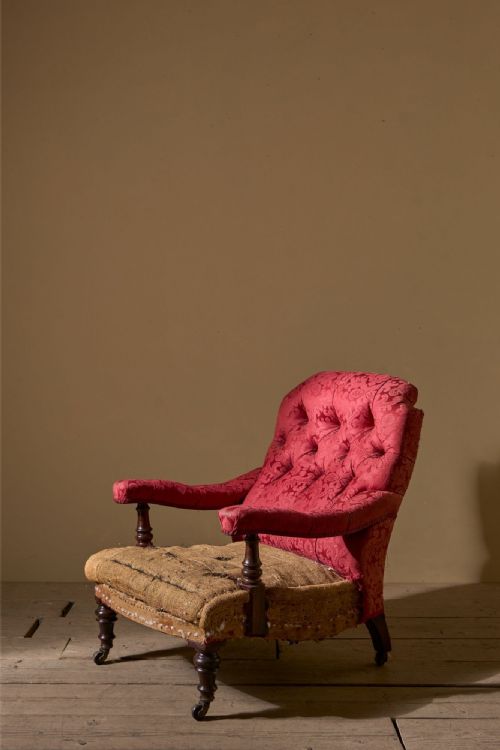
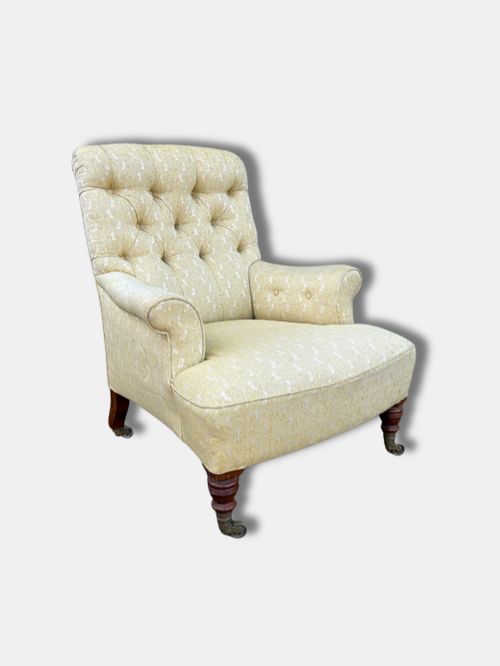
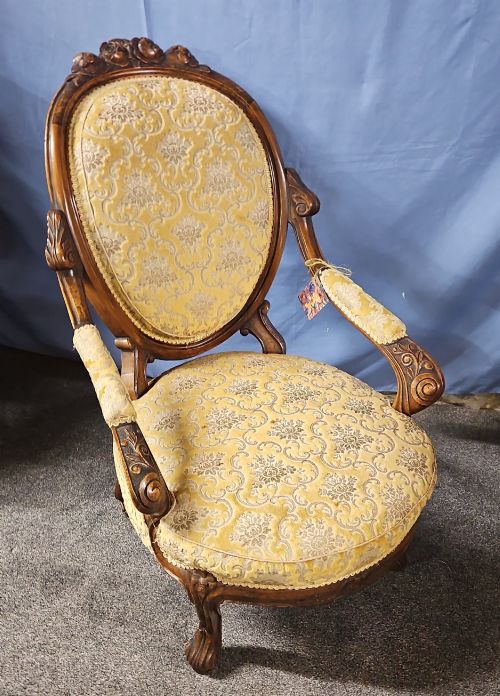
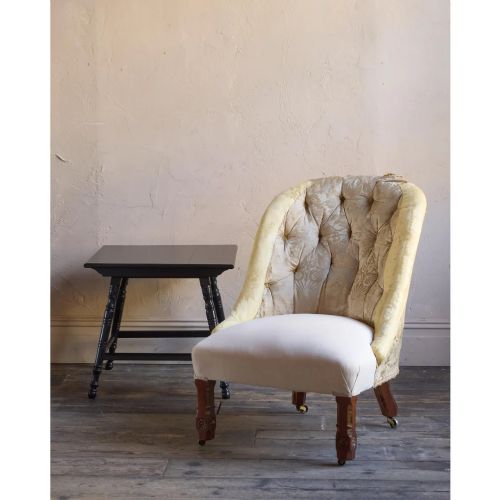
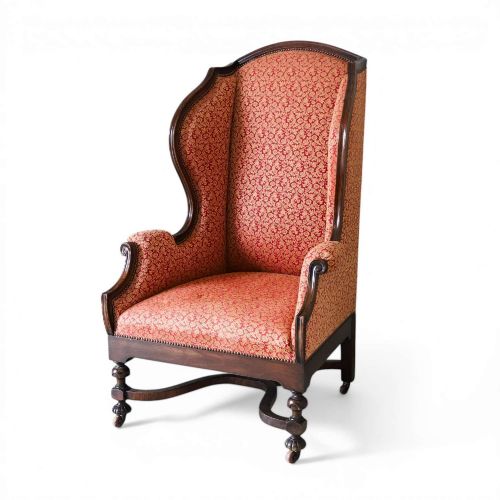
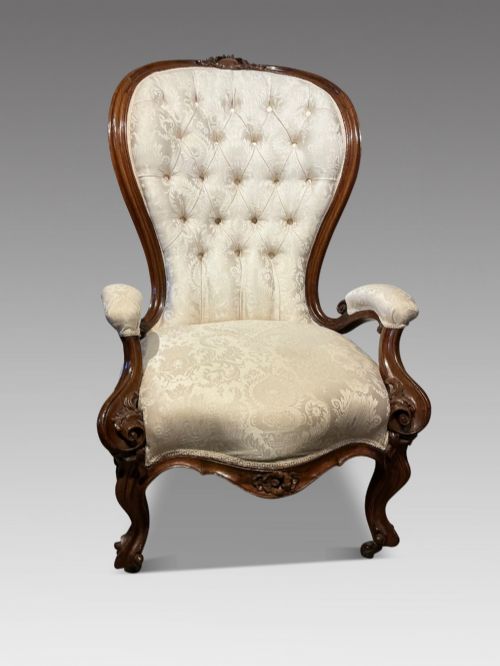
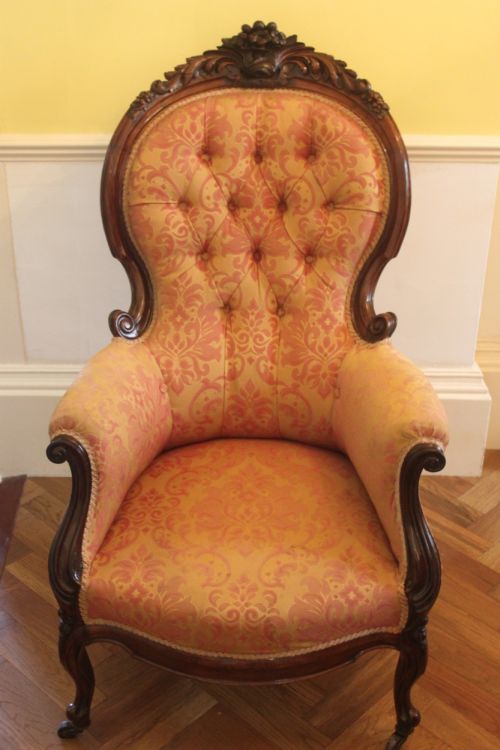
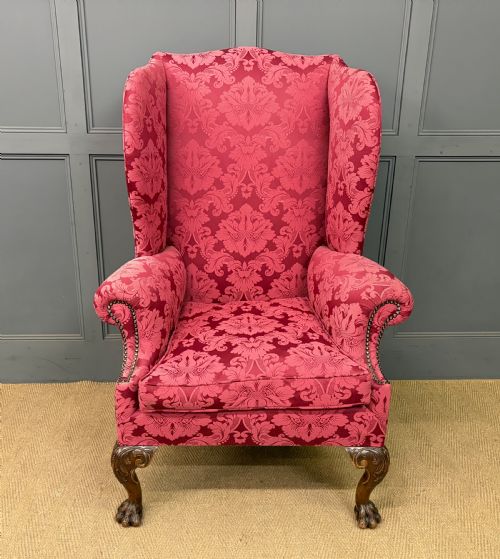
A victorian damask armchair encompasses seating designed during the nineteenth century, including wing armchairs, nursing chairs, and library chairs upholstered in woven fabric. Buyers often encounter walnut and mahogany frames featuring button backs, deep cushioning, and carved wooden details from various decades within the Victorian era.
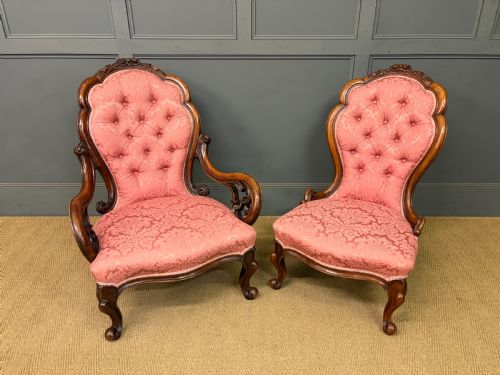
The selection frequently includes salon suites, open armchairs, and spoon-back designs originating from English country houses and town residences. These pieces span from early Victorian examples to later revival styles, reflecting the evolving domestic tastes of the nineteenth century.
Materials and construction
Makers utilised dense hardwoods such as walnut, mahogany, and rosewood for structural frames, frequently employing carved decoration on arms, legs, and crest rails. Brass castors and iron supports occasionally reinforced the mobility and internal stability of heavier library chairs.
Upholstery combined traditional stuffing materials with patterned damask fabric, secured with deep buttoning techniques to shape the supportive backrests. Wood framing was shaped through turning, carving, and revival styles including Carolean and French Rococo influences.
Some Victorian nursing chairs were built unusually low so ladies could tend infants without tangling their voluminous crinolines.
Judging quality and character
The refinement of the timber carving and the architectural proportions of the wooden frame distinguish finer examples from standard production. Crisp detailing on walnut or rosewood components indicates superior craftsmanship during manufacture.
The integration of the damask upholstery with the underlying frame structure affects the overall integrity and visual balance of the seating. Pieces retaining maker attribution or notable provenance command greater distinction among collectors.
Howard and Sons·Harrods, London·Cornelius V Smith
The Victorian Damask Armchair Glossary
- Damask fabric
- A reversible figured fabric with patterns formed through weaving, historically utilised for formal upholstery. This material defines the surface texture of these period seats.
- Spoon-back
- An upholstered chair back shaped in a concave oval resembling the bowl of a spoon, popular during the mid-nineteenth century. This contour supports the sitter's spine.
- Nursing chair
- A low-seated Victorian chair designed originally for comfort while nursing infants. These pieces often feature sprung upholstery and compact proportions.
- Carolean revival
- A nineteenth-century style emulating late seventeenth-century Carolean furniture design, characterised by ornate scrolling woodwork. Such chairs incorporate historical motifs into Victorian frames.
- Button-back
- An upholstery method where tufting buttons are pulled deep into the padding to create a padded diamond pattern. This technique secures internal stuffing while providing structural firmness.
Victorian Damask Armchair: Frequently Asked Questions
How do I identify a Victorian armchair?
Look for characteristic nineteenth-century timber choices such as walnut and mahogany, combined with traditional joinery methods and specific revival styles. Period upholstery techniques like deep buttoning further indicate nineteenth-century origins.
Examine the frame contours and carved wooden details, which often follow Victorian design vocabulary such as spoon-back shapes or barley twist supports.
Were these chairs used in bedrooms?
Many smaller Victorian seats, including nursing chairs and bedroom chairs, were specifically produced for private chambers rather than formal reception rooms. Their lower heights and compact proportions suited dressing areas and bedrooms.
Larger library chairs and wing armchairs remained in studies and drawing rooms for general relaxation and reading.
How should I care for damask upholstery?
Protect antique woven fabrics from direct sunlight to prevent fading of the patterned threads over time. Gentle vacuuming with a soft attachment helps remove dust without damaging the textile structure.
Professional specialist cleaning is recommended for addressing stains on historic fabric coverings.
What is a salon suite?
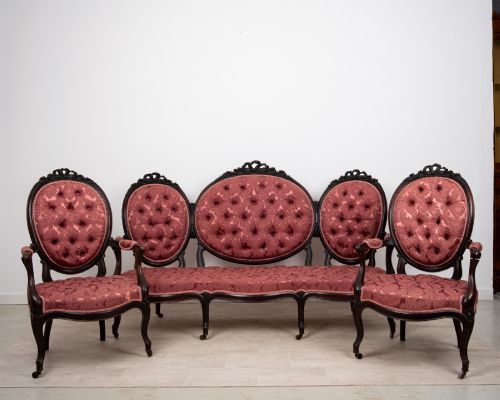
A salon suite comprises a matching set of seating furniture, typically including a settee alongside a pair of armchairs or nursing chairs designed for entertaining guests. These matched groupings shared identical wood framing, carving styles, and damask fabric upholstery.
They furnished Victorian drawing rooms to present a cohesive decorative scheme for visitors.