





Victorian Triple Compactum
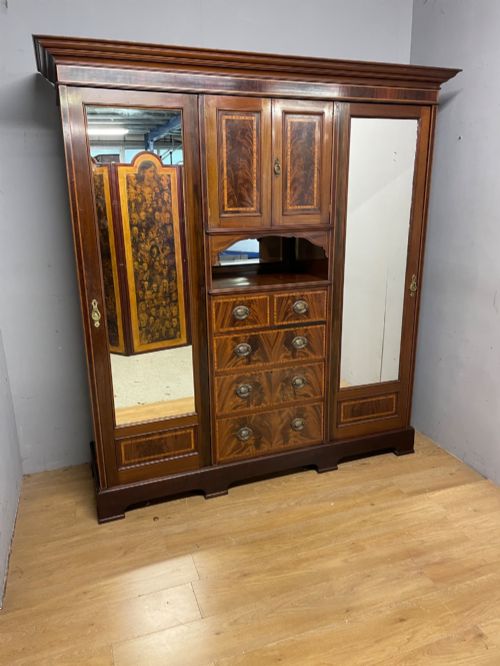
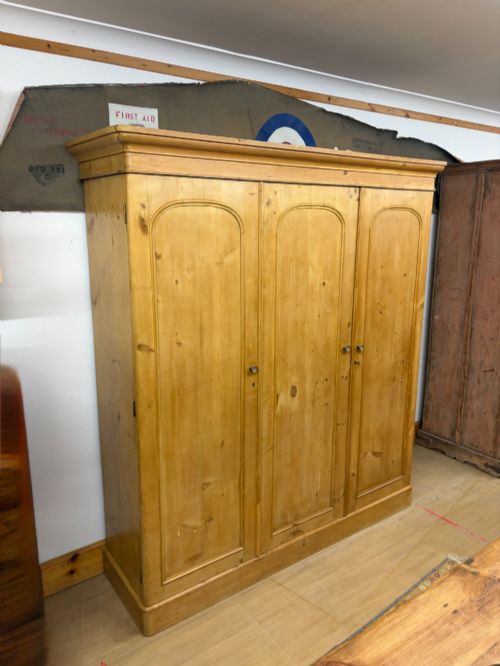
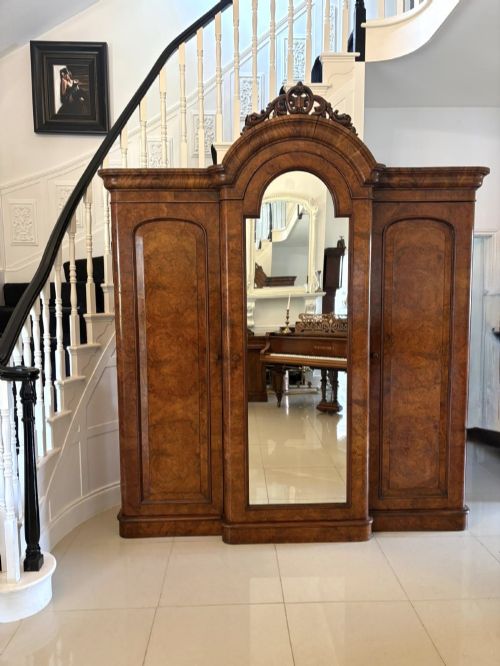
A victorian triple compactum offers generous multi-section bedroom storage scaled for nineteenth-century interiors, combining hanging space and internal drawers within a substantial three-door architectural carcass.
Victorian Triple Compactum
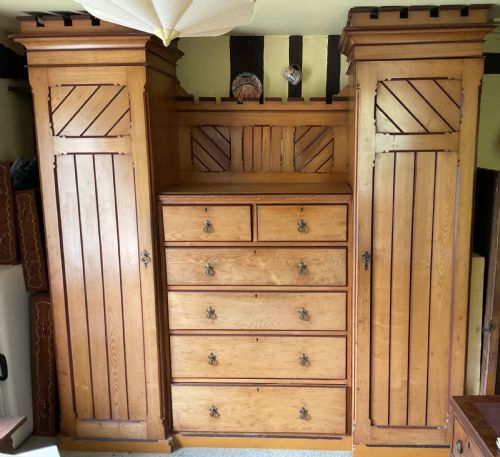
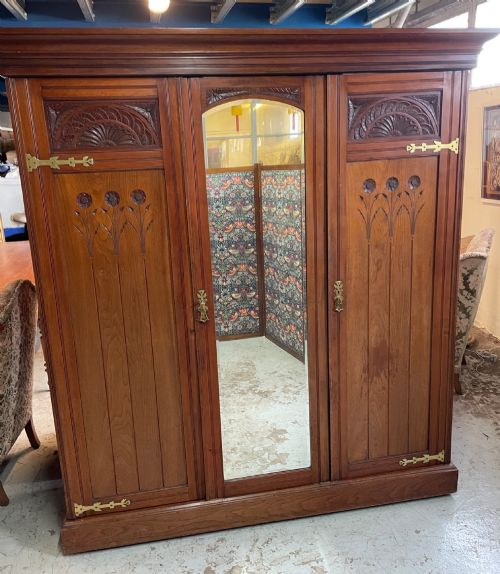
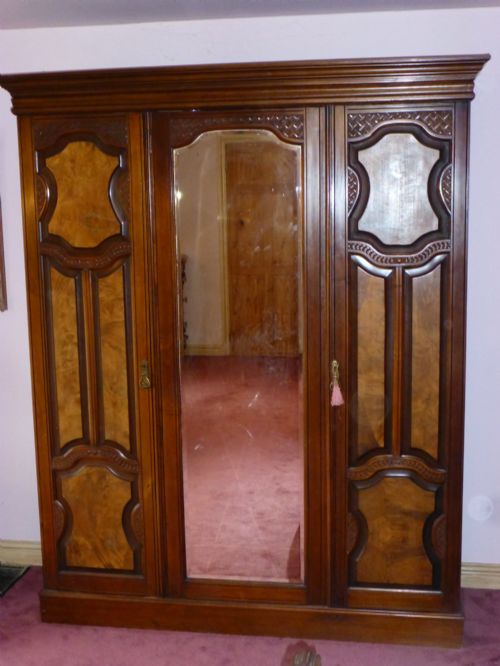
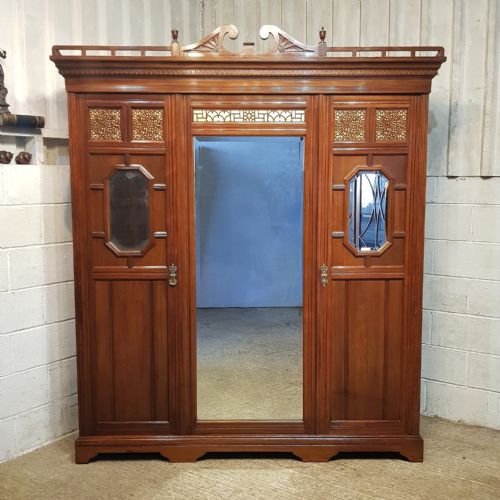
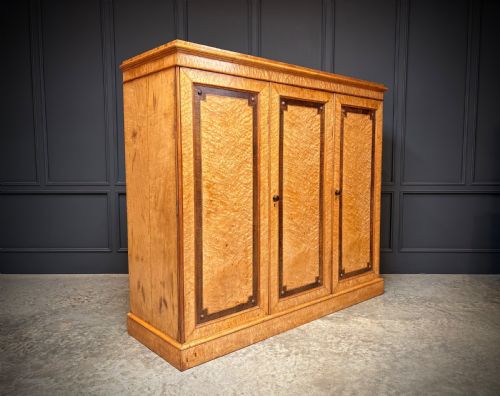
A victorian triple compactum is a large nineteenth-century wardrobe comprising three distinct vertical sections, typically housing a central tower of linen drawers flanked by hanging compartments. The format emerges across the Victorian period, spanning walnut, mahogany, and oak interpretations that reflect changing domestic storage requirements.
Makers construct these massive wardrobes as breakfront or straight-front carcasses, frequently incorporating mirrored central doors alongside panelled wings. Examples range from simple pitch pine utility pieces to elaborate burr walnut designs outfitted with sliding trays and deep drawers.
How they were made
Cabinetmakers build these large wardrobes using dense secondary timbers like oak and pine for internal framing, overlaid with figured veneers of burr walnut, flame mahogany, or pollard oak on the primary facades. Selected sections utilise brass hardware, cast iron internal fittings, and bevelled mirror glass.
Construction relies on heavy panelled frames, dovetailed internal drawer boxes, and massive moulded cornices that dismantle into manageable modules for transport. Carved details, boxwood stringing, and applied mouldings define the ornamental vocabulary across the Victorian decades.
Victorian Triple Compactum Retail Price Guide 2026
Typical asking prices for victorian triple compactum among the pieces listed under this phrase on Sellingantiques today, from the lower quarter to the upper quarter. They describe what is for sale here now, not the wider market.
Several examples incorporate hidden sliding compartments behind internal drawer stacks for securely storing pocket watches and small valuables.
What varies in quality
Quality reveals itself in the selection of timber figure, such as richly patterned burr walnut or symmetrical flame mahogany veneers matched evenly across the three doors. Superior examples display refined internal joinery, including cedar-lined drawers and well-fitted sliding trays rather than plain softwood linings.
Proportion and architectural detailing set individual pieces apart, distinguishing restrained classical breaks from heavier late-century mass production. The integration of original bevelled mirror plates, working brass locks, and intact modular dismantling bolts marks higher cabinetmaking standards.
Holland and Sons·H Ogden Manchester
The Victorian Triple Compactum Glossary
- Compactum
- A multi-functional wardrobe designed to incorporate hanging space, drawers, and sometimes shoe racks or sliding linen trays within a single combined unit.
- Breakfront
- A cabinet design where the central section projects forward from the flanking wings, creating visual depth and architectural presence.
- Burr Walnut
- A highly prized wood veneer taken from the knotted growth of a walnut tree, exhibiting intricate swirling grain patterns favoured by Victorian cabinetmakers.
- Pollard Oak
- Timber harvested from oak trees that have been pollarded, producing a dense, speckled grain pattern highly decorative on large wardrobe doors.
- Sentry Box
- A narrow single-door wardrobe section within a combination piece, resembling the sentry enclosure from which the colloquial term derives.
Victorian Triple Compactum: Frequently Asked Questions
How do I assemble a triple compactum?
These large wardrobes dismantle into distinct modular sections, including a heavy cornice, a base plinth, and three separate vertical carcass bays that bolt together internally.
Professional delivery and assembly ensure the heavy mirrored doors hang true and the frame remains square on uneven modern floors.
Will a compactum fit in my bedroom?
Victorian triple wardrobes are exceptionally large and heavy pieces that require substantial wall space and high ceilings to accommodate their imposing cornices.
Measure ceiling height carefully, as the assembled cornice often exceeds standard modern clearances during the upright tilting process.
How do I care for walnut veneer?
Keep nineteenth-century polished wood away from direct sunlight and strong heat sources to prevent the burr walnut or mahogany veneers from drying and lifting.
Apply a traditional beeswax polish sparingly to nourish the timber grain and maintain the natural lustre of the antique finish.