


Brown Wood Compactum
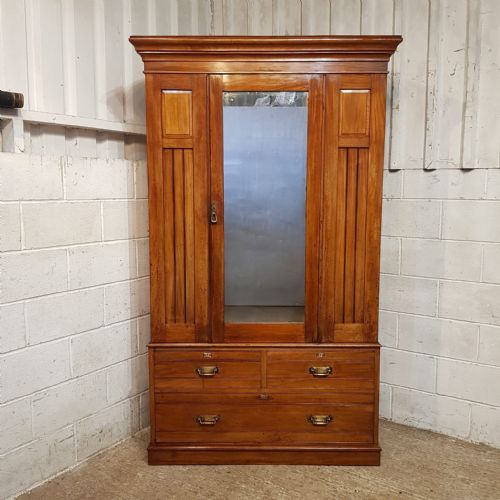
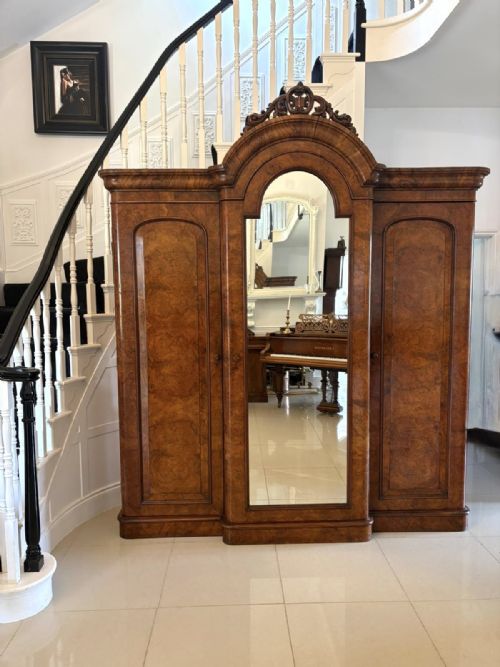
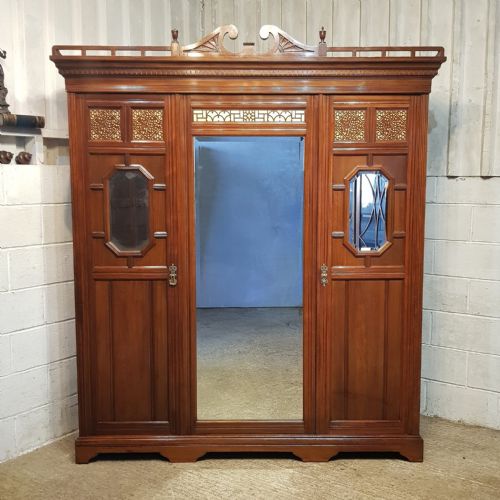
These brown wood compactum pieces offer substantial fitted bedroom storage, combining hanging space and drawers in rich timber builds.
Brown Wood Compactum
When you search for a brown wood compactum, you encounter substantial bedroom storage pieces that combine hanging space and interior drawers within a single carcass. The examples listed here span periods from the Georgian era through Victorian, Edwardian, and Art Deco times, showing how domestic storage evolved over generations.
Most pieces you meet on this page are constructed in mahogany or walnut, frequently featuring multiple doors arranged in double, triple, or breakfront formats. These wardrobes and cabinets served as comprehensive bedroom storage before fitted furniture became common in homes.
Materials and construction methods
Cabinet makers utilised solid timbers alongside figured veneers like burr walnut, flame mahogany, and curl mahogany to cover large surfaces with striking grain patterns. Brass hardware, mirror glass panels, and marquetry inlay appear frequently across these pieces to provide functional and decorative detail.
Joinery techniques relied on sturdy timber frames and panel construction to support the considerable weight of large wardrobe doors and internal linen slides. Surfaces received hand-applied polish finishes that highlighted the natural tone and figure of the wood.
One Art Deco cabinet adopts a split side design, proving that even stern brown wood storage occasionally embraced a playful angle.
Distinguishing quality in timber and design
The choice of timber veneer sets apart the finer examples, particularly where burr walnut or figured mahogany is selected for symmetrical grain alignment across multiple doors. Superior cabinet work shows in the precise fitting of internal linen slides, trays, and original brass fittings.
Proportion and architectural detailing dictate the visual strength of a piece, with breakfront forms and subtle marquetry inlay lifting the design well beyond standard utilitarian storage. The integrity of the original polish and mirror glass further distinguishes the best examples.
Edwards and Roberts·Maples and Co
The Brown Wood Compactum Glossary
- Compactum
- A multi-functional wardrobe that integrates hanging space, shelving, and internal drawers within a single unit. This design maximised bedroom storage efficiency in traditional homes.
- Burr walnut
- A highly figured wood harvested from the warted growths of walnut trees, yielding intricate swirling grain patterns. Cabinet makers prized this material for veneering prominent door panels.
- Breakfront
- A piece of furniture where the central section projects forward from the flanking wings. This configuration adds architectural depth to large wardrobes.
- Marquetry
- The art of applying decorative pieces of veneer to a structure to form intricate pictorial or geometric designs. It appears on select Victorian and Edwardian pieces.
Brown Wood Compactum: Frequently Asked Questions
What is a brown wood compactum?
A brown wood compactum is a large wardrobe that integrates hanging space, shelving, and internal drawers into a single multi-functional storage unit. These pieces were designed to provide comprehensive bedroom storage in a single footprint.
They appear in various timbers such as mahogany and walnut, reflecting the domestic storage needs of the nineteenth and early twentieth centuries.
How do I date these wardrobes?
Dating relies on observing construction methods, timber choices, and stylistic cues present in the piece. Georgian and Victorian examples often feature solid mahogany or burr walnut veneers, while Edwardian and Art Deco versions show distinct changes in proportion and decorative inlay.
Hardware styles and mirror glass framing also provide reliable clues to the period of manufacture.
Are these pieces difficult to move?
These large wardrobes are heavy and substantial constructions that often require dismantling for transport and installation. Many triple and breakfront examples were built as multi-part units to facilitate room placement.
Careful handling of mirrored doors and fitted internal elements is essential during relocation.
How do I maintain the wood?
Maintaining these timber surfaces involves keeping them away from direct heat sources and strong sunlight to prevent the veneer from drying out or fading. Regular dusting with a soft cloth preserves the polish without building up residue.
Occasional application of appropriate wax polish helps nourish the historic wood finish.