



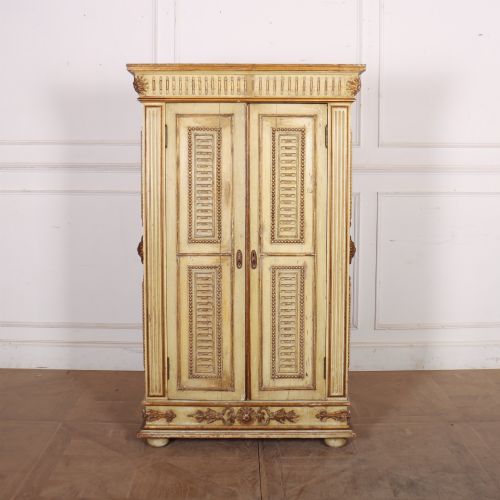


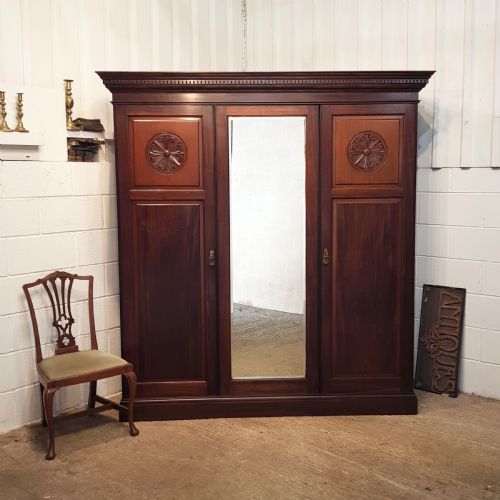

Late 19th Century Wardrobe
A late 19th century wardrobe brings substantial timber architecture and generous hanging space to a bedroom, combining practical storage with period craftsmanship.
Late 19th Century Wardrobe
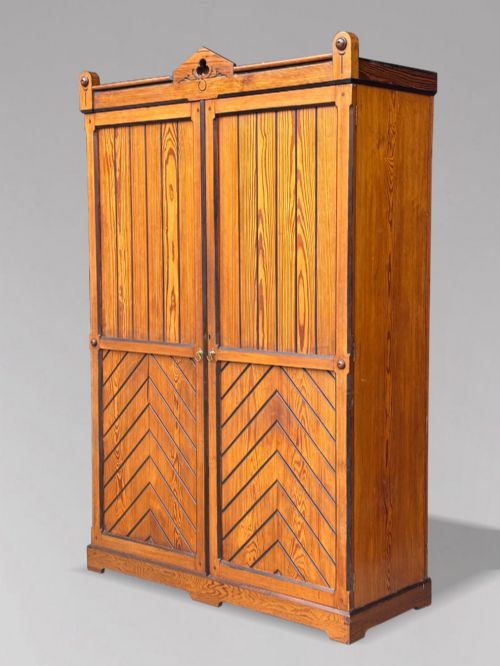
When you search for a late 19th century wardrobe, you encounter robust bedroom furniture predominantly rooted in the Victorian period. These pieces originate from around 1880 to 1890, capturing the solid proportions and domestic utility valued in late nineteenth-century homes.
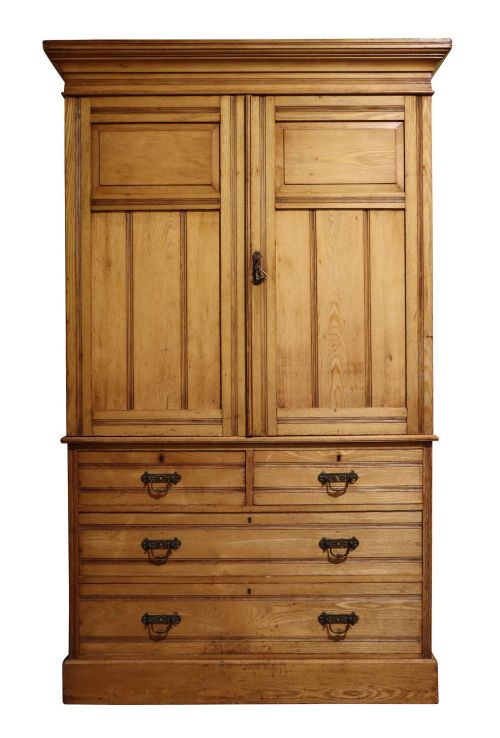
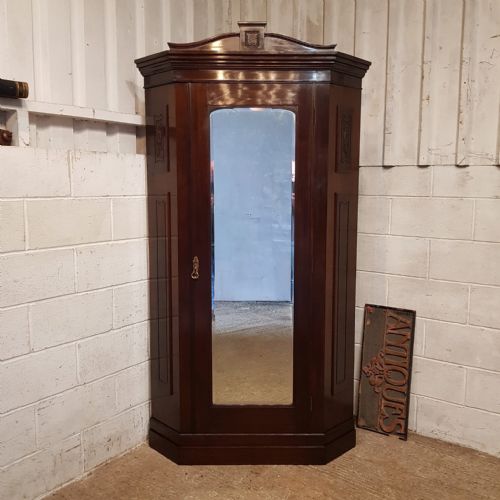
The selection on this page ranges from substantial triple and single door wardrobes to related linen presses and larger bedroom suites. Mahogany and pine dominate the forms, reflecting the typical timber choices of makers working during the Victorian and Arts and Crafts eras.
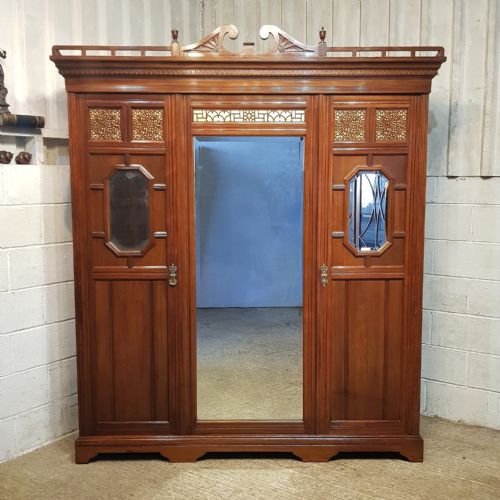
Buyers frequently meet pieces showing stylistic influences from the Aesthetic Movement as well as traditional Victorian designs. These large items served as the primary clothes storage in period houses, often combining hanging compartments with drawers and mirrored doors.
Materials and construction
Makers constructed these wardrobes using solid timbers such as mahogany, pine, ash, and pitch pine, frequently applying flame mahogany veneer to prominent surfaces. Structural integrity relied on traditional joinery techniques suited to supporting heavy doors and internal shelving.
Glass and mirror glass were integrated into door panels, while brass hardware provided functional handles and hinges. Certain examples incorporate specialised timbers like satin birch and American walnut, aligning with specific Aesthetic Movement and Arts and Crafts commissions.
Late 19th Century Wardrobe Retail Price Guide 2026
Typical asking prices for late 19th century wardrobe among the pieces listed under this phrase on Sellingantiques today, from the lower quarter to the upper quarter. They describe what is for sale here now, not the wider market.
Several wardrobes hide deep secret drawers beneath their hanging space, built for storing valuables out of sight.
Factors that define quality
Quality in these wardrobes is determined by the selection of timber and the sophistication of the cabinetmaker's construction. Superior pieces demonstrate careful grain matching, particularly on veneered surfaces, and robust internal framing that prevents door sagging over time.
The integration of decorative details, such as subtle inlay work or specialised brass fittings, separates standard utilitarian storage from finer artistic commissions. The proportion of the piece and the clarity of any carved or ebonised elements further indicate the original tier of manufacture.
Maple and Co·Shapland and Petter
The Late 19th Century Wardrobe Glossary
- Wardrobe
- A tall piece of furniture used for hanging and storing clothes. These items often feature full-length doors concealing hanging space or sliding trays.
- Linen Press
- A dual-purpose storage piece featuring upper sliding shelves enclosed by doors, positioned above a chest of drawers. They were traditionally used to store folded linens and garments.
- Aesthetic Movement
- A late 19th-century design style emphasising visual beauty and artistic reform over heavy historical revivalism. Pieces from this movement often utilise lighter woods and simpler geometric lines.
- Flame Mahogany Veneer
- A thin slice of mahogany timber cut from the fork of the tree to create a distinctive, swirling flame-like grain pattern. Cabinetmakers applied this to prominent exterior panels for decorative impact.
- Pitch Pine
- A durable resinous pine timber widely used in 19th-century cabinetmaking for its strength and distinct grain. It provided a sturdy structural alternative to more expensive hardwoods.
Late 19th Century Wardrobe: Frequently Asked Questions
How do I fit a large wardrobe in a modern bedroom?
Many late 19th-century wardrobes were designed to dismantle into manageable modular sections, including a cornice, base, and separate side panels, specifically to aid transport and room placement.
Checking the internal depth and vertical clearance before purchase ensures that modern hangers and folded garments will fit comfortably within the historic dimensions.
What is the difference between a wardrobe and a linen press?
A wardrobe is primarily built for hanging garments vertically behind full-length doors, whereas a linen press pairs upper sliding trays with lower drawers for storing folded textiles.
Presses often have a shallower hanging depth or none at all, reflecting an era when most everyday clothing was folded rather than hung.
How can I identify an Aesthetic Movement piece?
Aesthetic Movement pieces often feature lighter woods like satin birch, ebonised highlights, and geometric inlay work rather than heavy, dark Victorian carvings.
These designs prioritize artistic simplicity and structural honesty, often associated with progressive design reform during the 1880s.
Are these wardrobes made of solid wood?
Construction typically combines solid secondary timbers like pine for internal framing with substantial mahogany or ash on the visible exterior surfaces.
Finer decorative areas frequently employ flame mahogany veneer laid over stable secondary woods to achieve striking grain patterns without risking warping.