

Fitted Mahogany Armoire
A fitted mahogany armoire offers grand scale and intelligent internal storage, bringing distinguished timber grain and period presence to a bedroom.
Fitted Mahogany Armoire
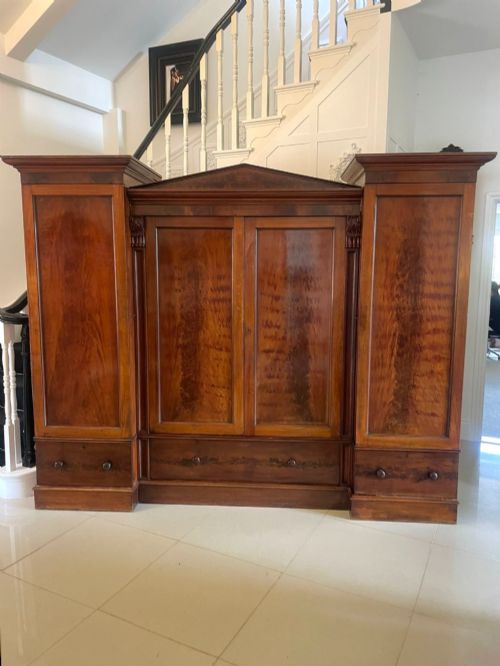
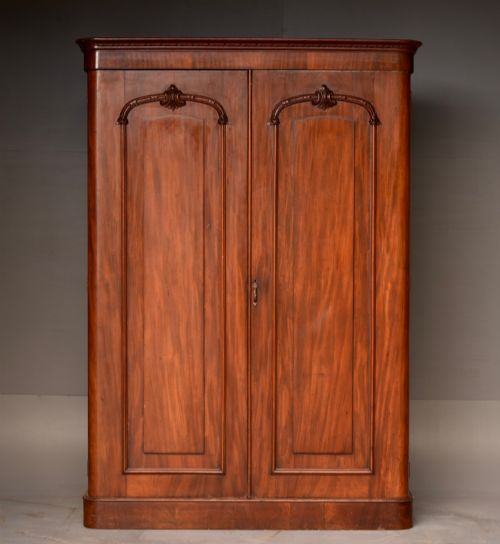
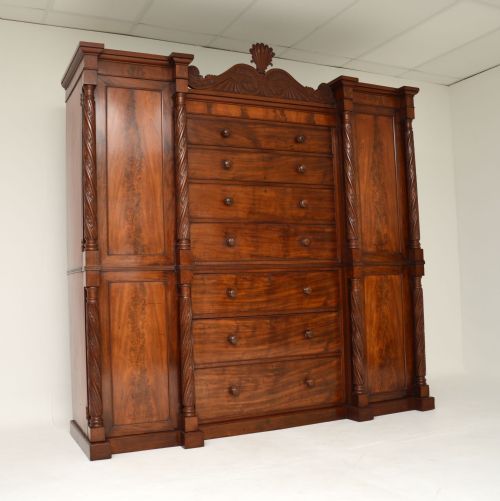
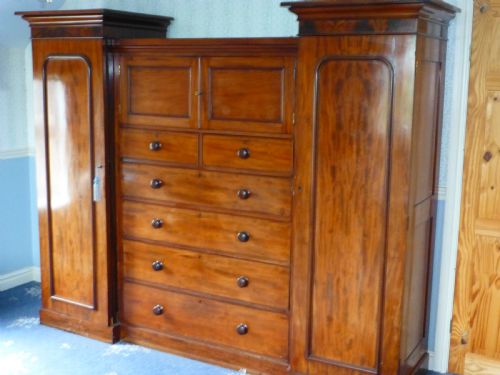
A fitted mahogany armoire encompasses large wardrobes, compactums, linen presses and breakfront cabinets designed to organise clothing and household linens. When searching for a fitted mahogany armoire, buyers encounter robust pieces built during the Victorian, Edwardian and Georgian periods.
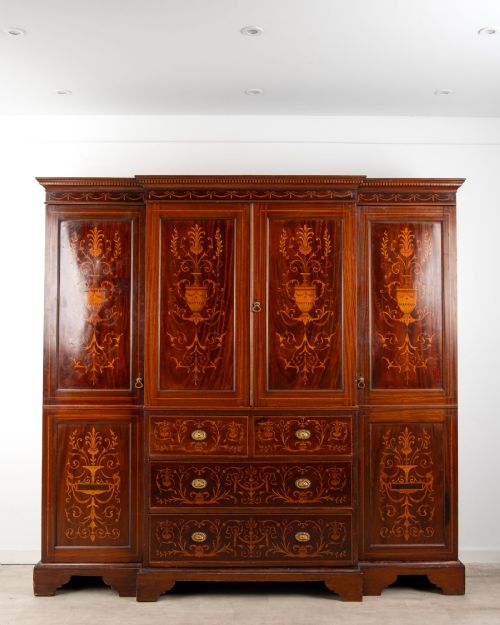
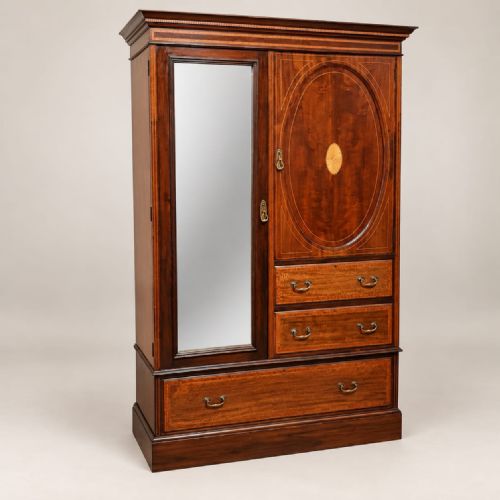
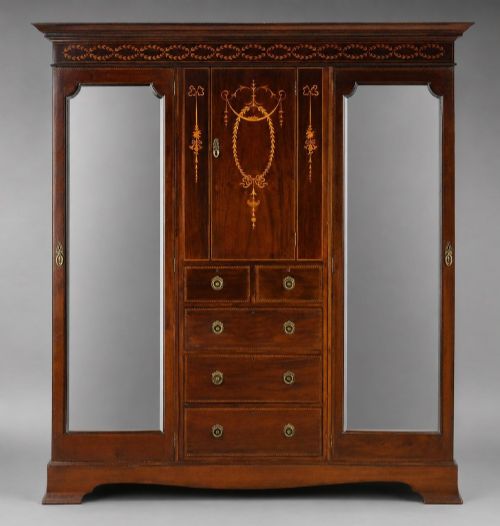
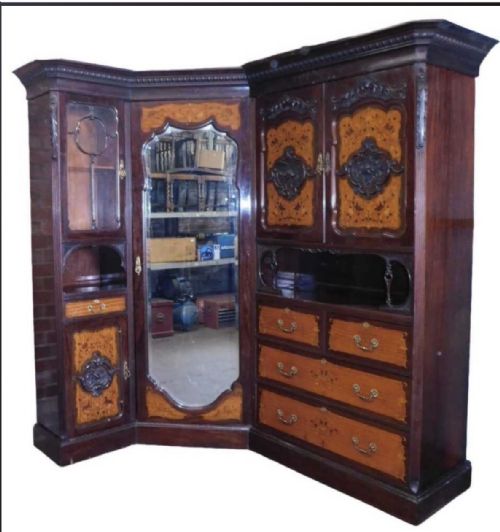
Many examples incorporate satinwood inlay, brass hardware, glazed panels or mirrored doors to break up expansive timber facades. Buyers select these large items to anchor a room with functional period architecture.
Materials and construction methods
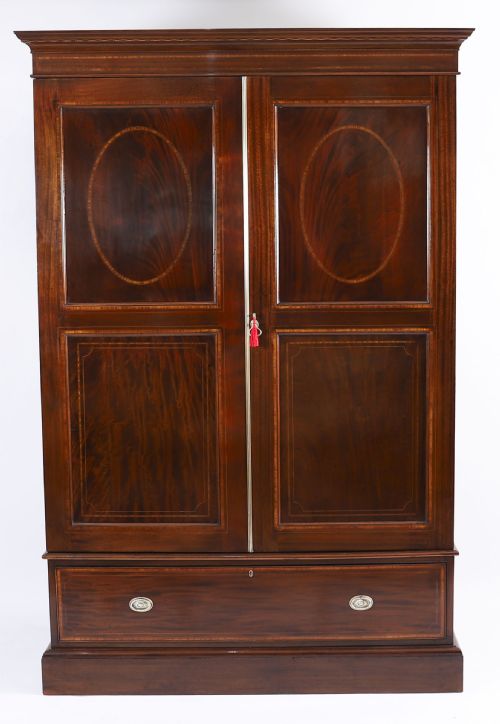
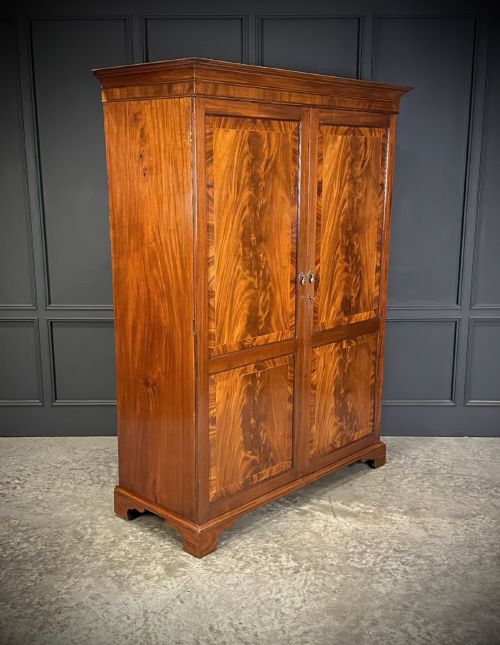
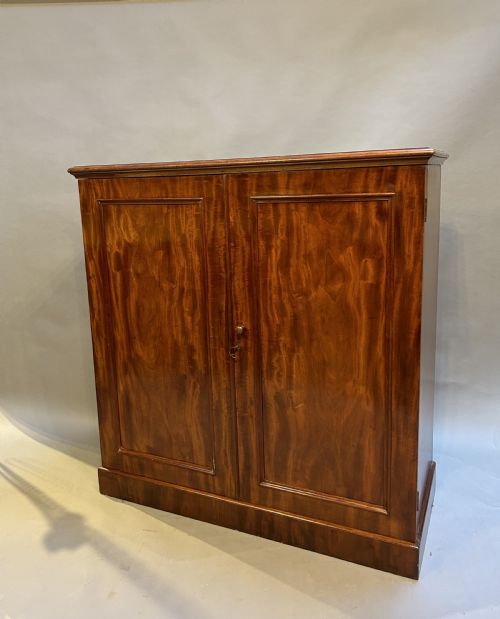
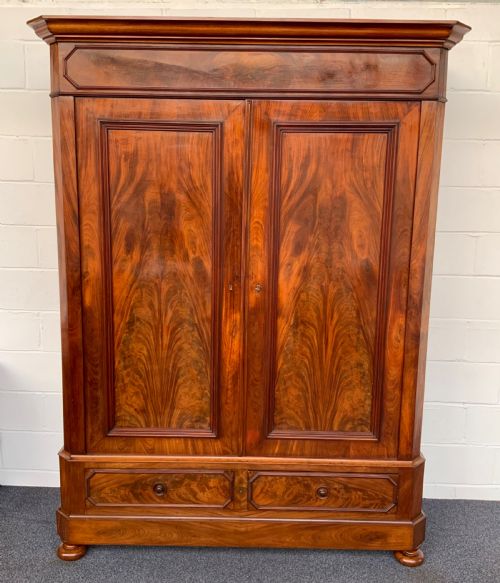
Craftsmen built these large carcasses using solid mahogany augmented by flame mahogany veneer, curl mahogany and figured mahogany veneer to create striking visual movement across wide panelled doors. Satinwood inlay frequently provides crisp geometric or floral contrast against the dark reddish-brown primary timber.
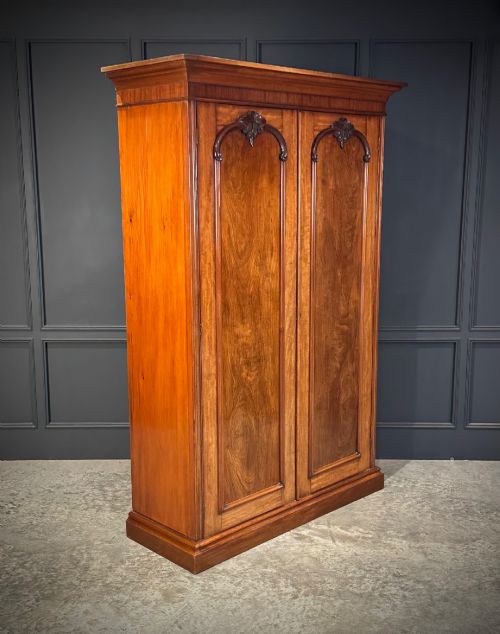
Interior compartments utilise secondary timbers alongside brass hanging rails, hooks and sliding linen trays configured for specific domestic duties. Glass panels, bevelled mirrors and carved mouldings complete the exterior articulation of these substantial case pieces.
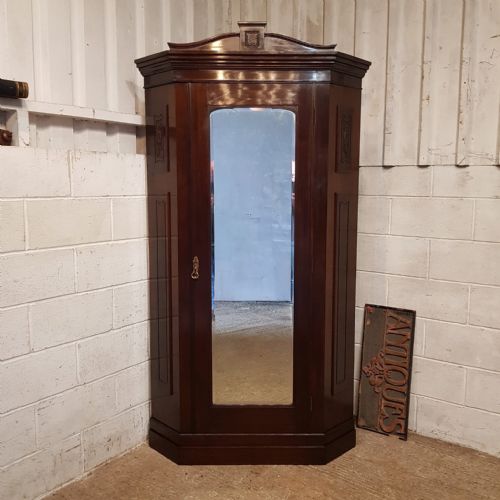
Several examples include clever sentry box configurations designed to fit snugly into awkward bedroom corners without sacrificing internal hanging depth.
Evaluating construction and design standards
Quality rests upon the selection of timber veneers and the architectural integrity of the breakfront or cornice mouldings. Superior examples display symmetrical flame patterns across matching door panels and retain intricate internal fittings such as original sliding trays and compartmentalised drawers.
The sophistication of the internal configuration distinguishes standard wardrobes from elaborate compactums and combination cabinets equipped with multiple specialised drawers and hanging sections. Fine joinery ensures that heavy panelled doors swing true within their frames without sagging.
Maples and Co·Gillows·Heals·Robert Strahan of Dublin·Edwards and Roberts
The Fitted Mahogany Armoire Glossary
- Compactum
- A multi-functional wardrobe combining hanging space, linen slides and multiple internal drawers within a single carcass. This efficient layout maximises storage capacity.
- Breakfront
- A cabinet design where the central section projects forward from the flanking wings. This architectural feature creates depth and shadow across large facades.
- Linen Press
- A tall storage piece featuring upper sliding trays enclosed by doors, positioned above a chest of base drawers. They were traditionally used to store folded linens and garments.
- Flame Mahogany
- A veneer harvested from the point where a branch joins the main trunk, producing a distinctive flickering flame pattern. Cabinetmakers prized this figure for prominent door surfaces.
- Satinwood
- A pale yellowish timber native to Ceylon and India used extensively for contrasting stringing and inlay work. It highlights the darker mahogany panels.
Fitted Mahogany Armoire: Frequently Asked Questions
What is a compactum wardrobe?
A compactum is a specialised multi-compartment wardrobe that combines hanging spaces, sliding linen trays and stacked internal drawers in one unified piece of furniture. These versatile units were designed to accommodate a complete gentleman or lady wardrobe.
Buyers often select compactums when they require maximum internal organisation without adding multiple standalone chests and wardrobes to a bedroom.
How can I tell the period of a mahogany wardrobe?
Period identification relies upon architectural styles, decorative motifs and construction techniques visible in the cornices and plinths. Georgian and Regency pieces favour architectural breakfronts and restrained classical proportions, while Victorian and Edwardian examples often introduce mirrored doors, satinwood inlay and heavy carved mouldings.
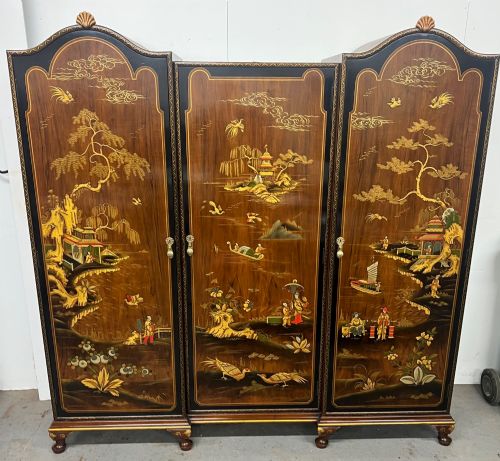
The evolution of revival styles, such as Chippendale Revival or Chinoiserie Revival, also points towards late nineteenth and early twentieth-century manufacturing dates.
Are these large wardrobes difficult to move?
Most large period wardrobes and armoires were constructed to dismantle into manageable modular sections, including a cornice, base plinth, side panels and central carcass. This knock-down construction allowed Victorian and Edwardian cabinetmakers to deliver heavy furniture up tight staircases.
Checking the construction reveals whether a piece uses traditional knockdown bolts and removable sections to facilitate transport.