



Four Door Wardrobe
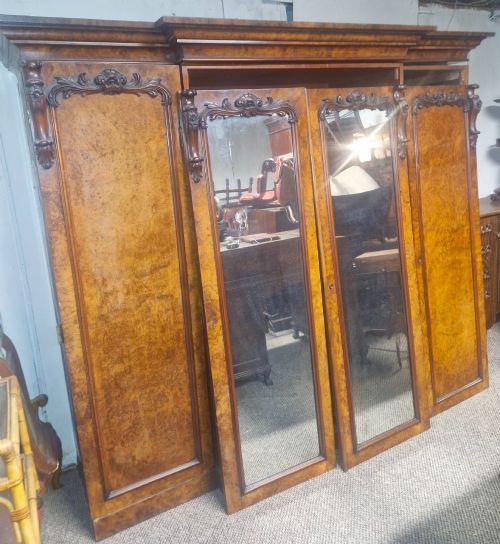
A four door wardrobe offers grand proportions and substantial storage, bringing architectural presence and period timber to a large bedroom.

Four Door Wardrobe
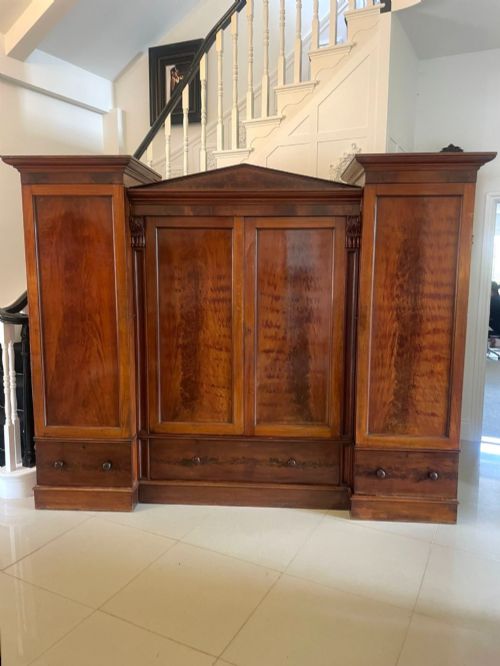
A four door wardrobe provides immense storage capacity, usually taking the form of a breakfront or compactum design with central hanging space flanked by linen shelves or drawers. When hunting for a four door wardrobe, shoppers commonly encounter substantial nineteenth-century examples in figured mahogany or flame mahogany veneer.
The format evolved from earlier linen presses and armoires, expanding into multi-section bedroom furniture during the Georgian and Victorian eras. Pieces often separate into modular sections to facilitate transport and installation in high-ceilinged rooms.
Makers utilised architectural cornices, breakfront central projections and panelled doors to break up the vast expanse of timber. These large pieces anchor a bedroom layout, serving both a functional dressing role and a decorative focal point.
How they were made
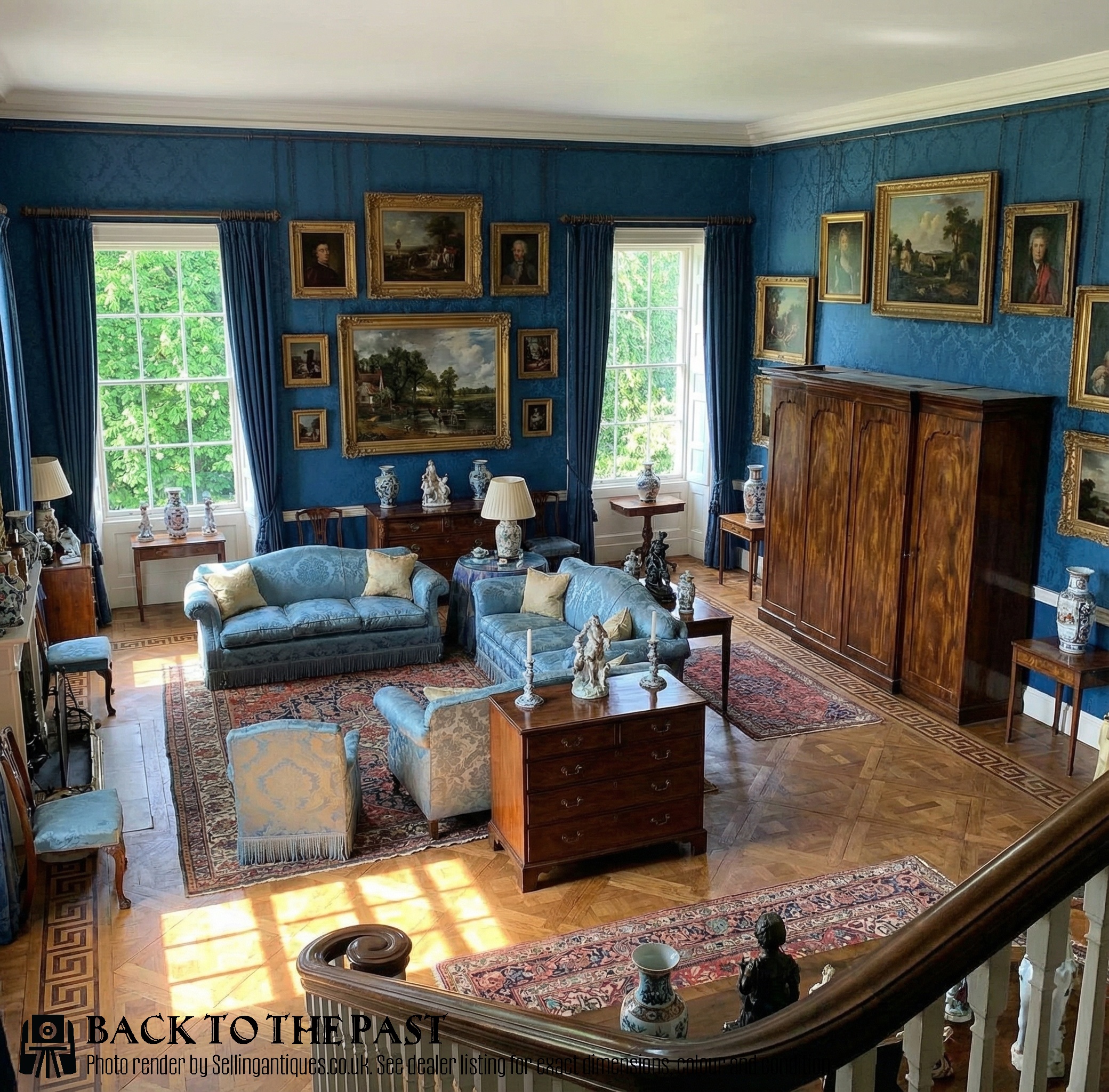
Cabinetmakers constructed these large carcasses using solid timbers such as mahogany, walnut, oak and pine, frequently applying figured mahogany, flame mahogany or burr walnut veneers to the principal facades. Secondary woods like oak and pine served for internal framing, drawer linings and backboards.
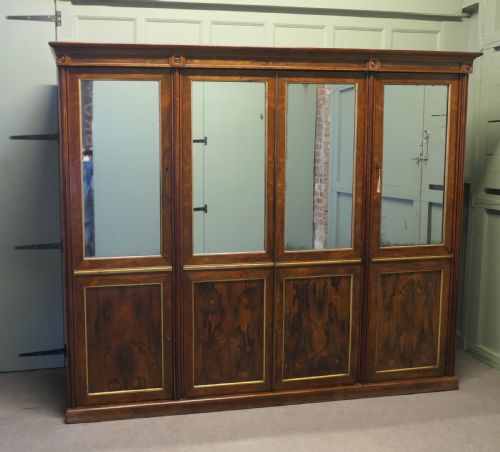
Decorative detailing involved boxwood, satinwood and ebony stringing or inlay, alongside carved mouldings and brass hardware. Glass mirrors appeared in door panels on later Victorian and twentieth-century interpretations.
Four Door Wardrobe Retail Price Guide 2026
Typical asking prices for four door wardrobe among the pieces listed under this phrase on Sellingantiques today, from the lower quarter to the upper quarter. They describe what is for sale here now, not the wider market.
Some nineteenth-century compactums hide secret compartments behind dummy drawer fronts designed for storing private ledgers.
What varies in quality
The selection of timber veneer dictates visual impact, with symmetrical flame mahogany or burr walnut figuring marking out superior cabinetmaking. Superior examples exhibit precise hand-cut dovetails on internal drawers and tight joinery on heavy breakfront cornices.
Proportion and internal configuration distinguish standard items from bespoke commissions. Pieces equipped with original linen slides, sliding trays and matching brass locks demonstrate high-tier workshop origin.
Robert Strahan of Dublin·Heals and Son·Denby and Spinks
The Four Door Wardrobe Glossary
- Breakfront
- A cabinet design where the central section projects forward from the flanking wings. This architectural layout creates depth and shadow across the facade.
- Compactum
- A multi-functional wardrobe combining hanging space, linen shelves and internal drawers within one unified carcass. These units maximise storage efficiency.
- Linen press
- A traditional piece of furniture featuring sliding trays or shelves enclosed by upper doors, placed above a base of wider drawers. They preceded dedicated hanging wardrobes.
- Flame mahogany
- A veneer cut from timber where the grain creates a flickering, flame-like pattern. Cabinetmakers reserved this decorative cut for primary display surfaces.
- Stringing
- Thin inlaid lines of contrasting wood, such as boxwood or ebony, set into the primary timber. This technique outlines panels and drawers for visual definition.
Four Door Wardrobe: Frequently Asked Questions
How do I dismantle a four door wardrobe?
Most large period wardrobes separate into modular components consisting of a cornice, a plinth, two hanging wings and a central section. The vertical modules typically bolt together internally behind decorative pilasters or mouldings.
Mark each section during disassembly to ensure correct alignment upon reassembly, and keep original fixings separate to protect the threadwork in older timbers.
What is the difference between an armoire and a wardrobe?
An armoire originates from continental traditions, historically serving to store armour or garments within deep, single-cavity cupboards often featuring carved walnut or painted finishes. Wardrobes developed distinct British cabinetry formats, eventually incorporating breakfront sections, internal drawers and specialised hanging space.
British examples frequently utilise mahogany veneers and architectural cornices, whereas continental counterparts lean towards regional carved motifs.
Will a four door wardrobe fit my bedroom?
These pieces require significant wall space and high ceilings to accommodate architectural cornices and deep breakfront projections. Measure both the clearance width and the vertical height of your room before acquisition.
Account for the swing radius of four full-length doors and verify that internal hanging rails provide adequate depth for modern coat hangers.
How do I care for antique mahogany timber?
Protect antique surfaces by maintaining stable room humidity away from direct heat sources and strong sunlight, which fades rich red tones. Dust regularly with a dry, soft cloth and apply traditional beeswax sparingly to nourish the polish.
Avoid silicone-based sprays, as they penetrate open grain structures and damage the historic patina accumulated over centuries.