
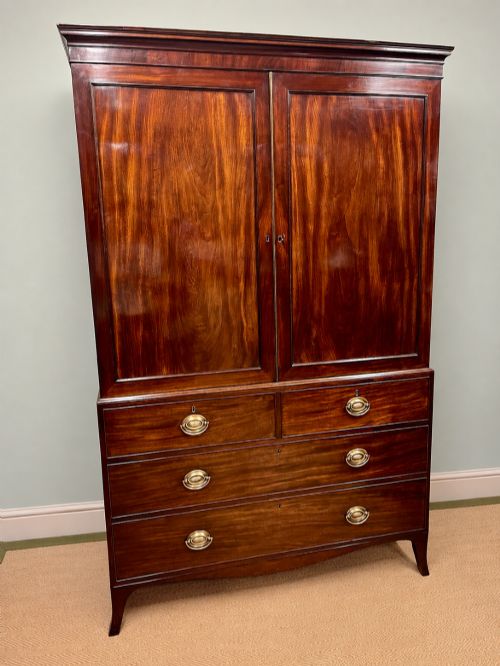
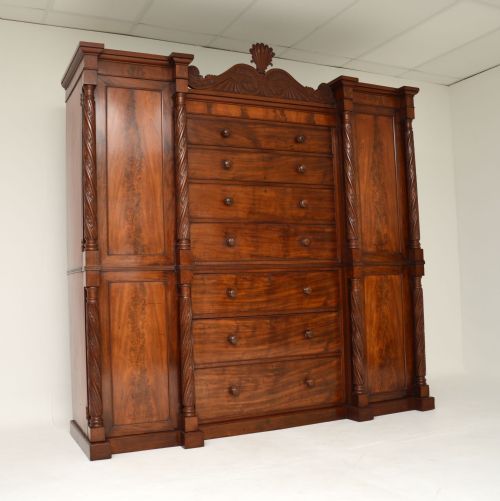
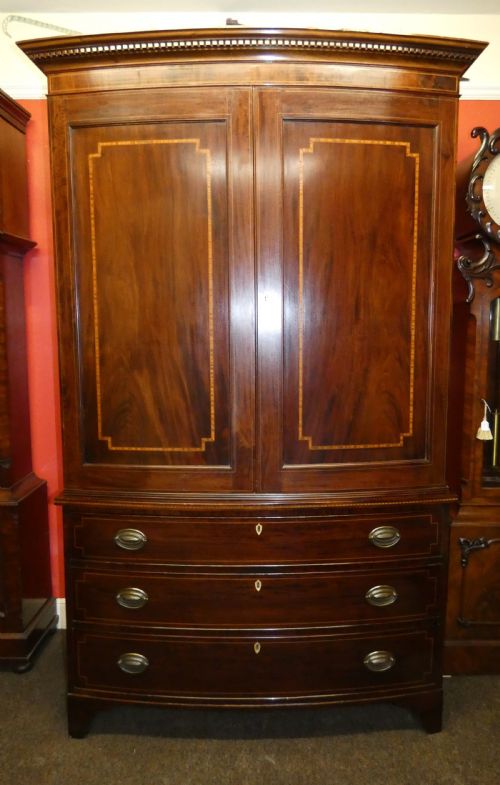
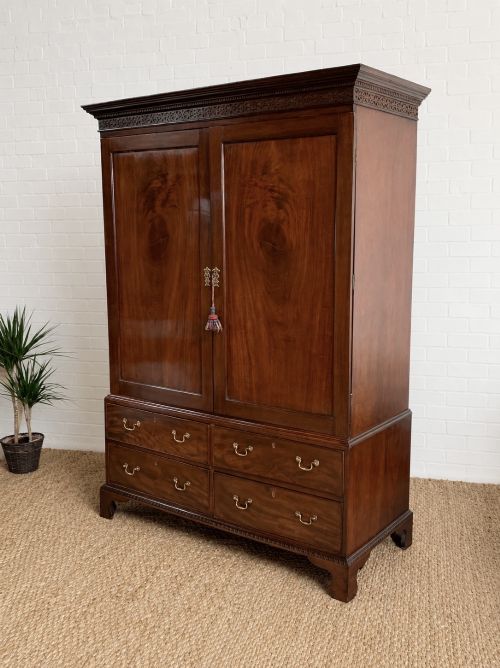
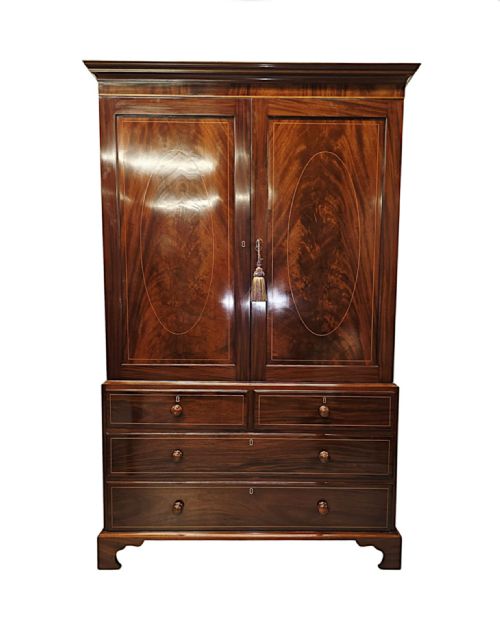
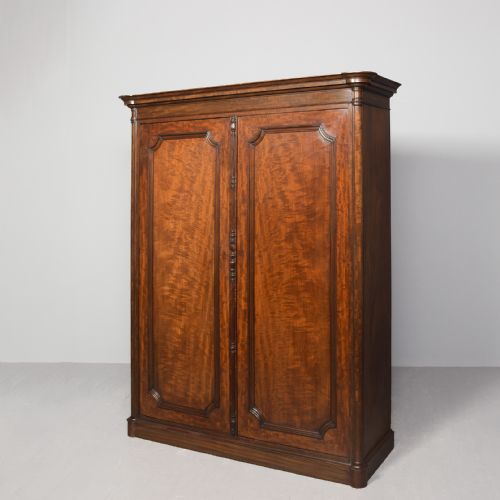
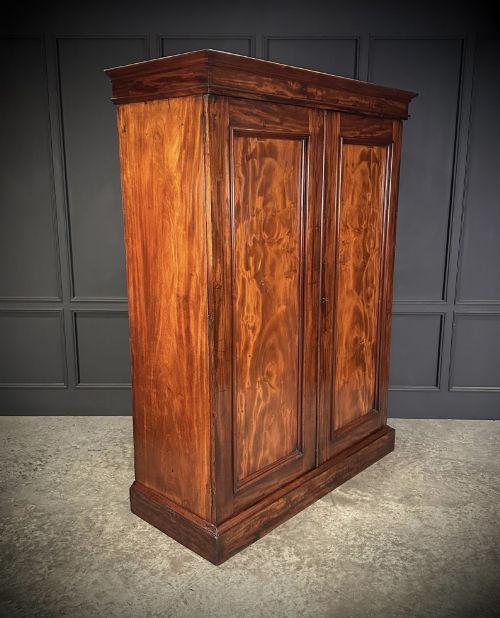
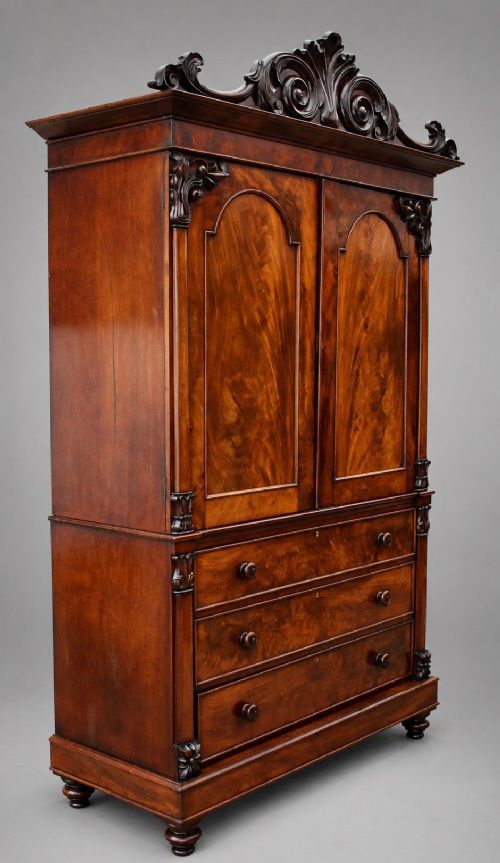
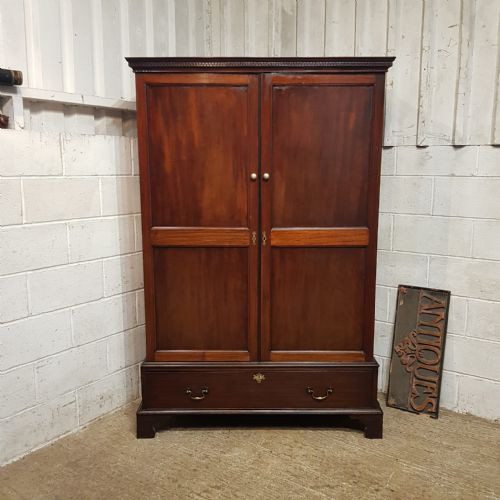

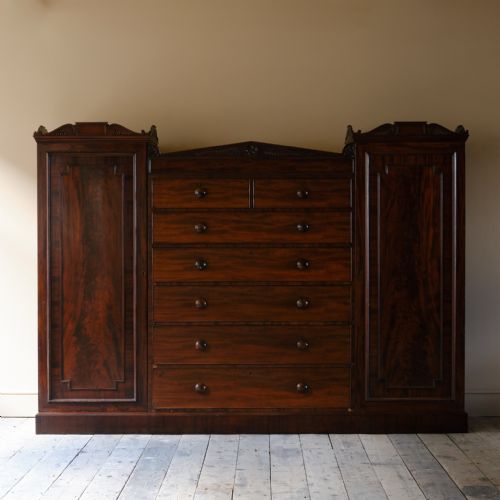


Regency Mahogany Armoire
A regency mahogany armoire offers substantial storage through timber of considerable depth and rich grain, built to anchor a formal bedroom.
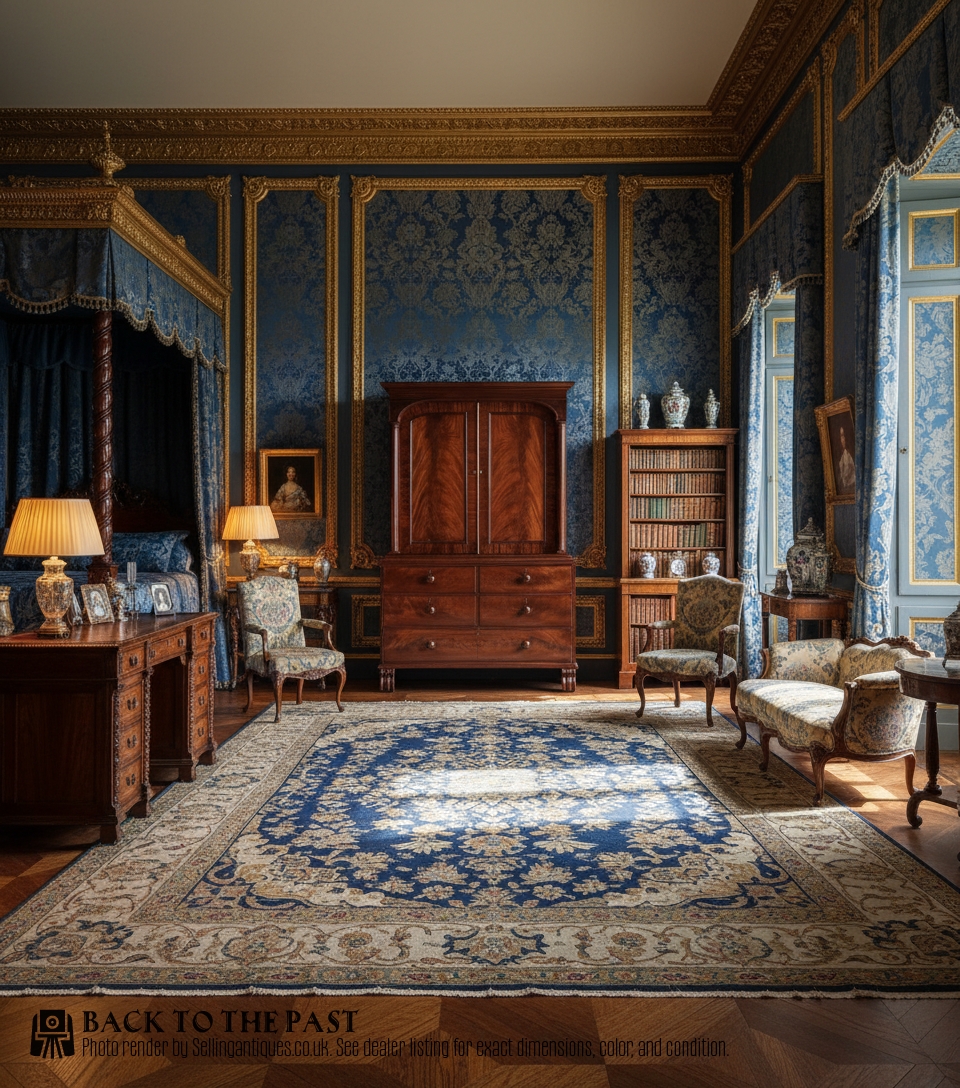
Understanding the regency mahogany armoire
A regency mahogany armoire encompasses large wardrobes, clothes presses, and linen cupboards from the nineteenth century, including pieces built in the Regency, William IV, and Victorian periods. When you search for a regency mahogany armoire, you encounter grand wardrobe forms designed to house garments and linen with architectural dignity.
The pieces listed on this page span the nineteenth century and incorporate styles from Regency to Edwardian revival interpretations. You see sturdy wooden cupboards alongside tall hanging wardrobes and multi-door presses intended for domestic service.
Materials and construction
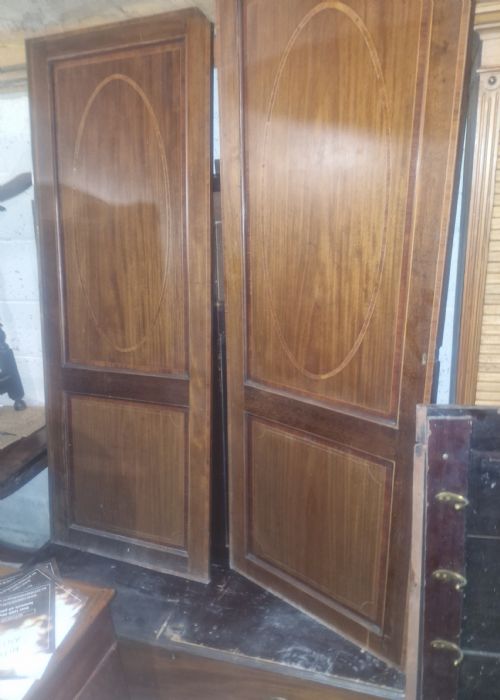
Cabinet makers utilised solid wood frames paired with flame mahogany and flame mahogany veneer surfaces to create striking visual movement across large door panels. The natural figure of the timber provides the primary decoration, often enhanced by book-matching techniques.
Brass fittings such as escutcheons, handles, and occasional campaign hardware secure the heavy timber doors and drawers. Joinery relies on traditional methods to support the substantial weight of mahogany and internal linen slides or hanging spaces.
Retail Price Guide 2026
Typical UK retail prices for regency mahogany armoire, calculated from the Sellingantiques database of over a million retail prices indexed since 2003. This retail price guide relies exclusively on Sellingantiques data; no external sources or auction records are used, so the figures do not describe the wider market.
Listings feature nineteen-century pieces alongside Edwardian revivals, utilising solid wood and flame mahogany veneer with brass hardware.
Assessing quality and craftsmanship
Quality rests primarily in the selection of the mahogany veneer and how evenly the flame figure is matched across the front panels. Superior examples display symmetrical grain patterns that command the eye without relying on excessive carved ornamentation.
The integrity of the internal fittings, from sliding linen trays to sturdy hanging rails, separates practical storage from grand architectural showpieces. Well-executed secondary timbers and precise joinery ensure the heavy doors hang true over decades of use.
The Regency Mahogany Armoire Glossary
- Armoire
- A tall cupboard or wardrobe used for storing clothing. This term often applies to large European or English freestanding wardrobe furniture.
- Flame mahogany
- A prized cut of mahogany timber showing a distinctive flickering flame-like grain pattern. Cabinet makers reserve this veneer for prominent exterior surfaces like doors.
- Linen press
- A tall piece of furniture featuring upper sliding trays for folded textiles and lower drawers for bulkier items. They evolved into general wardrobe storage during the nineteenth century.
- Veneer
- A thin layer of superior wood applied over a secondary timber base. This technique allows workshops to display dramatic grain figures efficiently.
- Regency
- An English design period spanning the early nineteenth century defined by classical restraint and architectural lines. Pieces from this era often feature clean geometric forms and restrained brass details.
Frequently Asked Questions
How do I use a linen press today?
The upper sliding trays serve well for folded jumpers, bedding, or accessories, while the lower drawers handle bulkier items.
Hanging wardrobe conversions also occur if you require full-length clothes storage inside the historic shell.
What is the difference between a press and a wardrobe?
A traditional press contains internal sliding shelves or trays designed specifically for folded textiles and linens.
A standard wardrobe focuses on vertical hanging space for coats and garments suspended from rails.
How do I care for mahogany timber?
Keep the wood away from direct heat sources and strong sunlight to prevent the polish from fading or the timber from splitting.
Apply natural beeswax occasionally to nourish the surface and maintain the warm lustre of the grain.
Are these wardrobes easy to dismantle?
Many large nineteenth-century cupboards separate into modular sections, including a cornice, base, and central carcase, to ease transport.
Check the individual construction carefully before attempting to move such heavy hardwood furniture.