

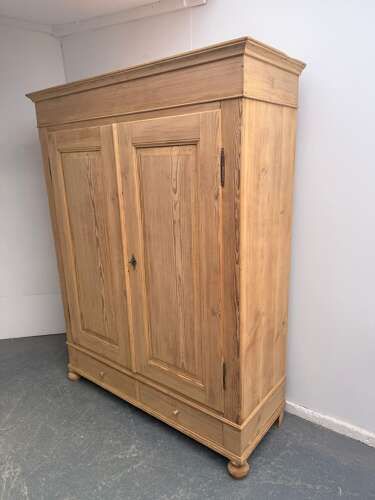
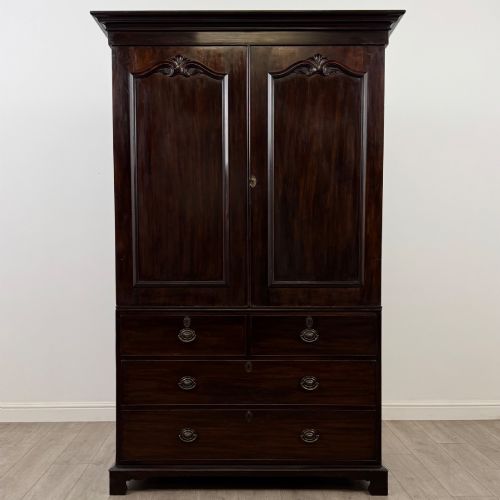
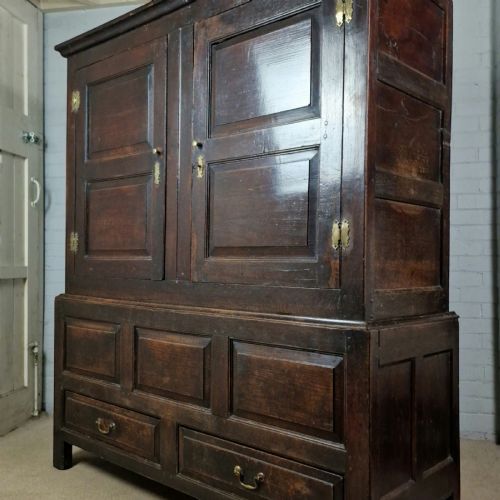
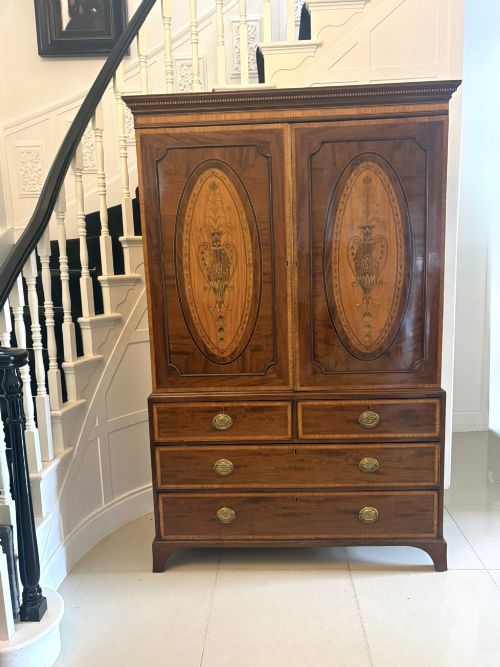
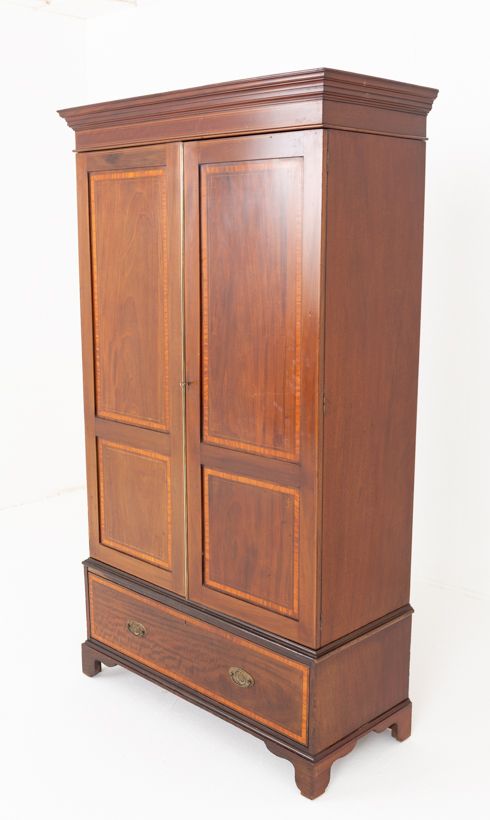
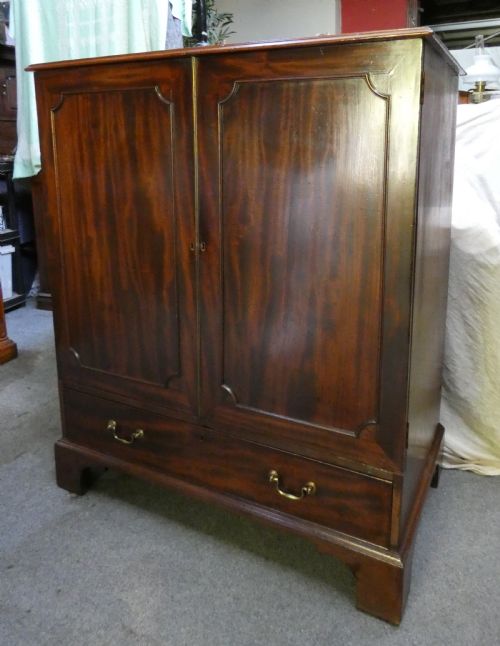
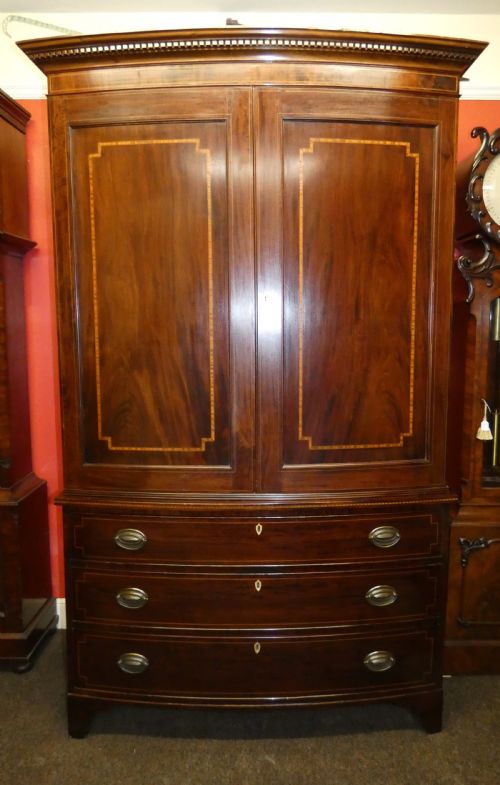
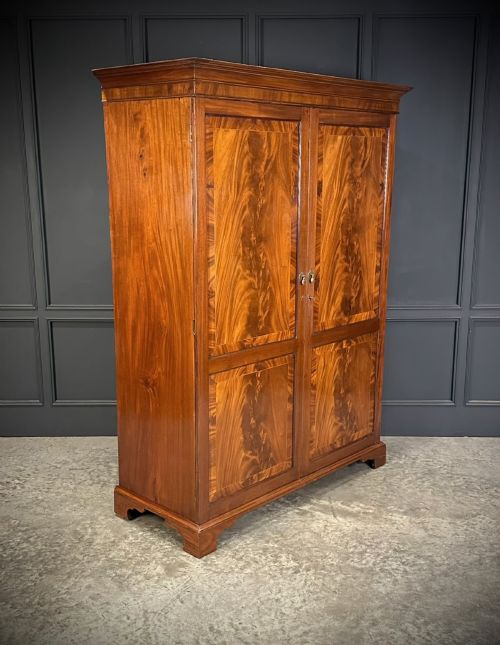
Georgian Clothes Cupboard
A georgian clothes cupboard offers generous interior storage hidden behind panelled doors, combining practical utility with refined cabinetmaking.

Georgian Clothes Cupboard
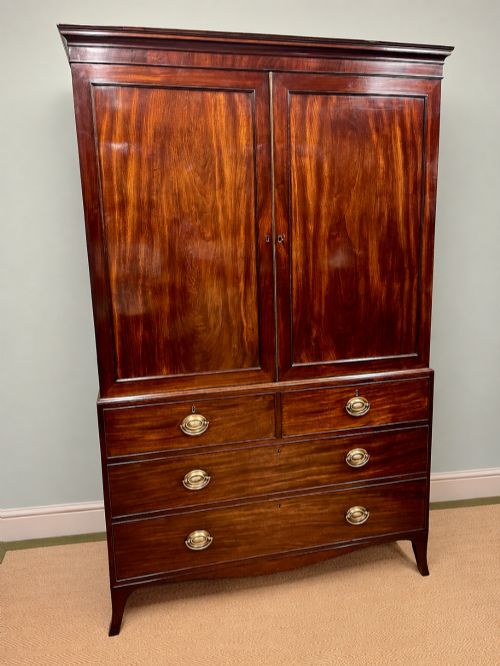
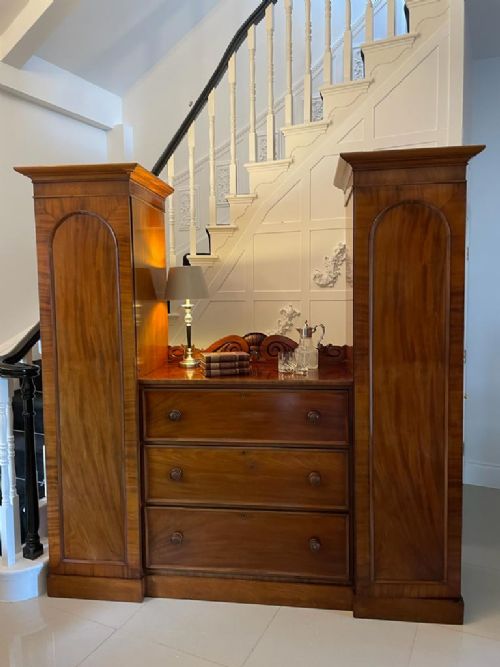
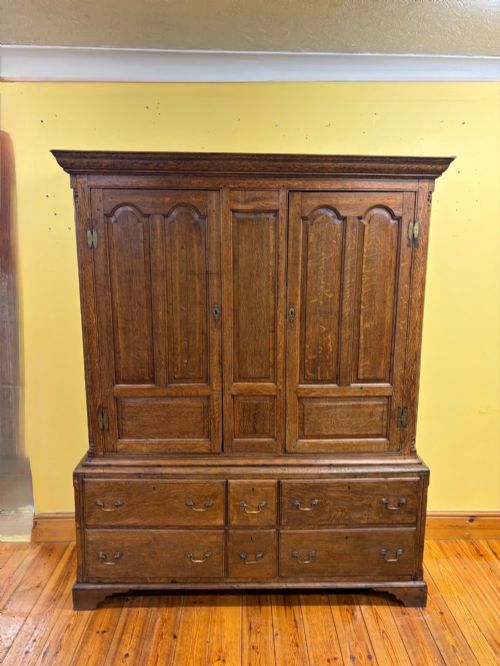
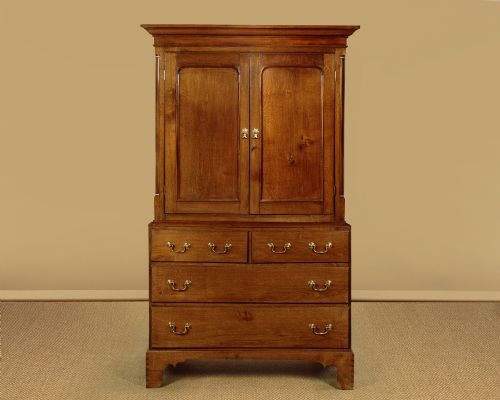
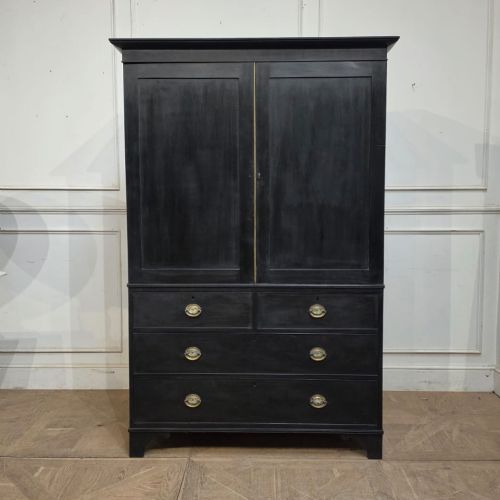
When you search for a georgian clothes cupboard, you encounter substantial freestanding storage furniture designed to hold linen and garments. These pieces span the eighteenth and early nineteenth centuries, emerging in both tall upright formats and lower dwarf proportions.
The evidence shows examples often catalogued as linen presses, wardrobes, or housekeepers cupboards. You will find items originating from regional workshops in Wales and the Channel Islands alongside pieces attributed to prominent makers.
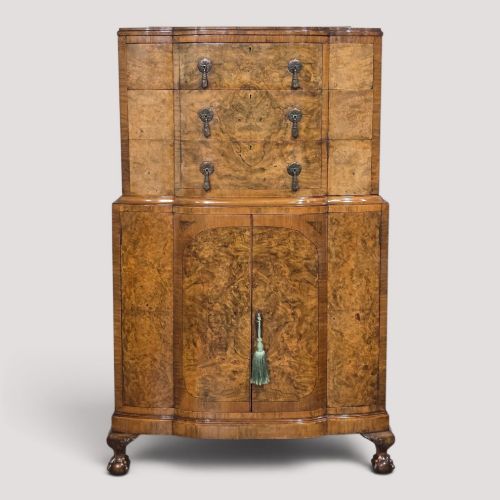
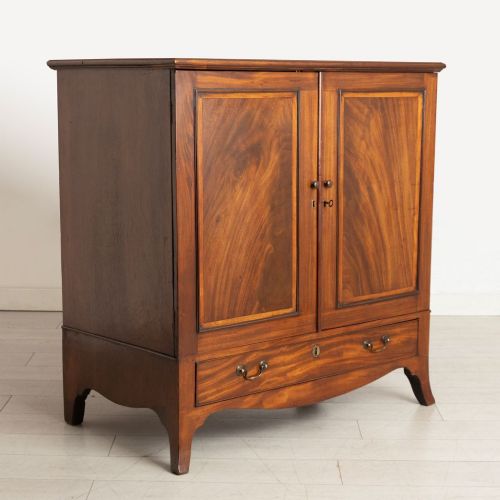
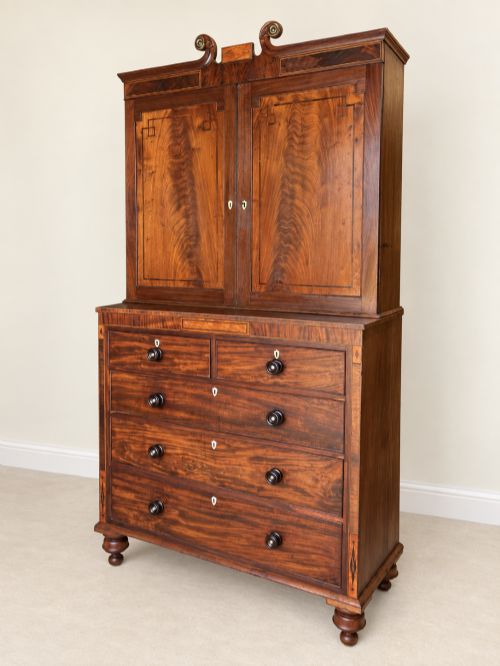
Formats range from straight fronts to bow fronts featuring flame mahogany veneers, swan-neck pediments, and satinwood inlay. Oak and mahogany serve as the primary woods across these domestic storage items.
Materials and construction methods
Cabinetmakers utilised solid timbers alongside veneered surfaces, applying flame mahogany and satinwood inlay to create figured grain patterns across large door panels. Brass hardware, including hinges and escutcheons, completed the assembly of these functional carcases.
Joinery techniques involved sturdy framing to support internal sliding trays or hanging space enclosed by heavy panelled doors. Pediments often incorporated intricate woodwork such as swan-neck profiles above the main storage body.
Georgian Clothes Cupboard Retail Price Guide 2026
Typical asking prices for georgian clothes cupboard among the pieces listed under this phrase on Sellingantiques today, from the lower quarter to the upper quarter. They describe what is for sale here now, not the wider market.
Listings demonstrate materials including mahogany, brass, satinwood, and oak across Georgian, Regency, and nineteenth-century periods.
Distinguishing quality in period storage
Quality rests in the selection of timber figures, where richly grained flame mahogany veneer or well-figured oak elevates a standard carcase into a refined decorative object. The crispness of satinwood inlay and the proportion of decorative mouldings also define the tier of craftsmanship.
Structural integrity depends on the retention of original brass fittings, internal sliding trays, and well-proportioned cornices like swan-neck pediments. Pieces retaining regional characteristics, such as specific Welsh or Channel Island proportions, demonstrate distinct regional traditions.
Gillows
The Georgian Clothes Cupboard Glossary
- Linen press
- A tall storage cabinet traditionally used for storing folded linen and clothes, typically featuring upper doors enclosing sliding trays above a base of drawers.
- Flame mahogany
- A highly figured veneer cut from where branches join the main tree trunk, creating a distinct flickering flame pattern.
- Swan-neck pediment
- A decorative architectural top above the cornice formed by two curved mouldings meeting in the centre.
- Satinwood inlay
- Contrasting pale timber inserted into the primary wood surface in decorative geometric or floral patterns.
- Dwarf clothes press
- A lower, more compact version of a standard clothes press, designed to sit comfortably in rooms with lower ceilings.
Georgian Clothes Cupboard: Frequently Asked Questions
What is a georgian clothes cupboard?
A georgian clothes cupboard is a large wooden storage piece built during the eighteenth or early nineteenth century. These cabinets were designed to hold garments and household linen behind panelled doors.
They frequently combine upper storage sections with lower drawer bases, functioning as precursors to the modern wardrobe.
How were linen presses used?
These cupboards were utilised primarily for storing household textiles, bed linens, and folded garments before modern wardrobe hanging space became standard. The internal sliding trays kept folded fabrics organised and accessible.
Lower drawers provided additional storage for smaller garments, keeping domestic linen clean and protected from dust.
Where were these cupboards made?
Pieces originate from various regions, including workshops in England, Wales, and the Channel Islands. Oak was frequently employed in regional Welsh workshops, whilst mahogany predominated in urban cabinetmaking.
Maker attribution sometimes points to established firms like Gillows during the Regency period.
How do I date a georgian clothes cupboard?
Dating relies on observing wood choices, construction methods, and stylistic details such as swan-neck pediments or satinwood inlay. Eighteenth-century examples often feature solid oak or early mahogany construction.
Later pieces from around eighteen hundred to eighteen thirty frequently incorporate bow fronts and flame mahogany veneers.