
Vintage Mahogany Armoire
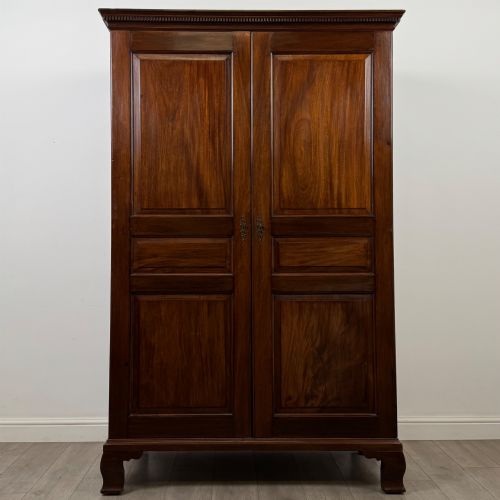
A vintage mahogany armoire is a substantial storage piece built to hold linen or garments, bringing deep timber tone and refined presence to a bedroom.
Vintage Mahogany Armoire
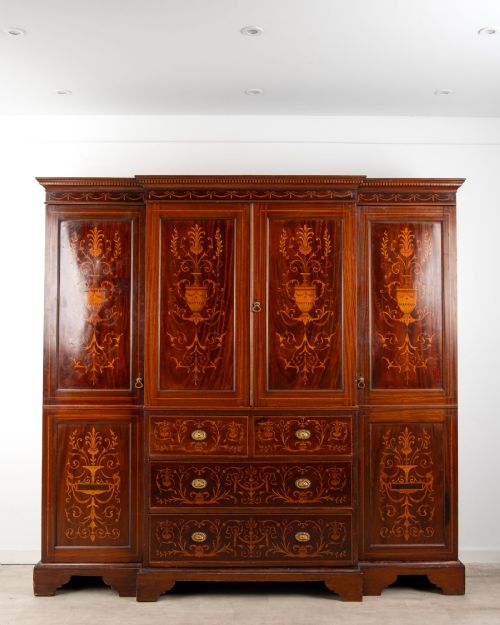
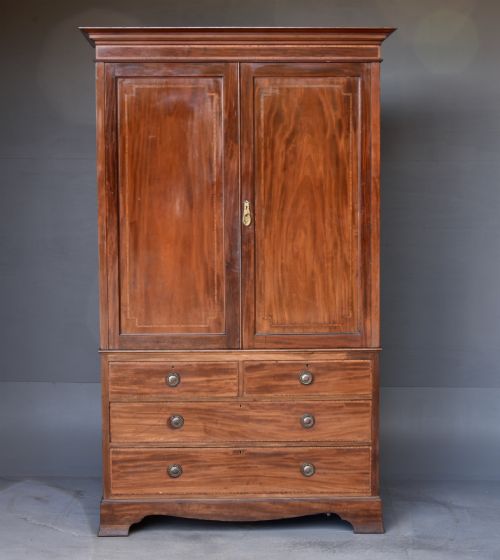
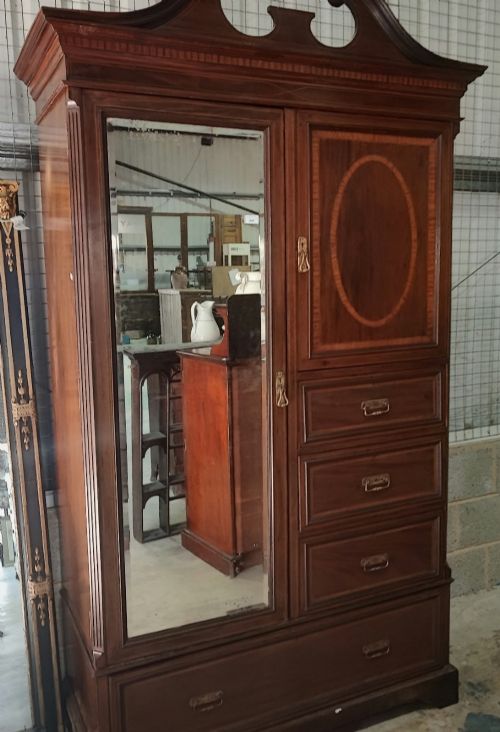
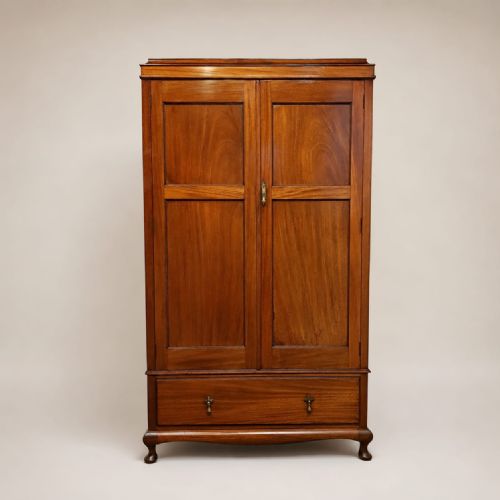
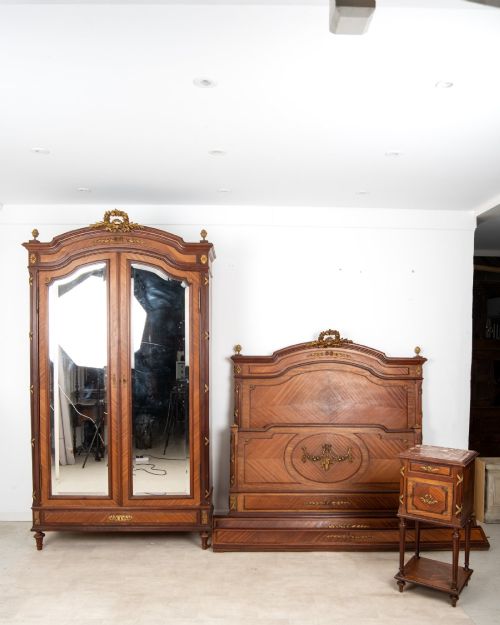
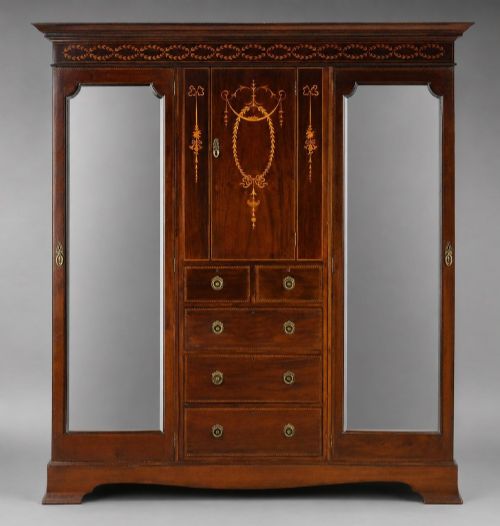
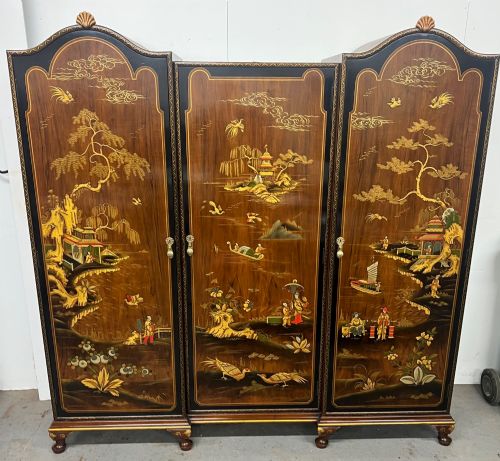
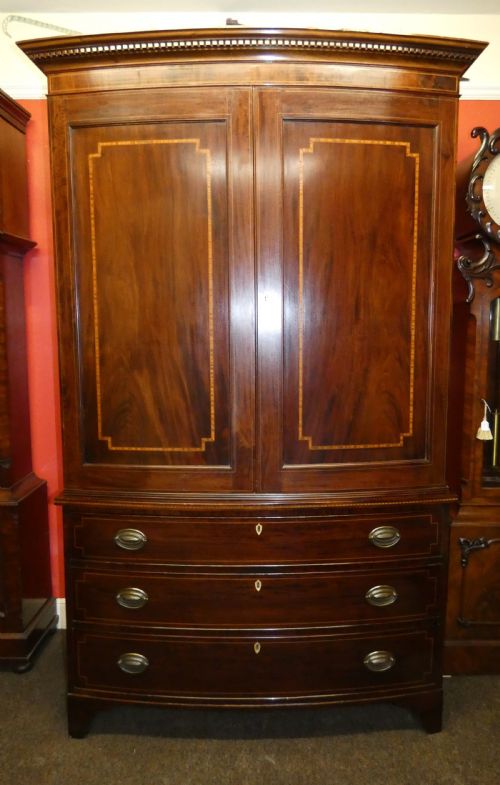
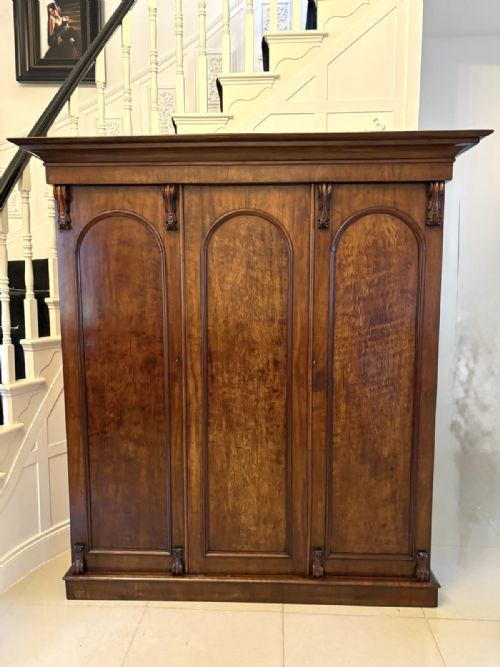
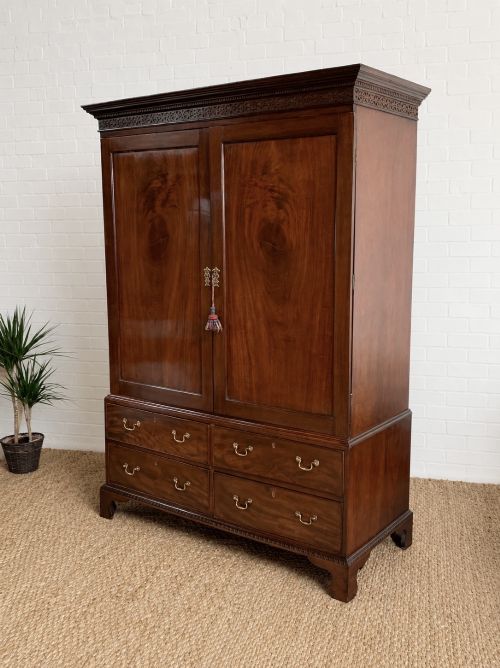
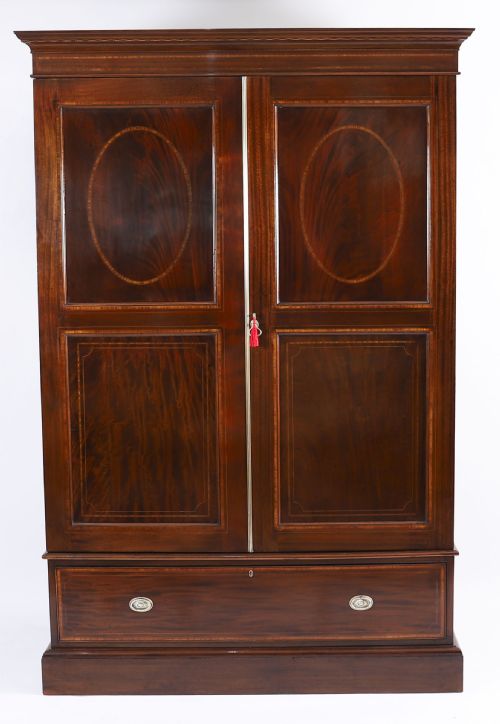
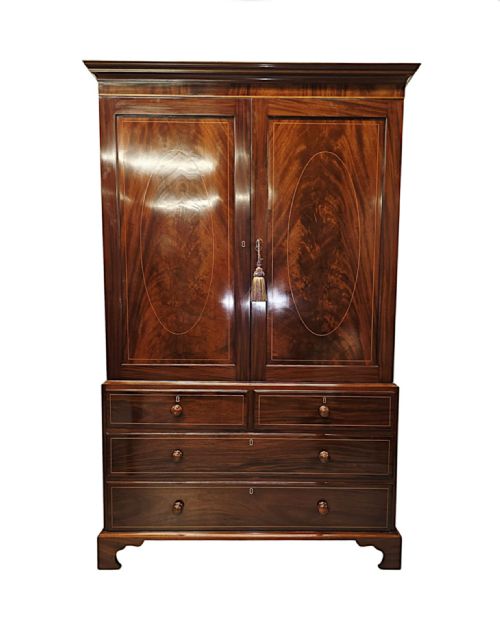
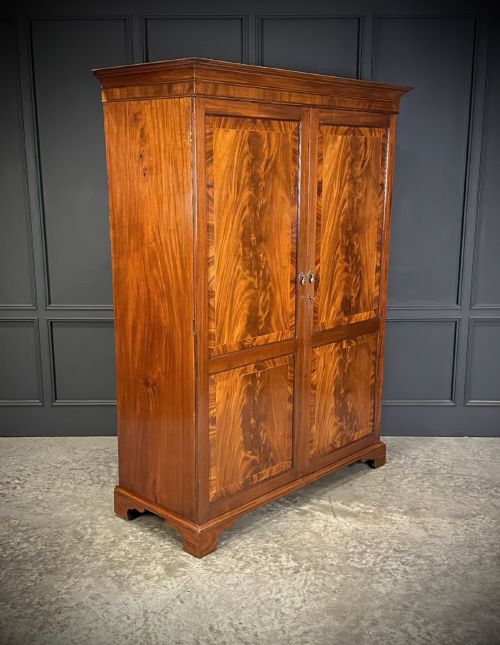
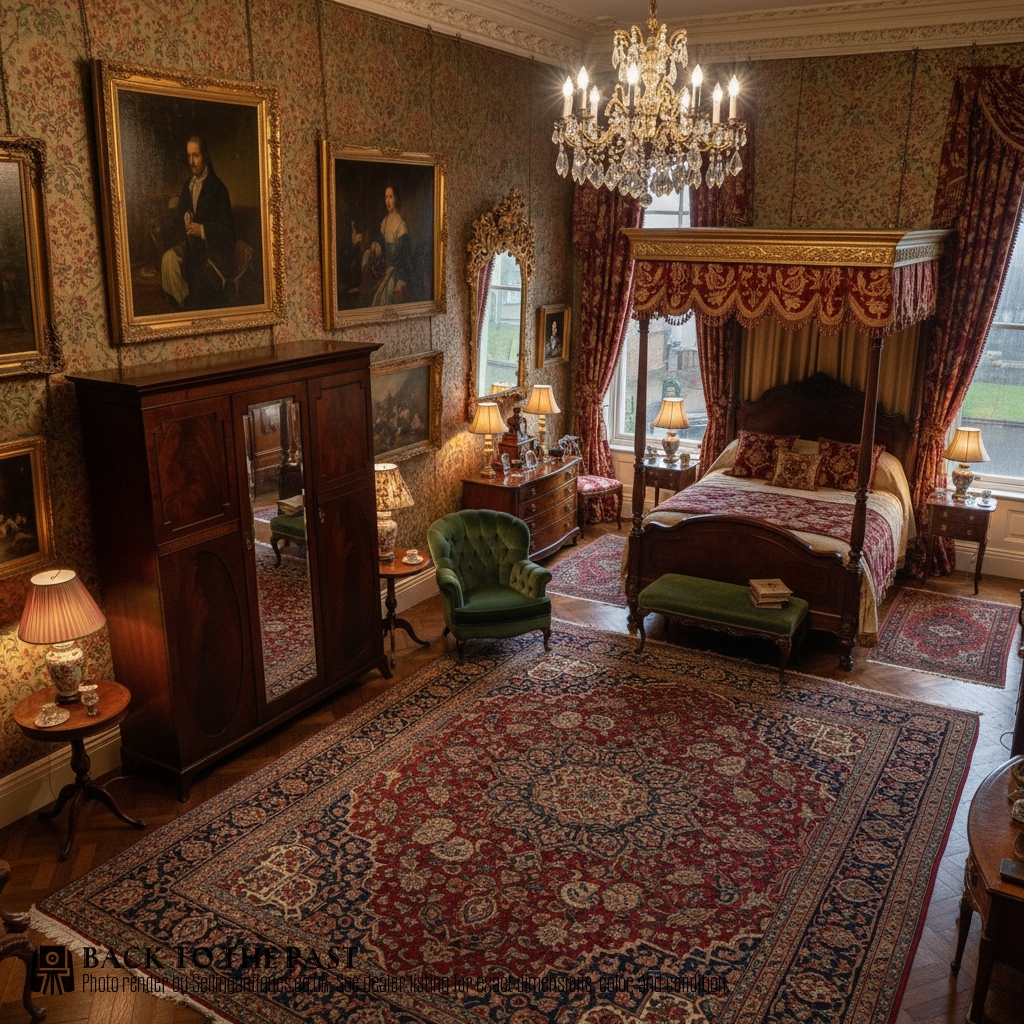
A vintage mahogany armoire encompasses tall wardrobes, linen presses, and compactums produced across the eighteenth, nineteenth, and early twentieth centuries. Pieces range from straightforward Georgian and Victorian double wardrobes to elaborate Edwardian inlaid designs and French revival armoires.
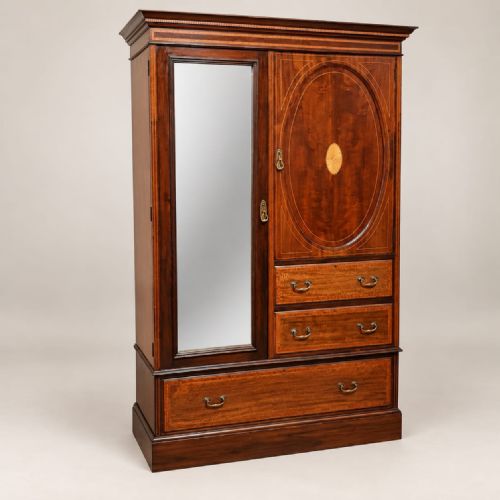
Buyers meet forms constructed as hanging wardrobes, housekeepers cupboards, and combination units featuring internal drawers. The selection spans English cabinetmaking traditions alongside French armoires outfitted with mirror glass and ormolu mounts.
How they were made
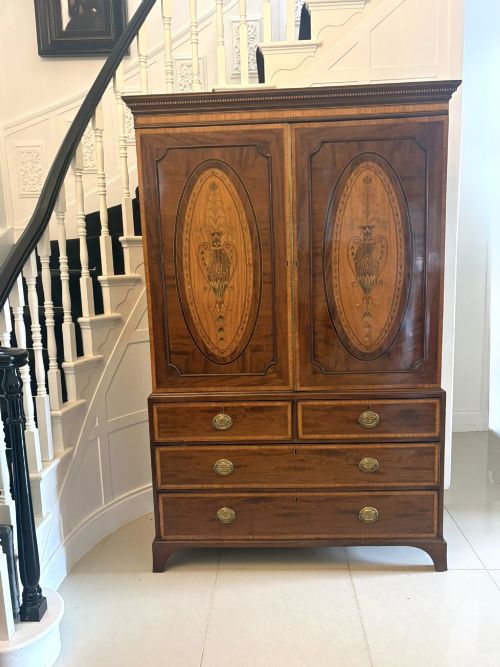
Construction relies heavily on solid mahogany and flame mahogany veneer, often enhanced by satinwood inlay, brass hardware, and glass or mirror panels. Cabinetmakers shaped cornices with blind fretwork and utilised oak for internal secondary framing.
French pieces incorporate gilt bronze ormolu mounts, while English workshops built modular wardrobes and linen presses designed to break down into sections for transport.
Vintage Mahogany Armoire Retail Price Guide 2026
Typical asking prices for vintage mahogany armoire among the pieces listed under this phrase on Sellingantiques today, from the lower quarter to the upper quarter. They describe what is for sale here now, not the wider market.
Housekeepers once stored folded linens on interior sliding trays hidden behind grand mahogany doors, keeping textiles crisp before the era of modern closets.
What varies in quality
The division between standard and superior pieces rests on the choice of timber and the precision of the cabinetwork. Figured mahogany and balanced flame veneer demonstrate careful material selection, while crisp satinwood inlay and detailed carving elevate the standard of a wardrobe.
Internal configuration also separates basic cupboards from high-end compactums and linen presses fitted with multiple sliding trays and graduated drawers. The integration of original brass hardware and well-fitted doors indicates superior workshop output.

maples & co·Edwards and Roberts·Druce & Co.·Heals
The Vintage Mahogany Armoire Glossary
- Armoire
- A large upright cupboard or wardrobe used primarily for hanging clothes and storing garments. These pieces often feature double doors enclosing hanging space or sliding shelves.
- Linen Press
- A tall storage cabinet consisting of an upper section with sliding trays for folded textiles and a lower section with graduated drawers. Georgian and Victorian examples frequently hide linen storage behind panelled doors.
- Compactum
- A multi-functional wardrobe combining hanging compartments, drawers, and linen shelves within a single unified piece. Edwardian makers produced these efficient units for comprehensive bedroom storage.
- Flame Mahogany
- A wood veneer cut from the fork of the mahogany tree to create a distinctive, flickering flame-like pattern. Makers selected this figured grain for prominent door panels and drawer fronts.
- Blind Fretwork
- Carved ornamentation applied to cornices or friezes that appears pierced or openwork but is set against a solid background. This decorative technique appears on eighteenth and nineteenth-century English case pieces.
Vintage Mahogany Armoire: Frequently Asked Questions
How do I assemble an armoire?
Many large nineteenth-century wardrobes and linen presses are modular pieces built to dismantle into a cornice, base, sides, and central doors. Assembly typically involves slotting or bolting the structural panels together before hanging the doors.
Working with an assistant ensures the heavy timber components align correctly without damaging the joints or original mouldings during setup.
What is a compactum wardrobe?
A compactum is a multi-purpose storage unit that integrates hanging space, linen drawers, and shelving into one large piece of bedroom furniture. Edwardian and Victorian makers designed them to hold an entire wardrobe within a single footprint.
These pieces often feature central mirrored doors flanked by linen presses on one side and a tall hanging cupboard on the other.
How do I care for mahogany?
Maintain mahogany surfaces by keeping them away from direct sunlight and consistent heat sources that can dry out the timber and veneer. Dust regularly with a soft, dry cloth and avoid silicone-based polishes.
Applying traditional beeswax occasionally helps nourish the wood and preserve the depth of the mahogany grain over time.