

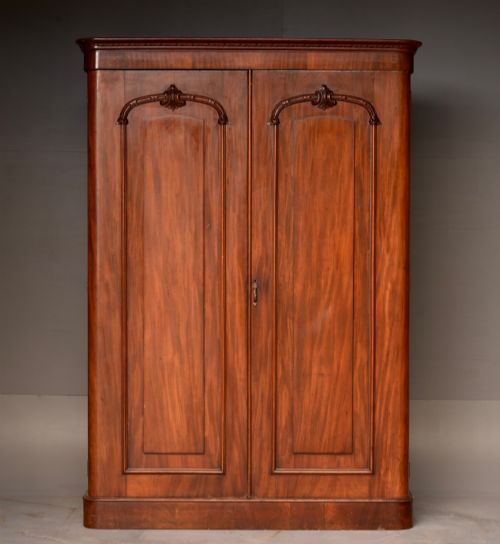
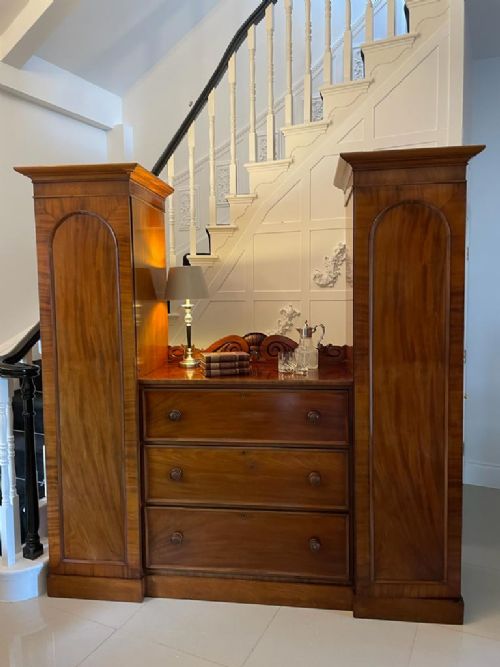
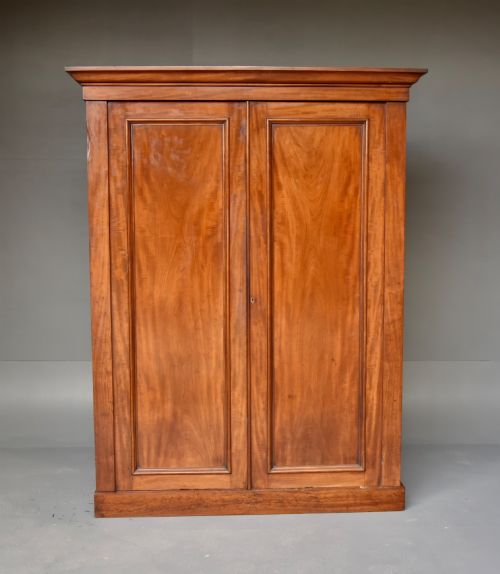
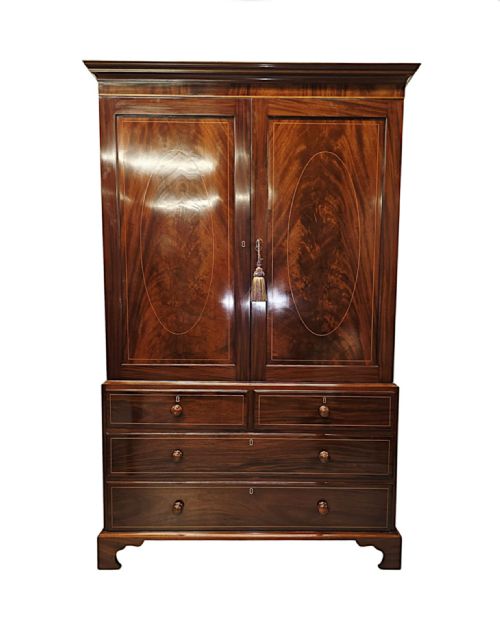

19th Century Mahogany Wardrobe
A 19th century mahogany wardrobe brings substantial timber and architectural presence to a bedroom, offering deep hanging space and internal drawers.
19th Century Mahogany Wardrobe
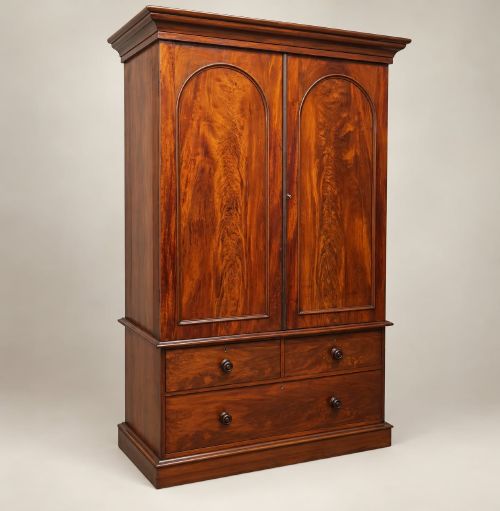
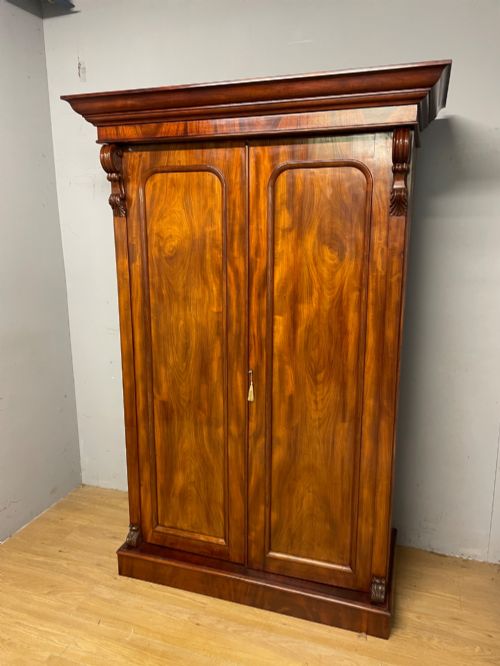
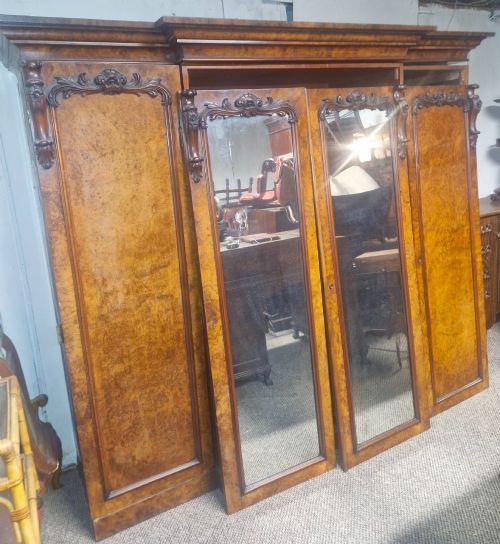
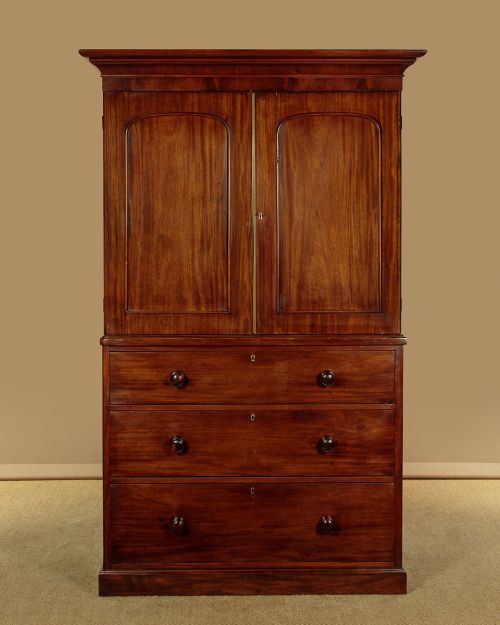
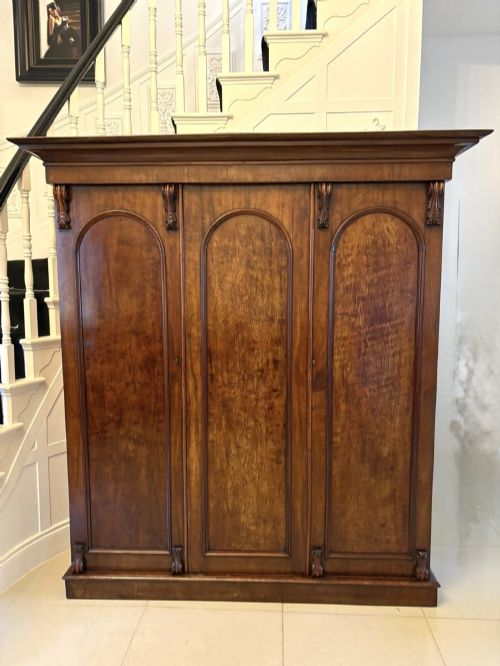
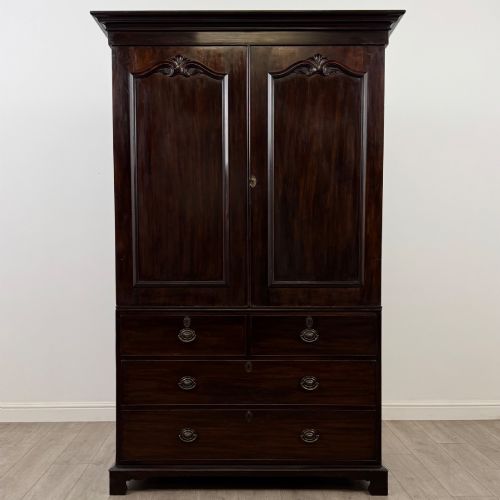
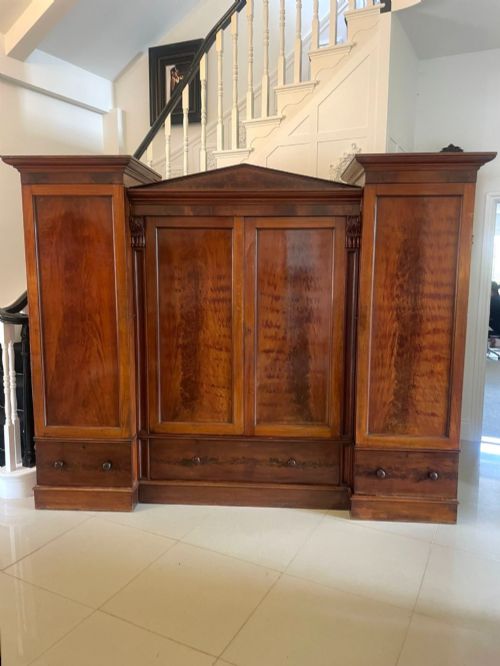
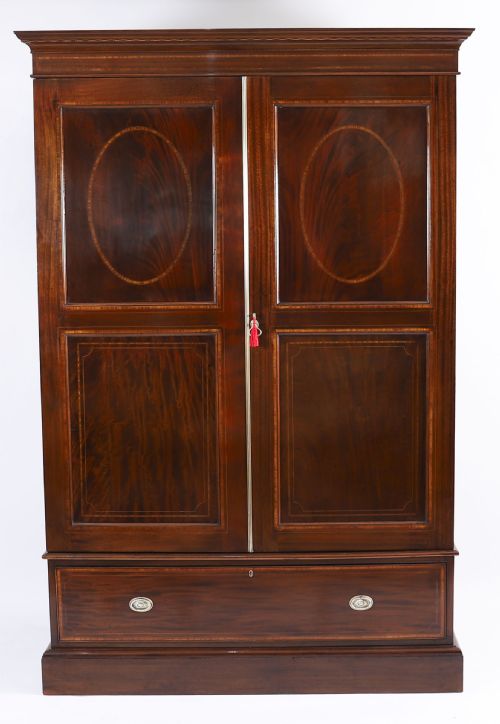
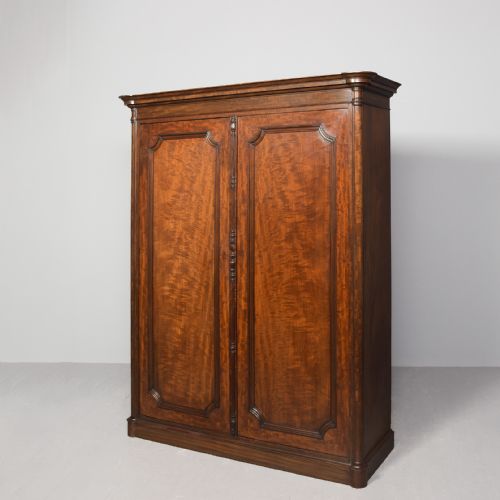
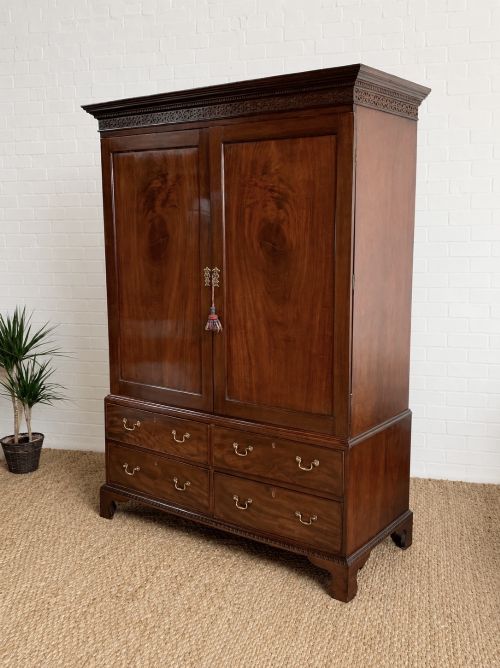
A 19th century mahogany wardrobe encompasses tall freestanding timber furniture designed for garment storage, appearing in forms ranging from simple single-door cupboards to large breakfront and four-door configurations. Buyers frequently encounter Victorian double wardrobes and tall linen presses featuring internal sliding trays or banks of drawers beneath hanging sections.
The selection extends across stylistic periods including Regency, William IV, and Georgian influences, alongside compactum models designed with specialised internal compartments. Regional variations such as Channel Island pieces and continental armoires also emerge among the broader selection of mahogany storage pieces.
Pieces span various heights and widths, accommodating both spacious country house bedrooms and more modest domestic interiors through dwarf and corner variations. Linen presses combine upper hanging or shelving space with lower chest configurations, functioning as versatile storage furniture.
How They Were Made
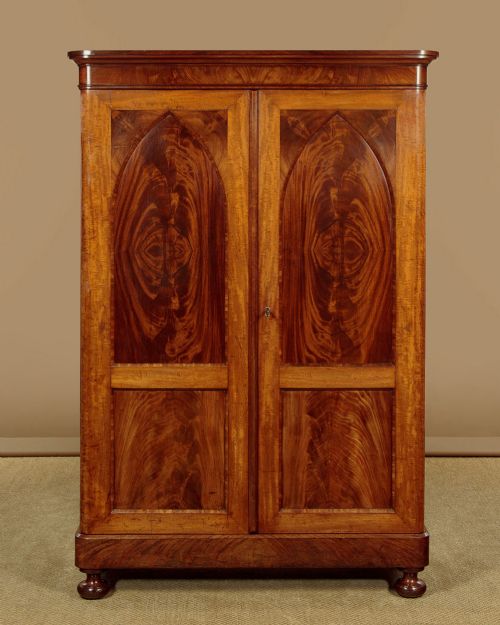
Cabinet makers utilised solid mahogany and flame mahogany veneers applied to secondary woods such as oak, creating figured grain patterns on primary display surfaces. Crossbanding in contrasting timbers like satinwood and rosewood often bordered door panels and cornices.
Internal construction relied on solid timber drawer linings, hand-cut dovetail joints, and brass hardware for locks and hanging fittings. Decorative elements incorporated blind fretwork cornices, marquetry inlay, and carved pilasters reflecting Georgian and Victorian design idioms.
19th Century Mahogany Wardrobe Retail Price Guide 2026
Typical asking prices for 19th century mahogany wardrobe among the pieces listed under this phrase on Sellingantiques today, from the lower quarter to the upper quarter. They describe what is for sale here now, not the wider market.
Listings feature mahogany, flame mahogany veneer, satinwood, oak, and boxwood across multiple 19th-century periods.
What Varies in Quality
Depth of figuring in the mahogany veneer dictates visual impact, with symmetrical flame patterns commanding greater attention than plain timber surfaces. The choice of secondary woods and the precision of boxwood or satinwood inlay reveal the underlying standard of workshop execution.
Proportion and scale separate standard double doors from monumental breakfront and four-door constructions equipped with architectural cornices and panelled pilasters. Original brass fittings, well-executed internal compartmentalisation, and integrated drawer arrangements elevate the structural complexity of individual pieces.
S & H Jewell·Heals
The 19th Century Mahogany Wardrobe Glossary
- Flame mahogany
- A veneer cut from timber where the grain creates a flickering, flame-like pattern. This figured wood was prized for central door panels.
- Compactum
- A fitted wardrobe designed with internal partitions, shelves, and drawers alongside hanging space. These units provide multi-purpose storage within a single footprint.
- Linen press
- A tall piece featuring upper doors enclosing sliding shelves or trays above a base of lower drawers. Originally built for storing flat textiles.
- Breakfront
- A cabinet design where the central section projects forward from the flanking wings. This architectural arrangement creates depth and shadow across large multi-door wardrobes.
- Crossbanding
- A decorative border technique where thin strips of veneer are laid with the grain running perpendicular to the surrounding panel. Timbers like satinwood and rosewood were utilised for contrast.
- Blind fretwork
- Carved ornamentation applied to flat surfaces to imitate pierced fretwork without cutting through the wood. It often appears along cornices on Georgian-style pieces.
19th Century Mahogany Wardrobe: Frequently Asked Questions
How do I dismantle a large wardrobe?
Most 19th century mahogany wardrobes dismantle into separate modular components including the cornice, base, side panels, and doors. This modular construction allowed historical craftsmen to transport large pieces up staircases and through domestic doorways.
Securing internal bolts and peg joints requires methodical disassembly to protect the structural integrity of the timber framing and veneered surfaces.
What is a compactum wardrobe?
A compactum combines hanging compartments with internal banks of drawers, sliding trays, and shoe racks within one unified piece of furniture. These designs emerged to maximise storage efficiency in Victorian bedrooms.
The specialised internal configuration provides dedicated spaces for folded garments, accessories, and outerwear alongside standard coat hanging.
How do I distinguish a linen press from a wardrobe?
A linen press contains shallow sliding shelves or trays behind its upper doors, historically designed for flat textiles rather than hanging garments. Wardrobes feature deep vertical hanging space for coats and dresses.
Many examples combine both functions by pairing upper linen trays with lower drawer banks or dedicated hanging sections.
Where should I place a heavy mahogany wardrobe?
Position the piece against a stable interior wall away from direct sunlight and heat sources to prevent the mahogany timber and veneers from drying out. Adequate clearance ensures doors swing fully and internal drawers operate without obstruction.
Checking floor levelness is essential before loading heavy garments into the hanging sections to keep the frame square.