
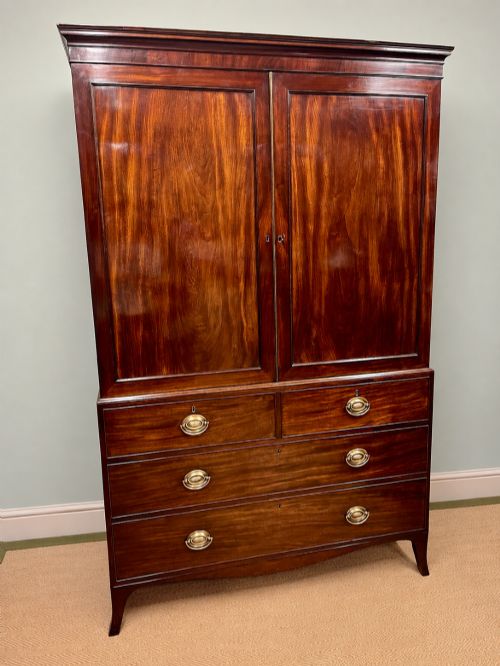
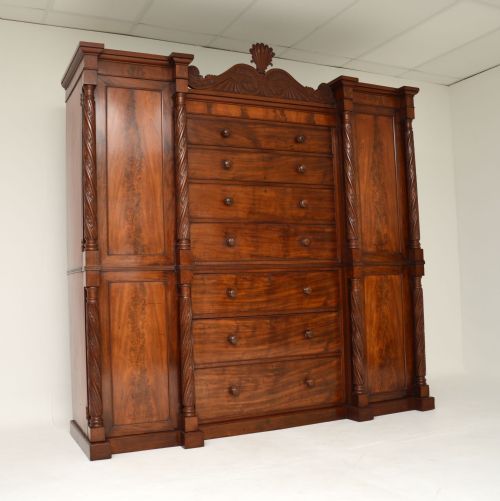
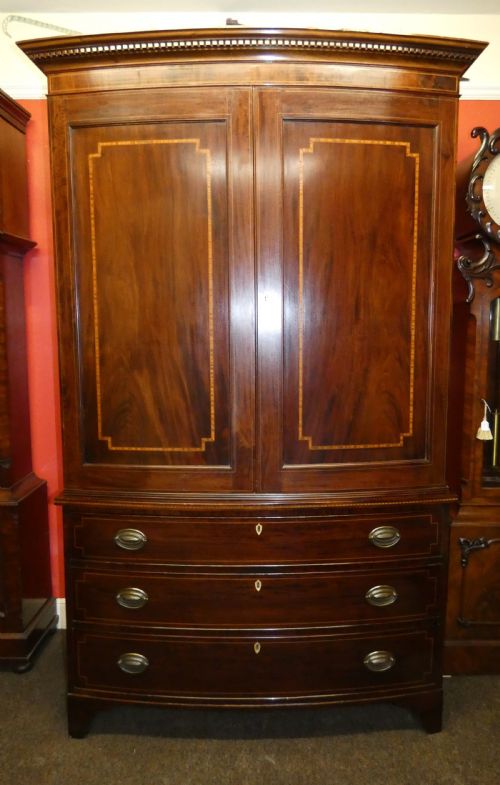
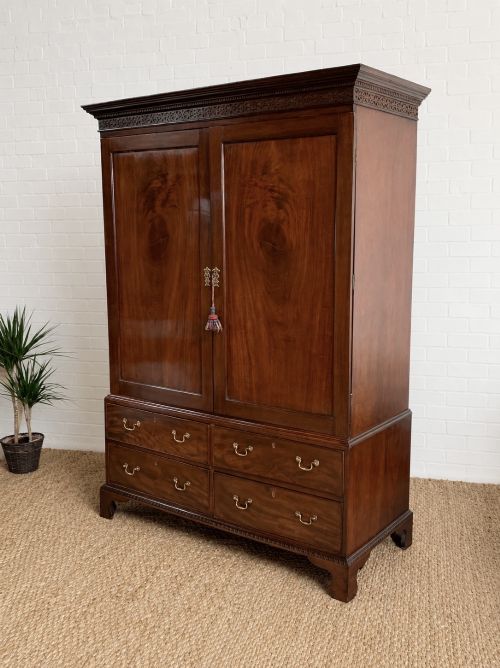
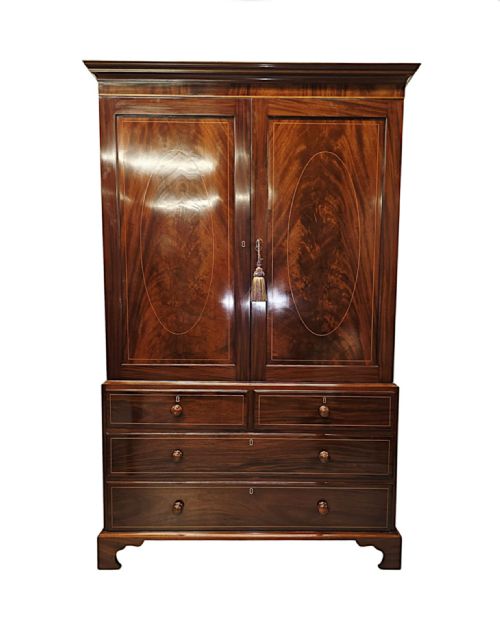
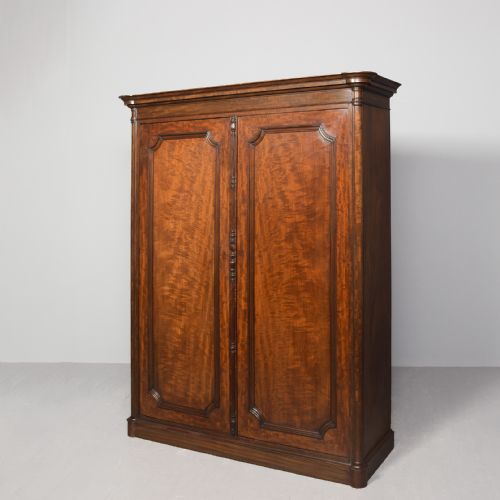
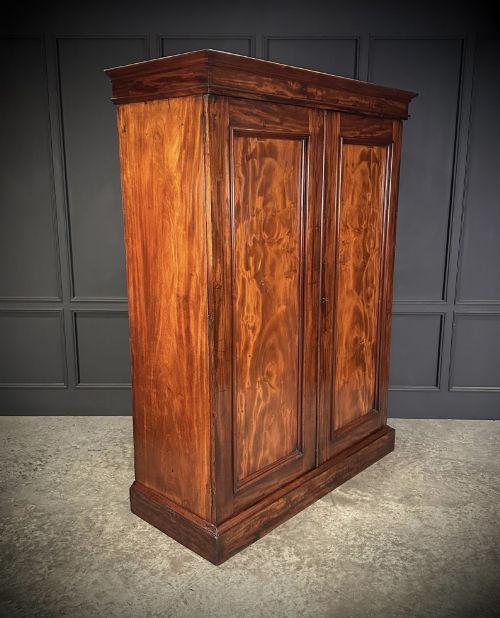
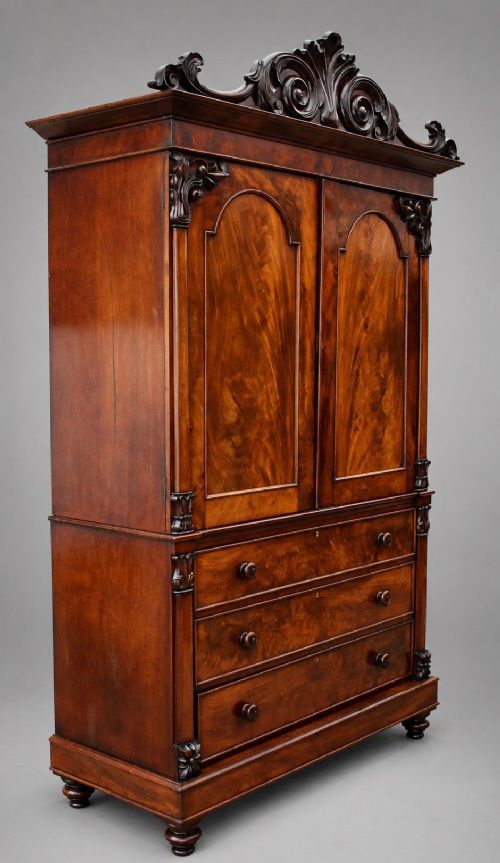
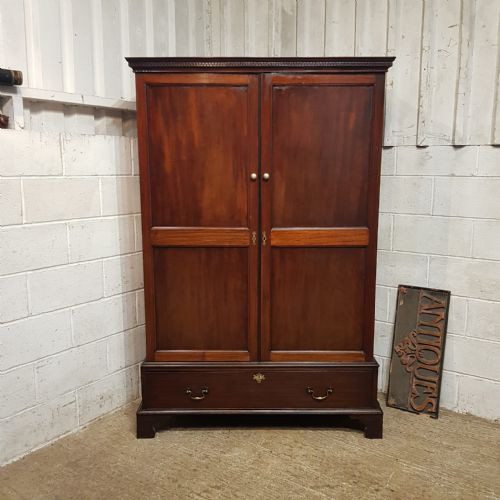



Regency Mahogany Wardrobe
These large storage pieces offer substantial hanging space and shelving, bringing architectural presence and rich grain patterns into a bedroom.
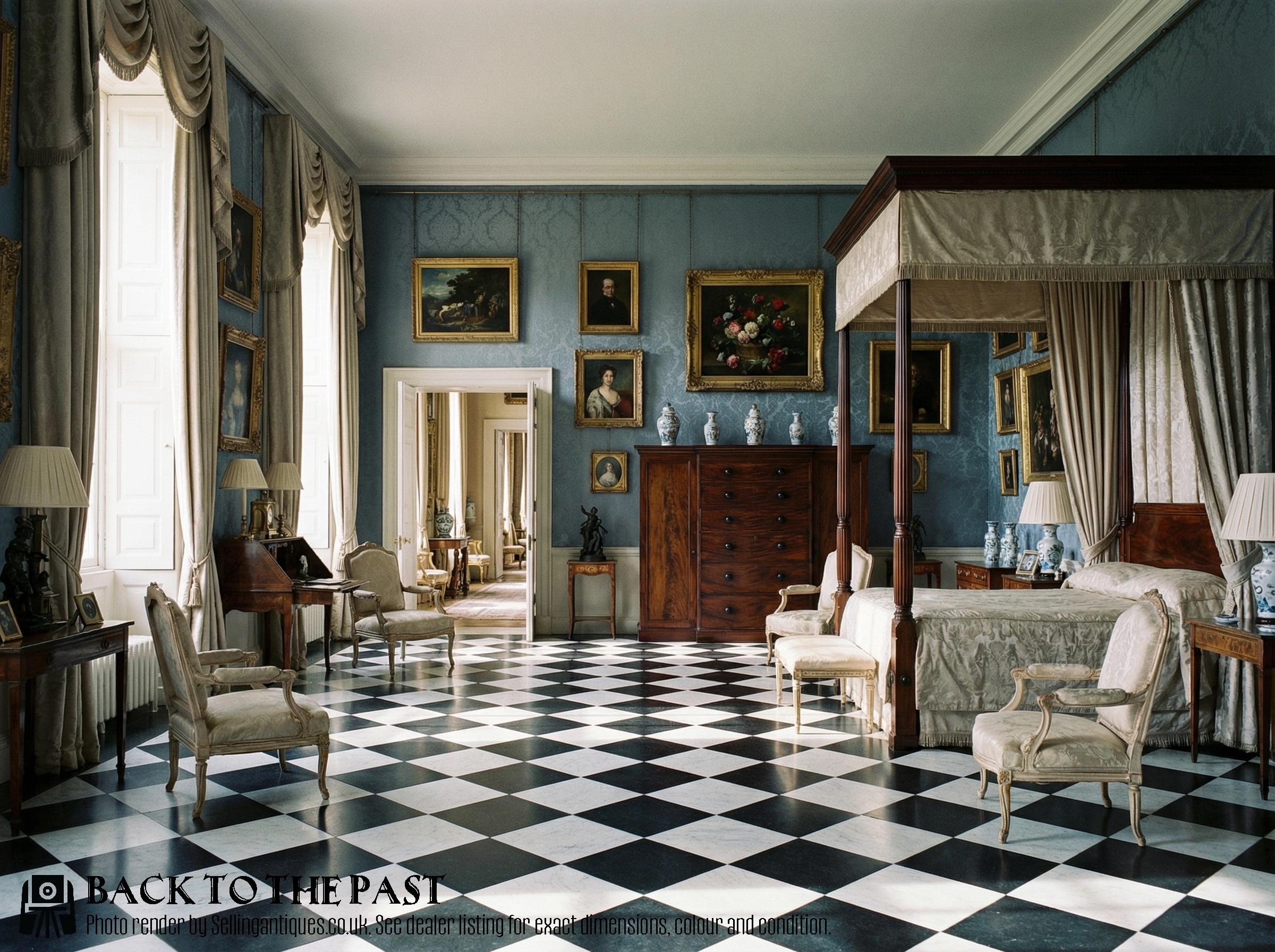
Forms and periods
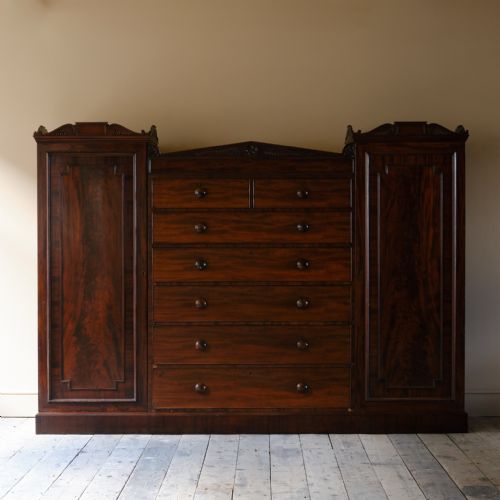
A regency mahogany wardrobe encompasses grand multi-door breakfront formats, compactum designs, and tall double configurations created across the nineteenth century. Makers of the period drew on Georgian traditions while developing large fitted storage pieces for domestic interiors.
Buyers meet variations ranging from plain double door carcases to elaborate breakfront examples with linen press sections and interior drawers. Pieces span the Georgian era through to later nineteenth century interpretations and Edwardian revivals.
Origins include English workshops, Irish pieces, and regional items such as Channel Island hall wardrobes. These storage items combine hanging compartments with sliding trays or linen slides behind panelled doors.
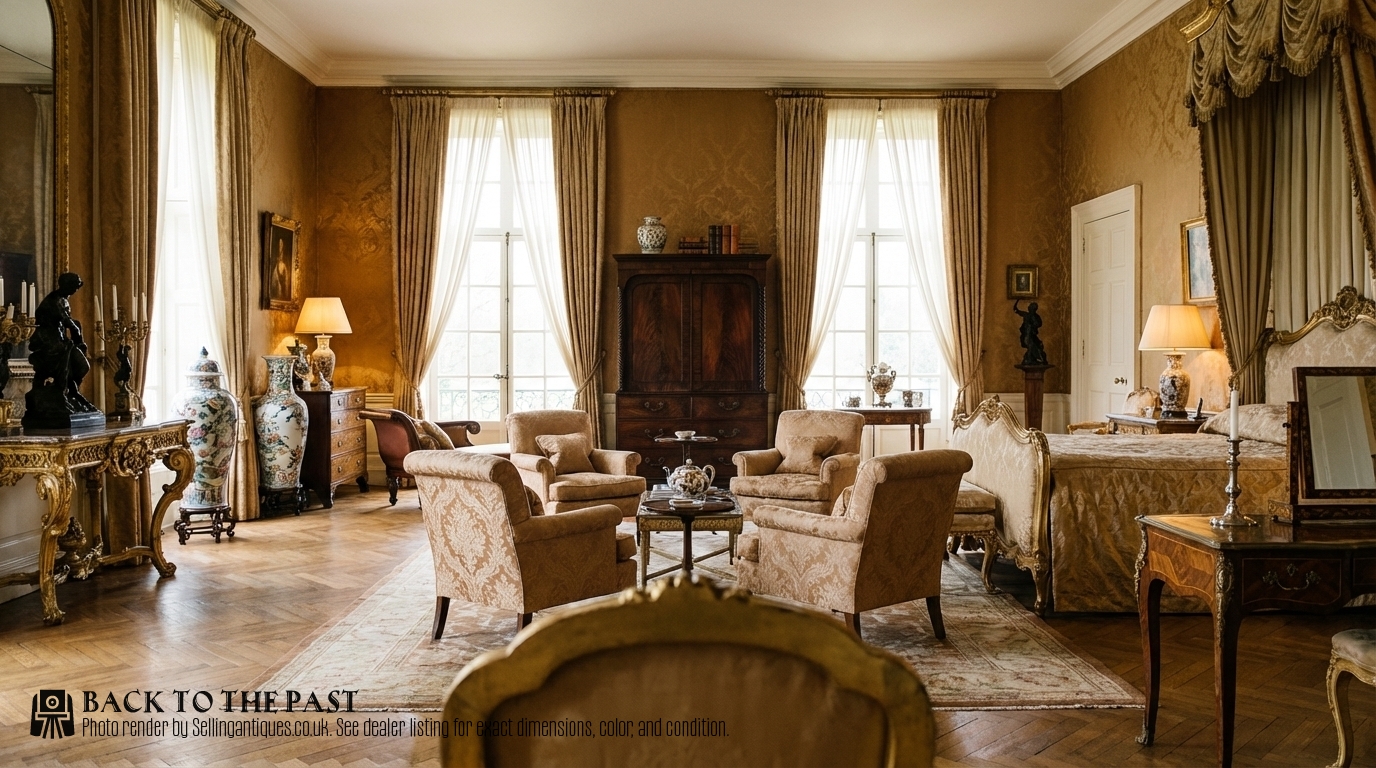
Materials and construction
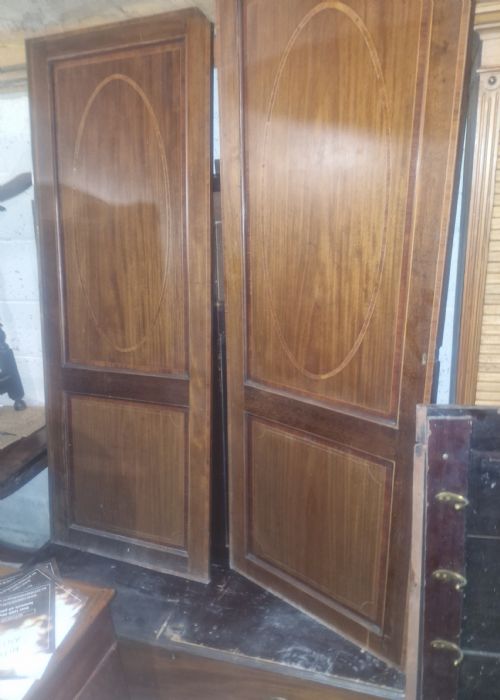
Cabinet makers utilised solid mahogany and pine carcases overlaid with flame mahogany veneer, curl mahogany, and figured mahogany. Selected timber sections create dramatic grain patterns across large door surfaces.
Inlay work incorporating satinwood details appears on specific revival and regional examples. Brass mounts, campaign fittings, and escutcheons accent the timber structure.
Retail Price Guide 2026
Typical UK retail prices for regency mahogany wardrobe, calculated from the Sellingantiques database of over a million retail prices indexed since 2003. This retail price guide relies exclusively on Sellingantiques data; no external sources or auction records are used, so the figures do not describe the wider market.
Listings feature eighteenth and nineteenth century periods alongside Edwardian revivals, constructed from mahogany, flame mahogany, pine, satinwood, and brass.
Craftsmanship and proportion
Higher tier examples display continuous grain matching across multi-door breakfront layouts and sophisticated interior drawer configurations. Lesser pieces rely on simpler timber selections and standard double door carcases.
Proportion and architectural detailing distinguish finer cabinets, particularly those featuring well-executed cornice mouldings and original brass hardware. The integration of linen press sections with deep internal trays demonstrates superior cabinet work.
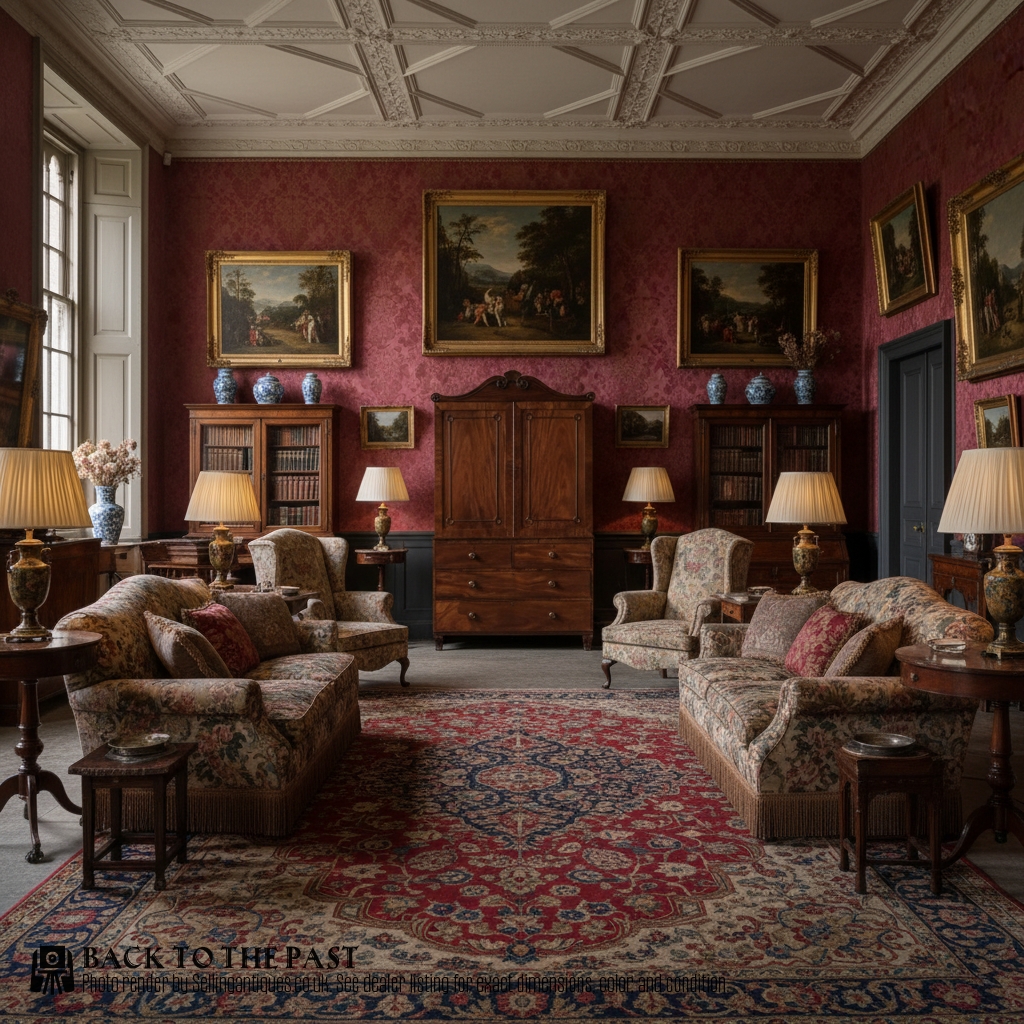
S & H Jewell·Maple & Co.
The Regency Mahogany Wardrobe Glossary
- Breakfront
- A cabinet design where the central section projects forward from the flanking wings. This format provides depth for large wardrobe interiors.
- Compactum
- A multi-functional wardrobe combining hanging space with linen slides, small drawers, and compartments. These pieces maximise interior storage capacity.
- Linen Press
- A tall storage piece featuring upper sliding trays enclosed by doors, positioned above chest drawers. Originally designed for storing household linens before hanging garments became common.
- Flame Mahogany
- Timber veneer cut at an angle to the branch junction to produce a distinctive flickering flame pattern. Cabinet makers used this figure on prominent exterior panels.
- Satinwood
- A pale yellow exotic timber used for contrasting stringing and inlay details on cabinet doors and cornices.
Frequently Asked Questions
How do I assemble a breakfront wardrobe?
These large cabinets typically dismantle into multiple sections including a cornice, a base plinth, and separate flanking wardrobes or central carcases. Assembly requires aligning the modular sections and securing them together before fitting the heavy doors.
Professional installation helps ensure the massive timber frames sit level on uneven floors, which prevents the tall doors from dropping or sticking in their frames.
What is the difference between a wardrobe and a linen press?
A standard wardrobe provides full height vertical hanging space behind large panelled doors for garments on hangers. A linen press incorporates internal sliding wooden trays or shelves in the upper section.
While many linen press cupboards were later converted to hanging use by removing internal trays, original examples retain their shallow sliding storage compartments.
How do I care for flame mahogany veneer?
Keep these timber surfaces away from direct sunlight and heat sources to prevent the polished finish from fading and the underlying veneer from lifting. Apply a quality beeswax periodically to maintain the lustre of the mahogany.
Avoid placing damp items or excessive weight on the polished top surfaces of the cabinet carcase.
Can these wardrobes fit in modern bedrooms?
These storage pieces possess significant physical depth and height, requiring careful measurement of ceiling clearance and access stairwells before purchase. Many historic properties accommodated large proportions, whereas contemporary rooms need exact spatial planning.
Modular breakfront and compactum designs offer flexible internal configurations once positioned inside the room.