


Victorian Stoneware Pitcher
A victorian stoneware pitcher brings robust clay and salt glaze into daily service, prized for tactile relief moulding and hand-incised decoration.
Victorian Stoneware Pitcher
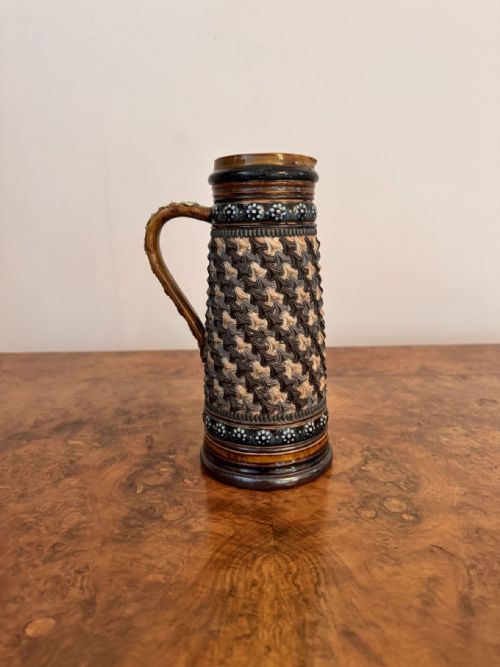
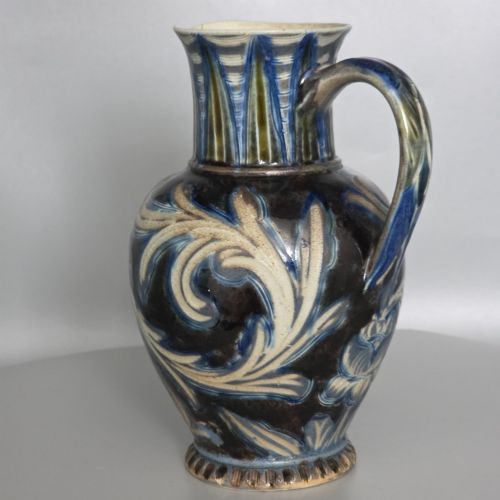
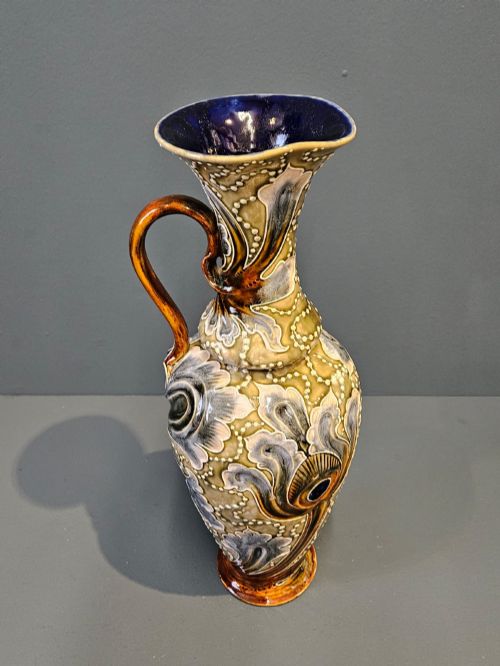
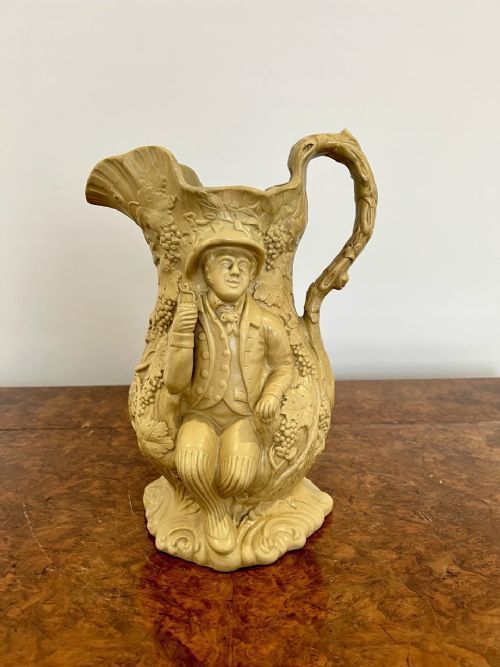
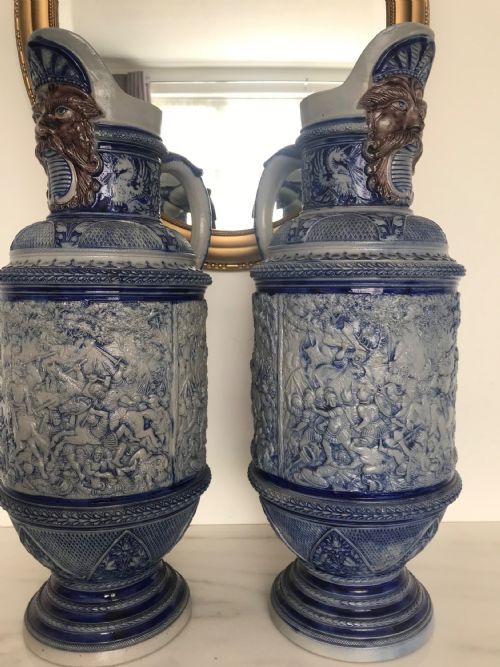
When searching for a victorian stoneware pitcher, buyers encounter durable vessels designed for utility and display across the nineteenth century. These jugs take forms ranging from tall harvest jugs and tavern pitchers to elaborate ewers and puzzle jugs.
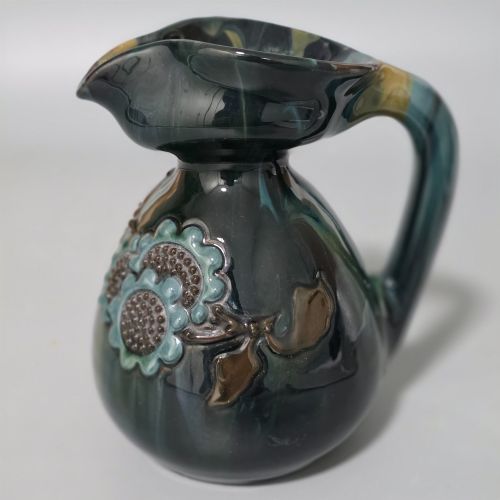
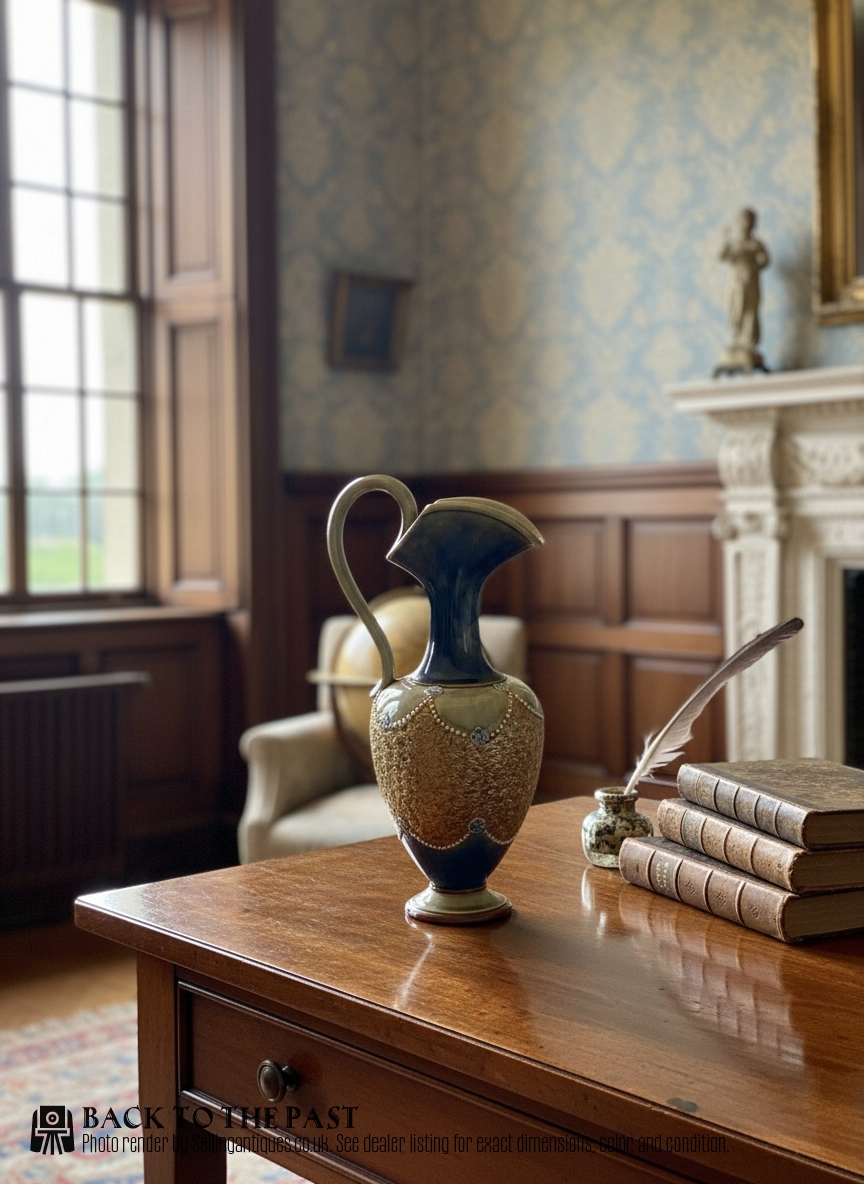
The pieces on this page originate predominantly from English potteries, most notably Doulton Lambeth, alongside German salt-glazed imports and Staffordshire manufacturers. They span the Victorian era, encompassing styles from early relief moulding to later Arts and Crafts and Art Nouveau designs.
How They Were Made
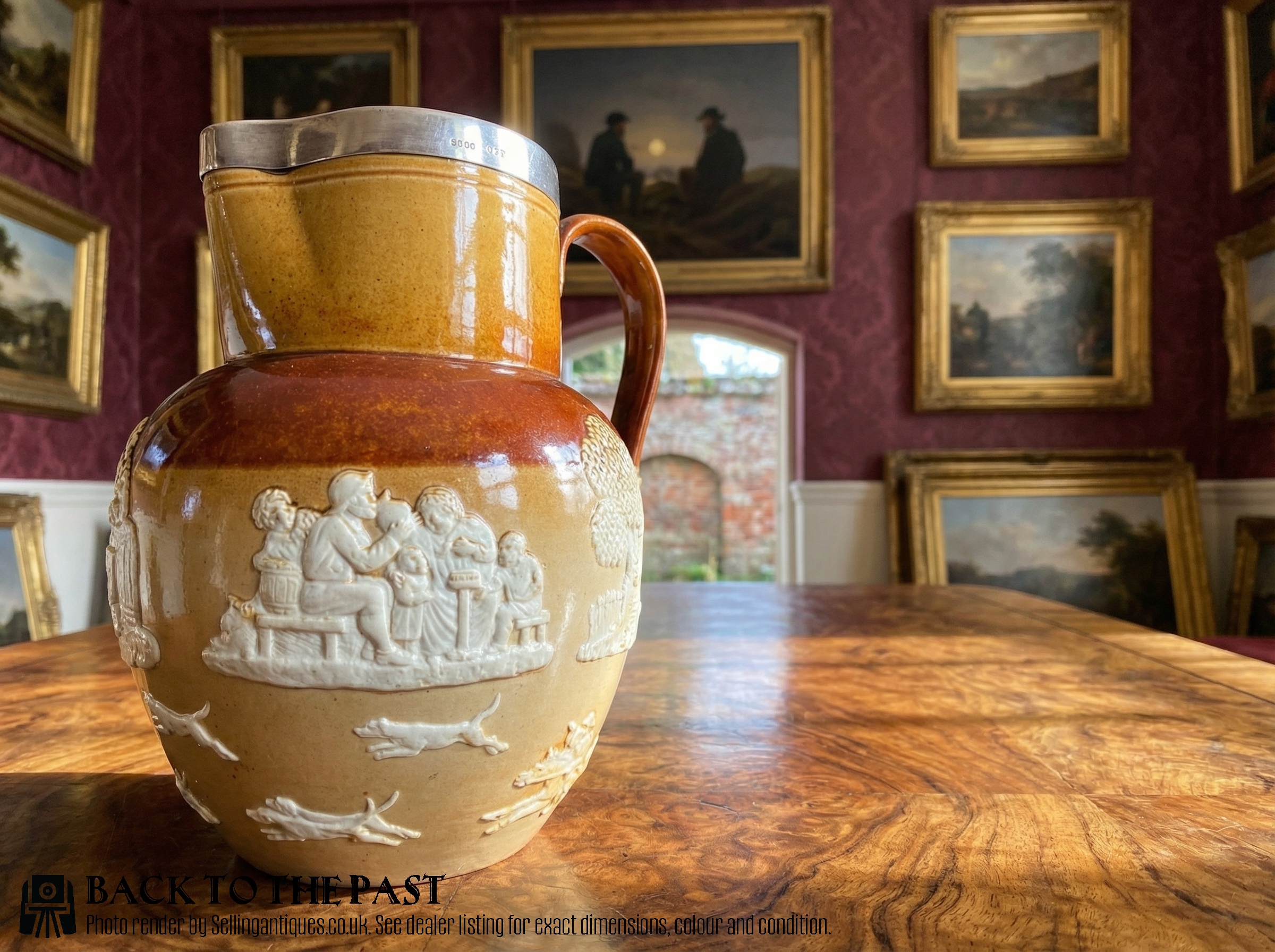
Potters shaped these vessels from heavy clay, often employing salt glazing to produce a durable, pebbled texture on the surface. Others utilised relief moulding techniques to press raised figural scenes, classical motifs or harvest themes directly into the body.
Makers finished many pieces with hand-incised patterns, cobalt blue highlights or applied sprigged decoration. Some examples received silver rims or hinged lids to complete the utilitarian or exhibition design.
Victorian Stoneware Pitcher Retail Price Guide 2026
Typical asking prices for victorian stoneware pitcher among the pieces listed under this phrase on Sellingantiques today, from the lower quarter to the upper quarter. They describe what is for sale here now, not the wider market.
The inventory records cobalt blue salt-glazed surfaces alongside buff-coloured and sage green bodies.
What Varies in Quality
The distinction between standard domestic ware and top-tier pieces rests on the crispness of the relief moulding and the complexity of the surface ornamentation. Denser, sharper incision and well-defined cobalt detailing elevate a piece beyond simple factory output.
Provenance and artistic attribution also drive distinction, particularly works bearing named studio artists or specific factory stamps. The inclusion of hallmarked silver mounts or complete graduated sets further separates exceptional examples from ordinary production.
Doulton Lambeth·Simon Peter Gerz·Sir Edmund Elton·Emma Shute·Charles Meigh·Ridgway and Sons·Jones and Walley·Minton·Dr Christopher Dresser
The Victorian Stoneware Pitcher Glossary
- Salt glaze
- A vitreous coating formed by throwing common salt into the kiln during high-temperature firing, creating an orange-peel texture. This finish protects the porous clay body underneath.
- Relief moulding
- A technique where clay is pressed into carved moulds to produce raised decorative patterns on the vessel wall. These motifs often depict classical scenes or natural foliage.
- Puzzle jug
- A drinking vessel featuring a pierced neck and deceptive spouts designed to confound the drinker. Fluid must be drawn through a hollow handle and rim to avoid spilling.
- Harvest jug
- A traditional form decorated with agricultural motifs, hunting scenes or rural revelry. These large vessels typically served ale at seasonal gatherings.
- Sprigged
- A method of applying separately moulded clay details onto the surface of an unbaked pot using slip as an adhesive. It creates a layered, contrasting decorative effect.
Victorian Stoneware Pitcher: Frequently Asked Questions
Were these pitchers used for water or ale?
Victorian pitchers served multiple domestic and tavern functions depending on their size and form. Large harvest jugs held ale for communal gatherings, while slender ewers and water jugs populated washstands and dining tables.
Specialist pieces like puzzle jugs functioned as drinking games in taverns. Hotel ice water jugs met the demands of nineteenth-century hospitality.
What is the difference between stoneware and earthenware?
Stoneware is fired at a higher temperature than earthenware, causing the clay body to vitrify and become completely impermeable to liquids. This renders the material durable without requiring an interior lead glaze.
Earthenware remains porous unless fully glazed. Victorian stoneware pitchers feel heavier and resist chipping more effectively than standard earthenware vessels.
How can I date a salt-glazed stoneware jug?
Examine the base, handle attachment and decorative style for manufacturing clues. Earlier nineteenth-century pieces often feature sharper relief moulding and distinct salt-glaze pitting, while later items incorporate Arts and Crafts or Art Nouveau motifs.
Maker marks, registration stamps and dated silver mounts provide the most precise chronological anchors. Stylistic shifts from classical Bacchanalian scenes to stylized sunflowers reflect the progression of the era.