
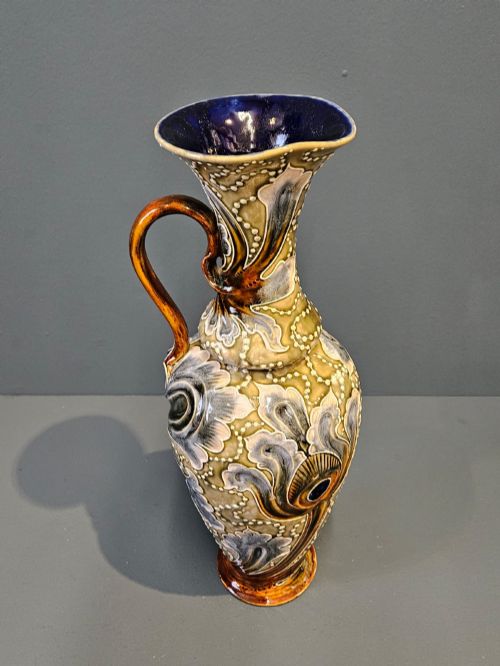


Doulton Lambeth Jug
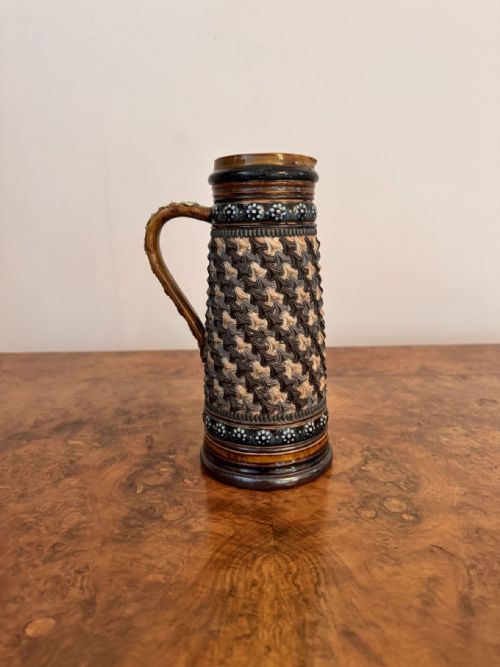
A doulton lambeth jug brings heavy salt glaze and intricate incised ornament straight from the late Victorian workbench into a modern room.
Doulton Lambeth Jug
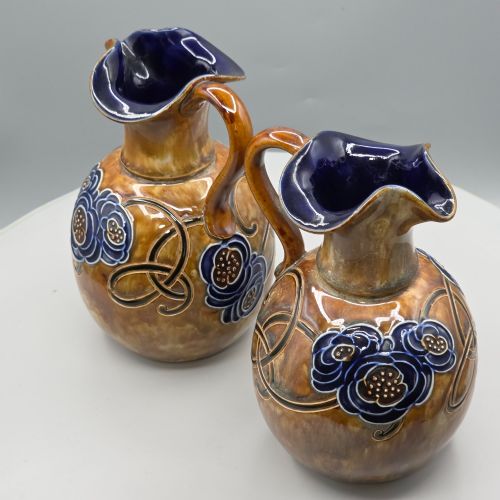
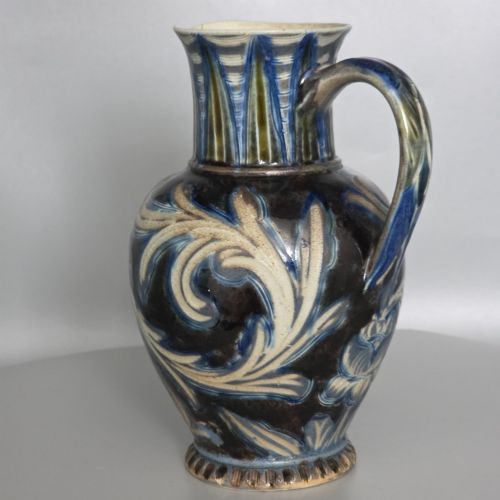
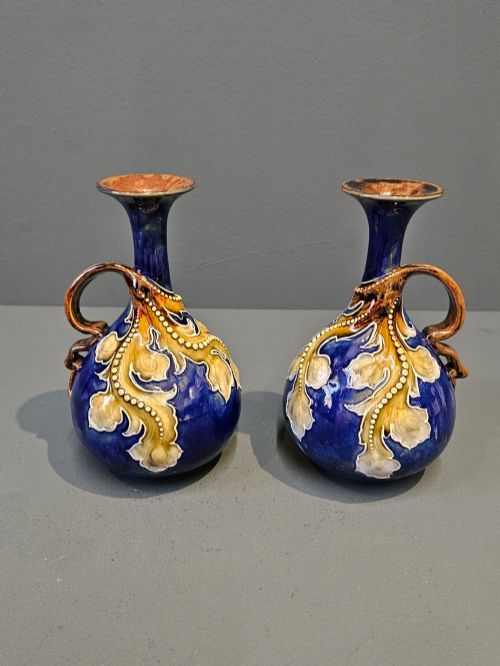
A doulton lambeth jug represents a pinnacle of nineteenth century British art pottery, emerging primarily from the London studios during the Victorian and Edwardian eras. These vessels range from utilitarian harvest jugs to elaborate commemorative pieces marking royal jubilees and sporting events.
The pieces appearing on this page span the 1870s through the 1910s, capturing stylistic shifts from traditional salt glaze forms to Arts and Crafts and Art Nouveau designs. Collectors frequently encounter large stoneware pitchers fitted with silver rims alongside smaller domestic ale and whisky containers.
Moulded handles, applied sprigged decoration, and distinctive blue and white motifs define the standard inventory of these ceramic works. Many examples bear specific historical connections, from cricket matches to military commemorations.
Judging Quality
Quality in a doulton lambeth jug rests upon the crispness of the incised patterns and the control evident in the reactive salt glaze firing. Pieces decorated by named artists display superior hand-drawn detail and more complex compositional balance than standard factory output.
The presence of hallmarked silver mounts and intact lids alters the desirability of a vessel, as does the historical significance of commemorative subjects like royal jubilees or sporting figures. Condition remains paramount, with crisp applied sprigging and clean uncompromised surfaces commanding greater attention.
Puzzle jugs required drinkers to master hidden air channels in the handle or risk spilling ale down their waistcoats.
Emma Shute·Elizabeth Atkins
The Doulton Lambeth Jug Glossary
- Stoneware
- A robust ceramic type fired at high temperatures until vitrified and rendered completely impermeable to liquids. This dense body forms the structural base for the majority of London pottery.
- Salt Glaze
- A glossy, slightly textured finish achieved by throwing common salt into the kiln during high temperature firing. The sodium reacts with the silica in the clay body to create a durable coating.
- Sprigged Decoration
- Moulded clay reliefs applied by hand to the surface of an unfired vessel using slip as an adhesive. Artisans used this technique to build up repetitive floral or figural motifs.
- Harvest Jug
- A traditional large drinking vessel typically featuring brown stoneware bodies and detailed sprigged or incised rural scenes. These pieces were historically filled with ale for agricultural labourers.
- Puzzle Jug
- A clever ceramic vessel featuring a hollow perforated rim and multiple spouts designed to confound drinkers who failed to cover the hidden air intake holes.
Doulton Lambeth Jug: Frequently Asked Questions
How do I date a doulton lambeth jug?
Dating relies primarily on the factory stamps impressed into the base alongside stylistic indicators such as Arts and Crafts incising or Art Nouveau motifs. The presence of specific historical events like royal jubilees or military campaigns provides a firm starting point for manufacture.
Secondary clues include the type of glaze, the presence of metal rims, and whether individual artist ciphers appear near the maker mark. Comparing these elements against known studio timelines narrows the production window securely.
Were these jugs used for daily drinking?
Many examples served practical domestic roles for holding water, ale, or whisky on nineteenth century dining tables. Robust stoneware construction ensured these vessels endured regular handling and washing.
Larger scaled presentation pieces functioned primarily as commemorative display items rather than functional tableware. Their heavy weight and decorative surfaces suited sideboard presentation just as well as active hospitality.
What caused the textured salt glaze finish?
Potters shovelled salt directly into the kiln fireboxes at peak maturity, causing the minerals to vaporize and bond with the heated silica clay. This chemical reaction generated a protective skin characterised by a subtle orange peel texture.
Variations in kiln temperature and placement created accidental colour mottling across the body of the vessel. No two salt glazed surfaces emerged from the firing process with identical patterns.
How should I clean my antique stoneware?
Maintenance requires only gentle washing with warm water and a soft cloth to remove accumulated dust from the incised recesses. Harsh chemical detergents and abrasive scouring pads risk damaging fragile applied details or historical glaze surfaces.
Silver rims benefit from occasional light polishing using non-abrasive cloths kept strictly away from the ceramic body. Proper care preserves the original surface sheen built up over a century of existence.