


Victorian Sterling Silver Cutlery
Victorian sterling silver cutlery brings functional elegance to the dining table, offering solid craftsmanship and enduring design for daily use or special gatherings.
Victorian Sterling Silver Cutlery
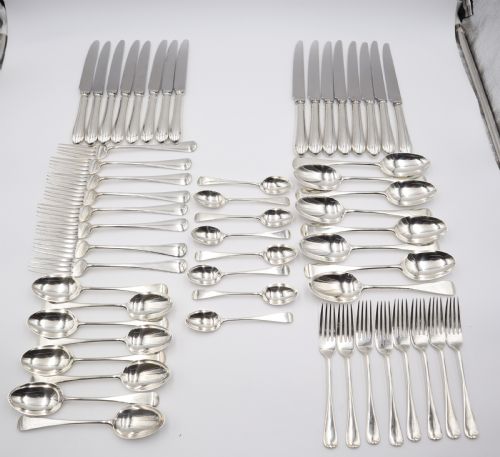
When exploring victorian sterling silver cutlery, a buyer encounters a diverse range of utensils designed for formal dining, serving, and specific tasks like fish consumption or dessert. These items span from individual spoons and forks to full canteens and cased presentation sets.
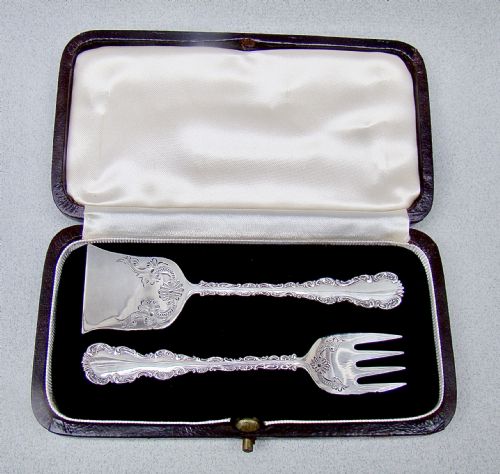
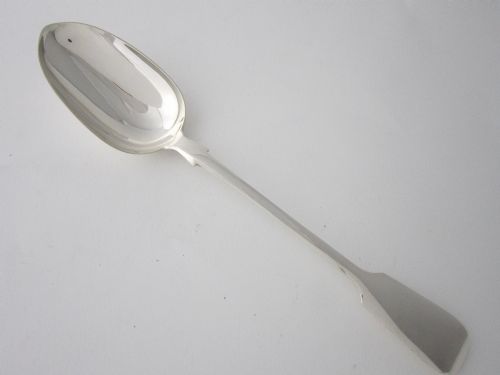
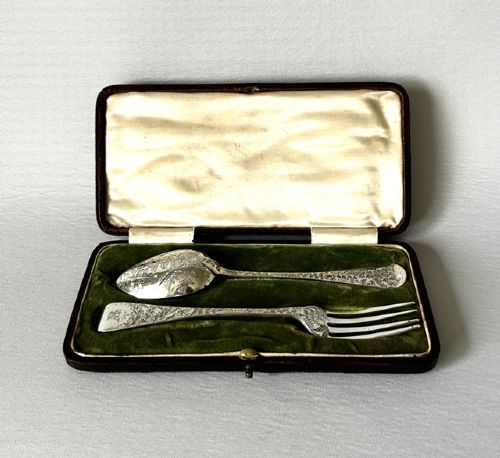
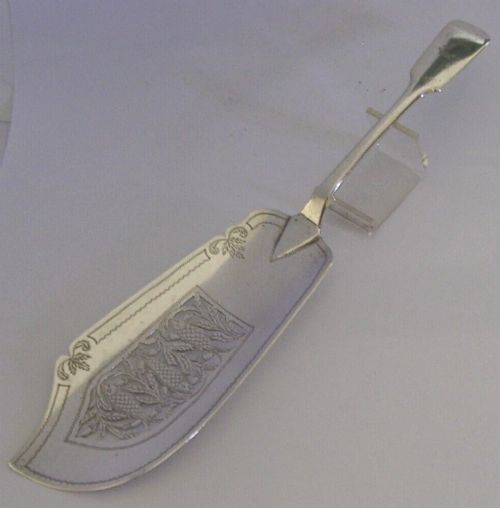
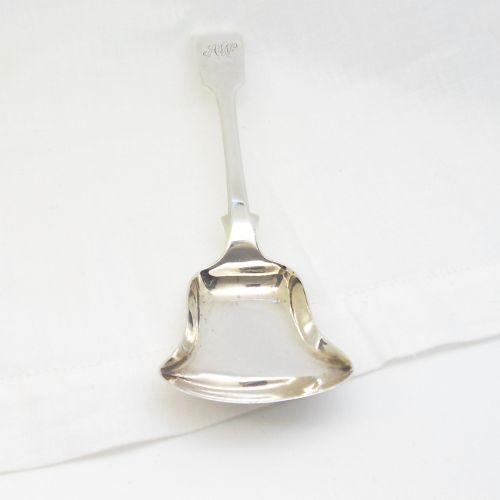
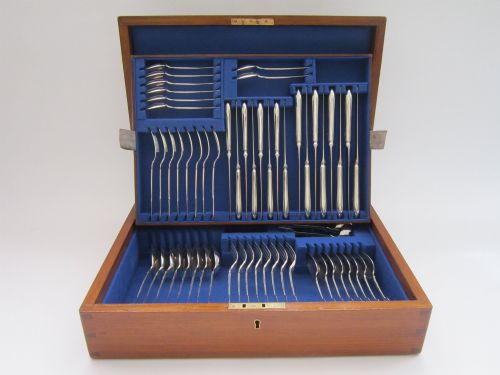
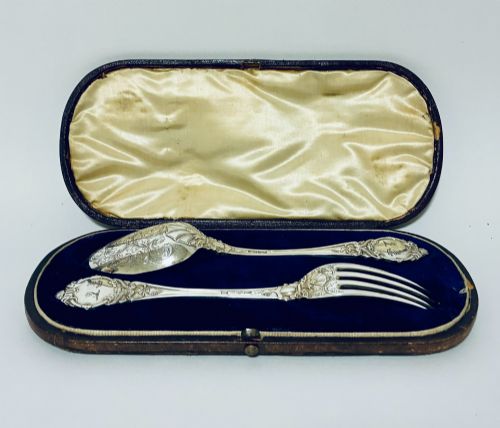
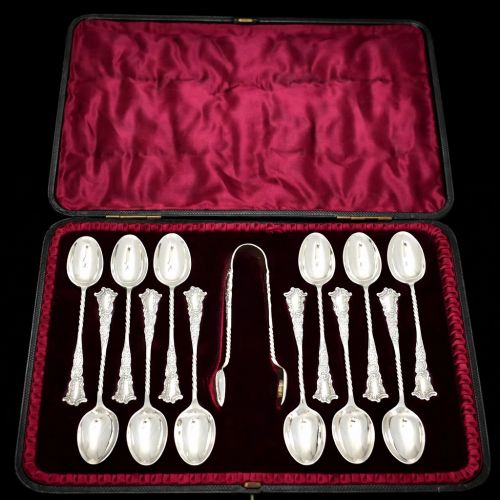
The most common examples on this page include fiddle pattern canteens, serving spoons, christening sets, and specialised implements such as fish servers, butter knives, and grape scissors.
Objects originate primarily from the Victorian period, alongside adjacent eras such as Georgian, Edwardian, and William IV, reflecting a rich heritage of British silversmithing.
How they were made
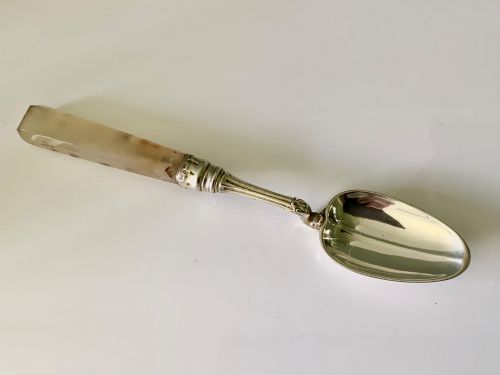
The primary material is sterling silver, frequently paired with handles formed from mother-of-pearl, stag antler, agate, or steel for specialised cutting blades and mechanics.
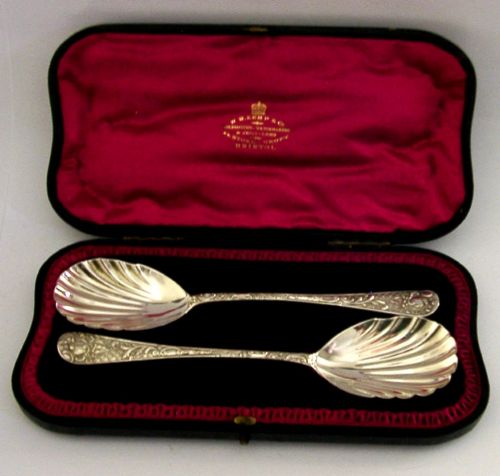
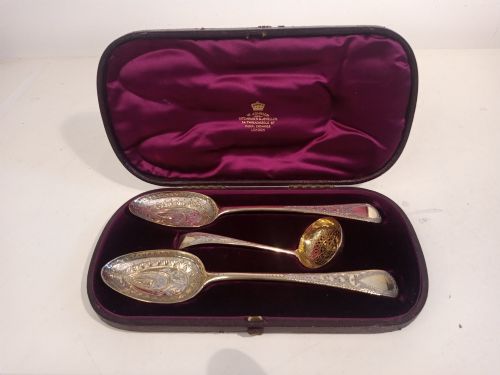
Silversmiths utilised traditional techniques including casting, engraving, and stamping to shape handles and bowls, often adding gilding to dessert spoons and berry spoons for decorative contrast.
Listings include sterling silver, mother-of-pearl, and stag antler across Victorian, Georgian, and Edwardian periods.
What varies in quality
Quality in victorian sterling silver cutlery is determined by the crispness of the cast or engraved patterns, such as the detailed scrolling on Kings pattern handles or naturalistic foliage.
The integrity of fitted storage cases, lined with velvet, silk, or satin, and the preservation of original hallmarks and family crests significantly influence the character and completeness of a set.
Henry Wilkinson·John Walton·George Unite·Christopher Dresser
The Victorian Sterling Silver Cutlery Glossary
- Fiddle Pattern
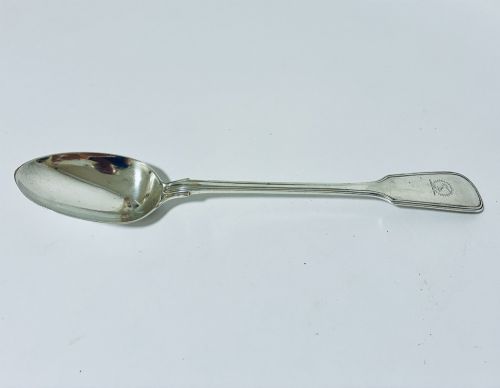
- A traditional handle shape featuring a narrow stem that broadens near the end into a distinct shoulder resembling a fiddle.
- Canteen
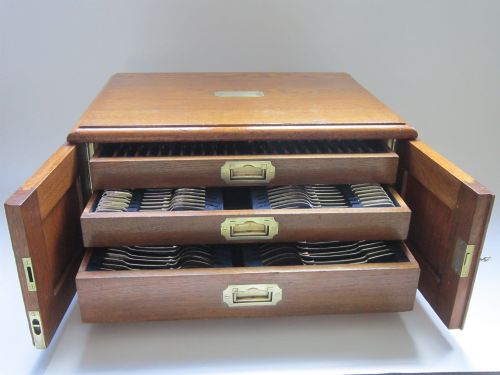
- A fitted box or chest containing a matching set of cutlery arranged in specific tiers or slots for storage.
- Hallmark
- A series of stamped marks on silver indicating the maker, assay office, purity standard, and date letter of the piece.
- Berry Spoon
- A large serving spoon, often originally Georgian or Victorian, embossed and engraved later with fruit and foliage designs.
- Marrow Scoop
- A narrow, elongated utensil with shallow troughs at both ends, historically used for extracting marrow from bones.
Victorian Sterling Silver Cutlery: Frequently Asked Questions
How do I clean tarnished silver cutlery?
Use a soft microfibre cloth and a specialist silver polish, rubbing gently along the contours of the handle and bowl to preserve crisp engravings and hallmarks. Avoid harsh abrasive pads that wear away the precious metal layer over time.
Store clean pieces in dry conditions, ideally within lined wooden canteens or anti-tarnish rolls, to minimise exposure to atmospheric moisture and sulphur.
Are these sets safe for daily use?
Sterling silver utensils are durable enough for regular dining, provided they are washed by hand rather than placed in an automated dishwasher. Hand washing protects organic handle materials like mother-of-pearl and stag antler from splitting under high heat.
Dry each piece immediately after washing with a soft linen cloth to prevent water spots and maintain the polished finish.
How do I identify a Victorian hallmark?
Examine the reverse of the stem or handle using a loupe to locate the small stamped symbols indicating the standard mark, assay office town, and date letter. Victorian sterling is typically denoted by the lion passant alongside a monarch's head profile for specific decades.
Reference books and official assay office registers help decode the specific date letter corresponding to the exact year of manufacture.
What is the difference between a canteen and a place setting?
A canteen represents a complete, unified collection of flatware and cutlery housed in its own designated storage box, often intended for twelve or more persons. Individual place settings or smaller sets usually cater to specific courses, such as dessert or fish, or smaller households.
Matching canteens often display consistent pattern work across all pieces, whereas assembled sets may feature varied monograms or slight stylistic shifts.