





Silver Knife and Fork
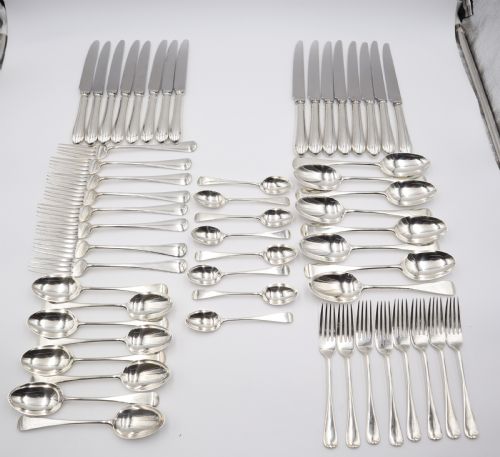
A silver knife and fork brings paired dining implements into domestic use, connecting matched blades and tines from Georgian decades onward.
Silver Knife and Fork
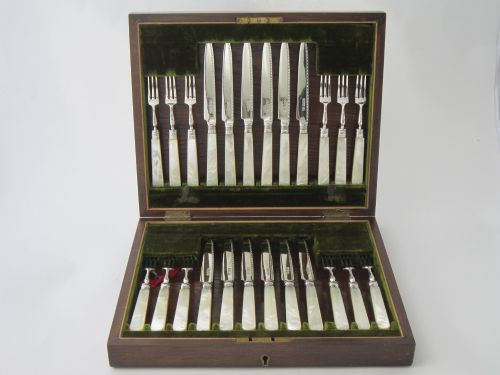
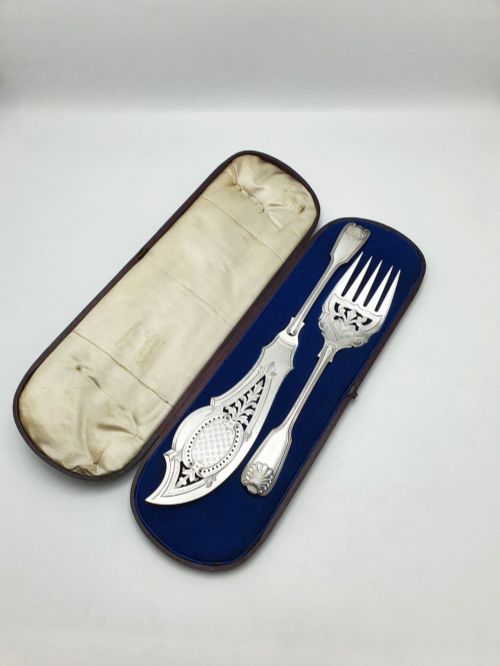
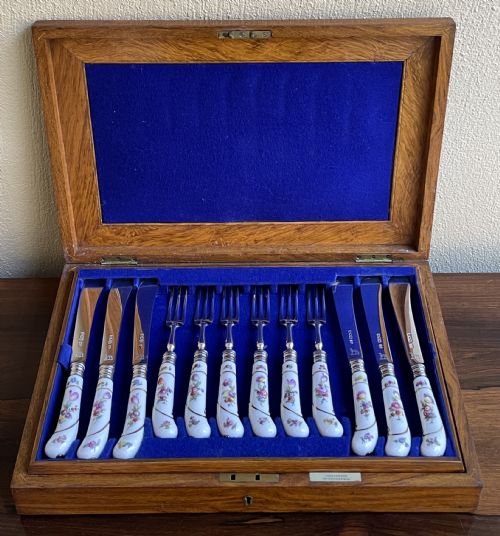
A silver knife and fork pairing encompasses boxed dessert sets, christening gifts, and fish servers designed for formal dining. Buyers examine individual folding fruit pieces alongside larger canteens intended for multiple persons.
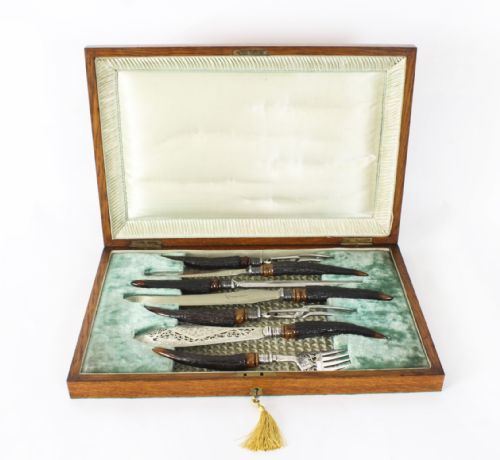
Victorian and Edwardian iterations dominate current selections, frequently pairing sterling silver or silver plate with mother-of-pearl or antler handles. These service pieces reflect domestic dining habits spanning the nineteenth and early twentieth centuries.
Materials and Construction
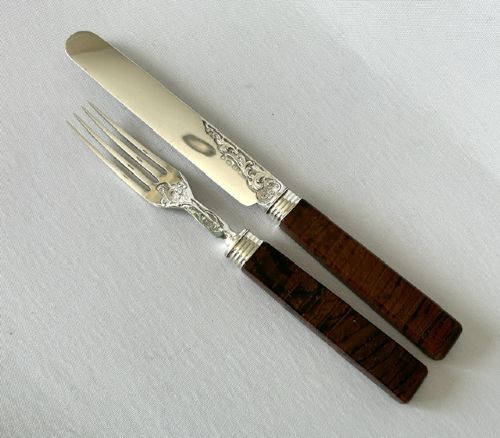
Craftsmen joined sterling silver or silver-plated blades and tines to organic handles using pins and ferrules. Mother-of-pearl, agate, horn, and carved bone provide tactile grips on fruit and dessert sets.
Engraved ornamentation adorns many surfaces, utilising hand-chasing and piercing techniques on fish servers and fruit knives. Fitted cases lined in velvet or silk protect these multi-piece sets.
Listings feature sterling silver, silver plate, mother-of-pearl, agate, horn, and velvet across Victorian, Edwardian, and Georgian periods.
Evaluating Quality
Quality rests upon the crispness of hand-engraving and the structural integrity of handle materials like banded agate or intact mother-of-pearl scales. Matching hallmarks across both implements indicate a true original pair rather than a later assembled set.
The survival of original fitted cases lined with silk or velvet distinguishes superior examples from loose service pieces. Substantial gauge silver and tight handle joints separate workshop output from ordinary production.
Carrington·International Silver Co·Jowika·Walter & John Barnard·Elkington & Co·Walker And Hall·Harry Atkin
The Silver Knife and Fork Glossary
- Sterling Silver
- An alloy containing a high proportion of pure silver combined with other metals for durability. British pieces typically bear standard assay office marks.
- Mother-of-Pearl
- The iridescent inner layer of mollusc shells used historically for knife and fork handles. It provides a smooth, decorative grip.
- Fruit Knife and Fork
- Small paired implements designed specifically for eating fruit at the conclusion of a meal. They often fold or fit inside compact leather or Moroccan cases.
- Fish Servers
- A matched serving knife and fork set engineered for presenting and dividing fish at table. Blades are frequently wide and heavily engraved.
- Assay Office
- An official body responsible for testing the purity of precious metals and stamping them with hallmark symbols. Sheffield and Birmingham are notable examples.
Silver Knife and Fork: Frequently Asked Questions
What were silver knife and fork sets used for?
These matched implements served specialised dining functions such as dessert courses, fruit consumption, and fish serving at formal meals.
Smaller folding versions accompanied individuals for travel or daily dining away from home.
How do I date a silver knife and fork?
Hallmarks stamped onto the metal provide assay office symbols, standard marks, and date letters corresponding to specific years.
Stylistic indicators such as Victorian aesthetic engraving or Edwardian handle shapes also assist in determining periods.
Are cased sets original to each other?
Fitted velvet or silk-lined boxes often house matching pieces created together by the same workshop or silversmith.
Matching maker marks and identical handle materials confirm whether the knife and fork originated as a pair.
How should antique cutlery be stored?
Storing items in dry, fitted wooden canteens or lined cases protects silver surfaces from tarnishing agents in the air.
Gentle handling preserves organic handle materials like mother-of-pearl, horn, and banded agate from unnecessary stress.