




Cased Silver Knife Fork
These fitted cased silver knife fork sets offer portable dining luxury and formal presentation, preserved in velvet and silk lined presentation boxes.
Cased Silver Knife Fork
A cased silver knife fork set represents formal dining and personal presentation, houses in fitted wooden or leather boxes lined with silk or velvet. You meet these pieces primarily in Victorian and Edwardian iterations, alongside earlier Georgian travel examples.
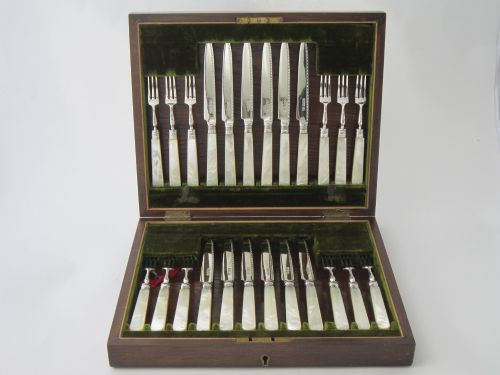
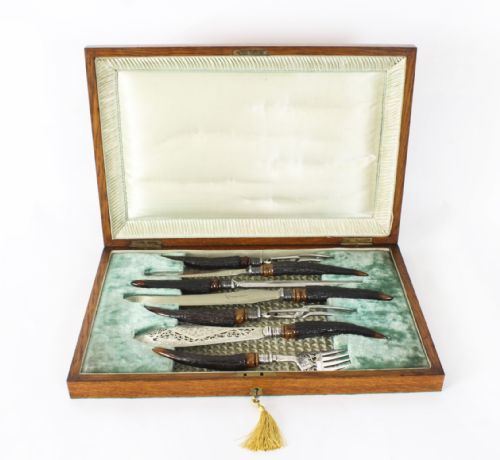
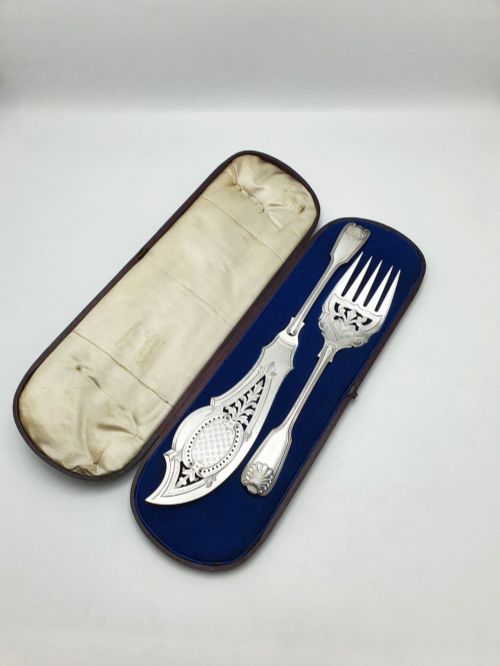
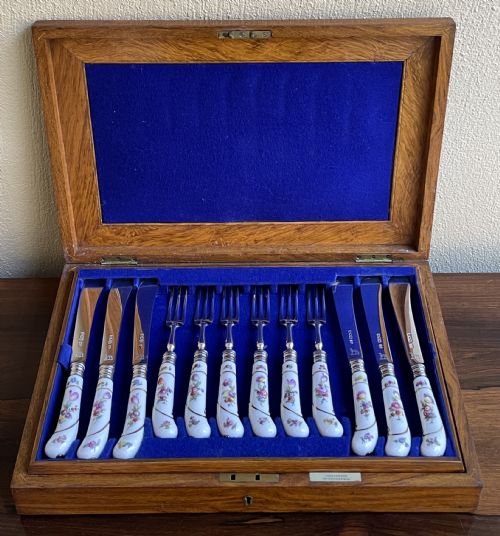
The configurations range from single fruit knives and forks to fish servers, christening sets, and dessert cutlery. Many incorporate mother of pearl, antler horn, or porcelain handles alongside sterling silver or silver plate blades.
Originating for travel, gift-giving, or formal dining, these sets survive complete with their original fitted cases. The selection spans the nineteenth century into the twentieth century, reflecting changing domestic habits.
How they were made
Makers utilised sterling silver and silver plate for the metal components, pairing them with steel blades for cutting edges. Handles rely on natural materials such as mother of pearl, antler horn, bone, and porcelain.
The storage vessels combine wooden frames with exterior leather or fabric coverings, lined internally with fitted velvet or silk to secure each utensil. Engraving and chasing decorate the metal surfaces, often featuring floral, hunting, or geometric motifs.
Some Victorian dining sets feature dog and hunting engravings on the blades, ensuring your fish service comes with a side of canine enthusiasm.
What varies in quality
The distinction between standard examples and the finest pieces rests on the integrity of the fitted case and the matching of the set. Complete sets with undamaged silk and velvet linings command greater interest than assembled groups.
Material selection dictates value, where solid sterling silver and genuine mother of pearl or carved horn outshine silver plate and plain wood. Crispness of the engraved or chased decoration on the blades and ferrules demonstrates superior workshop output.
Carrington·Waring and Gillows·Elkington and Co
The Cased Silver Knife Fork Glossary
- Sterling silver
- A silver alloy containing 92.5 percent pure silver and 7.5 percent other metals, usually copper. This standard appears frequently across British cutlery and serving pieces.
- Silver plate
- A layer of silver applied to a base metal core such as copper or nickel brass. Many nineteenth century servers utilise this technique to achieve a bright finish.
- Mother of pearl
- The iridescent internal layer of pearl oyster shells, shaped into smooth handle scales. It provides a tactile, pale surface for dessert and fruit cutlery.
- Campaign set
- Portable dining equipment designed for travel or military use abroad. These sets pack efficiently into compact fitted boxes.
- Ferrule
- The metal ring or cap that secures the handle to the blade or tine. It often displays decorative engraving or hallmarks.
Cased Silver Knife Fork: Frequently Asked Questions
What are cased silver knife fork sets used for?
These sets served specialised dining functions, including dessert courses, fruit consumption, fish serving, and christening gifts. Their fitted boxes allowed safe storage at home or transport during travel.
Over time, they transitioned from practical dining implements into presentation pieces and treasured family gifts, preserved intact within their original velvet and silk linings.
How do I identify the period of a set?
Hallmarks stamped on the silver components provide the most reliable date indicators, denoting the assay office and year of manufacture. Stylistic clues such as handle materials and case construction also help narrow the timeframe.
Victorian and Edwardian pieces often feature ornate floral engraving, whilst Georgian examples tend toward simpler lines or specific travelling formats.
Are these utensils safe to use for dining?
Many sets remain functional, though older steel blades and delicate handle materials require careful hand washing rather than machine cleaning. Mother of pearl and horn handles are particularly sensitive to heat and moisture.
Collectors generally preserve these items for display or occasional formal use rather than daily dining, given their age and fragile silk lined cases.
Why do some sets include mother of pearl?
Mother of pearl resists the acidic properties of fruit juices, making it an ideal handle material for dessert and fruit knives. Its natural iridescence also added visual elegance to the dining table.
This material was widely favoured throughout the Victorian period for high quality personal cutlery and presentation sets.