




Victorian Silver Urn
When you search for a victorian silver urn, you are looking at substantial vessels designed for tea, wine, or display that bring period gravity to a room.
Victorian Silver Urn
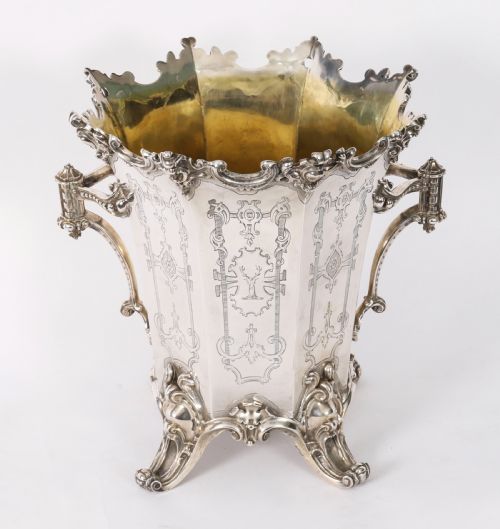
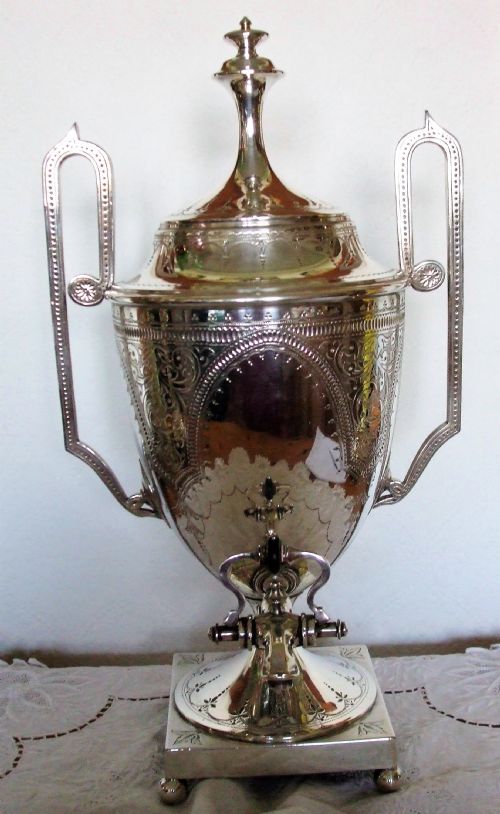
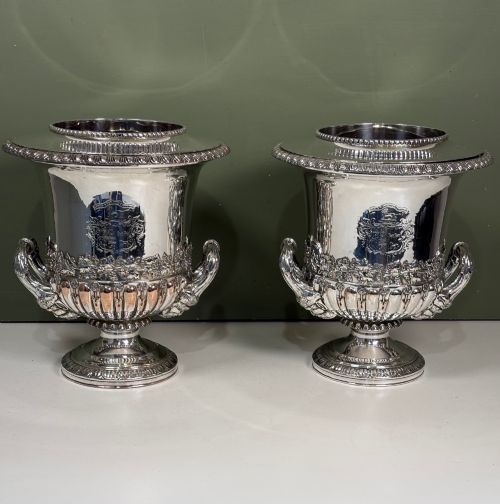
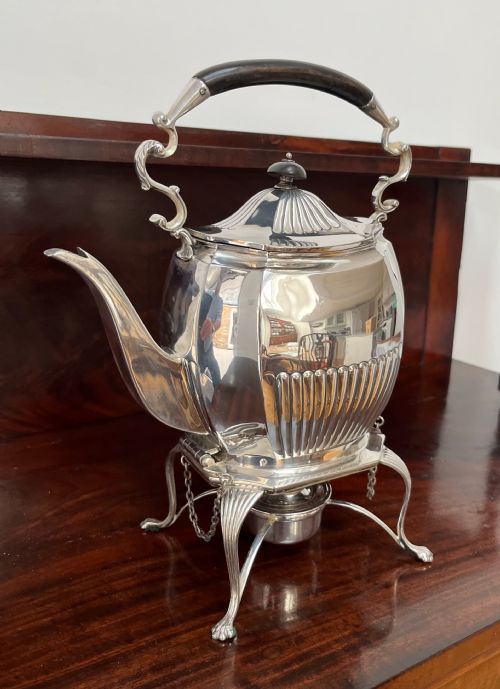
A victorian silver urn encompasses several distinct vessel types, with tea urns, samovars, and wine coolers appearing most frequently across these records alongside decorative vases and spirit kettles.
The objects span from the nineteenth century into the early twentieth century, showing both sterling silver and silver plate constructions.
Makers utilised neoclassical and revivalist design idioms to create symmetrical bodies often set on square bases with tap spouts or handles.
Materials and construction
Makers built these vessels primarily using sterling silver or silver plate over base metals, occasionally incorporating bone, wood, or glass elements for handles and liners.
Silversmiths employed techniques such as casting, spinning, and hand engraving to shape the urn bodies and apply surface ornamentation.
Fittings like taps, burner stands, and insulated handles required precise assembly to ensure functional performance alongside decorative effect.
Several historical pieces double as miniature milk churns for the dining table.
Evaluating the standard
Quality rests in the weight of the metal, the crispness of chased or engraved detailing, and the structural integrity of handles and spouts.
The proportion of the body to its base and the harmonious integration of decorative mounts distinguish superior examples from standard production pieces.
Makers known for high output applied meticulous finishing to interior surfaces and joints, maintaining balance across complex forms.
Elkington Mason And Co·Walker And Hall·Risler And Carré Paris·Harrison Brothers And Howson·Henry Tatton And Son
The Victorian Silver Urn Glossary
- Samovar
- A heated metal urn traditionally used to boil water for tea. These vessels often include an internal vertical tube containing burning fuel.
- Argyle
- A type of vessel designed to keep gravy warm using a heated core or water jacket. This form prevents congealing during service.
- Baluster
- An architectural shape characterised by a swelling lower portion tapering toward a narrow neck. Many vases and urns utilise this profile.
- Sheffield plate
- A composite material made by fusing a thin sheet of silver to a thicker copper base. This technique preceded modern electroplating.
Victorian Silver Urn: Frequently Asked Questions
What is a silver samovar used for?
A samovar served as a central vessel for heating and boiling water, typically for tea preparation during formal gatherings. The internal chamber held hot coals or a burner to maintain the temperature.
Over time, these large pieces transitioned from active service items to decorative display objects in dining rooms and parlours.
How do I clean a silver plated urn?
Maintenance requires gentle cleaning with a soft cloth and a specialised silver polish formulated to protect thin plated layers from abrasive wear. Regular dusting prevents tarnish accumulation in recessed engravings.
Harsh chemical dips should be avoided, particularly on pieces with soldered joints or mixed materials like wood and bone.
How can I tell the period of an urn?
Dating relies on maker marks, assay office stamps, and stylistic cues such as neoclassical proportions or rococo revival ornamentation. Design elements often reflect the prevailing tastes of the nineteenth and early twentieth centuries.
Documentation or engraved crests can also provide specific historical context regarding the date of manufacture.