



Victorian Silver Pitcher
A victorian silver pitcher brings heavy glass, chased metal, and substantial nineteenth-century weight directly to the dining table.

Victorian Silver Pitcher
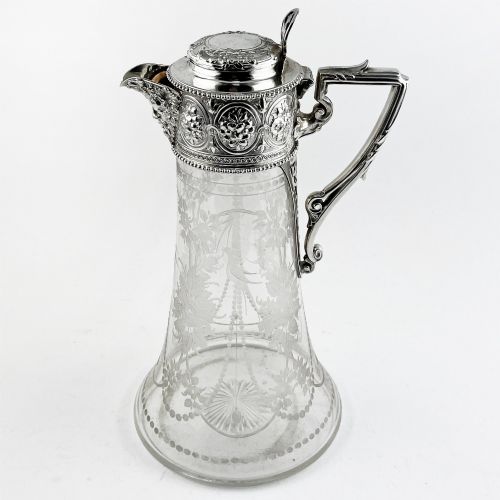
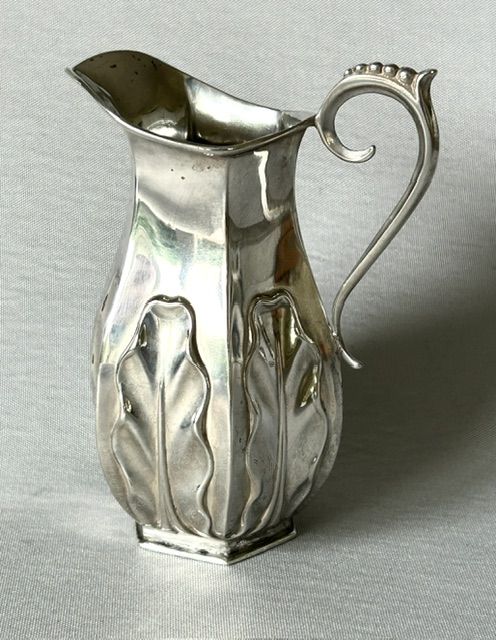
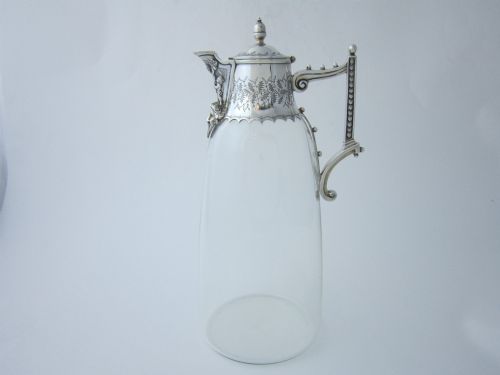
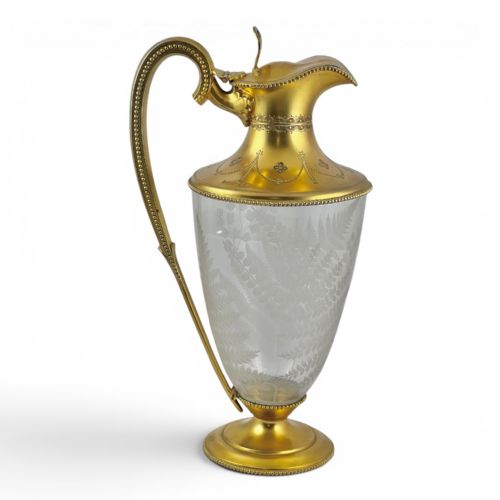
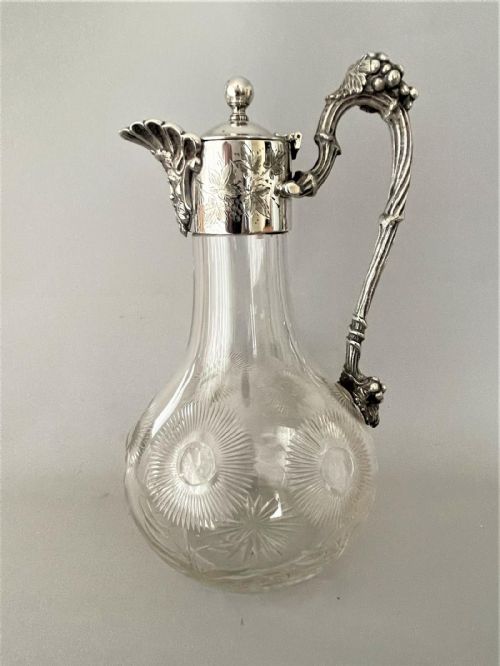
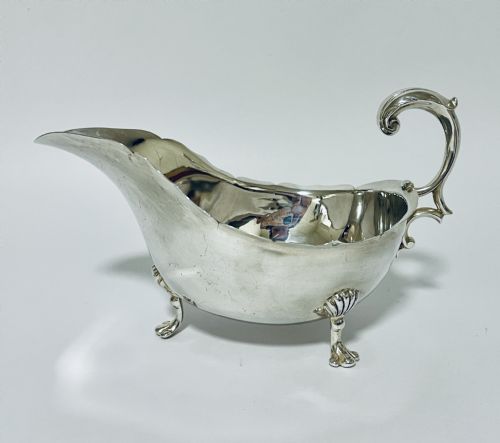
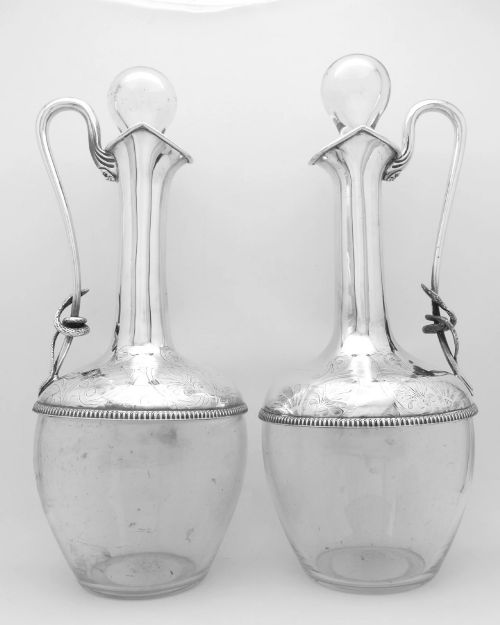
A victorian silver pitcher most commonly appears on this page as a claret jug, combining blown crystal bodies with mounted silver or silver-plated handles, collars, and hinged lids. These vessels date primarily from the nineteenth century, spanning periods from the 1860s through to Edwardian years, with forms ranging from tall wine ewers to smaller cream jugs and sauce boats.
Makers utilised diverse regional hallmarking standards across London, Sheffield, and Chester, stamping sterling silver alongside silver-plated copper. Alongside wine vessels, the inventory holds heavier water pitchers, lemonade jugs equipped with internal ice tubes, and coopered oak cider jugs banded in metal.
Materials and Technique
Silversmiths combined sterling silver and silver plate with cut glass, etched crystal, and occasionally copper or coopered oak. Metal mounts were cast, chased with floral or figural scenes, and soldered to collars fitted closely around glass bodies.
Techniques included electrotyping for complex dimensional forms like wine jugs and beakers, alongside hand-engraving and silver-gilt applications that enriched interior bowls and exterior relief work.
Victorian Silver Pitcher Retail Price Guide 2026
Typical asking prices for victorian silver pitcher among the pieces listed under this phrase on Sellingantiques today, from the lower quarter to the upper quarter. They describe what is for sale here now, not the wider market.
Listings feature nineteenth-century materials including cut glass, etched crystal, coopered oak, sterling silver, and electroplated metal.
Craftsmanship and Weight
The division between standard production and top tier rests on the crispness of the chased detail, the thickness of the silver deposit on plated wares, and the depth of the wheel-cutting on the crystal body. Heavy cast mounts, tight hinge articulation, and well-balanced serpent or bacchus mask handles indicate superior workshop standards.
Makers known for prominent institutional output and registered design marks generally produced heavier gauges of metal and clearer, more resonant glass vessels than anonymous regional shops.
Asprey and Co. Ltd·Henry Bourne·Mappin and Webb·Elkington and Co·Robert Garrard·Thomas Smily
The Victorian Silver Pitcher Glossary
- Claret jug
- A specialised vessel designed for serving red wine, typically featuring a glass body with a metal handle, collar, and hinged lid.
- Silver plate
- A layer of silver fused or electroplated onto a base metal core such as copper, prevalent in nineteenth-century utilitarian dining wares.
- Electrotype
- A method of depositing silver onto a mould through electrolysis to create detailed three-dimensional reliefs without heavy manual chasing.
- Chasing
- A metalworking technique where the smith hammers patterns into the front surface from the outside to push the design into relief.
- Silver gilt
- Sterling silver that has been coated with a thin layer of gold on the interior surface, commonly used for vessels holding acidic liquids.
Victorian Silver Pitcher: Frequently Asked Questions
What were claret jugs used for?
These vessels served red wine at nineteenth-century dining tables, allowing hosts to pour claret from a decorative container rather than the original bottle.
The hinged lid kept the contents covered between pours while the handle and collar provided a secure grip for the server.
How do I identify a Victorian piece?
Inspection of metal components usually reveals stamped hallmarks indicating assay offices in London, Sheffield, or Chester alongside date letters specific to the nineteenth century.
Stylistic cues such as heavy floral chasing, etched glass patterns, and silver-plated mounts further point toward Victorian and Edwardian manufacturing periods.
Are these pitchers safe for daily use?
Most glass and silver-mounted jugs remain functional for serving water, wine, or lemonade at the modern table provided they receive careful hand washing.
Harsh detergents and mechanical dishwashers must be avoided to protect nineteenth-century solder joints, delicate silver plate, and vintage crystal.
What is the difference between silver plate and solid silver?
Solid silver pieces bear standard sterling hallmarks indicating a high purity standard throughout the entire metal component.
Silver-plated items utilise a base metal substructure beneath an exterior coating of silver, which can occasionally reveal the underlying metal where heavy wear occurs over generations.