

Victorian Silver Mounted Glass
These robust and elegant pieces of victorian silver mounted glass bring tactile weight and rich colour to any room.
Victorian Silver Mounted Glass
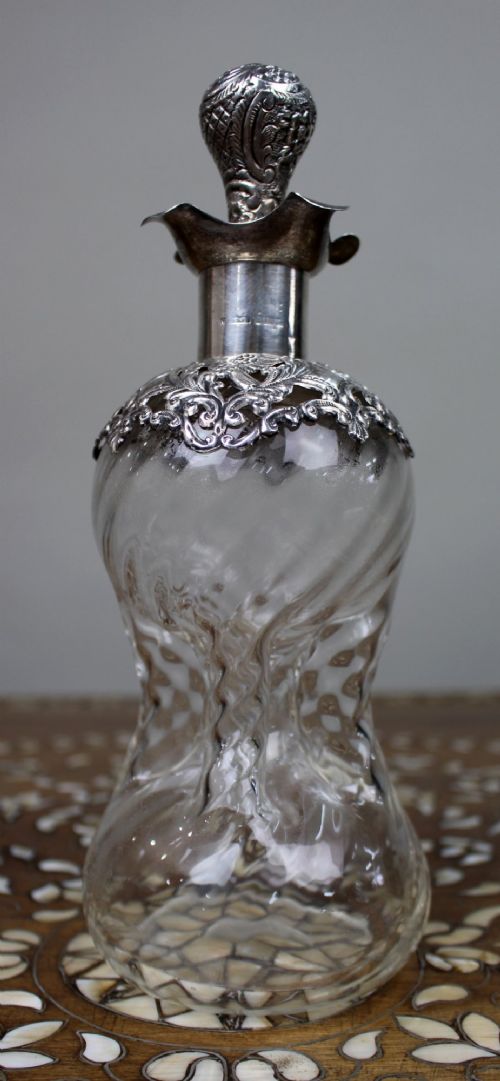
When you search for victorian silver mounted glass, you encounter functional vessels and personal containers made during the nineteenth and early twentieth centuries. These objects combine heavy, translucent or coloured glass bodies with sterling silver collars, mounts, hinged lids, or decorative overlays.
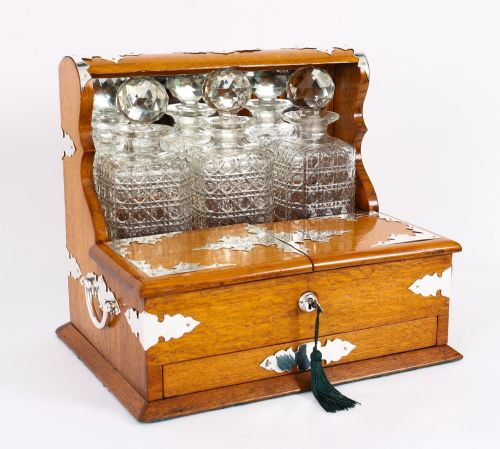
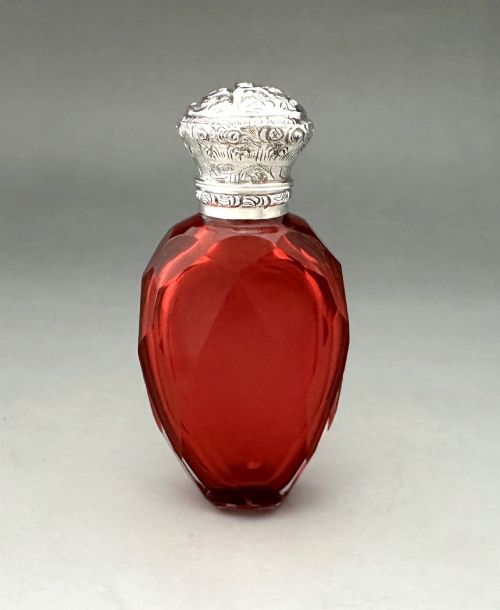
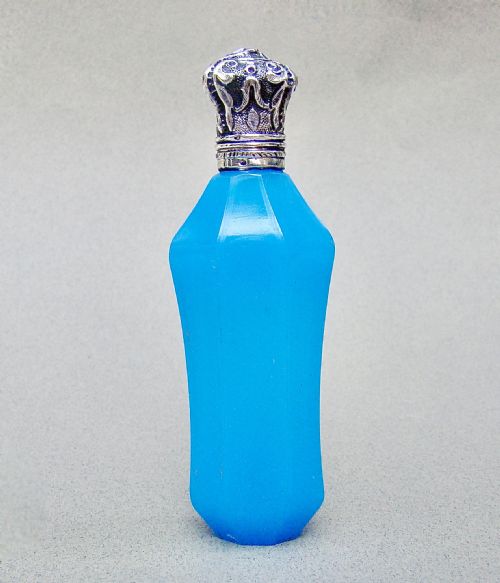
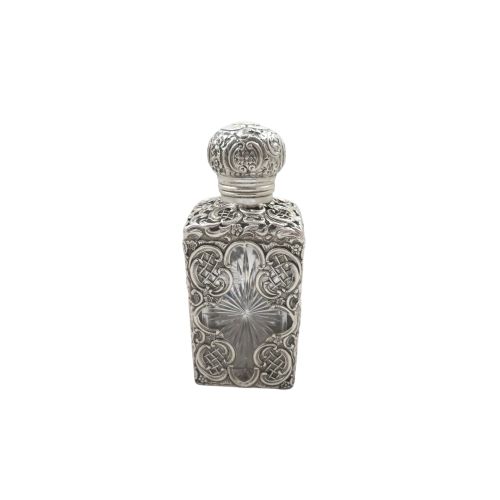
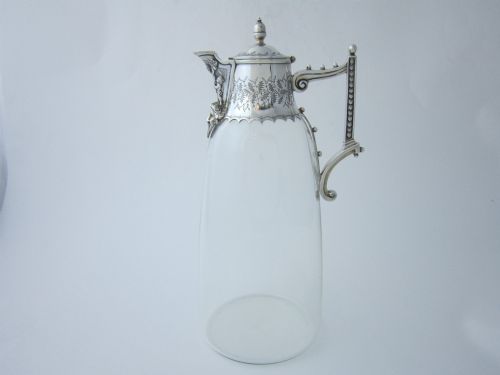
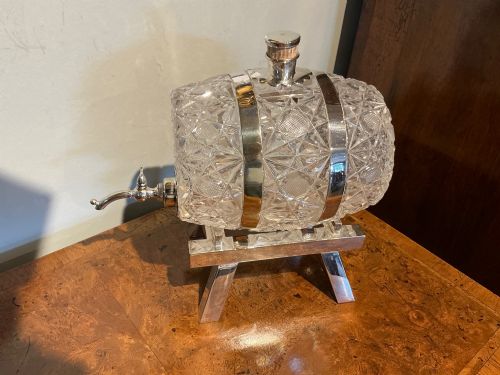
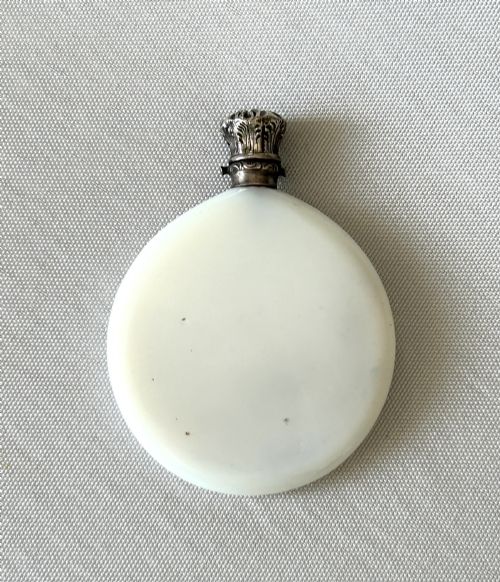
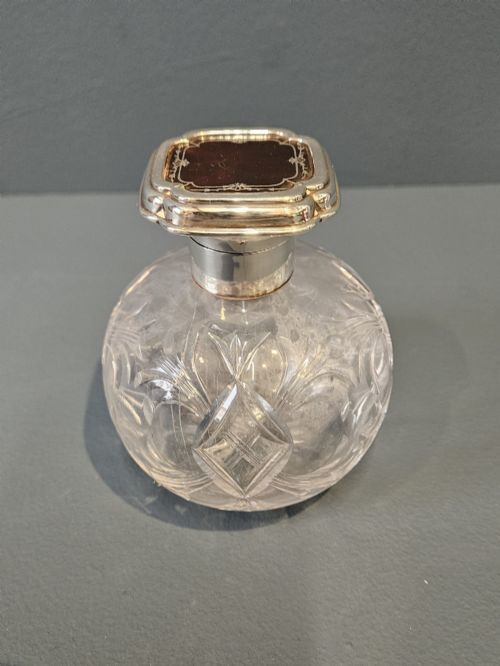
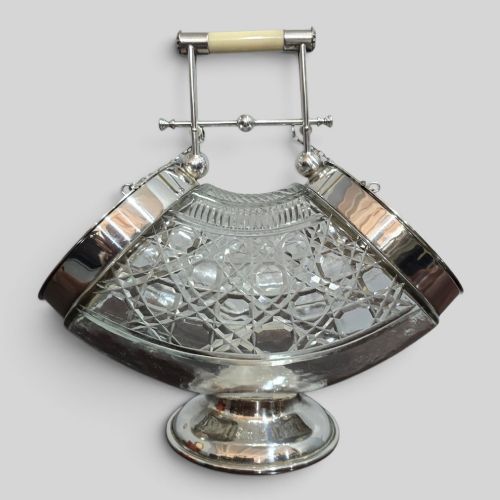
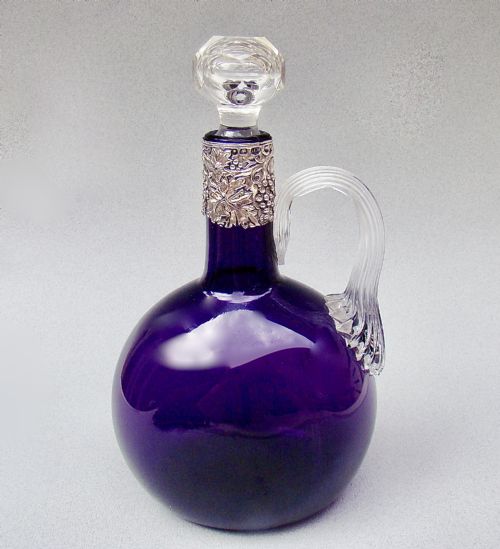
The selections span dining ware and vanity items, most frequently appearing as claret jugs, decanters, scent bottles, and biscuit barrels. Coloured glass variants - such as ruby, cranberry, amber, and opaline - sit alongside brilliant cut crystal and plain glass.
Makers utilised these combinations for practical domestic hospitality and personal grooming. Surviving examples reflect the high Victorian appetite for combining metalwork with decorative glass forms.
How They Were Made
The glass bodies were shaped by blowing into moulds or free-blowing, then finished through cutting, engraving, or enamelling to achieve deep facets and decorative surfaces. Coloured glass required specific mineral additives in the molten batch, creating rich tones like emerald, amethyst, and cobalt.
Silversmiths formed the mounts from sterling silver or silver plate, hammering, casting, or stamping the metal to fit the precise contours of the glass neck or base. Assay office hallmarks stamped into the silver collars provide exact recording dates and maker marks for the metal components.
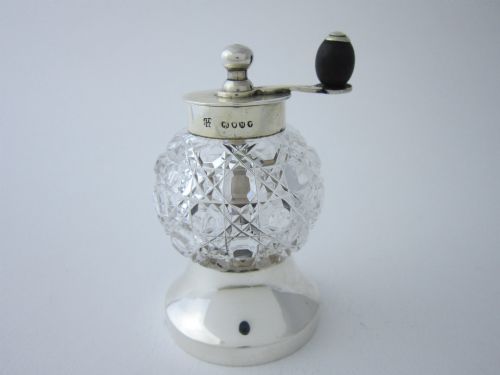
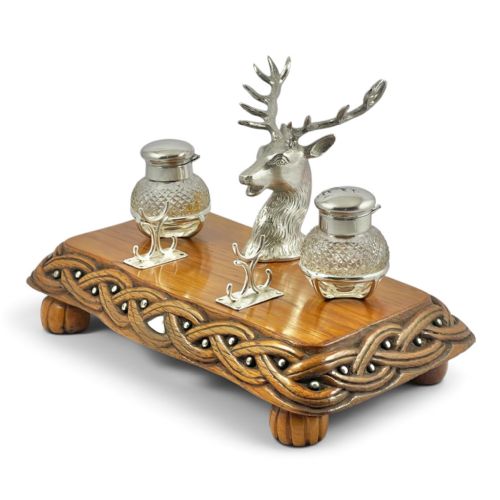
Object forms on this page include claret jugs, scent bottles, decanters, biscuit barrels, pepper grinders, and inkstands.
What Varies in Quality
Superior items display crisp, deep cutting in the glass and substantial gauge silver mounts that fit snugly without movement. The integration between glass and metal shows careful assembly, where hinged lids align perfectly and stoppers are original to the vessel.
Makers who engaged notable silversmiths or renowned glass houses produced pieces with refined proportions and complex decorative techniques, such as hand-applied enamel or detailed casting.
Asprey and Co. Ltd·Henry Matthews·William Comyns·Elkington·Mappin and Webb·James Fenton·Charles May·Grinsell and Sons·The Mousley Brothers
The Victorian Silver Mounted Glass Glossary
- Claret jug
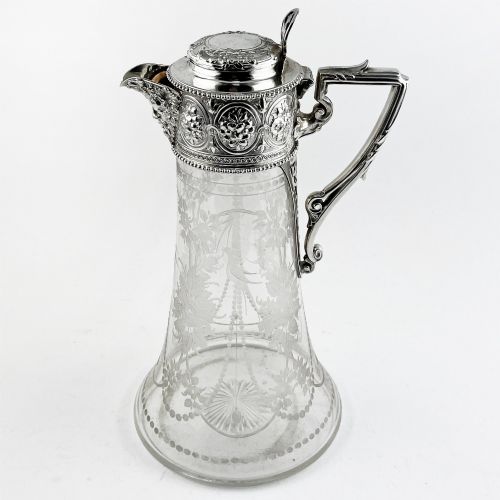
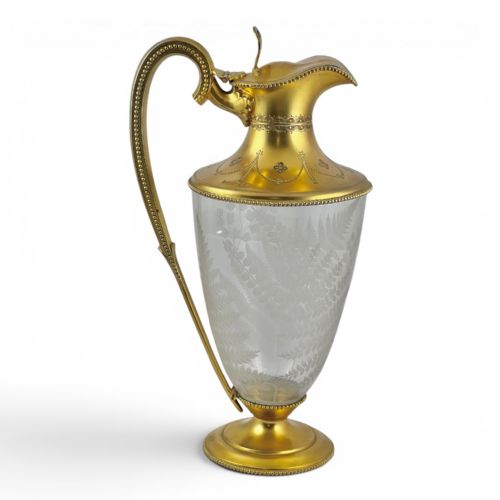
- A pouring vessel designed specifically for serving red wine, typically featuring a glass body with a hinged silver lid and handle. Many Victorian examples utilise ornate cut crystal or coloured glass.
- Scent bottle
- A small personal container for perfume, fitted with a secure silver cap or screw lid to prevent evaporation. These frequently employ coloured glass or detailed hobnail cutting.
- Biscuit barrel
- A lidded container used for storing biscuits on the dining table, combining a glass or ceramic body with a substantial silver plated or sterling mount and swing handle.
- Hallmark
- A series of official marks stamped onto silver components indicating the maker, assay office, standard of purity, and year of manufacture.
- Vinaigrette
- A small ornamental box featuring an internal pierced grille, designed to hold a sponge soaked in aromatic vinegar. These are often mounted onto miniature glass or precious metal bodies.
Victorian Silver Mounted Glass: Frequently Asked Questions
What is victorian silver mounted glass?
These items are nineteenth-century domestic and personal objects that combine blown or cut glass bodies with sterling silver or silver plate mounts. They range from large dining table decanters and claret jugs to small vanity scent bottles.
The silver components often bear official hallmarks, allowing collectors to identify the assay office and production year while the glass showcases various nineteenth-century manufacturing techniques.
How were these glass and silver pieces used?
Victorian households utilised these vessels primarily for serving beverages, storing dry goods, or holding perfumes and cosmetics. Decanters and claret jugs graced the dining table, while scent bottles and trinket jars rested on dressing tables.
Their dual construction allowed owners to enjoy the decorative qualities of coloured or cut glass alongside the durability and status of solid silver.
How do I clean silver mounted glass?
Clean the glass body with warm soapy water and a soft cloth, taking care to avoid harsh abrasives that might scratch the surface. Polish the silver mounts gently with a dedicated silver cloth, keeping polishes away from the glass.
Submerging antique pieces in liquid chemical dips can damage cement adhesives used in older mounts or tarnish exposed metal unevenly.
How can I tell the date of a piece?
Examine the silver mounts for stamped hallmarks, which typically include a date letter corresponding to a specific assay office register. These marks provide a reliable chronological anchor for the metalwork.
Stylistic cues in the glass cutting, colour preferences, and mounting design offer additional context for narrowing down the production period.