


Antique Glass Perfume Phial
An antique glass perfume phial is a pocket vessel for scent, crafted in cut glass and mounted in sterling silver to carry personal fragrance.
Antique Glass Perfume Phial
When you search for an antique glass perfume phial, you meet small scent bottles spanning the Georgian, Victorian, Edwardian, and Art Deco periods. These vessels range from simple cut glass tubes to elaborate forms mounted in sterling silver or ormolu.
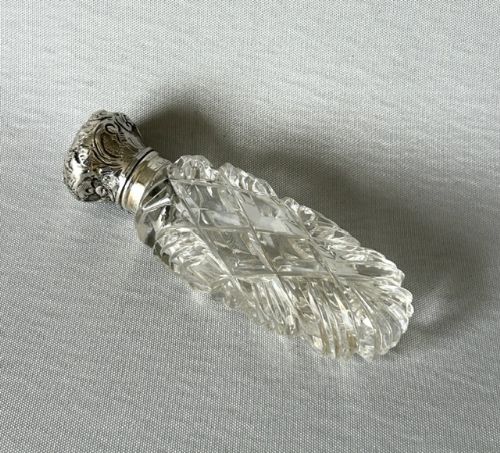
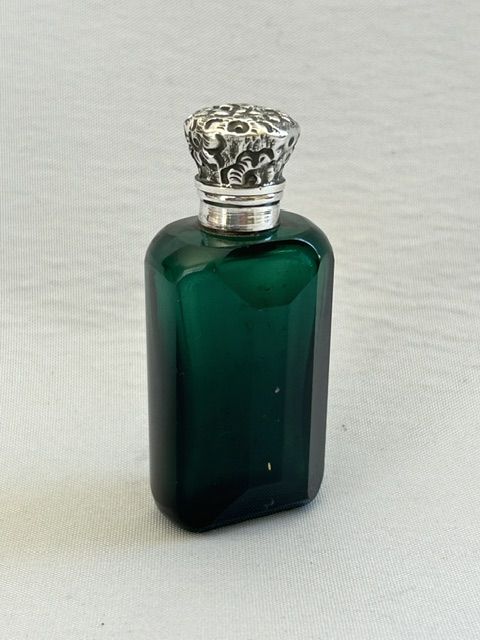
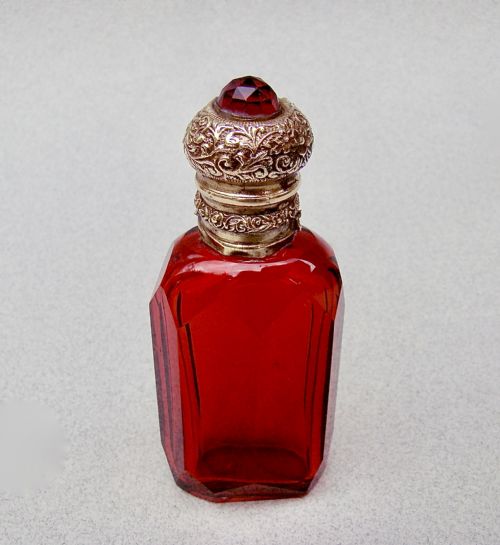
The version you are most likely to encounter on this page is a Victorian silver mounted design in cranberry glass, Bristol green, or clear cut glass, dating from the late nineteenth century. Such pieces were made to be carried in a purse or displayed upon a dressing table.
Makers and manufacturers also produced novelty shapes, such as eggs or owls, alongside double-ended formats and enamel topped pairs. Each example reflects the prevailing taste of its decade, from Georgian Jacobite engraving to the clean lines of Art Deco.
How they were made
Glassmakers blew and cut lead crystal, cranberry glass, and ruby glass to create the body of the phial, sometimes adding etched detail or symmetry. This glass was combined with cast and chased sterling silver, ormolu mounts, and enamel tops.
Silversmiths constructed hinged caps and screw lids to seal the scent within the bottle, often incorporating cork stoppers internally. Engraving and repoussé work decorated the silver mounts, matching the scale of the miniature glass vessels.
Some Victorian designers turned scent bottles into wise owls and smooth eggs, ensuring your perfume came with a beak or a shell.
What varies in quality
The standard of a phial rests upon the depth of the glass cutting, the clarity of the colour, and the crispness of the silver mounts. Finer pieces display sharp facets on the glass and detailed hand engraving on the metal cap rather than simple stamped decoration.
Unusual forms, such as figural animal designs or Jacobite sympathy engravings, require greater skill from the artisan and separate standard dressing table accessories from notable cabinet examples.
The Antique Glass Perfume Phial Glossary
- Phial
- A small glass bottle or vial used for holding liquids such as perfume. It is designed to be portable and secure.
- Cranberry glass
- A rich pinkish-red glass produced by adding gold chloride to the molten batch. It was widely utilised in Victorian scent bottles.
- Ormolu
- Gilded bronze or brass mounts applied to decorative objects. It provides a bright golden contrast to coloured glass.
- Double ended
- A scent bottle featuring compartments at both ends with separate stoppers or caps. This allowed the owner to carry two distinct fragrances simultaneously.
- Jacobite
- Pertaining to the political movement supporting the exiled Stuarts. Items bearing this association often feature coded symbols and engravings.
Antique Glass Perfume Phial: Frequently Asked Questions
What is a glass perfume phial?
A glass perfume phial is a small container designed to hold liquid fragrance securely in a pocket or handbag. They were essential personal accessories in the Georgian and Victorian eras.
Most examples combine a blown glass body with a tight metal cap to prevent evaporation of costly scents.
How were double-ended scent bottles used?
Double-ended scent bottles allowed the owner to carry two different perfumes or smelling salts in a single container. Each end featured its own hinged or screw cap.
These pieces became popular during the Victorian period for daily personal use.
How do I date an antique scent bottle?
Dating relies on the style of the glass cutting, the shape of the bottle, and any silver hallmarks present on the mounts. Hallmarks provide exact years and assay office locations.
Stylistic cues such as Art Deco geometric enamel or Georgian Jacobite engraving also indicate the period.
Can I still use antique perfume bottles?
Antique perfume phials can hold fragrance if the inner stopper and outer cap seal properly. Many owners prefer to display them empty on a dressing table to protect the delicate glass and silver.
Careful cleaning with warm water preserves the interior without damaging historic metalwork.