
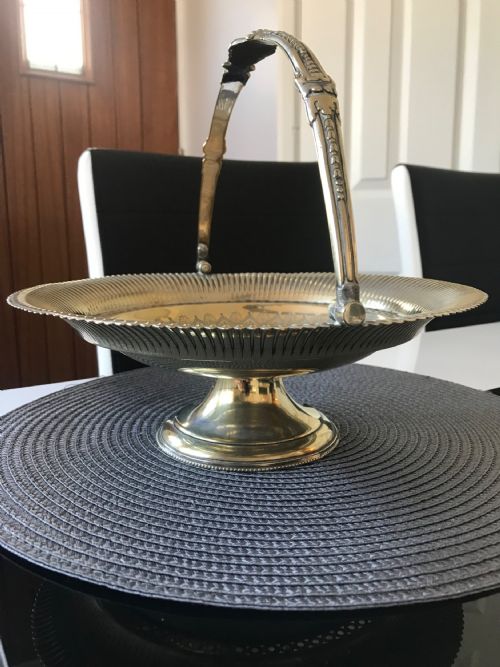


Victorian Silver Cake Basket
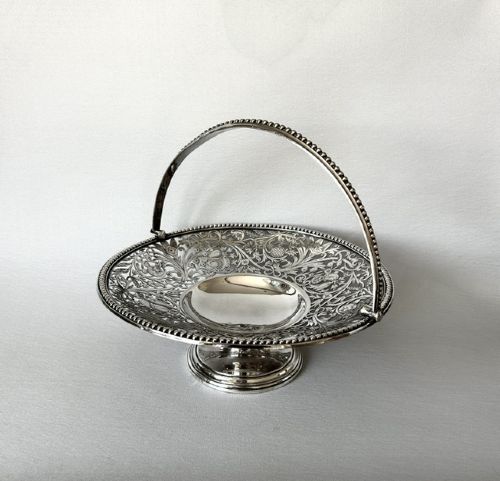
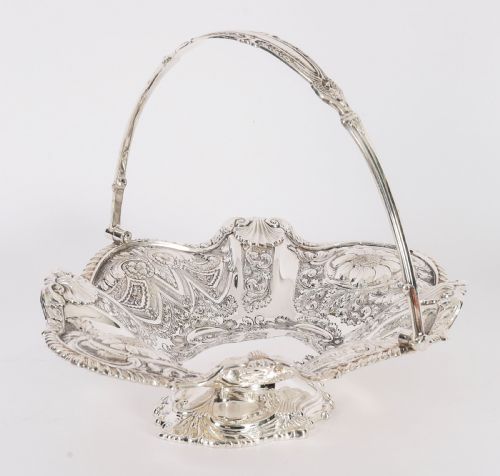
A victorian silver cake basket brings nineteenth-century dining ceremony to the table, offering a deep swing-handled vessel for fruit, bread or pastry.
Victorian Silver Cake Basket
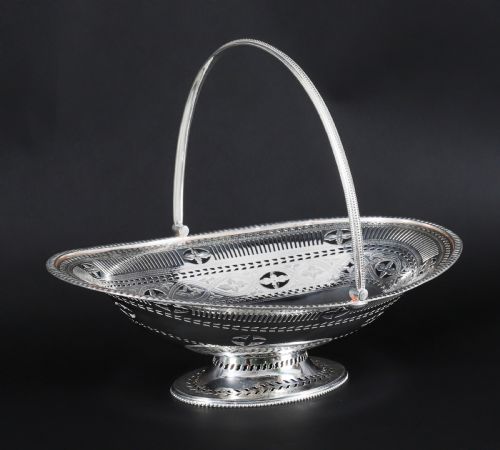
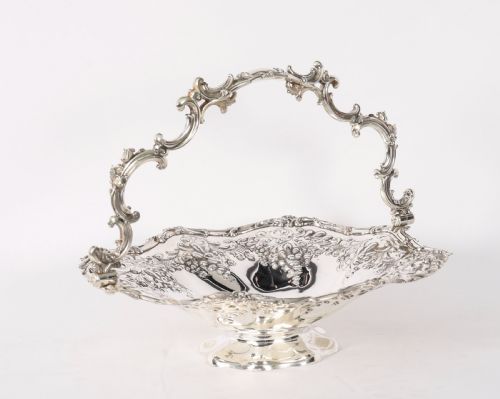
A victorian silver cake basket takes the form of a footed bowl or deep receptacle fitted with an arched swing handle, designed for serving cakes and fruits in nineteenth-century households. These pieces appear in solid sterling silver and various plated forms, crossing stylistic paths from restrained neoclassical lines to exuberant rococo revival curves.
The selection on this page centres primarily on silver plated specimens alongside solid silver examples bearing hallmarks from the nineteenth century and subsequent decades. Alongside traditional fruit and cake baskets, related serveware includes bread baskets and decorative bowls with piercework or embossed detailing.
Origins stretch from mid-nineteenth century workshops through to later art nouveau and aesthetic movement interpretations. Makers range from large-scale manufacturers to specialised silversmiths, utilising glass inserts or heavy metal bases to achieve varied silhouettes.
Materials and Construction
Silver plating on copper or nickel silver forms the backbone of these pieces, alongside solid sterling silver constructed through hammering, casting and piercing techniques. Manufacturers employed electroplated nickel silver and standard silver plate to achieve lustrous surfaces without the weight and cost of solid metal.
Decorative work relies heavily on piercing, embossing and applied cast mounts, creating openwork lattices or floral relief around the bowl walls. Swing handles attach securely via hinged pivots, often complemented by cast feet or pierced rims that ground the vessel firmly upon the table.
Specialist variations incorporate opaline glass liners held within pierced metal frames, marrying glasswork with silver plating for aesthetic movement designs. Makers stamped their pieces with specific marks to indicate plating quality, solid silver standards or factory origins.
Victorian Silver Cake Basket Retail Price Guide 2026
Typical asking prices for victorian silver cake basket among the pieces listed under this phrase on Sellingantiques today, from the lower quarter to the upper quarter. They describe what is for sale here now, not the wider market.
Listings feature items spanning the nineteenth and twentieth centuries, utilising materials from brass and glass to solid sterling silver.
The Spectrum of Quality
Quality rests upon the crispness of the pierced or embossed ornament and the structural integrity of the swing handle and its hinge mechanism. Superior examples display deep, hand-chased detail rather than shallow stamped patterns, maintaining structural rigidity across the basket body.
The preservation of the underlying metal beneath the silver plate determines lasting visual appeal, with finer pieces retaining their bright plating without excessive wear on high points. Solid silver iterations derive their standing from clear hallmarks, heavier gauge metal and well-balanced proportions that sit squarely on their feet.
George W. Scott & Sons Ltd·James Deakin & Sons·W M F·James Dixon·Elkington
The Victorian Silver Cake Basket Glossary
- Swing handle
- An arched metal handle attached to pivot pins on either side of the basket rim, allowing it to drop flat or stand upright. This feature permits easy passing at the dining table.
- Piercework
- A decorative technique where metal is pierced and cut away to form openwork lattices, scrolls or geometric patterns. It lightens the visual weight of the basket.
- Electroplated nickel silver
- A base metal alloy of copper, nickel and zinc coated with a thin layer of pure silver using an electrolytic process. It became the dominant manufacturing method in the Victorian period.
- Opaline glass
- An opaque, milky glass often tinted in soft colours, used as a removable liner within decorative metal baskets. It provides a striking textural contrast against silver or plated frames.
- Neoclassical
- A design style inspired by classical Greek and Roman forms, characterised by symmetry, straight lines, urn motifs and restrained floral garlands. It contrasts sharply with the curving asymmetry of rococo revival.
Victorian Silver Cake Basket: Frequently Asked Questions
How were silver cake baskets used?
Victorian households utilised these baskets for presenting sliced cakes, pastries or seasonal fruit during formal teas and dinner parties. The swing handle allowed guests or servants to lift the vessel easily from the sideboard to the table.
They served as both functional serveware and decorative centrepieces, reflecting the host's social standing through the brilliance of the polished metal.
How do I clean a silver cake basket?
Maintenance requires gentle washing in warm soapy water using a soft cloth, avoiding harsh abrasive dips that strip the remaining silver plate or damage delicate antique surfaces. Regular dusting with a non-abrasive cloth preserves the underlying metal.
For pieces with glass inserts, remove the liner before cleaning the metal frame separately to protect both materials from moisture trapped underneath.
Solid silver or silver plated?
Distinguishing solid silver from plated wares involves searching for British hallmarks, which indicate standard sterling purity, city assay offices and date letters. Plated pieces usually feature maker marks or electroplate designations rather than official town hallmarks.
Weight, feel and the presence of base metal showing through worn high points offer further clues to a piece's construction method.
How do I style one in a modern home?
These baskets integrate well into contemporary spaces as functional containers for fresh fruit on a kitchen island or as standalone decorative objects on a sideboard. Their openwork frames and reflective surfaces catch natural light effectively.
Pairing a pierced silver basket with seasonal botanicals or glass ornaments highlights the intricate craftsmanship without requiring formal dining use.