


Silver Cake Basket Handle
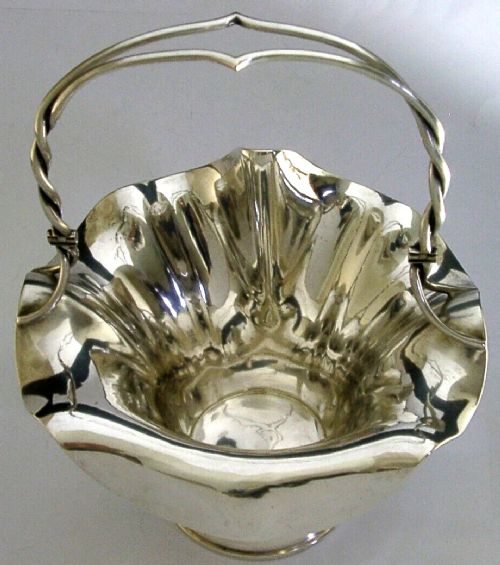
A silver cake basket handle secures the movable arch above Georgian, Victorian, and Edwardian vessels designed for display.
Silver Cake Basket Handle
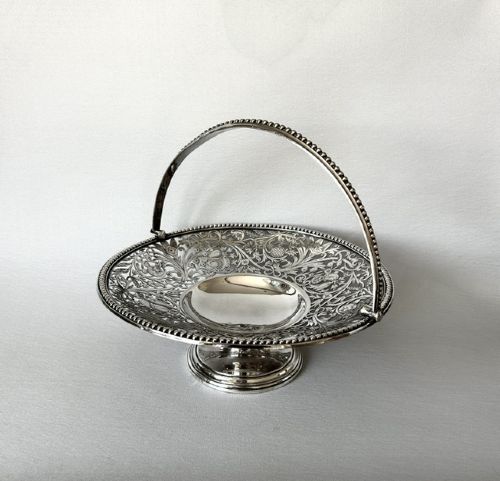
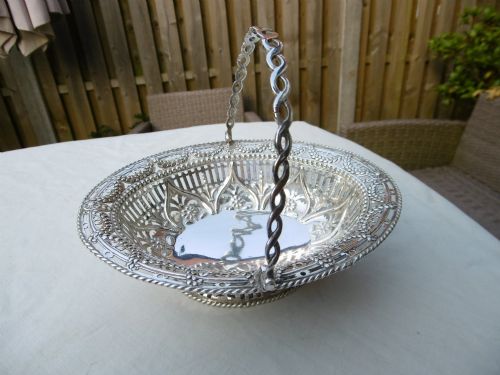
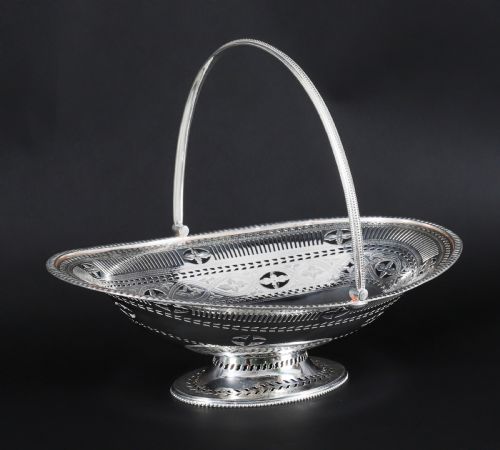
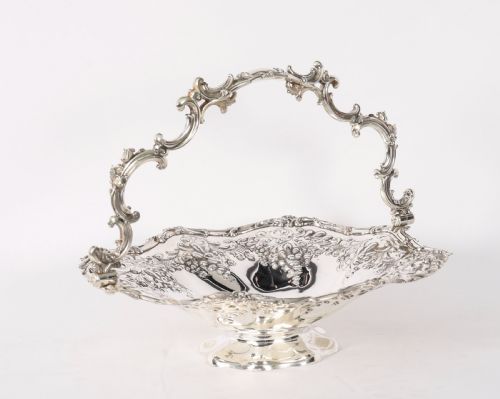
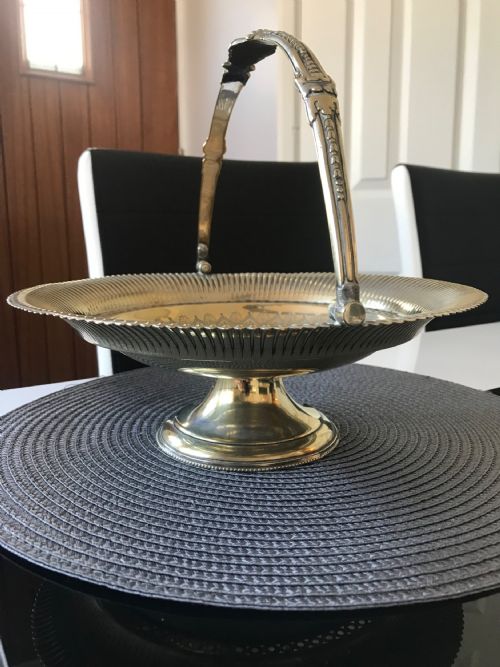
A silver cake basket handle forms the arched grip above footed or flat-bottomed servers spanning the eighteenth, nineteenth, and twentieth centuries. These pieces appear in solid sterling silver, silver plate, and Old Sheffield Plate, often accompanied by swing mechanisms that allow the arch to drop to either side.
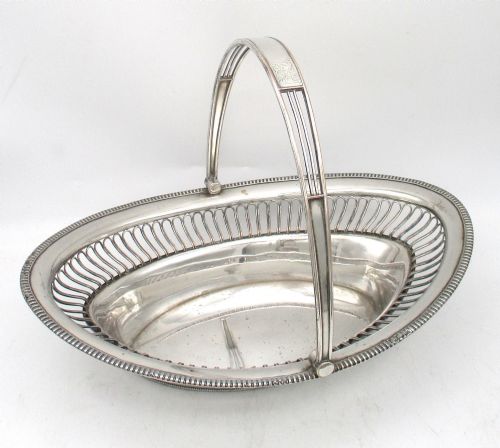
The forms range from heavy solid silver Georgian and Edwardian examples with intricate pierced or lattice work to silver plated Victorian fruit and bread baskets. Makers utilise copper cores, glass inserts, and electroplated nickel silver alongside traditional sterling.
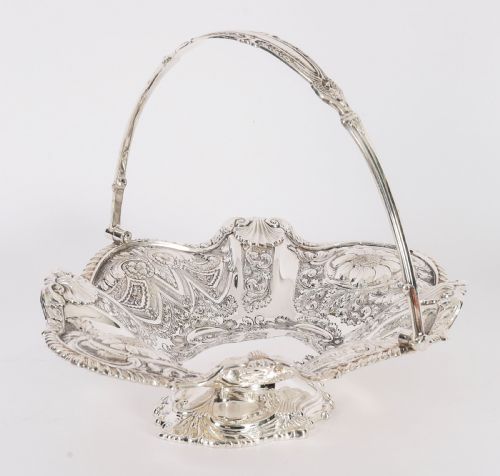
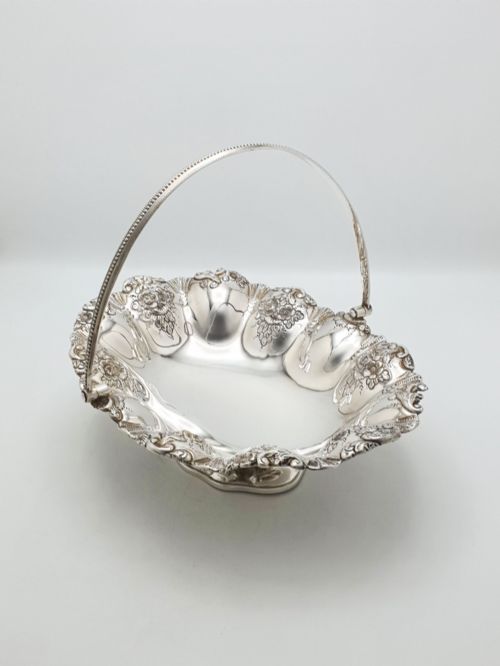
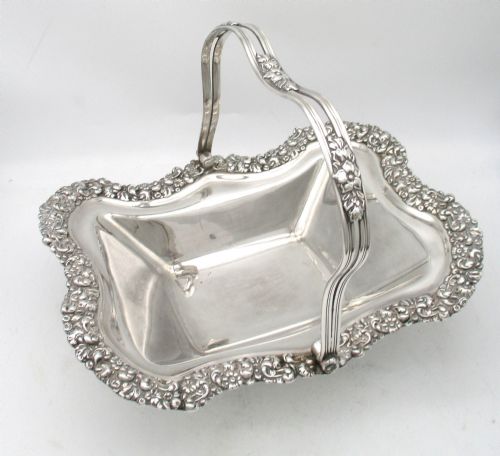
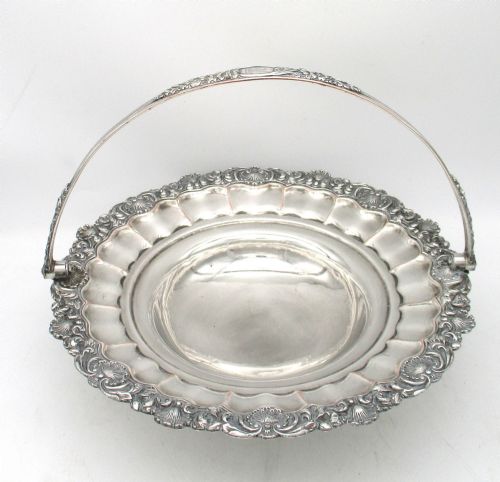
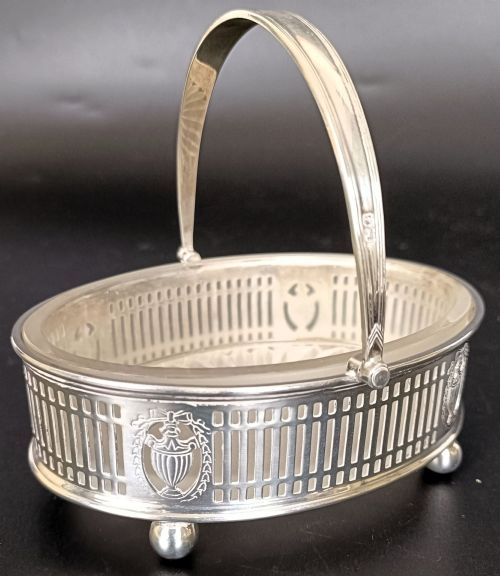
Collectors encounter swing-handled vessels shaped as oval, round, and decorative bowls, frequently displaying repoussé rims, floral detailing, or neo-classical styling.
Materials and construction
Silversmiths constructed solid pieces from sterling silver, hammering and piercing the metal to create lattice and fretwork designs. Other examples utilise Old Sheffield Plate or silver plate over copper and nickel silver bases.
Handles attach via pivoting pins or hinges to allow movement, while decorative elements like floral repoussé and embossed detailing are worked into the rims and borders of the baskets.
Listings span solid sterling silver, silver plate, Old Sheffield Plate, and copper across Georgian, Victorian, and Edwardian periods.
Quality variations
The weight of the metal and the precision of the pierced or fretwork ornamentation distinguish standard production from exceptional work. Solid sterling pieces by known makers demand attention for their structural integrity and crisp chasing.
The method of plating and the preservation of the underlying copper or nickel silver determine the durability of silver plated and Old Sheffield examples. Smooth operation of the swing handle and balance in the resting position indicate superior original assembly.
George W. Scott & Sons Ltd·John Hunt·Samuel Herbert·John Walton·James Dixon & Sons Ltd·William Hutton & Sons·James Deakin & Sons·Hammond, Creake & Co·Liberty & Co
The Silver Cake Basket Handle Glossary
- Swing handle
- A movable arched grip attached to the rim of a basket by pivots, allowing it to lower to the side. This mechanism is common on Georgian and Edwardian cake and fruit baskets.
- Old Sheffield Plate
- A composite material formed by fusing a sheet of silver to a thicker copper base before rolling and shaping. This technique appears on eighteenth and nineteenth-century domestic wares.
- Pierced work
- A decorative technique involving the cutting or piercing of holes through the silver plate in geometric or floral patterns. This method lightens the vessel and showcases craftsmanship.
- Repoussé
- A metalworking technique where the design is hammered into relief from the reverse side. It creates raised floral and scroll motifs on basket rims.
- Electroplated nickel silver
- A base metal alloy of copper, nickel, and zinc coated with a layer of silver via an electrical process. It serves as a substitute for solid silver in later Victorian and Edwardian manufacturing.
Silver Cake Basket Handle: Frequently Asked Questions
What is a silver cake basket handle used for?
The handle supports the movable arch on top of serving vessels intended for bread, fruit, and cakes. It allows users to lift and pass the server during formal dining.
Historically, these pieces occupied the centre of the table for dessert or tea service before table arrangements shifted in the twentieth century.
How do I identify a Georgian silver basket?
Georgian pieces typically feature hallmarks stamped directly onto the silver, indicating the assay office, date letter, and maker's mark. They often display hand-pierced wirework or chased detailing characteristic of the eighteenth century.
Solid silver construction and heavier gauges of metal distinguish these earlier items from later plated alternatives.
What is the difference between silver plate and Old Sheffield Plate?
Old Sheffield Plate uses a mechanical fusion method where a thin layer of sterling silver is bonded to a copper ingot prior to rolling. This produces a distinctive cross-section where copper edges may appear.
Standard silver plate relies on an electrochemical process introduced later in the nineteenth century to coat base metals like nickel silver.
How should I clean a silver basket handle?
Gentle washing with warm water and mild soap removes daily dust without harming the metal surface. Specialised silver polishing cloths maintain the shine without abrasive scratching.
Plated items require particular care to avoid wearing through the thin silver layer over raised embossed details.