
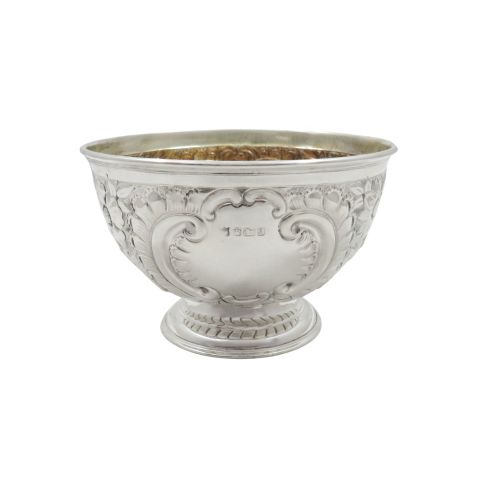
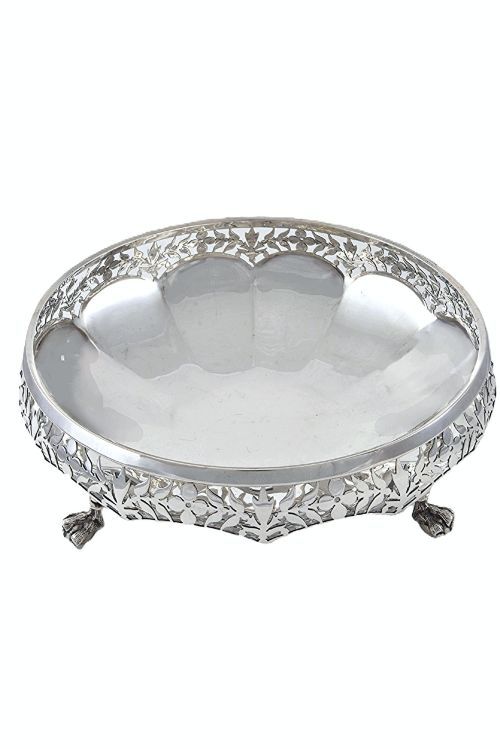
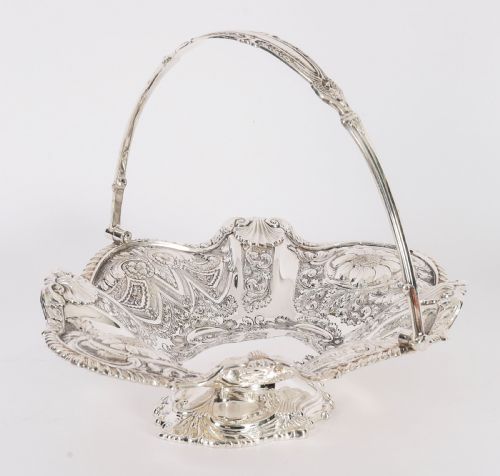
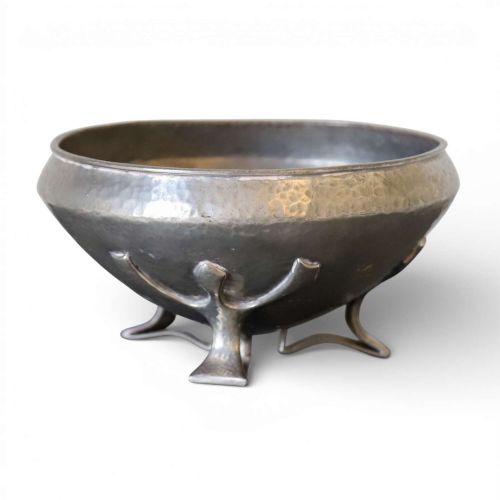
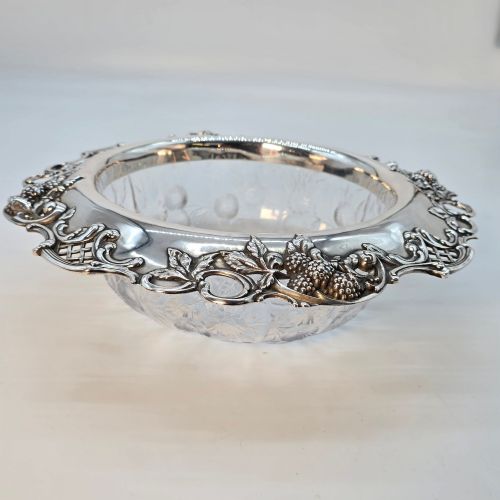
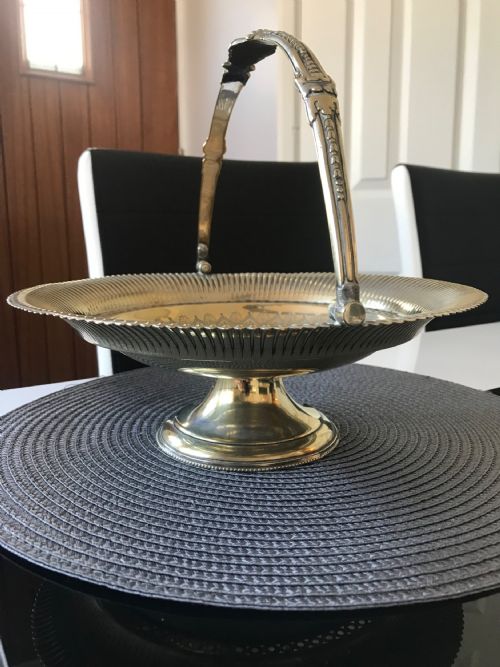
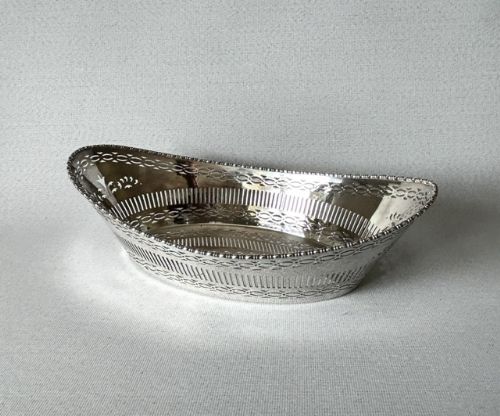
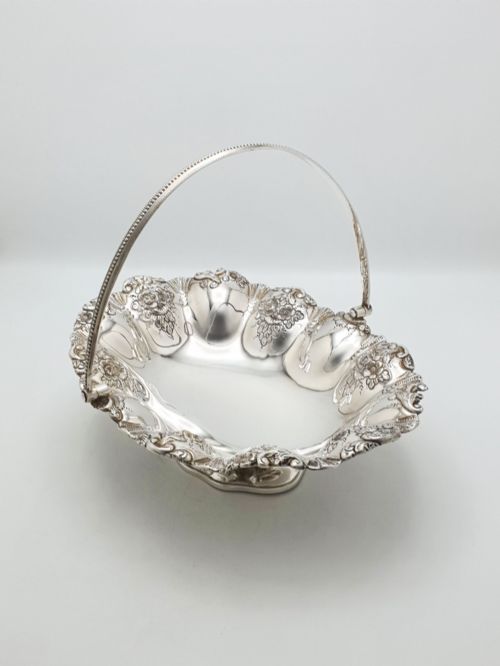
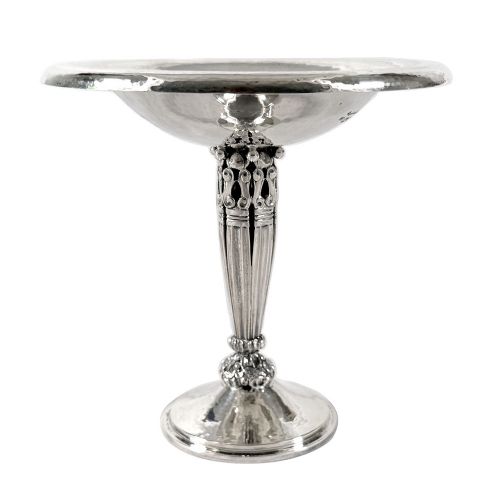


Edwardian Silver Fruit Dish
An edwardian silver fruit dish brings pierced metalwork, swing handles and pedestal feet to the table, combining utility with distinct period style.
Edwardian Silver Fruit Dish
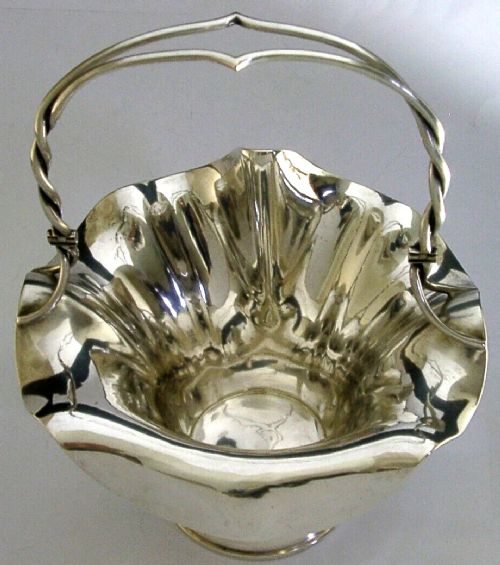
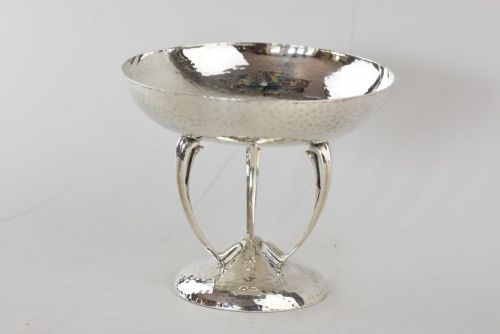
When you search for an edwardian silver fruit dish, you encounter open baskets, handled bowls, pedestal dishes and tazze spanning the late nineteenth and early twentieth centuries. These vessels served to present fruit, bread or cakes upon the dining table, taking diverse forms from simple sterling bowls to elaborate swing-handled baskets.
The versions met most frequently on this page date from the Edwardian period itself, alongside Victorian, George V and slightly later pieces sharing similar domestic functions. Alongside solid sterling silver, many examples utilise silver plate, electroplated nickel silver, pewter combined with glass, or ceramic elements.
Makers and manufacturers from London, Sheffield, Birmingham and continental workshops produced these items across varied stylistic movements including Art Nouveau, Arts and Crafts, Neoclassical and traditional Edwardian designs. The selection encompasses footed bowls, lattice-pierced baskets, and figural centrepieces intended for formal presentation.
Materials and Techniques
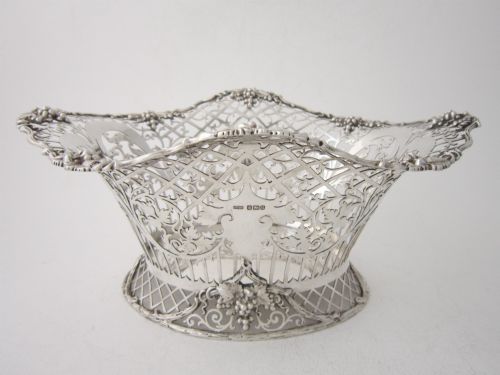
Silversmiths utilised sterling silver and silver plate over base metals, shaping bodies through hammering, casting or spinning before applying decorative details. Piercing and lattice work required careful hand-sawing or piercing to create open geometric patterns without weakening the structural integrity of the dish.
Makers frequently employed repoussé and chasing techniques to push floral and foliate motifs out from the reverse of the metal, creating textured relief rims and borders. Swing handles were attached via pivoting pins to reinforced mounts, allowing handles to drop cleanly to the sides of the basket.
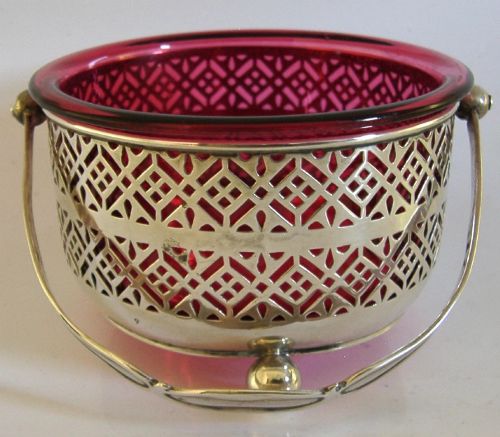
Pewter and mixed-media pieces incorporated blown or cut crystal glass liners, ceramic bowls, or oak bases secured within metal frameworks. Plated wares utilised electroplated nickel silver as a durable base for silver deposition, ensuring a bright metallic finish across complex forms.
Listings feature items spanning the Victorian era, the Edwardian period, and the 1920s, utilising sterling silver, silver plate, pewter, glass, and ceramic.
Distinctions in Execution
Quality rests in the crispness of the piercing, the weight of the metal, and the harmony of the design proportions. Substantial gauge silver or heavy plating resists bending under the weight of fruit, maintaining structural rigidity across wide bowls and swinging handles.
Superior examples display finely detailed repoussé work where floral motifs retain sharp contours and clean depths rather than soft, blurred edges. The integration of mixed media, such as fitted cranberry glass liners or cut crystal inserts, demonstrates precise tolerances and careful craftsmanship.
Goldsmiths and Silversmiths Company·George W. Scott And Sons Ltd·Liberty And Co Tudric Pewter·Tiffany And Co·Mappin And Webb·Charles Boyton·Elkington And Co·Walker And Hall·James Dixon And Sons·Roberts And Belk·S. Kirk And Son Company
The Edwardian Silver Fruit Dish Glossary
- Tazza
- A shallow bowl or dish mounted upon a stem and foot. This pedestal form elevates the display of fruit or sweetmeats above the table surface.
- Repoussé
- A metalworking technique where the artisan hammers or pushes the design from the reverse side to form raised patterns on the front. This creates tactile floral and scroll borders.
- Pierced
- Metalwork perforated with decorative patterns or lattice openings. It lightens the visual weight of large silver dishes and baskets.
- Comport
- A shallow standing dish used for serving fruit or dessert. They appear frequently in pedestal formats across Edwardian dining collections.
- Swing Handle
- A hinged bail handle attached to opposite sides of a basket or bowl. It allows the handle to fold flat against the vessel rim when not in use.
Edwardian Silver Fruit Dish: Frequently Asked Questions
What were fruit dishes used for?
These vessels held fresh fruit, bread, or cakes for presentation on the dining table or sideboard during formal meals and gatherings. Their raised or handled formats made them easy to pass among guests.
Over time, their domestic role expanded into decorative centrepieces when empty, showcasing the intricate metalwork, glass inserts, or pierced lattice designs.
How do I tell sterling from silver plate?
Sterling pieces bear hallmarks indicating silver standards, such as the lion passant in British assay office marks, alongside maker marks and date letters. Silver-plated items generally use manufacturer marks like EPNS or specific maker stamps denoting an electroplated finish over base metal.
Examining worn spots on handles or high points can also reveal the underlying base metal on plated pieces, whereas solid silver maintains a uniform composition throughout.
How do I clean antique silver dishes?
Dust the piece gently with a soft cloth and wash with mild, warm soapy water if needed, avoiding abrasive pads or harsh chemical dips that strip patination. Dry thoroughly with a lint-free cloth to prevent water spots.
Store the dish away from direct sunlight and damp environments, and use specialised silver polish sparingly only when necessary to maintain the finish.
How do I date an edwardian dish?
British pieces often carry date letters within their hallmarks that correspond to specific assay office years spanning the Edwardian era from 1901 to 1910. Style indicators, such as characteristic Art Nouveau sinuous lines or heavy neoclassical repoussé borders, help narrow down the period when hallmarks are absent.
Maker marks also assist with dating when checked against historical factory operating years and registered design numbers stamped onto the base.