
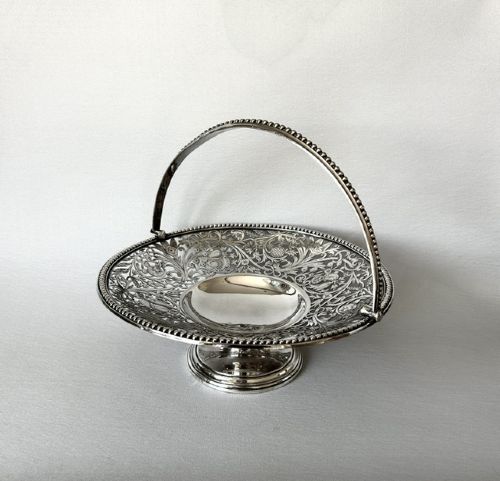
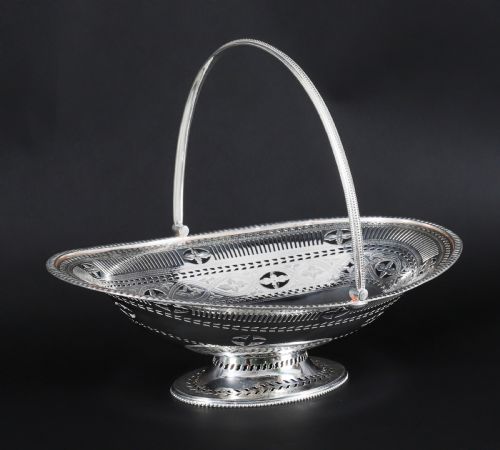
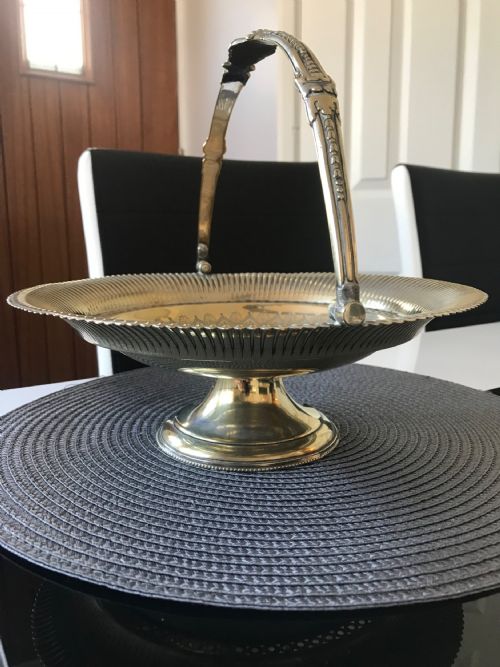
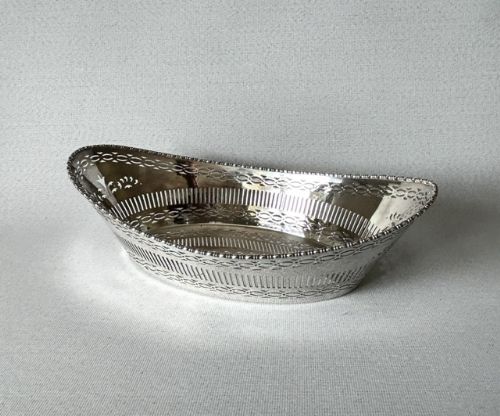


Vintage Silver Plated Basket
A vintage silver plated basket brings substantial Victorian and Edwardian weight to a table, combining practical service with crisp metalwork.
Vintage Silver Plated Basket
A vintage silver plated basket encompasses fruit baskets, cake baskets, and bread baskets spanning the Georgian, Victorian, Edwardian, and Art Deco periods. These forms served formal dining rooms and parlours, functioning as functional serveware or decorative centerpieces.
The pieces seen most often on this page date from the nineteenth and early twentieth centuries, particularly the Victorian and Edwardian eras. Formats range from swing-handle fruit vessels to wirework baskets and handled bowls.
Makers utilised various base metals beneath silver plating, producing distinct weights and decorative details across different decades. Buyers encounter everything from early nineteenth century wirework to geometric Art Deco serving dishes.
Materials and construction methods
Silversmiths constructed these pieces using copper, nickel silver, and electroplated nickel silver as base metals before applying silver plate or utilising the earlier Old Sheffield Plate technique. Old Sheffield Plate fused a thin sheet of sterling silver to a copper core, visible at exposed edges.
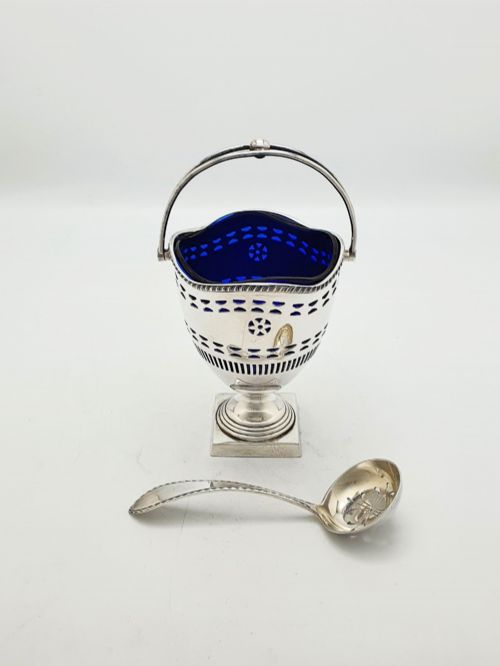
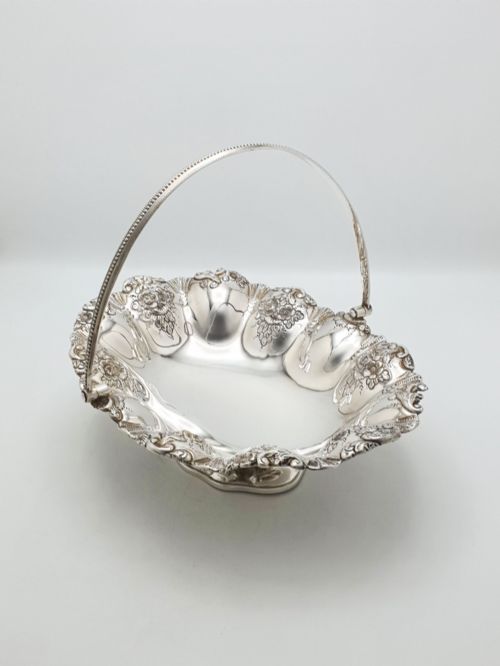
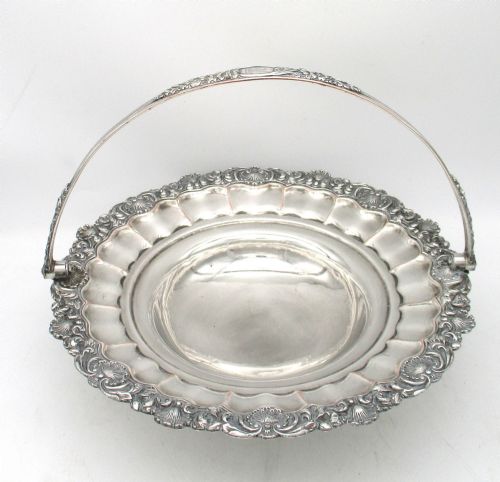
Makers shaped the metal through piercing, wirework, and repoussé hammering to create pierced galleries and floral rims. Swing handles, loop handles, and applied cast mounts required precise soldering and mechanical fastening.
Makers combined silver plate with contrasting elements such as cobalt glass liners, wood bases, and cut crystal inserts. These mixed media constructions added colour and texture to standard silver vessels.
Some nineteenth century bakers rested their cakes inside wirework baskets so enthusiastically that crumbs permanently settled into the soldered joints.
Factors that distinguish the finest pieces
Quality separates pieces by the crispness of the repoussé work, the delicacy of the pierced galleries, and the structural integrity of the wirework. Hand-finished chasing on floral rims shows superior craftsmanship compared to plain stamped alternatives.
The condition of the silver layer dictates overall standard, particularly where underlying copper or nickel shows through heavy polishing. Maker attribution also elevates certain pieces, distinguishing documented studio production from unmarked manufacturing.
Mappin & Webb·Elkington·Roberts and Belk·Brille Paris·James Dixon
The Vintage Silver Plated Basket Glossary
- Old Sheffield Plate
- An early method of fusing silver to a copper ingot before rolling them into sheets. This technique predates electroplating and leaves characteristic copper seams along cut edges.
- EPNS
- Electroplated Nickel Silver, a common base material introduced in the nineteenth century. It provides a stable white metal foundation for silver deposition.
- Pierced work
- The practice of cutting decorative patterns through the metal wall of a basket. This technique lightened fruit and cake baskets while adding intricate visual detail.
- Repoussé
- A metalworking technique where the artisan hammers the design from the reverse side to form raised patterns in relief on the rim or body.
- Wirework
- Construction method utilising fine drawn wires soldered together in geometric or open lattices. It appears frequently in lighter baskets from the Georgian and early nineteenth century eras.
Vintage Silver Plated Basket: Frequently Asked Questions
How do I clean a silver plated basket?
Clean silver plate using a soft cloth and a specialised silver cream designed to protect thin plated surfaces. Avoid abrasive dips that strip remaining silver layers from the base metal.
Take care around applied repoussé details and soldered joints where excessive rubbing can expose the underlying copper or nickel silver.
What is the difference between Old Sheffield Plate and electroplate?
Old Sheffield Plate involves physically fusing a sheet of silver to a copper core by heat and pressure. This creates a solid sandwich of metal with distinct copper edges.
Electroplate applies a thin layer of silver onto a base metal using an electrical current. This later technique leaves a uniform coating without exposed copper seams.
How were cake and fruit baskets used?
Cake and fruit baskets served wealthy households during afternoon tea and formal dining courses. They held bread, cakes, or fresh fruit for guests to select at the table.
Many featured swing handles for easy transport by servants between the kitchen and the dining parlour.
How do I date a silver plated basket?
Dating relies on stylistic clues such as Neoclassical swags, Victorian floral repoussé, or geometric Art Deco lines. Maker marks and registration numbers stamped on the base offer further chronological context.
Construction methods like Old Sheffield Plate point toward the Georgian and early nineteenth century periods.