
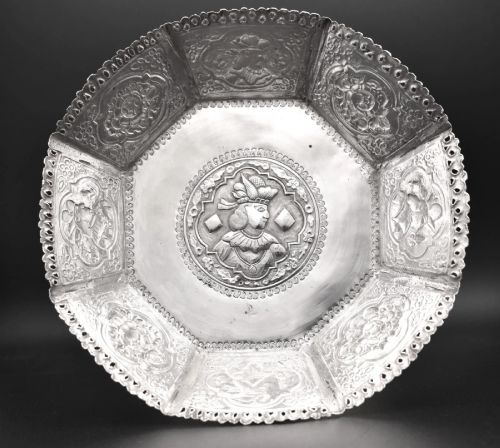


Silver Pedestal Fruit Bowl
These silver pedestal fruit bowl examples bring raised elegance to a table, offering deep bowls on elevated feet for serving fresh fruit or holding centrepieces.
Silver Pedestal Fruit Bowl
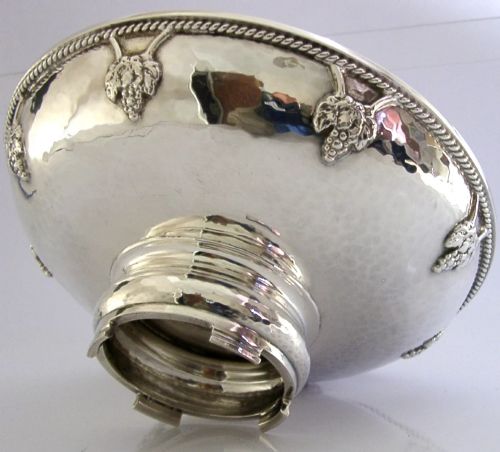
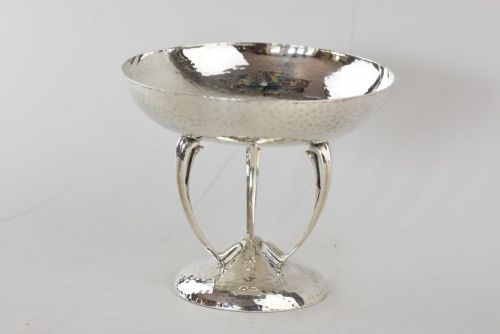
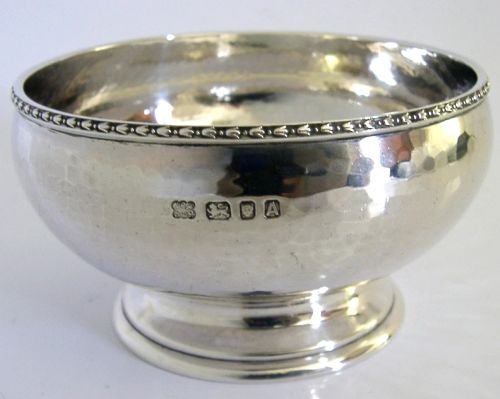
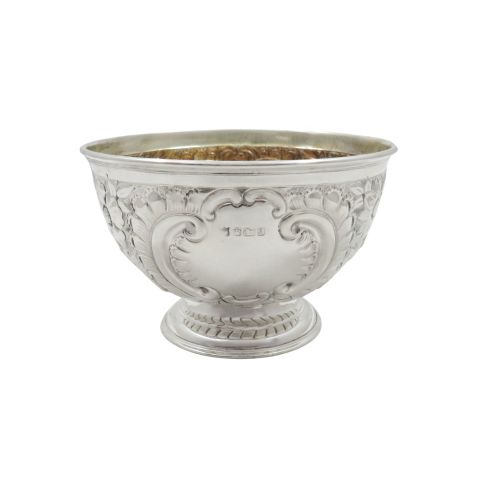
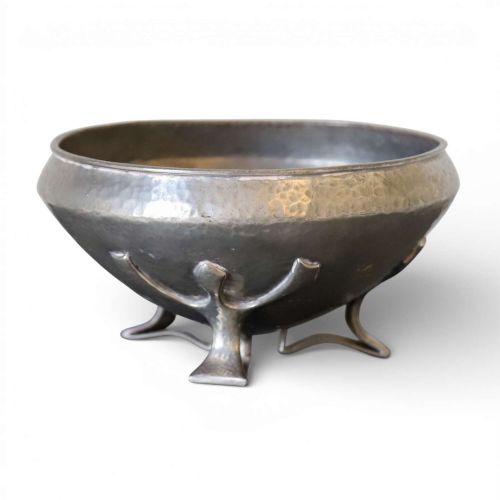
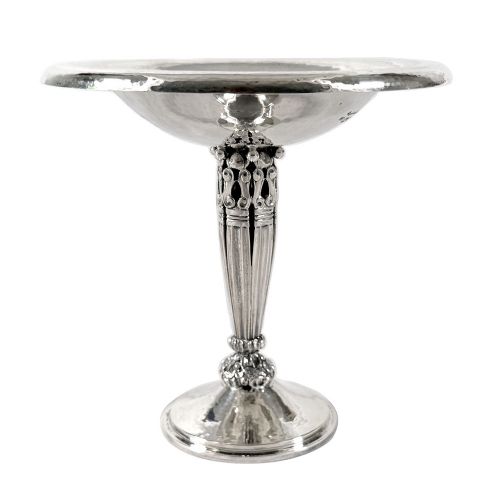
A silver pedestal fruit bowl sits on a raised foot, tazza base or stem, lifting fruit and decorative arrangements above the surface of a dining table or sideboard. These vessels appear across the Victorian and Edwardian eras, alongside Arts and Crafts, Art Nouveau and Art Deco periods, shifting in form from classical revival baskets to hammered modernist tazze.
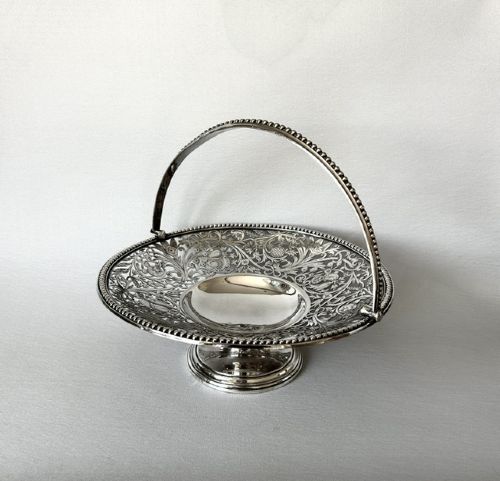
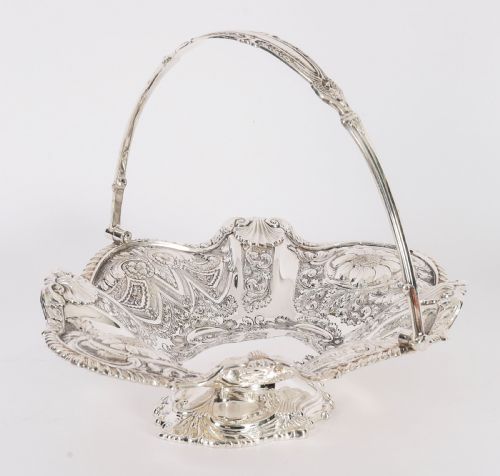
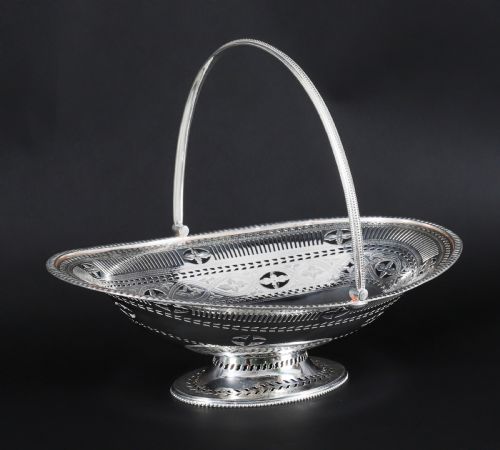
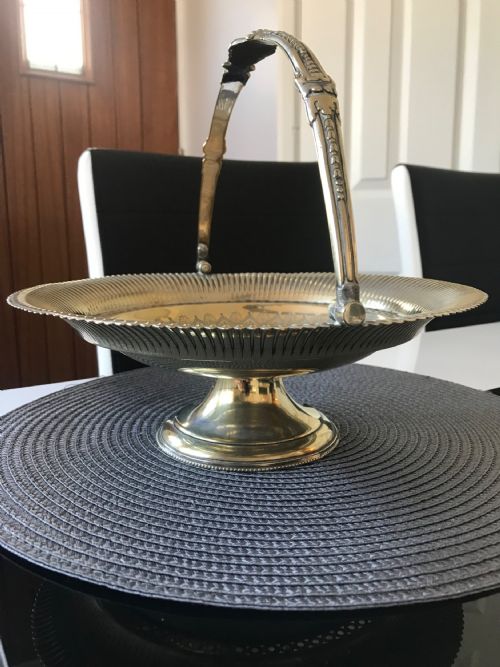
The objects on this page span solid sterling silver and silver plate, as well as specialised variations combining cut crystal, brass, glass and electroplated nickel silver. Buyers will find footed bowls, pierced presentation pieces, swing-handled baskets and large centrepieces created by British makers and international houses alike.
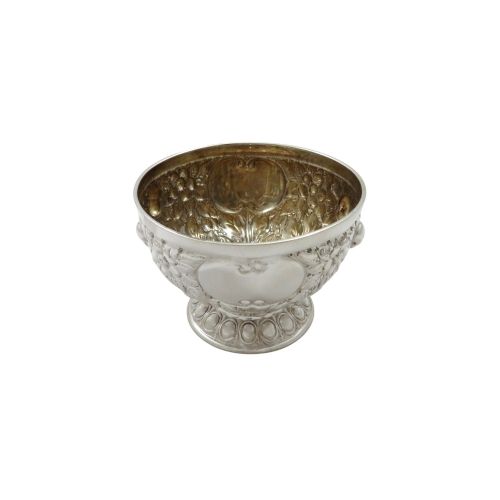
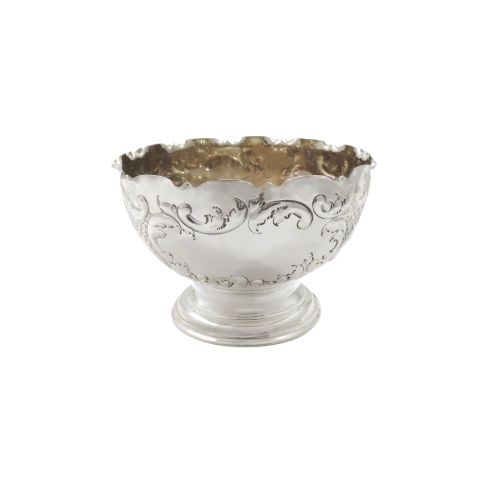
Victorian and Edwardian pieces often feature pierced lattice detail, repoussé work or neo-classical cast ornament, while later 20th-century examples lean towards clean geometric lines or modernist planished surfaces. Choosing a piece involves balancing the intended function, whether for daily dining display or holding fruit, with the desired period aesthetic.
Materials and construction methods
Silversmiths constructed solid sterling silver and continental 800 silver vessels through raising from a flat sheet, hammering, or casting the foot and bowl separately before soldering them together. Planishing hammers left subtle facets across Arts and Crafts pieces, while decorative borders relied on chasing, repoussé relief work, and intricate piercing.
Silver plated items utilised base metals such as nickel silver, copper, or bronze as a core, applying a layer of silver through electroplating or old Sheffield plating techniques. Many baskets and centrepieces incorporated swing handles, applied wirework, or fitted cobalt blue glass liners to hold fruit and liquids securely.
Listings feature items spanning sterling silver, silver plate, pewter, glass, and brass across Victorian, Edwardian, Arts & Crafts, and Art Deco periods.
Assessing craftsmanship and execution
Quality rests in the crispness of the piercing, the weight of the metal utilised in the bowl and pedestal foot, and the balance of the overall form. Superior pieces display hand-finished detailing rather than mass-produced uniformity, with secure joints between stem and basin.
Makers who invested time in hand-chased repoussé work, substantial gauge silver, or complex reticulated fretwork created items that retain their structural integrity and decorative sharpness over generations.
A E Jones·Goldsmiths and Silversmiths Company·Liberty & Co Tudric·Charles Boyton·Joseph Rodgers·Walker & Hall·Hammond, Creake & Co·James Dixon & Sons·Elkington & Co·WMF
The Silver Pedestal Fruit Bowl Glossary
- Tazza
- A shallow bowl or plate mounted on a pedestal foot, traditionally used for serving fruit or sweetmeats at the table. This form serves as a primary ancestor to many footed fruit bowls.
- Comport
- An ornamental dish raised on a high foot, placed upon a dining table for fruit or confections during the 19th and early 20th centuries.
- Piercing
- The technique of cutting decorative patterns through sheet metal to create openwork lattices, frets, or scrollwork borders. It lightened the visual weight of large silver fruit baskets.
- Planishing
- A final hammering technique using a smooth flat-faced hammer to refine the surface of metal and create a distinctive faceted texture across Arts and Crafts silver.
- Repoussé
- A metalworking method where the artisan hammers the design from the reverse side to form raised relief patterns on the front. This technique defines ornate Burmese and Indian silver bowls.
- Hallmark
- An official stamp applied to precious metals indicating the standard of purity, the assay office, the maker's mark, and the date of manufacture. It provides the most reliable guide to a piece's age and origin.
Silver Pedestal Fruit Bowl: Frequently Asked Questions
How do I care for an antique silver bowl?
Wash the silver gently in warm soapy water using a soft cloth, then dry it thoroughly with a lint-free towel to prevent water spots.
Avoid harsh abrasive dips and store the vessel in a dry environment, utilising anti-tarnish cloths if leaving it on display for extended periods.
Can I use these bowls for serving food today?
Solid silver and silver plated bowls remain safe for serving dry fruits, bread, and pastries during meals.
Pieces with glass liners can safely hold moist fruits or cooling ice, while heavily plated bronze or antique base metal items are best reserved for dry display.
How can I tell the age of a silver pedestal bowl?
Examine the base or rim for hallmarks, maker's marks, and purity stamps that indicate the exact assay office and year of production.
Stylistic clues such as Art Nouveau whiplash curves, Edwardian pierced fretwork, or Victorian neo-classical motifs also help date unmarked silver plated examples.