


Silver Plated Cake Basket
A silver plated cake basket brings nineteenth-century hospitality to the table, designed originally for pastry and fruit.
Silver Plated Cake Basket
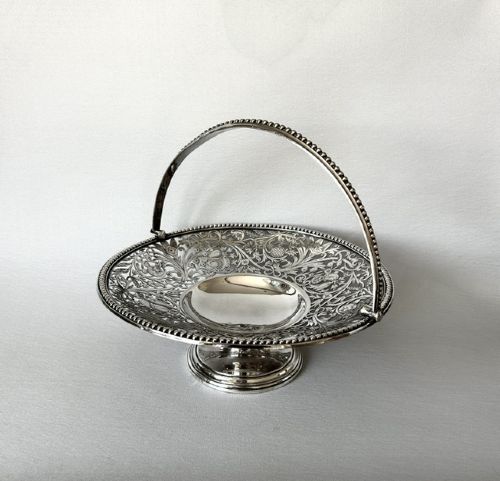
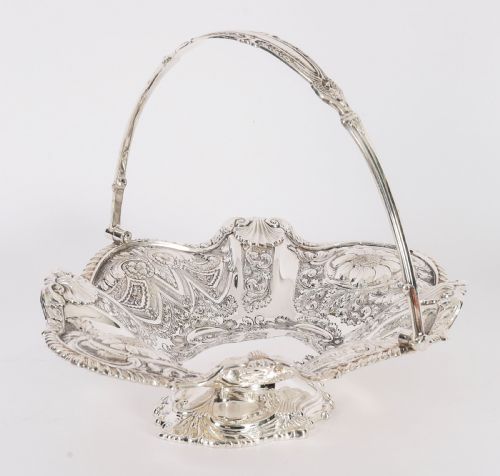
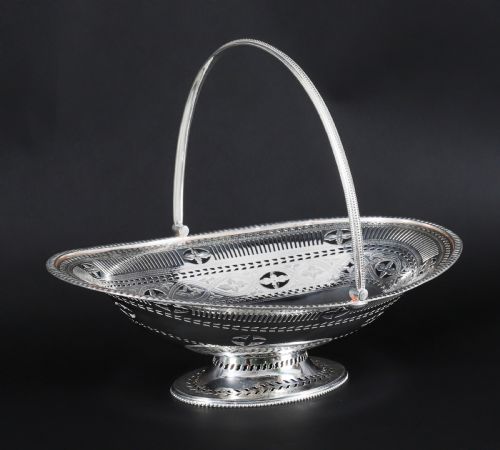
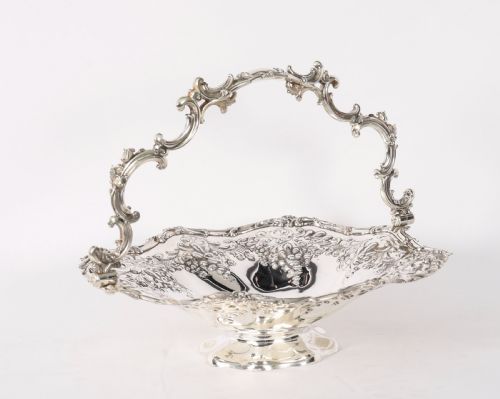
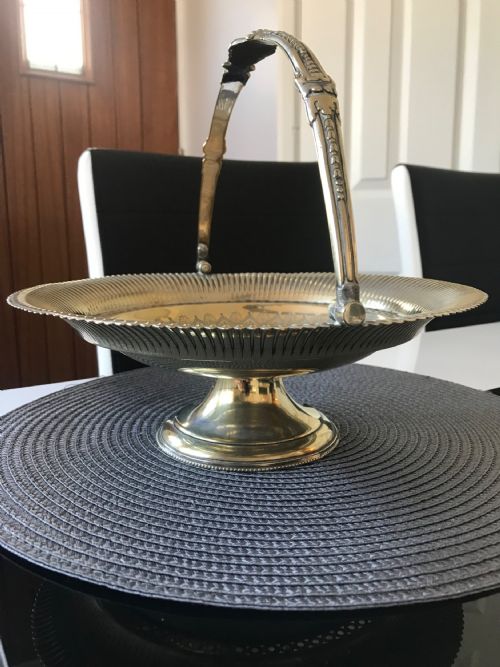
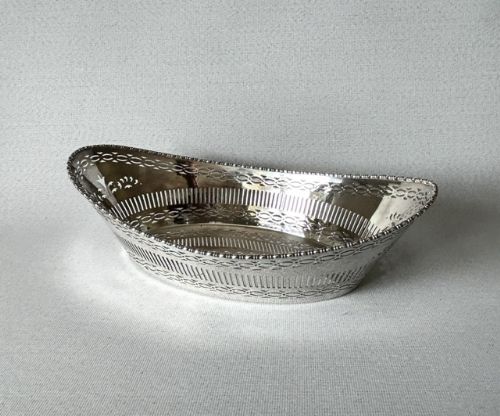
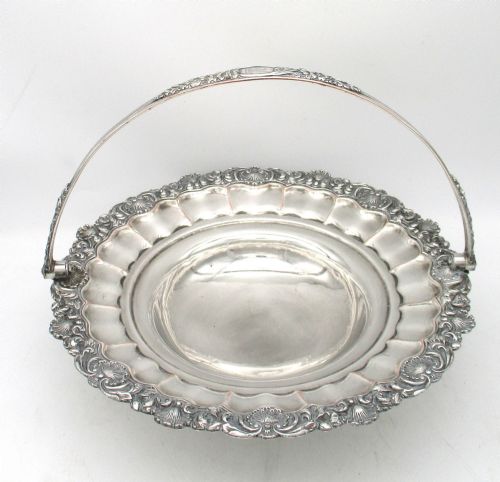
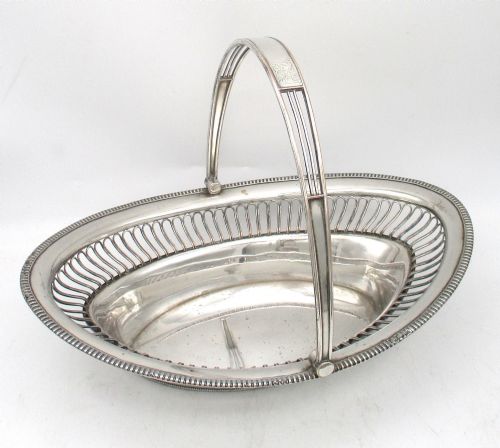
A silver plated cake basket takes several forms across the Georgian, Victorian, and Edwardian periods, functioning primarily as a table centrepiece for serving bread, fruit, and cakes. You will encounter these pieces in round, oval, and pierced designs, frequently fitted with a swing handle for passing around the dining table.
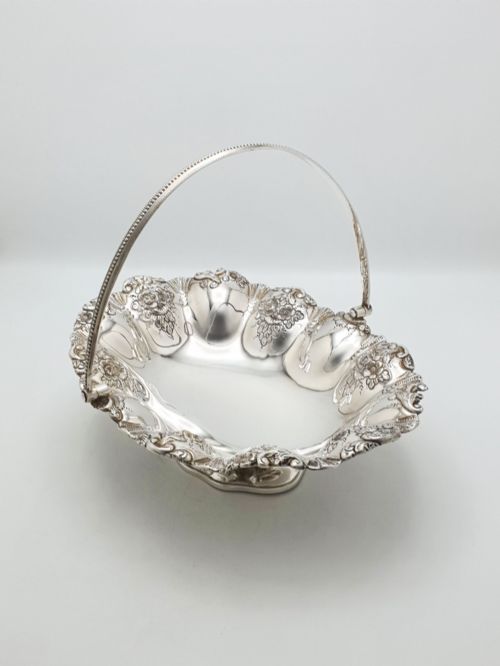
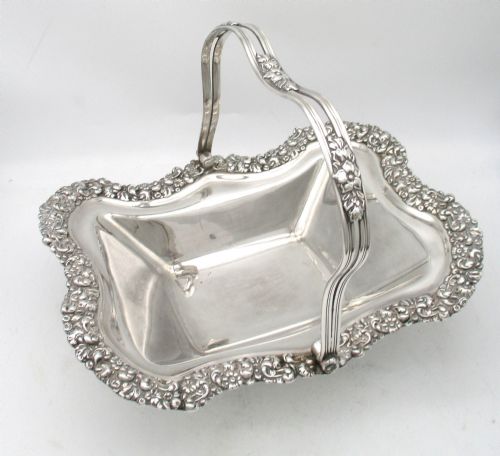
The material composition spans traditional Old Sheffield Plate from the early nineteenth century through to later electroplated nickel silver and standard silver plate from the Victorian era onward. Makers produced these serving vessels in various styles, including neoclassical, rococo revival, and Edwardian floral repoussé.
The selection on this page shows basketware originating mainly from the nineteenth and early twentieth centuries, encompassing simple wirework structures as well as ornate decorative fruit baskets. Buyers find these items grouped alongside broader tableware and serveware categories.
Materials and Technique
Old Sheffield plate pieces rely on an older method of fusing a thin sheet of silver to a thicker copper core, often leaving the cut edges visible upon close inspection. Later nineteenth-century items utilise electroplating, a process that deposits a layer of silver onto a base metal such as nickel silver or copper.
Craftsmen achieved intricate openwork designs through piercing and reticulation, cutting patterns out of the metal plate by hand or with mechanical saws. Decorative rims and handles frequently incorporate embossed floral repoussé work or cast elements soldered securely to the main body.
Some nineteenth-century wirework baskets look remarkably like modern kitchen strainers until you spot the family crest engraved inside.
Assessing the Workmanship
The standard of execution in a silver plated cake basket depends heavily on the crispness of the piercing and the depth of any engraved or repoussé decoration. Superior examples display balanced proportions, neat soldering joints, and a swing handle that moves smoothly on its pins.
The retention of the original silver plating dictates much of the visual appeal, as heavy wear reveals the warmer copper or brass base metal underneath. Maker marks stamped into the metal indicate the workshop or manufacturer, distinguishing mass-produced items from pieces bearing recognised maker attributions.
George W. Scott & Sons Ltd·Mappin & Webb·Elkington·James Dixon·W M F·Walker and Hall·Roberts & Belk
The Silver Plated Cake Basket Glossary
- Old Sheffield Plate
- An early method of fusing silver and copper together before shaping. Pieces made this way date predominantly from the Georgian and early nineteenth-century eras.
- EPNS
- Electroplated Nickel Silver. This abbreviation denotes a base metal alloy coated with a layer of silver via an electrical current.
- Repoussé
- A metalworking technique where the design is hammered or pressed into relief from the reverse side. Edwardian baskets often feature this style along the rim.
- Wirework
- Construction method utilising thin metal wires soldered into open geometric patterns. This technique appears on lightweight baskets from the late eighteenth and early nineteenth centuries.
- Swing-handle
- A movable arch handle attached to pivots on the sides of the basket. This allows the vessel to fold flat or remain upright for carrying.
Silver Plated Cake Basket: Frequently Asked Questions
How were cake baskets used?
These vessels held baked goods, bread, or fruit on the dining table, often passed among guests during formal meals.
The swing handle allowed diners to reach the contents easily when the basket sat at the centre of the table.
How do I clean my basket?
Use a soft cloth and a gentle silver polish formulated for plated items, avoiding harsh abrasives that strip the thin silver layer.
Take particular care around pierced sections and engraved lines where old polish can accumulate in the recesses.
What is Old Sheffield Plate?
Old Sheffield Plate is an early composite material made by thermally fusing a sheet of silver to a copper ingot.
This technique predates modern electroplating and produces a distinctive appearance where the underlying copper shows through on high points or cut edges.
Can I use these for food?
Most buyers use these baskets for dry foods like fruit, wrapped sweets, or pastries during special occasions.
Direct contact with moist or acidic foods should be minimised to protect the underlying metal from tarnishing or corrosion.