


Victorian Silver Sugar Basket
These victorian silver sugar baskets bring the brilliance of nineteenth-century dining tables straight into modern rooms, offering craftsmanship that mass-produced tableware simply cannot match.

Victorian Silver Sugar Basket
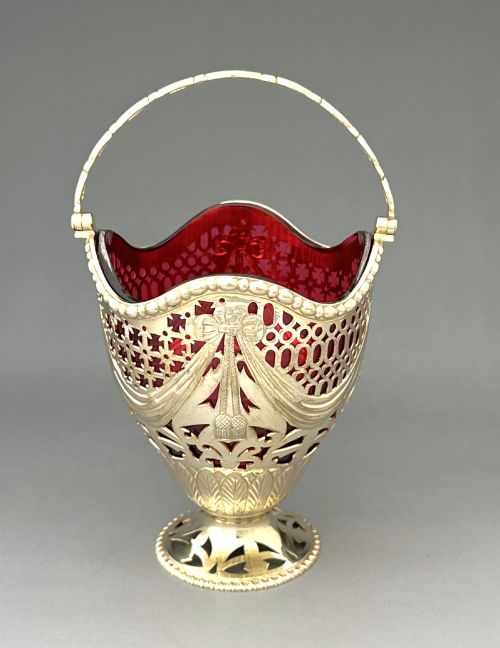
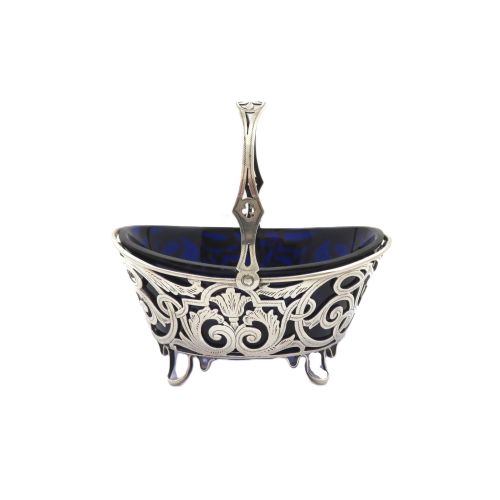
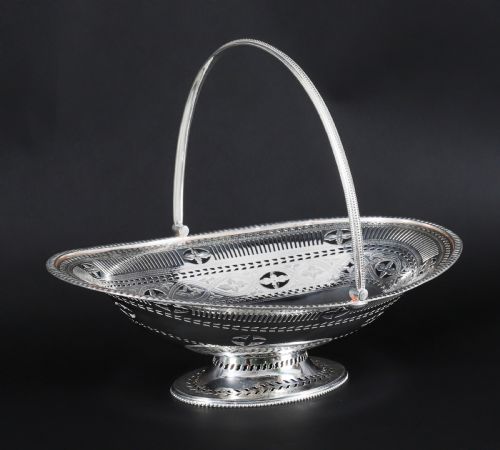
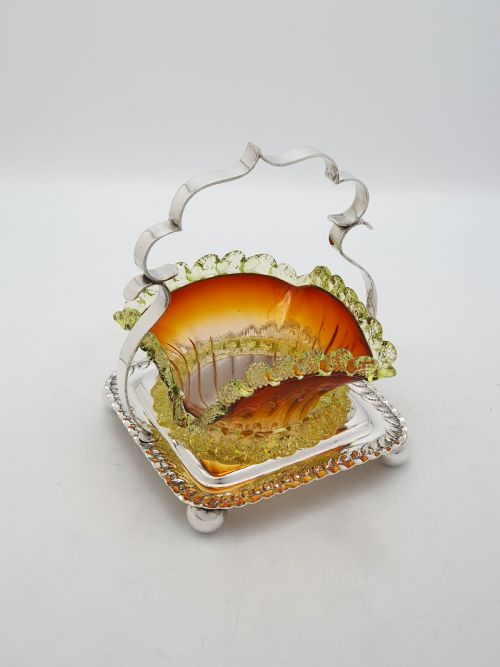
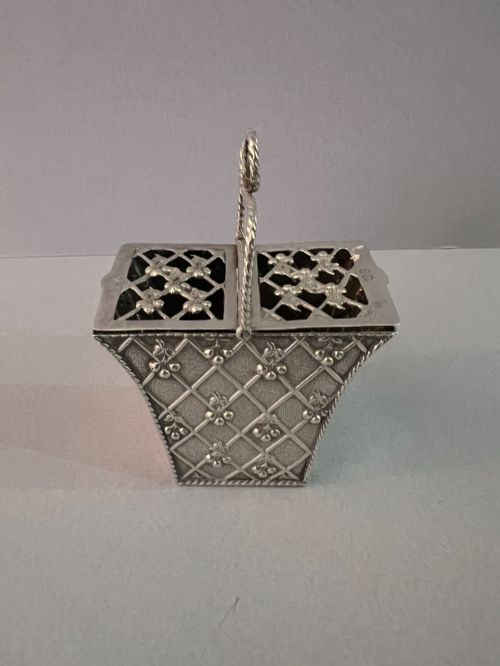
A victorian silver sugar basket sits at the heart of nineteenth-century tableware, designed specifically to hold lump sugar for tea service. Most examples you will encounter combine a pierced or solid metal frame with a brightly coloured glass liner.
The form stretches from boat-shaped vessels to cylindrical pails and wirework bowls. Makers produced these in both sterling silver and silver plate, frequently pairing them with cranberry, cobalt, ruby, or blue glass inserts.
While many pieces belong strictly to the Victorian period, you will also find related Edwardian variations, alongside Georgian style revivals and occasional miniature sweetmeat baskets.
How They Were Made
Silversmiths utilised techniques such as piercing, casting, and wirework to construct the metal frames. Handles were often hinged with swing mechanisms or cast with intricate floral motifs.
Glass liners were blown separately, sometimes in amber, vaseline, or cranberry hues, to sit snugly inside the metal framework. Gilding was also applied to silver surfaces to create a rich two-tone effect.
Victorian Silver Sugar Basket Retail Price Guide 2026
Typical asking prices for victorian silver sugar basket among the pieces listed under this phrase on Sellingantiques today, from the lower quarter to the upper quarter. They describe what is for sale here now, not the wider market.
Some baskets feature intricate wirework so fine they resemble woven birdcages designed to secure sweetness.
What Varies in Quality
The distinction between ordinary and exceptional pieces rests upon the crispness of the metalwork and the originality of the components. Pierced designs with sharp, clean cutouts and cast floral handles command greater admiration than plain, stamped alternatives.
An original, undamaged glass liner that fits the metal frame perfectly elevates a piece considerably. Maker marks and clear hallmarks also separate standard production items from master silversmith output.
George Fox·W M F·Edward H Stockwell·The Haseler Brothers·Nathan and Hayes·Henry Wilkinson·Elkington and Co·Fenton Brothers
The Victorian Silver Sugar Basket Glossary
- Sterling silver
- A silver alloy containing 92.5 percent pure silver by mass, standard for British high-grade tableware.
- Silver plate
- A base metal coated with a thin layer of silver, common in nineteenth-century domestic manufacturing.
- Silver gilt
- Sterling silver that has been coated with a thin layer of gold on its surface.
- Cranberry glass
- A pinkish-red glass created by adding gold chloride to the molten batch.
- Sweetmeat basket
- A small decorative dish intended for holding sweets, nuts, or small confections.
Victorian Silver Sugar Basket: Frequently Asked Questions
How were sugar baskets used?
These baskets held lump sugar on the tea table, allowing guests to serve themselves using specialised tongs or sifter spoons.
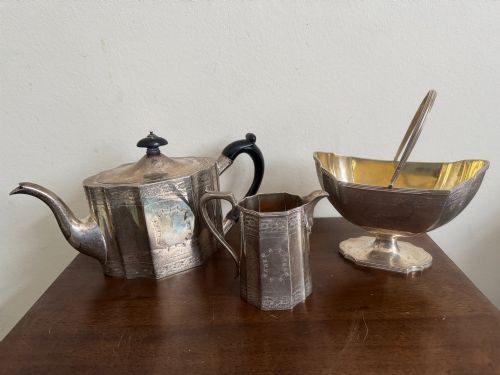
They sat centrally among tea sets, often paired with matching cream pails or preserve dishes.
Are the glass liners original?
Many baskets retain their original blown glass liners in colours like blue, ruby, or cranberry.
Because glass breaks easily over time, replacement liners appear frequently in the antique market.
How do I date a silver basket?
British hallmarked pieces feature assay office symbols, date letters, and maker marks stamped directly into the metal.
Stylistic clues such as wirework or neoclassical revival motifs also help narrow down the decade of production.
Can I use them every day?
Solid silver and silver plate withstand gentle, everyday use provided you clean them with appropriate silver care products.
Care must be taken with antique glass liners, which require hand washing rather than dishwasher cleaning.