


Late Victorian Glass Bowl
These late victorian glass bowl pieces bring rich colour and tactile weight to a table, combining vibrant glass with ornate metalwork.
Late Victorian Glass Bowl
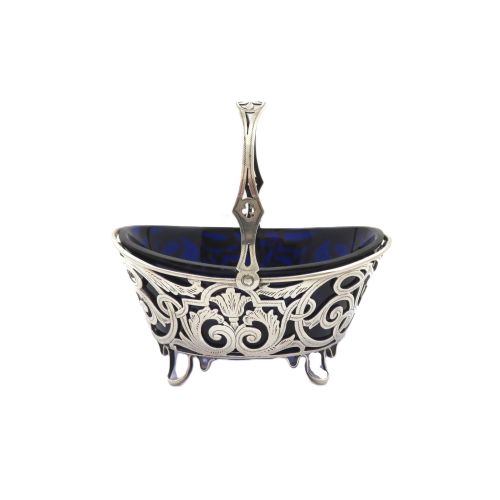
A late victorian glass bowl encompasses decorative vessels and tableware produced across the late nineteenth century, including pieces dated around eighteen ninety. You will frequently find cranberry glass bowls, ruby glass liners within silver plated stands, and opaline glass baskets. These items served functional roles on the dining table or served as purely decorative objects for the parlour.
The aesthetic vocabulary spans standard Victorian taste, the Aesthetic Movement, and Japonisme, alongside Arts and Crafts influences. Forms range from simple fruit bowls and sugar bowls to elaborate tazzas and pendant lights. English and continental makers contribute to this variety, often pairing the glass with sterling silver or silver plate.
How they were made
Makers utilised glass blowing and moulding techniques to shape the vessels, frequently incorporating minerals like uranium or gold leaf to achieve deep colours such as cranberry and vaseline yellow. Cut glass elements required skilled hand grinding and polishing to create sharp facets that catch the light.
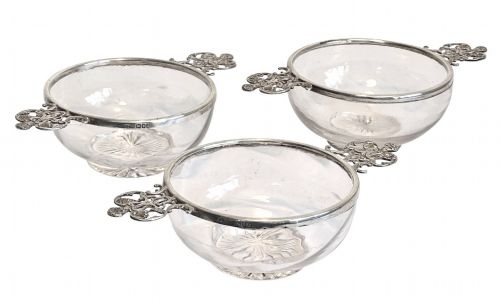
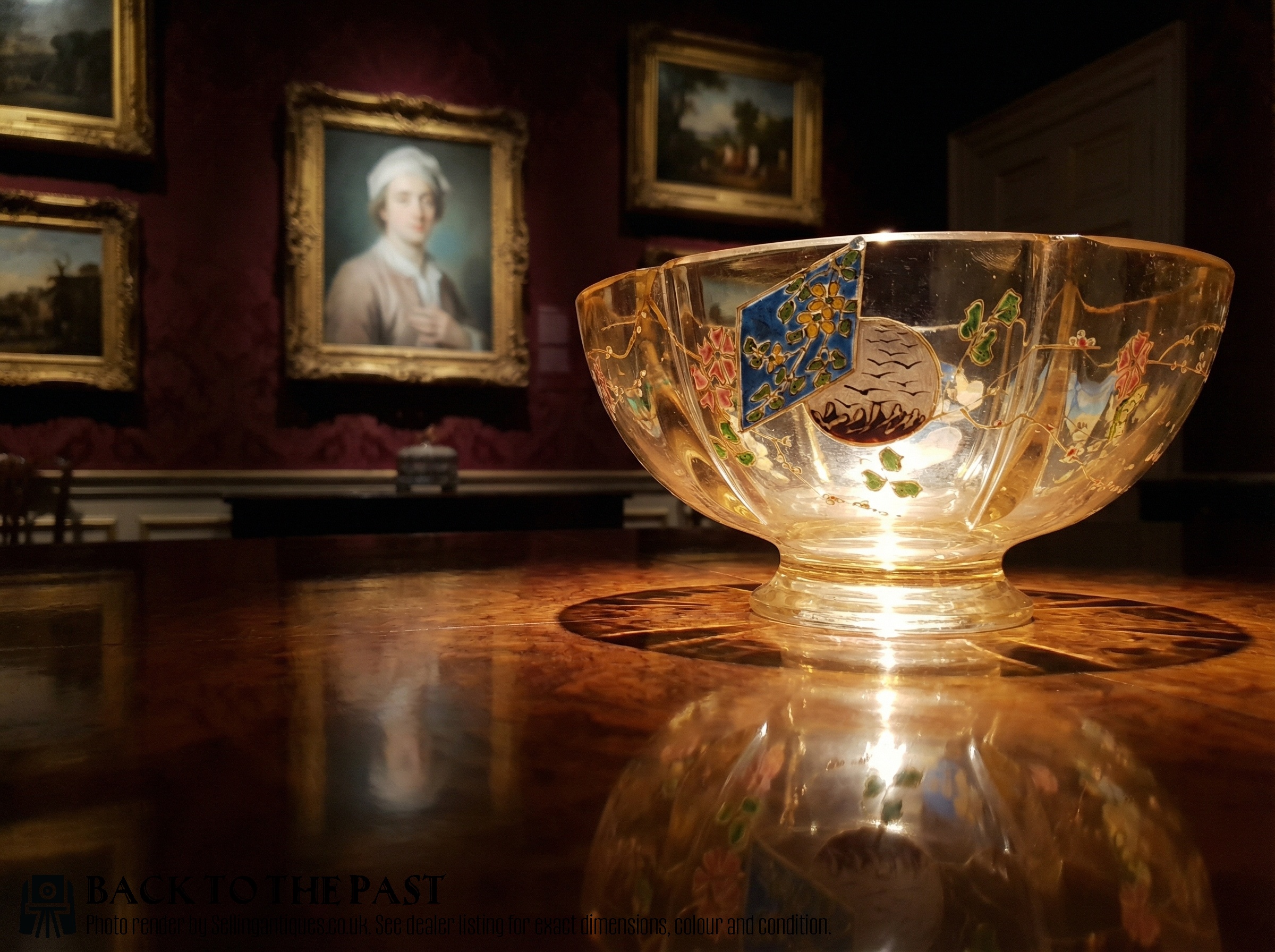
Metal mounts and liners involved sterling silver, silver plate, or bronze, often shaped through casting, piercing, and hand engraving. Decorative details like enamel work and hand painting were then applied directly to the glass surface before firing.
Garden party services and peacock vases remind us that late Victorians loved bringing feathered fowl and botanical themes straight to the dining table.
What varies in quality
The finesse of the glass manipulation and the depth of its colour set the higher examples apart from standard production. Rich, uniform hues in cranberry or opaline glass indicate careful chemical control during the melting process.
The standard of the metal mountings dictates the overall distinction of the piece. Heavy cast bronze, detailed silver piercing, and marked sterling silver indicate higher workshop standards than light silver plating.
William Comyns·Stuart for Liberty·Thos. Webb & Sons·François Eugène Rousseau·Baccarat
The Late Victorian Glass Bowl Glossary
- Cranberry glass
- A transparent pinkish-red glass coloured with gold chloride. It appears frequently in nineteenth century tableware and sugar bowls.
- Opaline glass
- An opaque or translucent pale glass developed in France and popular during the nineteenth century. It often mimics the appearance of natural stone or porcelain.
- Tazza
- A shallow bowl raised on a stem and foot, used for serving fruit or sweets. These pieces often feature gilt decoration or cut glass patterns.
- Vaseline glass
- A transparent yellow-green glass containing uranium dioxide, which glows brightly under ultraviolet light. It was widely produced during the Victorian period.
- Silver plate
- A thin layer of silver fused to a base metal such as copper or Britannia metal. This technique allowed manufacturers to produce elaborate tableware at a lower cost than solid silver.
Late Victorian Glass Bowl: Frequently Asked Questions
What is a late victorian glass bowl made from?
These pieces combine blown or moulded glass with mounts of sterling silver, silver plate, or bronze. The glass itself varies from clear crystal to coloured varieties like cranberry, ruby, and opaline.
Enamel, gold leaf, and hand painted motifs frequently decorate the surface, while some examples incorporate specialised materials like uranium glass.
How were these bowls used originally?
Victorian households utilised these vessels for dining, serving fruit, sugar, or sweets during formal gatherings. Silver plated frames with coloured glass liners were standard table centrepieces.
Other examples functioned as decorative tazzas or pendant lighting fixtures within domestic interiors.
How do I date a late victorian glass bowl?
Dating relies on stylistic clues, registered design numbers, and maker marks stamped into the metal mounts or etched onto the glass. Pieces span the period from eighteen eighty to nineteen hundred.
Shifts in design from ornate Victorian revivalism towards Aesthetic Movement and Arts and Crafts styles help narrow the decade of production.
How do I care for a glass bowl with metal mounts?
Cleaning requires warm water and mild soap, avoiding harsh chemical dips that damage silver plate or fragile enamel decorations. Dry the metal components thoroughly to prevent tarnishing.
Handle the pieces by the body rather than delicate applied handles or pierced silver rims to avoid structural strain.