
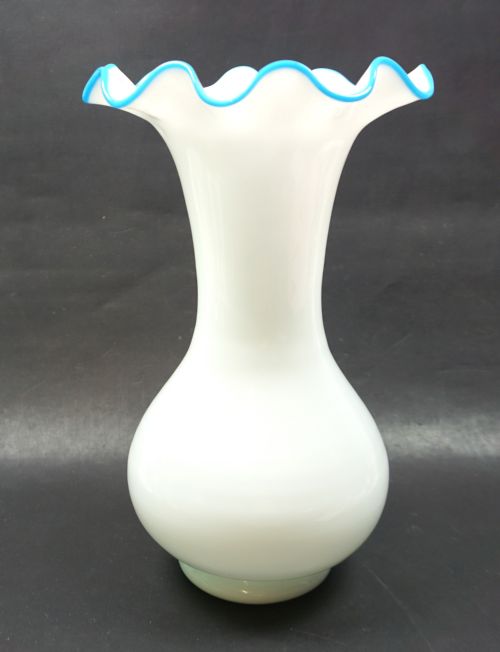


19th Century Opaline Glass
These 19th century opaline glass pieces range from delicate scent bottles to substantial table lamps, prized for their translucent quality and soft colour.
19th Century Opaline Glass
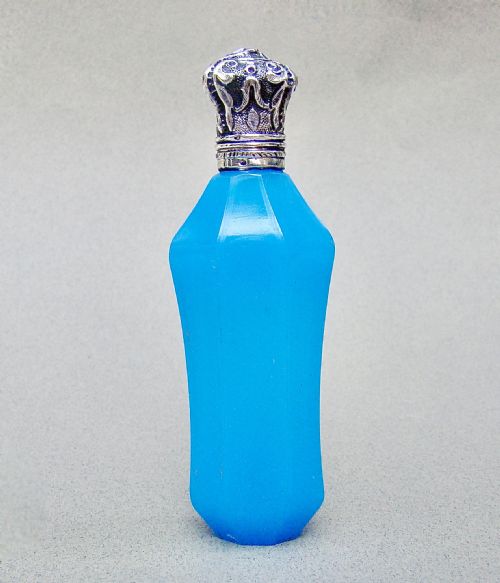
Buyers seeking 19th century opaline glass encounter a variety of decorative objects, from vases and scent bottles to table lamps and trinket boxes. French workshops and English makers produced these items in white, blue, green, and turquoise shades, often incorporating moulded or blown forms.
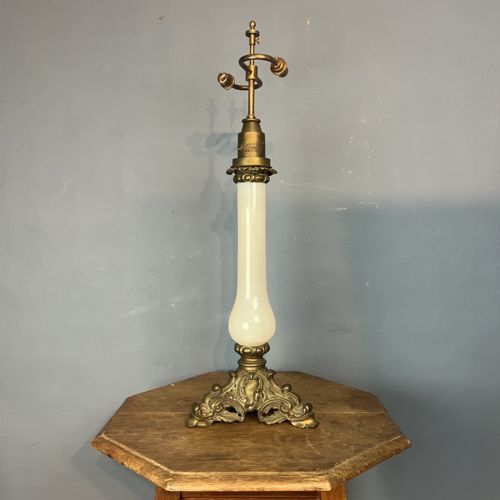
Vases and perfume bottles dominate the available selection, frequently enhanced with hand-painted floral motifs or delicate gilding. Functional items such as oil lamps and centrepieces also appear, combining the characteristic translucent material with metal mounts.
The aesthetic reflects Victorian, Second Empire, and Biedermeier tastes, ranging from simple silhouettes to elaborate classical revival designs. Most examples date from the middle to the late decades of the nineteenth century.
Materials and production
The production of opaline glass relied on the addition of bone ash, tin oxide, or other agents to create an opaque or translucent milky appearance. Makers blew or moulded the glass into shape, sometimes layering different colours to achieve distinct rims and threaded details.
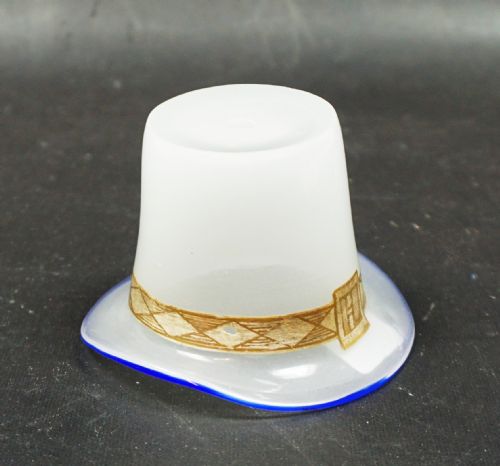
Many pieces incorporate metalwork, utilising brass, bronze, silver, or ormolu mounts, collars, and handles. Enamel paint, gold leaf, and gilt bands were frequently applied to the glass surface and fired for permanence.
Listings feature items from French and English origin, spanning the Georgian period through the end of the nineteenth century.
Judging quality
Quality in these objects rests upon the purity of the glass body and the refinement of any hand-painted or gilt decoration. Superior items display crisp enamel work, precise gilding, and well-balanced proportions without heavy clouding or accidental bubbles in the material.
The integration of metal mounts also dictates standard; heavy brass, cast bronze, or marked silver plate securely fitted to the glass body indicates superior manufacturing care. Finer pieces maintain crisp relief mouldings and undamaged surface ornamentation.
Baccarat·Jean Francois Robert·Joseph Hinks·Wild and Wessel·James Dixon
The 19th Century Opaline Glass Glossary
- Opaline glass
- A translucent, semi-opaque glass developed in various pale colours to imitate porcelain or natural opals. It gained widespread popularity across European glasshouses during the nineteenth century.
- Ormolu
- Gilded bronze used for mounts, feet, and decorative fittings on glassware and furniture. The technique involves applying a finely ground gold-mercury amalgam to cast bronze.
- Table lustre
- A decorative glass candlestick or vase hung with cut glass prisms designed to catch the light. They frequently appear in matching pairs on French mantelpieces.
- Nailsea
- A style of glasswork featuring combed or looped opaque white trails within a clear or coloured body. The name originates from an English glassworks active in Somerset.
19th Century Opaline Glass: Frequently Asked Questions
Are these lamps electrified?
Many nineteenth-century oil lamps and desk lamps have been converted to electricity at some point in their history. Some retain their original burners and collar components alongside modern wiring.
Inspect the wiring and fittings with a professional electrician before daily use. Original oil reservoirs and brass mechanisms should be handled carefully.
How do I distinguish French and English pieces?
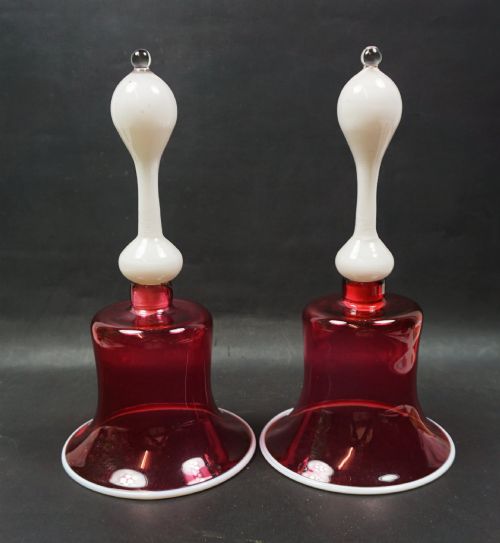
French pieces often favour elaborate ormolu mounts, classical revival forms, and rich turquoise or blue shades associated with Baccarat and Palais Royal novelties. English examples frequently lean towards simpler Victorian domestic items, cranberry glass combinations, and Nailsea loop patterns.
Examination of the base and any metal stamps can provide further clues regarding the country of origin. Makers' marks, patent stamps, and retailer signatures occasionally appear on the metal mounts.
What caused the milky appearance?
Glassmakers added bone ash, arsenic, or tin oxide to the molten batch to scatter light passing through the material. This created the characteristic semi-translucent, milky quality that defines the type.
Different mineral oxides produced the various pastel shades of blue, green, and pink found in nineteenth-century examples.