



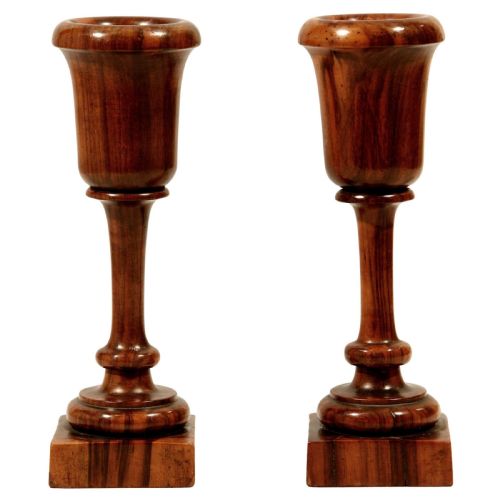
Pair of Mantelpiece Vases
A pair of mantelpiece vases brings symmetry to a room, offering matched focal points designed to sit proudly on a shelf or hearth.
Pair of Mantelpiece Vases
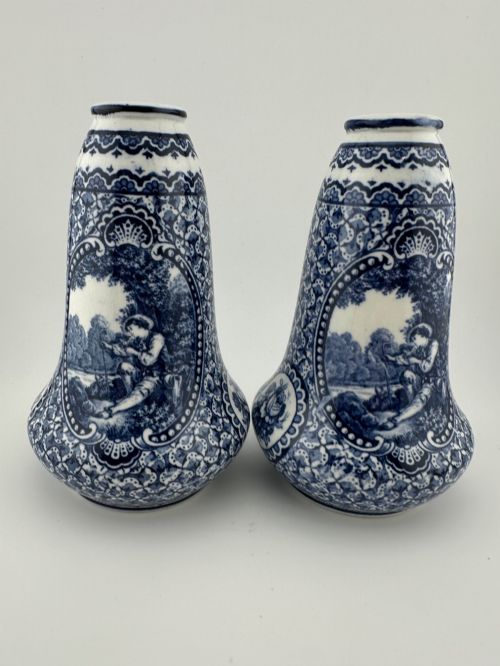
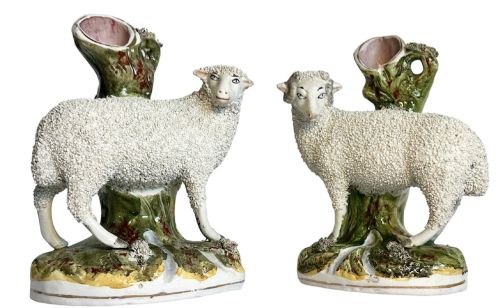
A pair of mantelpiece vases comprises two matching vessels created specifically to flank a central object on a fireplace shelf or sideboard. Buyers encounter forms ranging from classical urns and campana shapes to playful Staffordshire animal figures and glass lustres.
The pieces on this page span the nineteenth and early twentieth centuries, drawing on Victorian, French Empire, Art Nouveau, and Japanese Meiji aesthetics. Ceramic, glass, and bronze predominate, reflecting the varied materials favoured by period makers.
Originating from English, French, German, Italian, and Japanese workshops, these dual decorative objects serve both ornamental and functional roles. Whether finished with rich gilding, enamel, or hand-painted details, each set provides balanced display potential.
Materials and construction
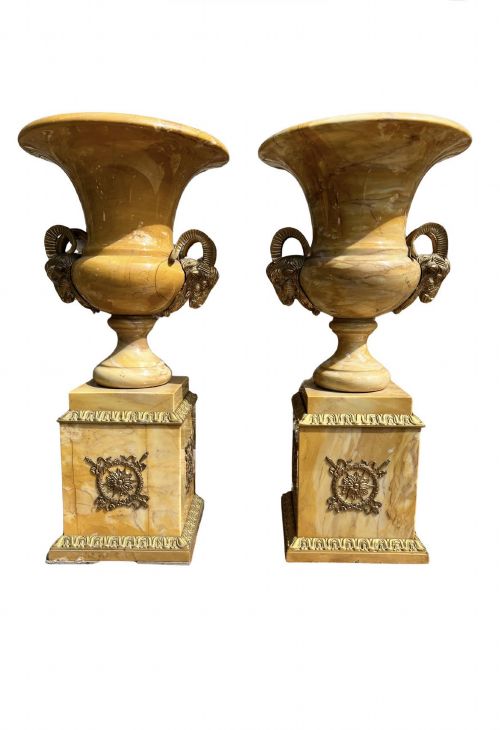
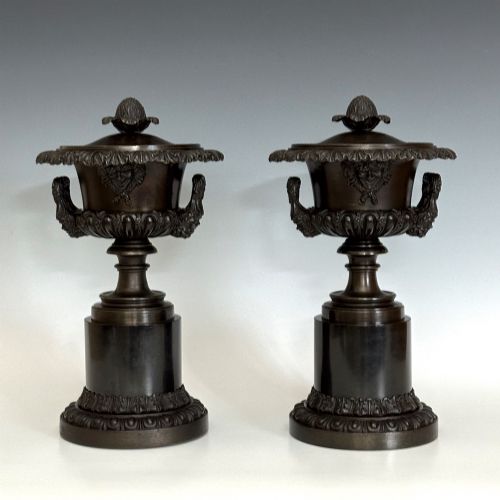
Cast metals such as bronze, ormolu, and brass provide structural weight for classical urns and cassolettes, frequently mounted upon siena marble or stepped plinth bases. Makers often combined these metallic elements with hand-chased detailing.
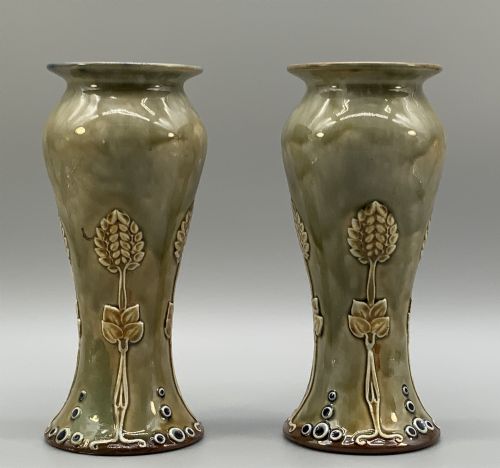
Ceramic examples utilise earthenware, stoneware, and porcelain bodies finished with glazes or applied enamel colours. Stoneware pieces from potteries like Doulton and Mettlach display robust moulded or incised patterns characteristic of their period.
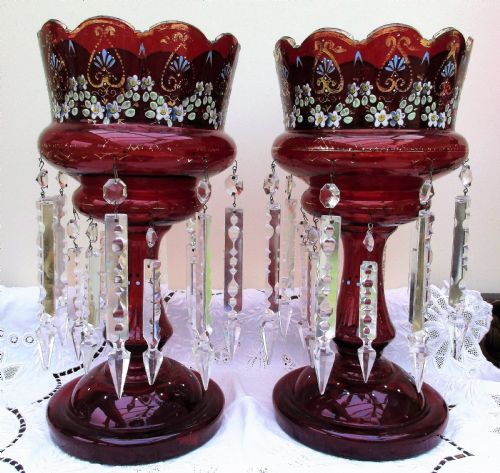
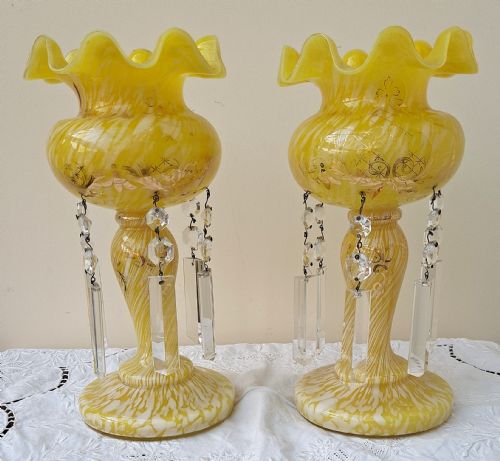
Glass production involves techniques seen in ruby, yellow, and opaline glass lustres, alongside overlaid bohemian glass and art glass. Artisans added cut glass prisms or delicate raised leaf and floral designs to enhance the reflective quality of the glass.
Styles span Victorian, Neoclassical, French Empire, Art Nouveau, and Japanese Meiji period designs.
Judging quality in matched pairs
Quality rests upon the crispness of execution in the moulding, chasing, or hand-painting across both pieces equally. Superior examples retain matching proportions, sharp surface details, and intact gilding or enamel work without heavy rubbing.
The integrity of the materials dictates longevity and refinement, from densely veined marble bases to clean, unclouded glass bodies. Subtle variations in colour or form highlight the individual hand of the artisan in authentic period items.
Royal Bonn Franz Anton Mehlem·Royal Doulton Lambeth·Spode·Mettlach Pottery·Baccarat·Tashiro
The Pair of Mantelpiece Vases Glossary
- Campana urn
- A bell-shaped vessel with a flaring rim and a footed base. This classic form appears frequently in bronze and cast iron decorative pieces.
- Cassolette
- A dual-purpose ornamental vase featuring a reversible lid that converts the vessel from a closed urn to a fragrance burner. French Empire examples often combine marble and gilt bronze.
- Spill vase
- A small narrow vessel designed to hold taper candles or wooden spills used for lighting fires. Staffordshire pottery versions often depict figures or animals.
- Mantel lustre
- A decorative glass vase hung with cut glass prisms or drops designed to catch and reflect candlelight. Ruby and opaline glass variants are typical of the Victorian era.
- Imari
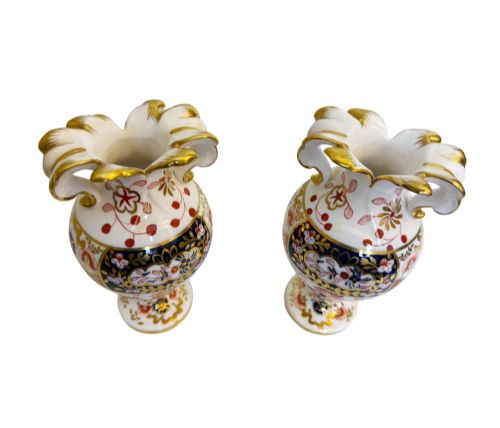
- A style of Japanese export ceramics featuring a distinct palette of underglaze blue, iron red, and gold. European potteries frequently borrowed these decorative motifs.
Pair of Mantelpiece Vases: Frequently Asked Questions
How were mantelpiece vases originally used?
These matched vessels sat symmetrically on fireplace mantelpieces, often framing a clock or mirror. They provided visual balance to the principal hearth of a room.
Beyond simple display, specific variations like spill vases held wooden tapers for transferring flames to lamps or pipes, while lustres held candles to illuminate dark rooms.
What is the difference between an urn and a vase?
Urns generally feature a footed base, a distinct body, and a defined neck, frequently including handles and a matching cover. They draw heavily on classical architectural traditions.
Vases encompass a broader category of open-topped vessels intended primarily for holding stems, though many decorative mantelpiece examples remain strictly ornamental.
How do I date a pair of glass lustres?
Nineteenth-century glass lustres often exhibit hand-blown pontil marks on their bases and feature hand-painted floral motifs or distinct ruby and opaline glass colourations. The cut glass prisms hanging from the rims should show appropriate age wear.
Later reproductions frequently lack the slight weight irregularities and depth of colour found in Victorian and Edwardian glass production.
Where were Japanese Satsuma vases made?
Satsuma ware originated in Kagoshima Prefecture in Japan, though workshops in Kyoto and Tokyo also produced significant quantities for export during the Meiji period. These earthenware pieces are recognised by their ivory-coloured crazed glaze and elaborate enamel painting.
Makers such as Tashiro contributed to the export market with heavily gilded designs tailored for Western interiors.