
Victorian Sheet Music Holder
These Victorian sheet music holder pieces, often found as elegant canterburys and music stands, bring both period charm and practical storage to a music room.
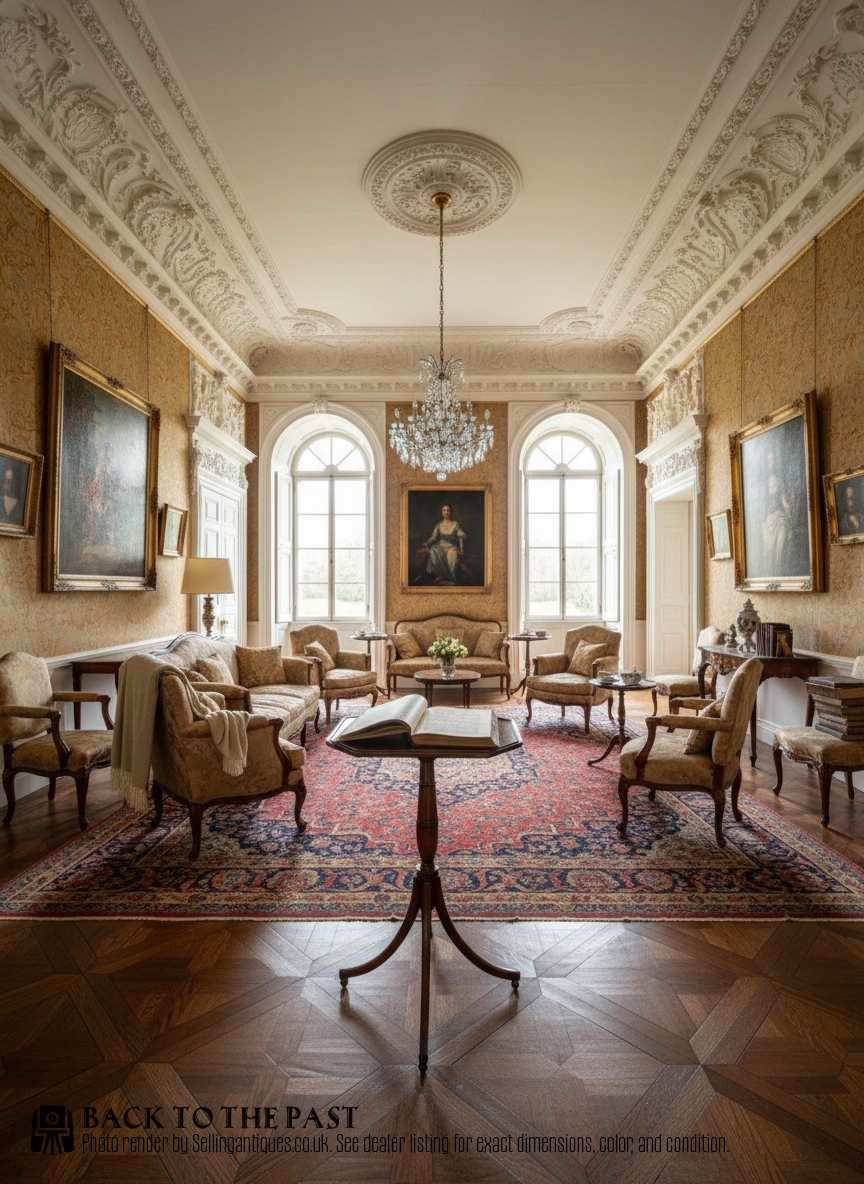
What they are
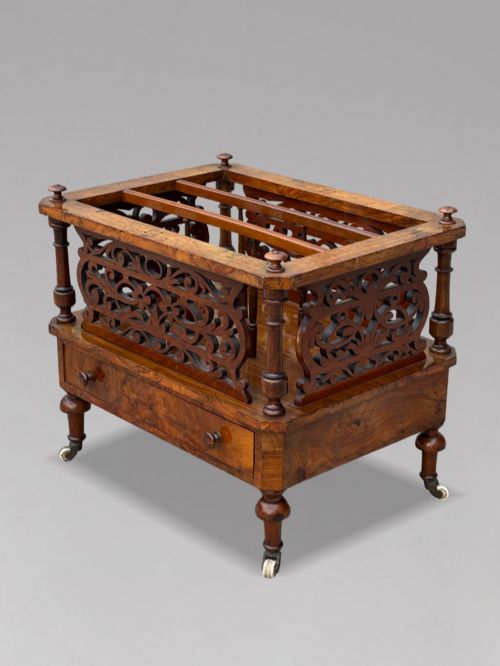
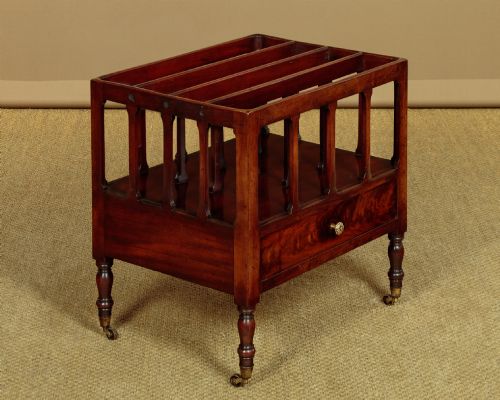
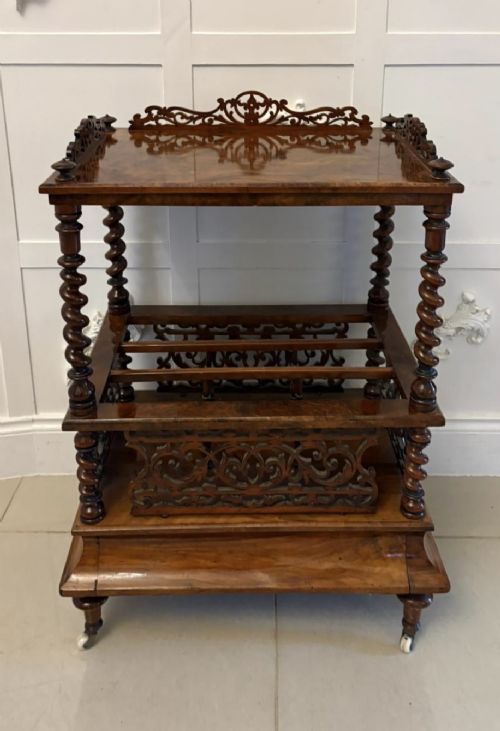
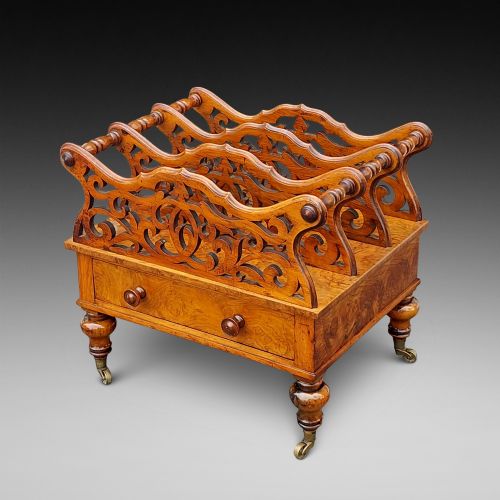
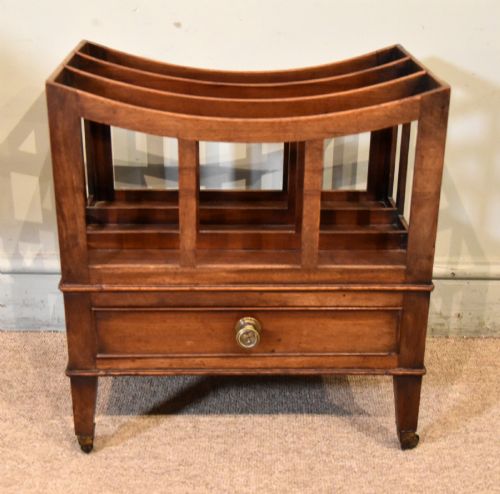
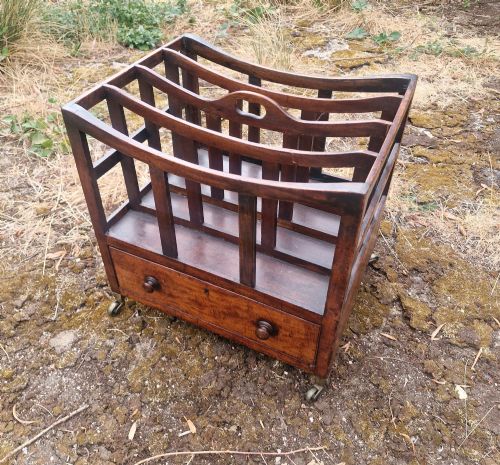
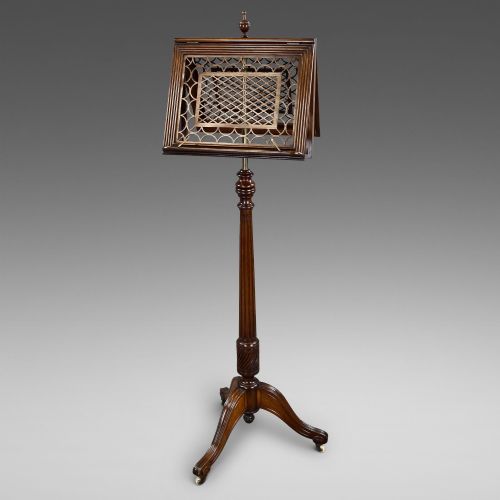
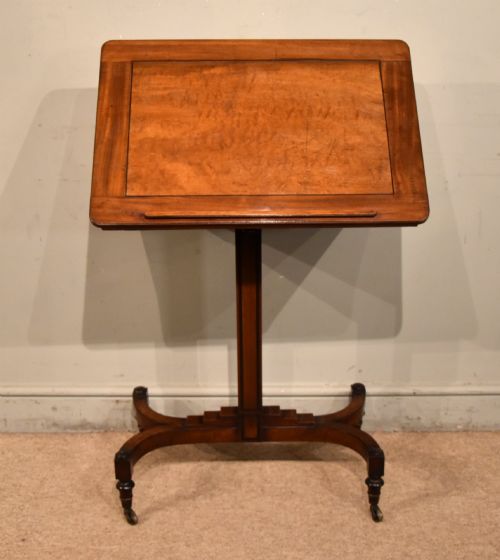
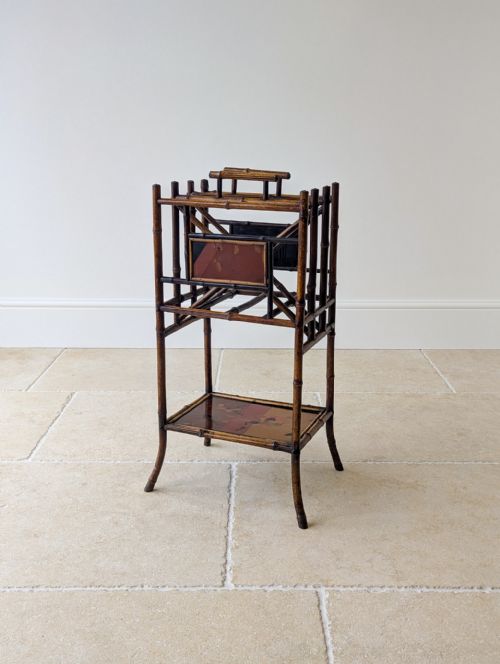
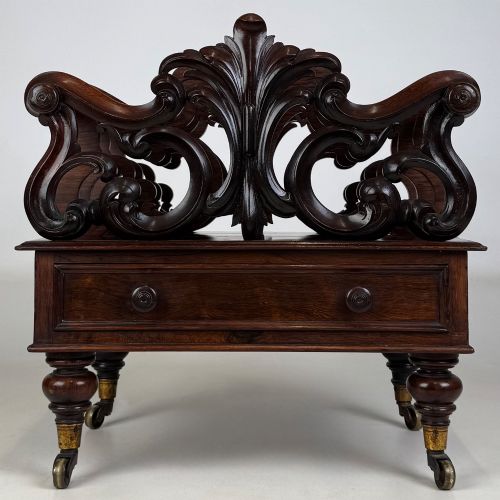
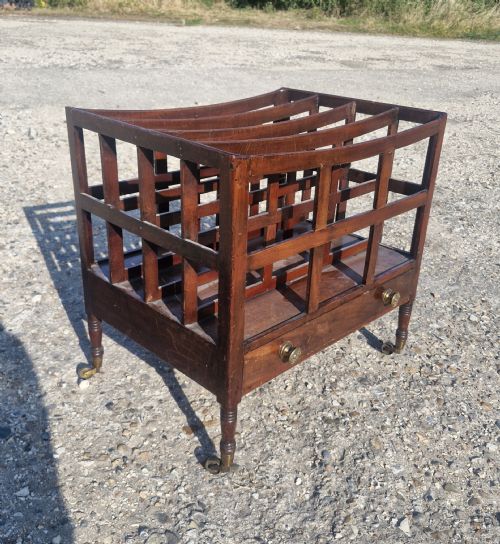
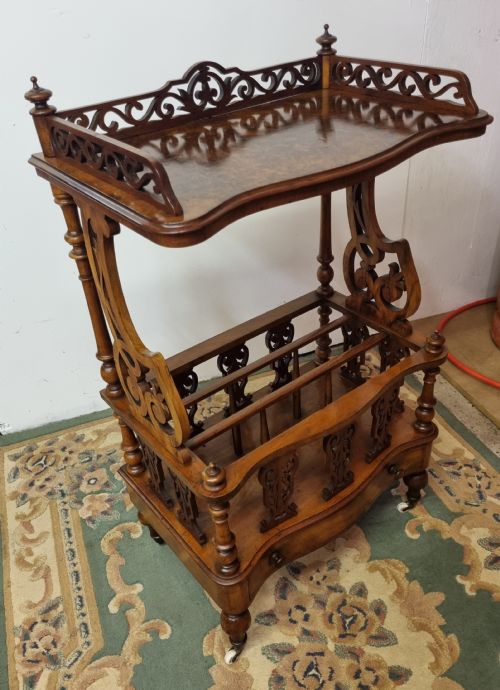
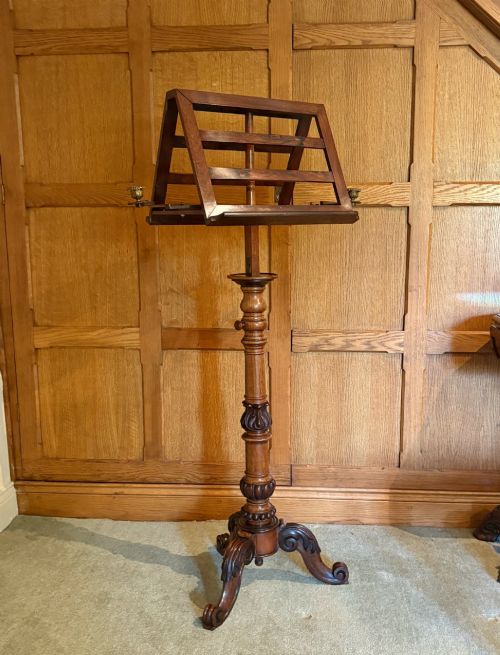
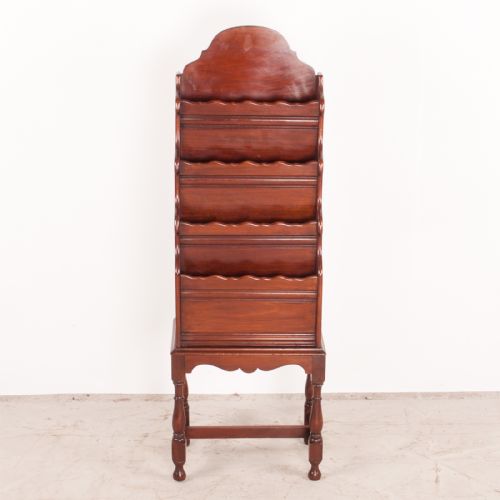
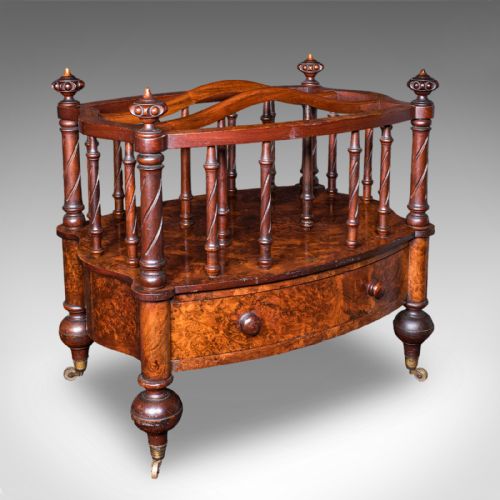
The most common formats on this page are canterburys featuring vertical partitions for holding sheet music, often combined with drawers or lower shelves. You will also find specialised music stands and occasional tables that reflect the domestic musical pursuits of the nineteenth century.
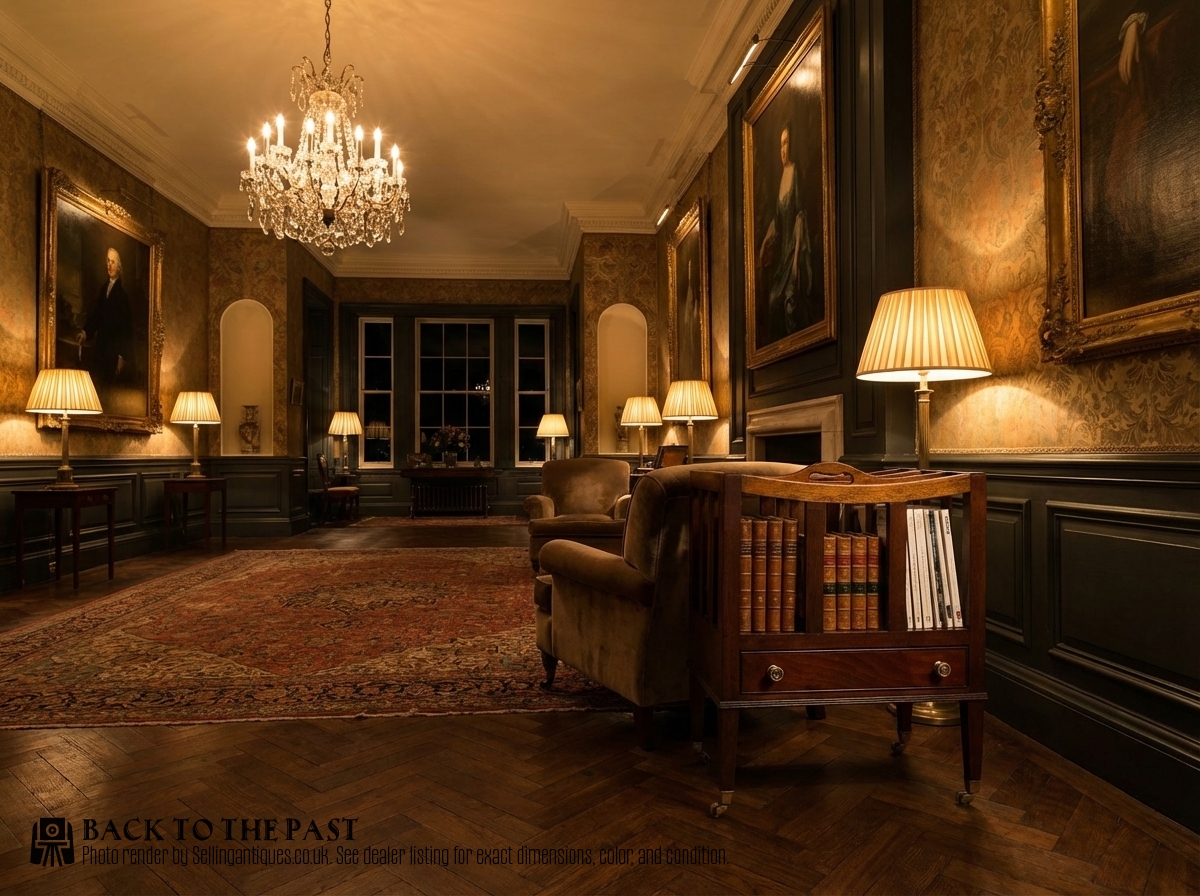
How they were made
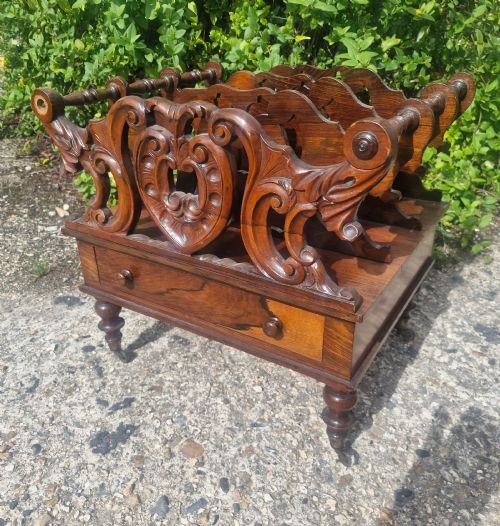
Cabinet makers utilised dense hardwoods such as mahogany, rosewood, burr walnut, and standard walnut for the primary framework of these pieces. Boxwood inlay and marquetry frequently decorate the surfaces, adding intricate linear patterns to the timber.
Metal components, specifically brass, appear alongside ceramic elements to provide functional adjustments, castors, or decorative accents. Carved details are hand-applied to solid rosewood or mahogany frames to shape the uprights and legs.
Retail Price Guide 2026
Typical UK retail prices for victorian sheet music holder, calculated from the Sellingantiques database of over a million retail prices indexed since 2003. This retail price guide relies exclusively on Sellingantiques data; no external sources or auction records are used, so the figures do not describe the wider market.
Current listings span the Victorian and Regency periods, utilising mahogany, rosewood, walnut, and burr walnut with brass and ceramic accents.
What varies in quality
The distinction between standard examples and superior pieces rests in the choice of timber figure and the precision of the inlay. Finely figured burr walnut and rich rosewood paired with crisp boxwood inlay elevate a piece significantly above plain mahogany versions.
Execution of carved woodwork and the integration of functional elements, such as smooth-running adjustable mechanisms on reading tables or sturdy brass castors, define the upper tier of craftsmanship.
The Victorian Sheet Music Holder Glossary
- Canterbury
- A low stand with vertical partitions designed originally for holding sheet music or books. This form often includes a small drawer beneath the rack and rests on short legs with castors.
- Marquetry
- The art of applying decorative veneer pieces of different woods to a structure to form geometric or floral designs. It is commonly seen on nineteenth-century walnut surfaces.
- Boxwood Inlay
- Contrasting pale wood set into recesses of a darker timber to create sharp, decorative borders. This technique highlights the edges and panels of finer Victorian furniture.
- Regency
- An architectural and design style spanning the early nineteenth century characterised by classical restraint and dark timbers. Pieces from this period predate the Victorian era proper but share domestic uses.
Frequently Asked Questions
What is a victorian sheet music holder used for?
These pieces were originally built to hold unbound sheet music, folios, and songbooks neatly upright in a drawing room or music parlour.
The partitioned sections prevented large paper scores from slumping and creaking while making individual pieces easy to browse and retrieve during an evening performance.
What woods were used for these holders?
Cabinet makers relied primarily on dense tropical and European hardwoods including mahogany, rosewood, and various cuts of walnut.
Finer examples frequently incorporated decorative elements such as burr walnut veneers and contrasting boxwood inlay to catch the eye in a formal interior.
Can I use these for modern magazines?
The partitioned slots and sturdy timber construction make these pieces well-suited for organising contemporary magazines, journals, and records.
Their compact footprints allow them to sit beside a sofa or armchair just as effectively as they stood beside a nineteenth-century piano.