

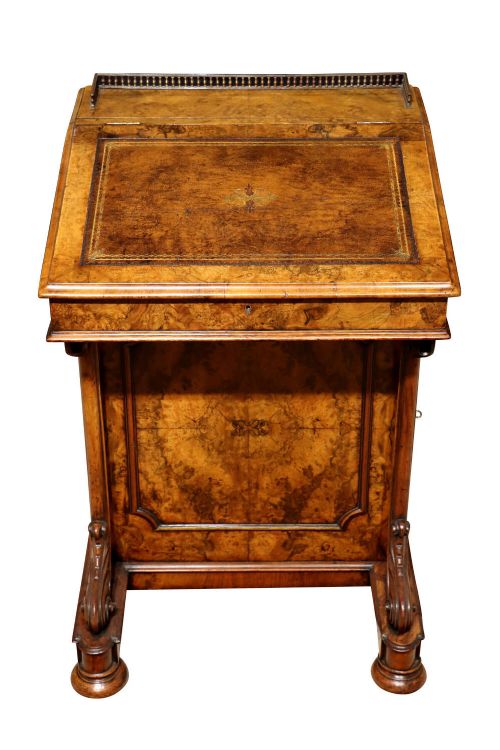


Victorian Satinwood Bureau Desk
A victorian satinwood bureau desk brings a pale, luminous warmth to a study, combining figured timbers with practical writing compartments.
Victorian Satinwood Bureau Desk
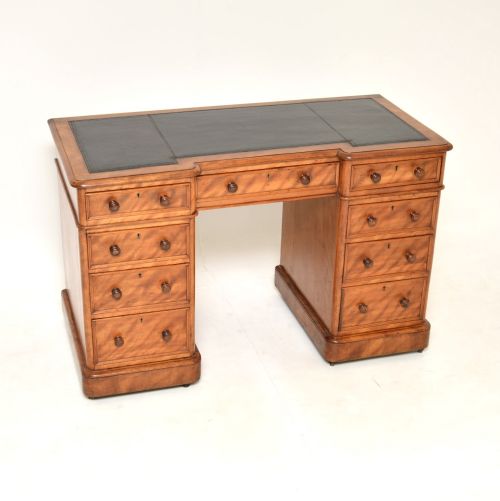
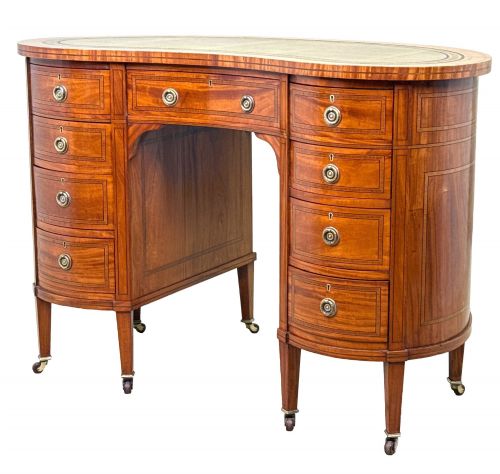
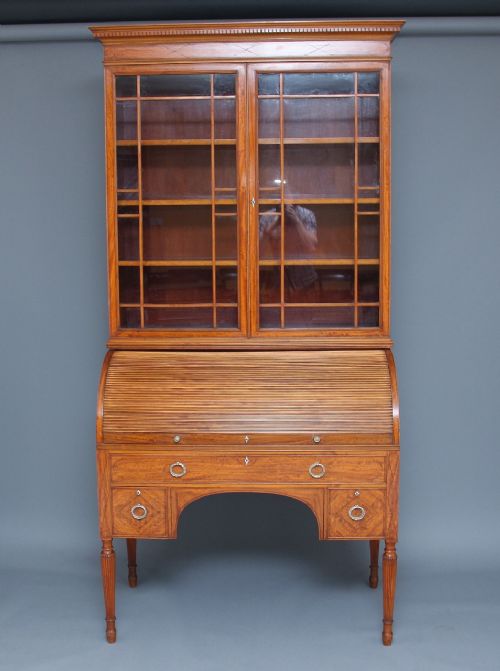
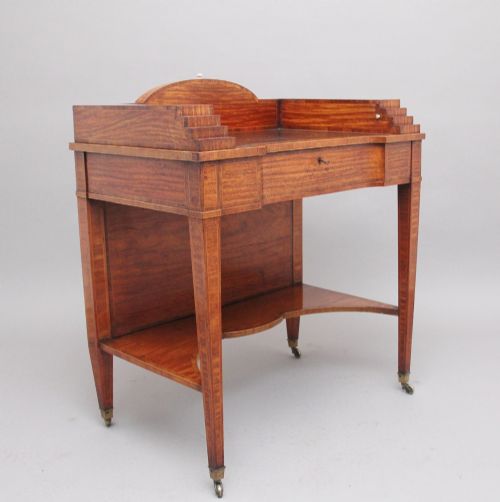
When you search for a victorian satinwood bureau desk, you encounter pieces that span the nineteenth century, including Sheraton revival items and late Victorian examples from eighteen ninety. These take various forms, such as knee-hole desks, cylinder bookcases, and ladies writing tables.
The most common pieces on this page combine light satinwood surfaces with marquetry inlay, leather writing inserts, and brass hardware. They range from compact ladies tables to larger pedestal desks and bureau bookcases.
Makers and workshops of the period, such as Edwards and Roberts, produced elaborate forms including Carlton house desks and writing cabinets. Walnut, mahogany, and rosewood frequently appear alongside satinwood as secondary timbers or contrasting crossbanding.
Materials and Construction
Carpenters utilised satinwood veneers over firmer carcass woods like mahogany or pine, laying out intricate parquetry and marquetry geometric patterns. Ormolu mounts and brass handles add structural accents to the refined cabinetry.
Writing surfaces frequently incorporate fitted leather inserts, whilst internal compartments utilise lesser woods like walnut and birch for small drawers and pigeonholes. Hand-decoration and painted finishes appear on select late nineteenth-century pieces.
Listings feature periods spanning from the Georgian era through the Victorian period and into Edwardian times.
Distinguishing Quality
The fineness of the marquetry inlay and the choice of highly figured satinwood dictate the visual appeal of a piece. Finer examples display meticulous grain matching and crisp ormolu mounts rather than plain timber surfaces.
Internal complexity also separates standard writing tables from exhibition-quality bureau bookcases and Carlton house desks. Superior execution shows in the smooth action of cylinder rolls, drawers, and fitted pigeonhole compartments.
Edwards and Roberts·Donald Ross·Morison of Edinburgh
The Victorian Satinwood Bureau Desk Glossary
- Satinwood
- A dense, lustrous timber with a golden sheen, highly prized for nineteenth-century veneer and inlay work. It forms the primary visual signature of these desks.
- Marquetry
- The art of applying pieces of veneer to a structure to form decorative patterns and pictorial designs. Cabinet makers used contrasting woods to create floral or geometric motifs.
- Carlton House Desk
- A particular form of writing table featuring a curved superstructure of small drawers and compartments around the back and sides. They often incorporate leather writing surfaces and satinwood veneers.
- Parquetry
- Geometric mosaic woodwork used for floors and furniture surfaces. It appears in repeating patterns across tabletops and bureau fronts.
- Ormolu
- Gilt bronze mounts applied to furniture for decorative effect. These metal ornaments highlight corners, drawers, and legs on revival pieces.
Victorian Satinwood Bureau Desk: Frequently Asked Questions
What is a satinwood bureau?
A satinwood bureau is a writing cabinet finished in pale, lustrous timber, featuring a sloping lid or cylinder front that conceals small drawers and pigeonholes.
These pieces date predominantly from the nineteenth century and often display marquetry inlay or painted details in the Sheraton revival style.
How do I care for satinwood?
Keep satinwood furniture away from direct sunlight and heat sources to prevent the timber from fading and the veneer from lifting. Regular dusting with a soft, dry cloth maintains the polished surface without moisture damage.
Apply occasional specialist wax polish sparingly if the wood appears dry, following the direction of the grain.
Where were these desks placed?
These desks served as private writing spaces in drawing rooms, boudoirs, and libraries of Victorian homes. Ladies writing tables and bonheur du jour cabinets sat comfortably in reception rooms for correspondence.
Larger pedestal desks and cylinder bookcases functioned as primary workspaces in studies and offices.
How to tell periods apart?
Earlier nineteenth-century pieces often display restrained classical lines, whilst items from the eighteen eighties and nineties lean towards Sheraton revival marquetry and painted satinwood. Edwardian examples continue these lighter decorative traditions into the twentieth century.
Construction methods and secondary timbers inside the drawers also help indicate the approximate decade of manufacture.