




Victorian Rosewood Chiffonier
A victorian rosewood chiffonier is a low sideboard designed for the nineteenth-century parlour, prized for its figured timber and useful enclosed storage.
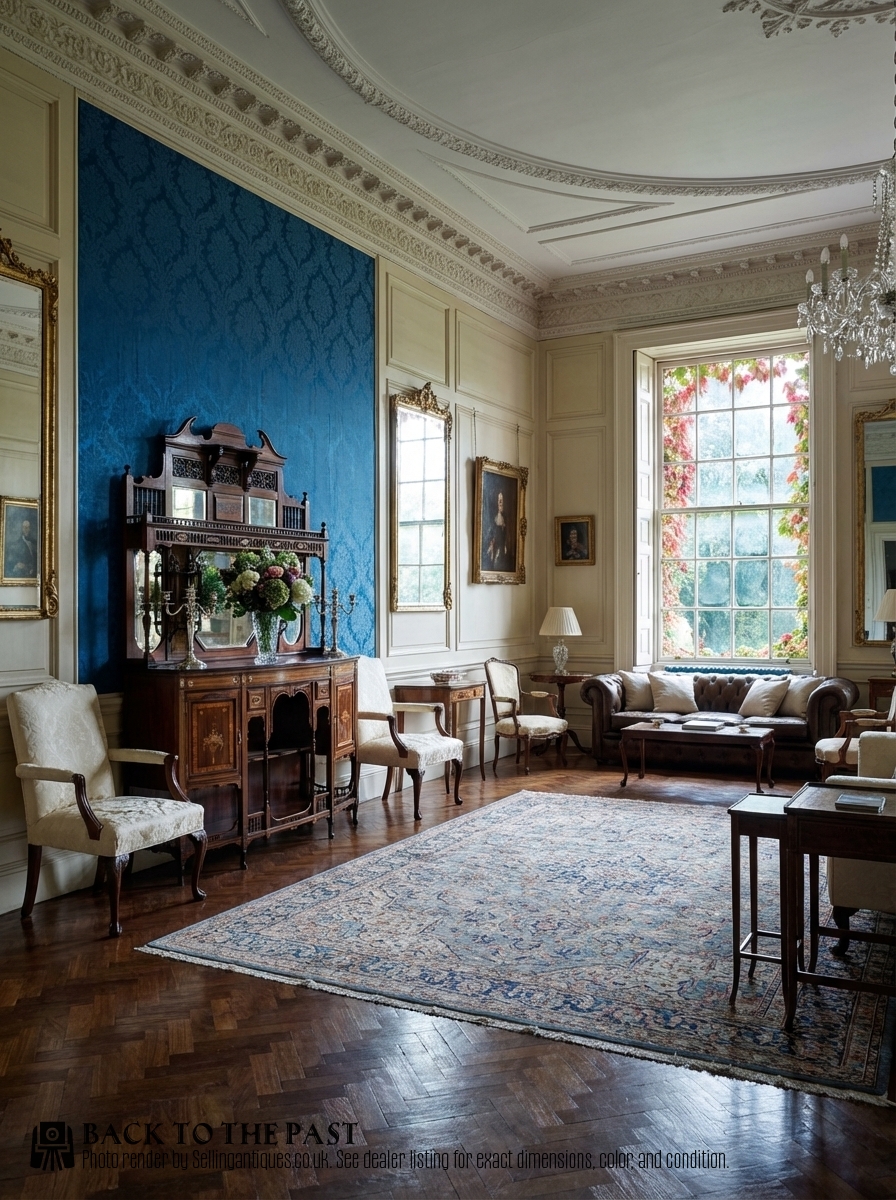
Victorian Rosewood Chiffonier
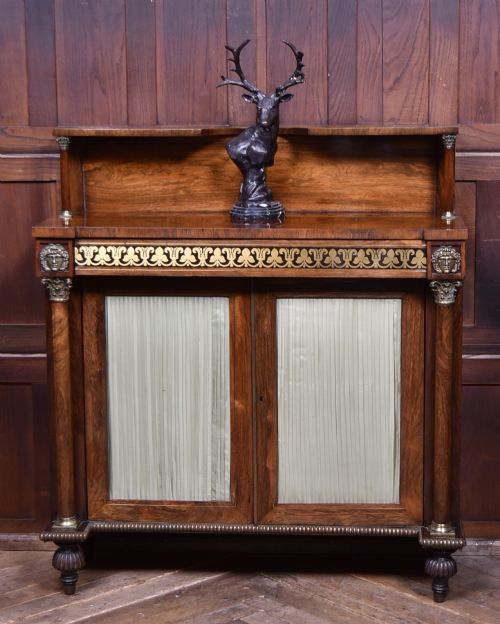
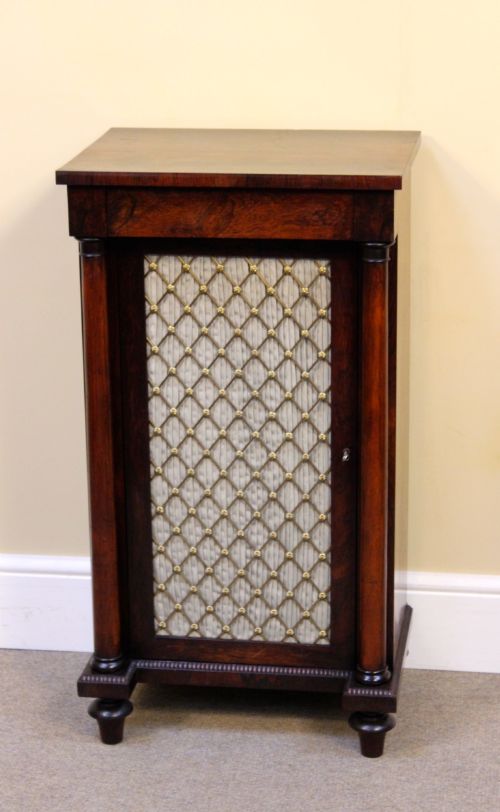
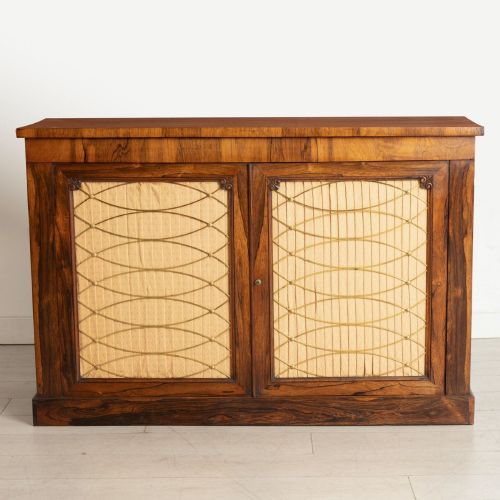
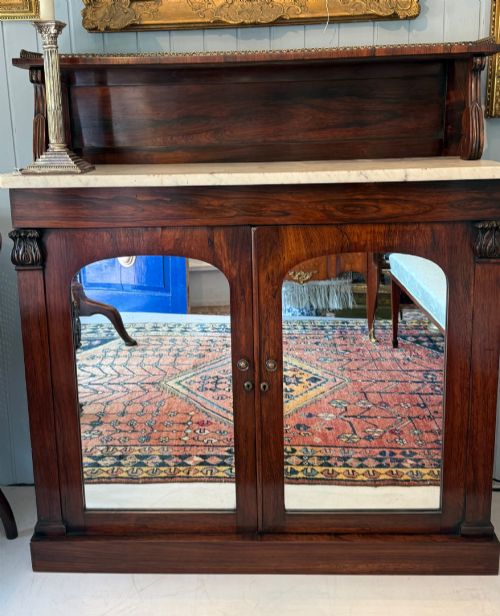
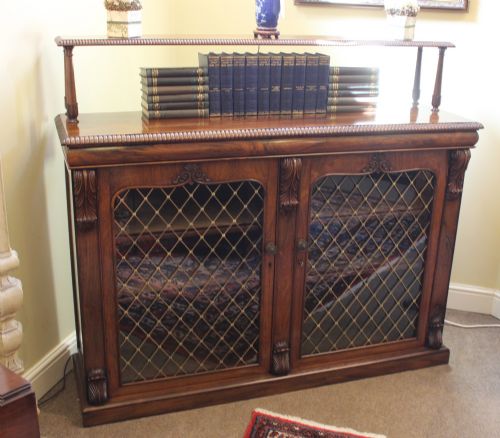
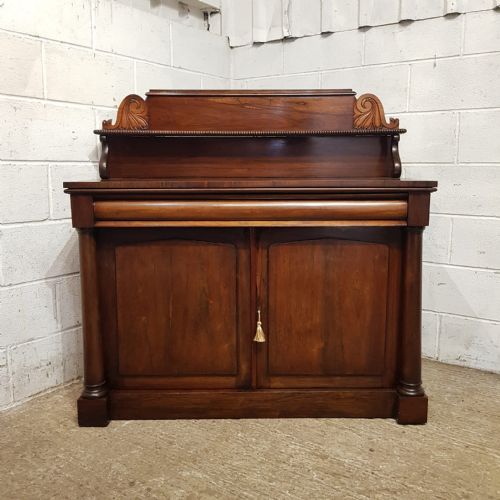
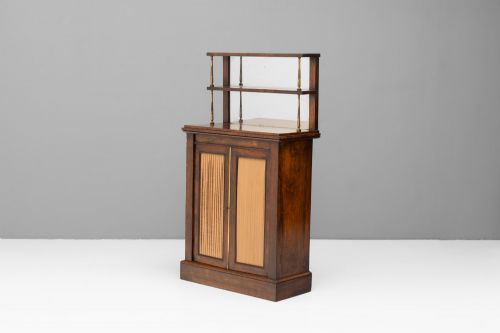
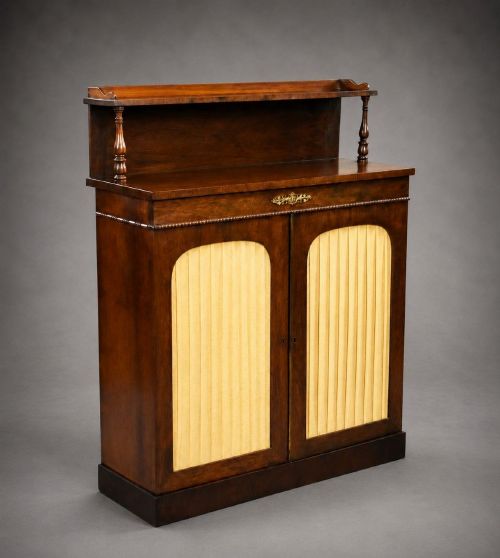
A victorian rosewood chiffonier is a low storage piece that typically combines a lower cupboard section with an upper tier or shelf, appearing frequently across nineteenth-century domestic interiors. These cabinets function primarily as living room or parlour furniture, offering a surface for display alongside concealed shelf space behind panelled or glazed doors.
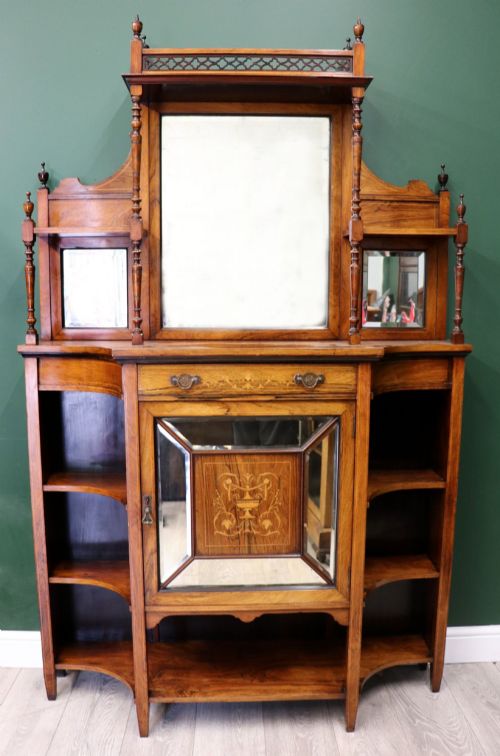
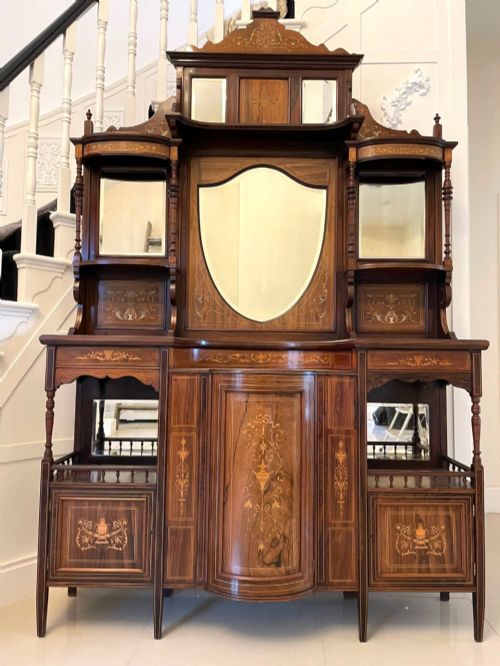
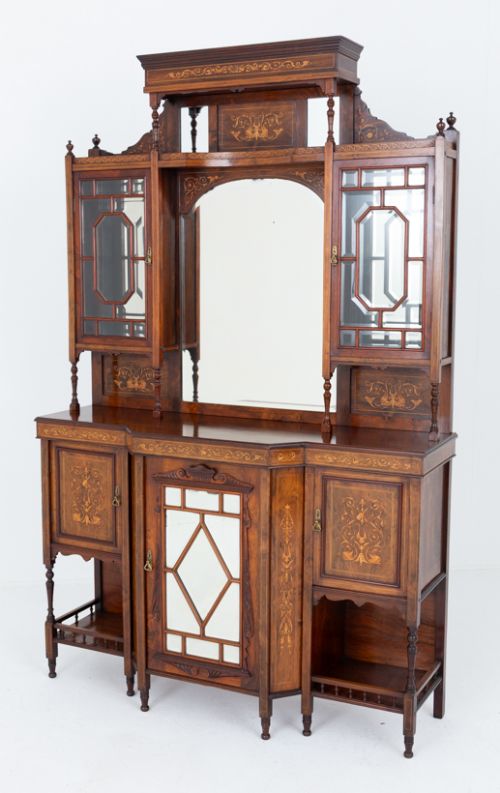
The pieces catalogued here span the nineteenth century, encompassing early examples alongside late Victorian and Aesthetic Movement variants. Makers often styled them with serpentine fronts, breakfront profiles, or marquetry details, bridging the transition between traditional sideboards and decorative salon credenzas.
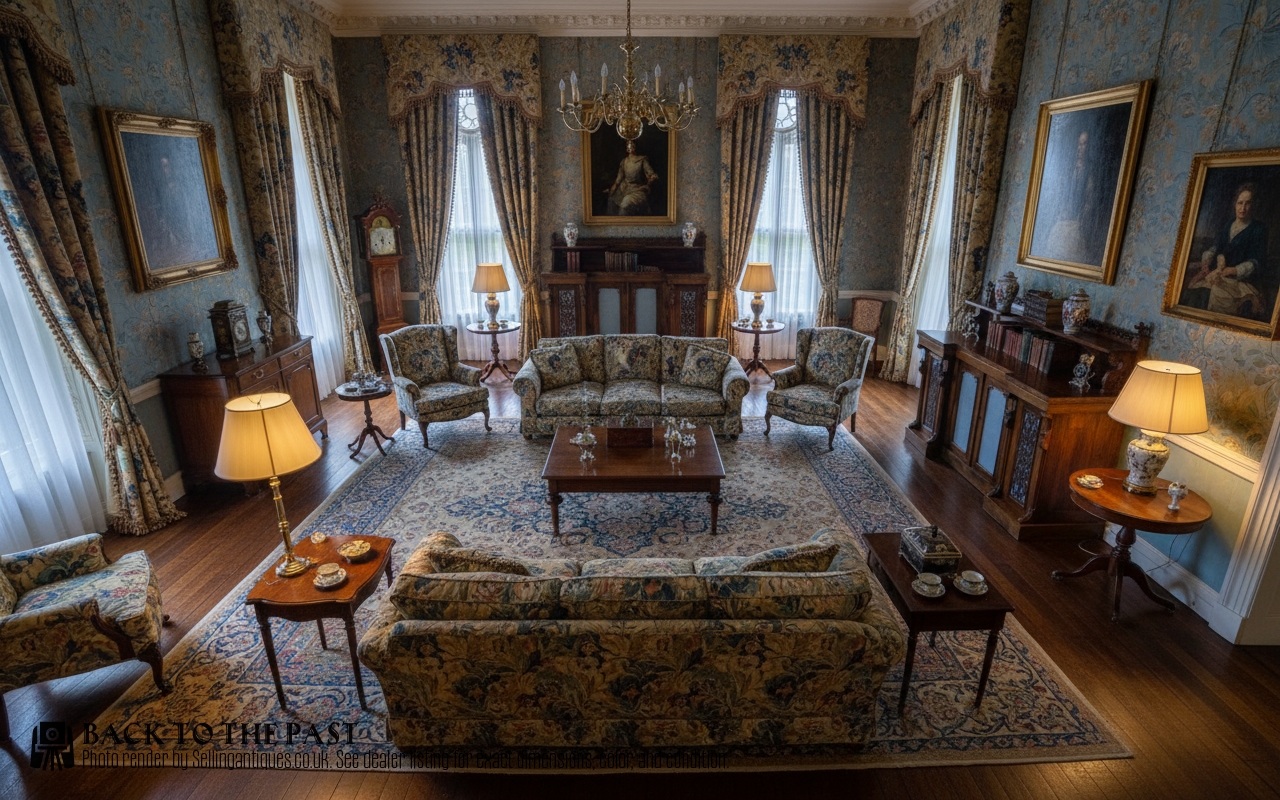
Materials and construction
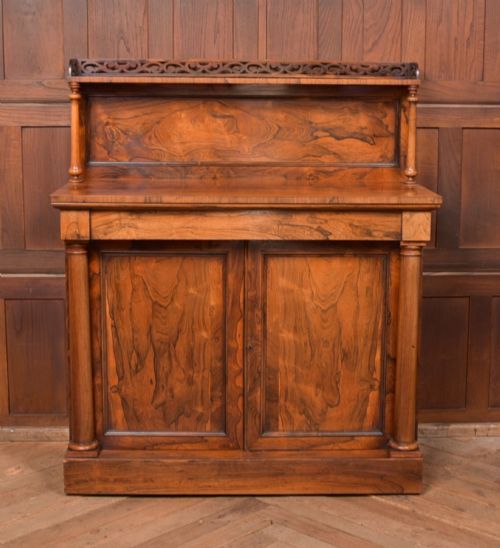
Makers utilised rich rosewood timbers, frequently selected for their pronounced natural figure and deep grain patterns. Structural integrity relied on solid carcases faced with choice veneers, often complemented by contrasting boxwood inlay and marquetry motifs.
Additional elements incorporate glass panelling, mirror plates, and cast brass hardware. Interiors utilise secondary timbers for shelving and drawer construction, while specific iterations feature applied fabric panels or marble tops.
Victorian Rosewood Chiffonier Retail Price Guide 2026
Typical asking prices for victorian rosewood chiffonier among the pieces listed under this phrase on Sellingantiques today, from the lower quarter to the upper quarter. They describe what is for sale here now, not the wider market.
Listings feature rosewood side cabinets spanning the early nineteenth century through to the late Victorian Aesthetic Movement.
Distinctions in execution
Quality in a victorian rosewood chiffonier rests primarily in the selection of the timber veneer and the precision of any boxwood inlay or marquetry. Master workshops demonstrated superior control over grain matching across curved serpentine fronts and door panels.
The refinement of brass mounts, the clarity of integrated mirror glass, and the architectural weight of the upper tier further separate standard utility pieces from high-status cabinet work.
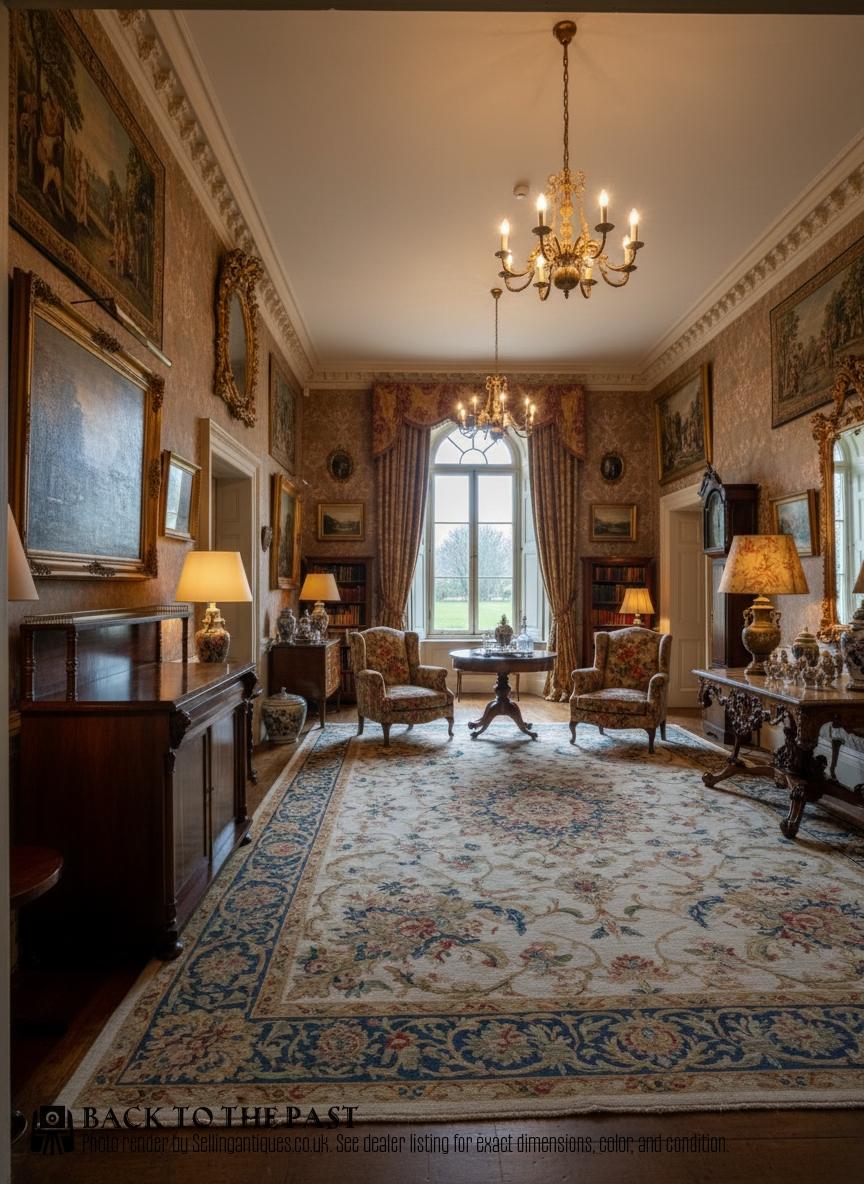
Maple and Co·Howard and Sons·Collinson and Lock by Stephen Webb
The Victorian Rosewood Chiffonier Glossary
- Chiffonier
- A low cabinet or sideboard featuring a two-door cupboard base, frequently surmounted by a raised shelf or back. This form developed during the Regency and remained popular throughout the Victorian era.
- Marquetry
- Decorative patterns formed by the insertion of contrasting veneer woods into a primary carcase. In these pieces, floral or geometric boxwood designs often embellish the rosewood surface.
- Serpentine
- A furniture front curved with a convex centre flanked by concave ends. This undulating shape requires advanced woodworking skill to achieve successfully in solid timber and veneer.
- Credenza
- A grand side cabinet or sideboard format often associated with nineteenth-century reception rooms. The term frequently overlaps with chiffonier descriptions in historical inventory records.
Victorian Rosewood Chiffonier: Frequently Asked Questions
How do I date a rosewood chiffonier?
Dating relies on stylistic shifts from the simpler architectural lines of early nineteenth-century examples to the elaborate marquetry and Aesthetic Movement forms of the late Victorian period.
Examining construction techniques, timber thickness, and hardware fixings provides further clues to the precise decade of manufacture.
Where should I place a chiffonier?
These low cabinets suit dining rooms, living spaces, or wide hallways where surface display space and concealed storage are both required.
Their shallow depth ensures they do not dominate smaller rooms while still offering substantial internal shelf capacity.
What is the difference between a sideboard and a chiffonier?
A sideboard is traditionally a larger dining room server, whereas a chiffonier is generally more compact and typically includes an upper shelf or mirrored back structure.
In nineteenth-century terminology, however, the two labels were frequently used interchangeably by makers and retailers.
How do I care for rosewood furniture?
Rosewood benefits from a stable indoor environment away from direct sunlight and sudden humidity shifts, which can dry out timber veneers.
Regular dusting with a soft, dry cloth preserves the polished surface without the need for heavy chemical polishes.