

Victorian Pottery Statue
These robust victorian pottery statue examples bring colourful character and historic charm to mantelpieces and side tables.
Victorian Pottery Statue
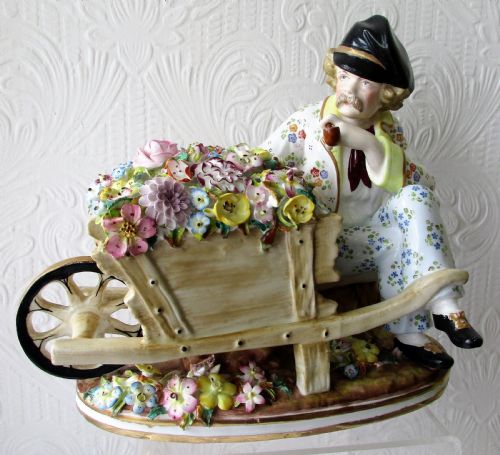
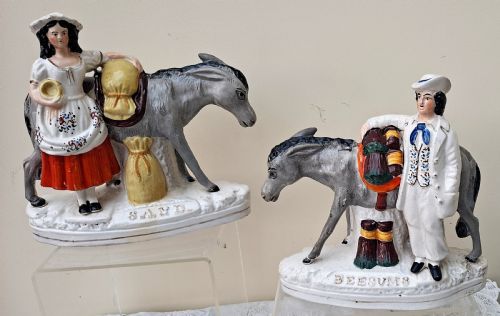
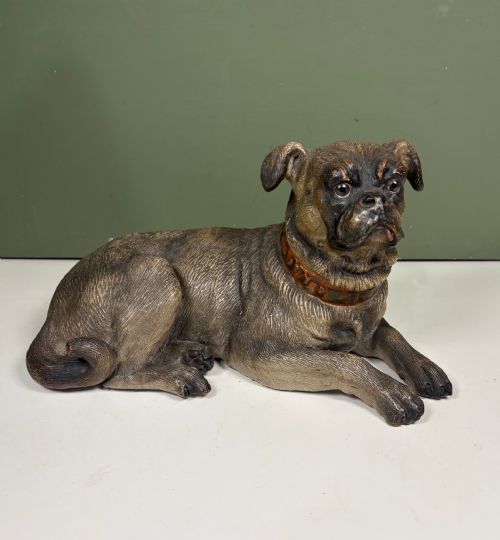
A victorian pottery statue encompasses earthenware figures and animals produced during the nineteenth century, largely originating from Staffordshire potteries and occasionally continental workshops. Buyers seek these pieces for their naive charm, historical subjects, and decorative presence in traditional interiors.
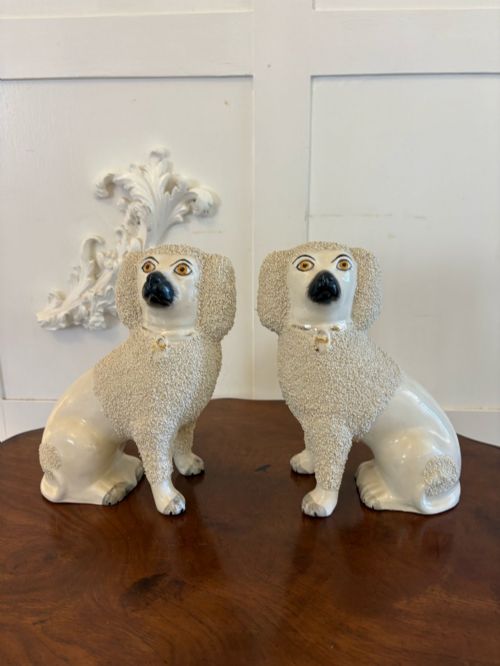
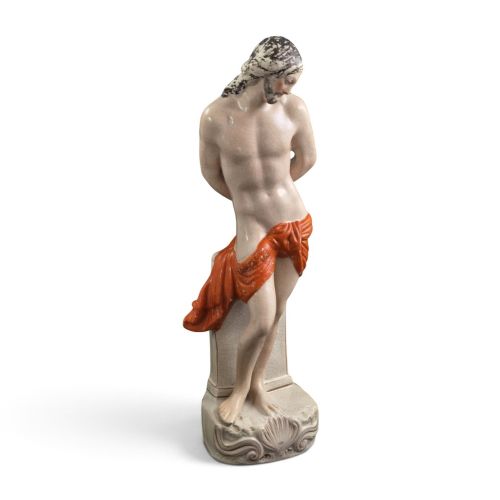
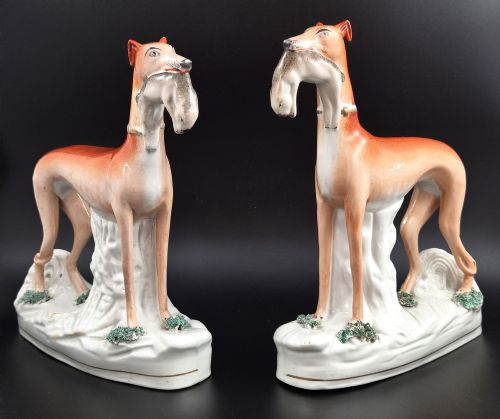
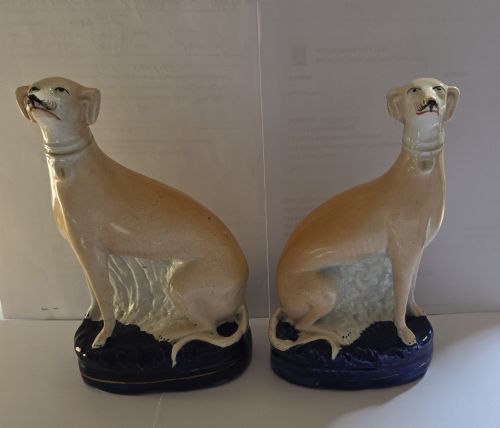
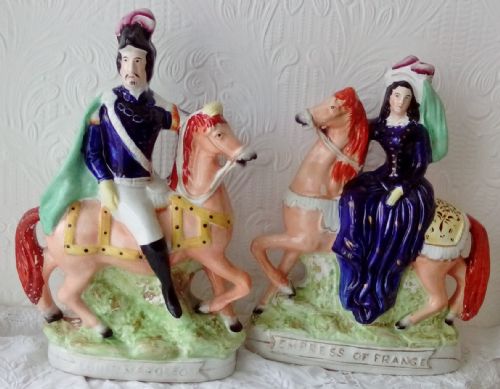
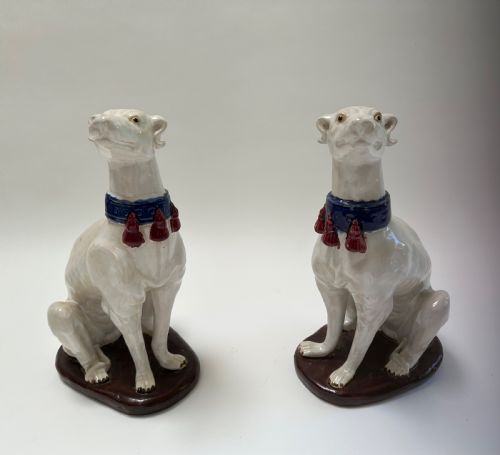
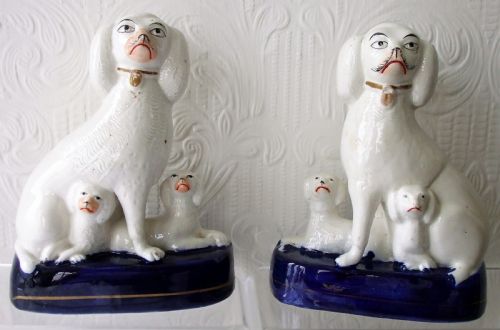
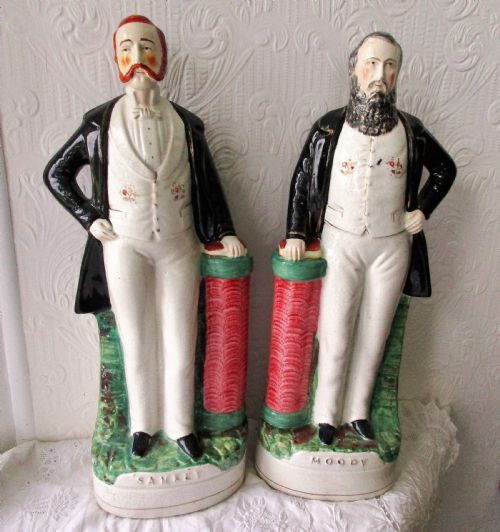
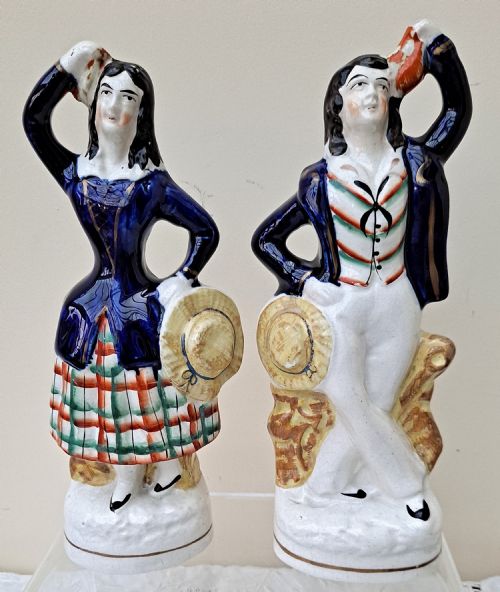
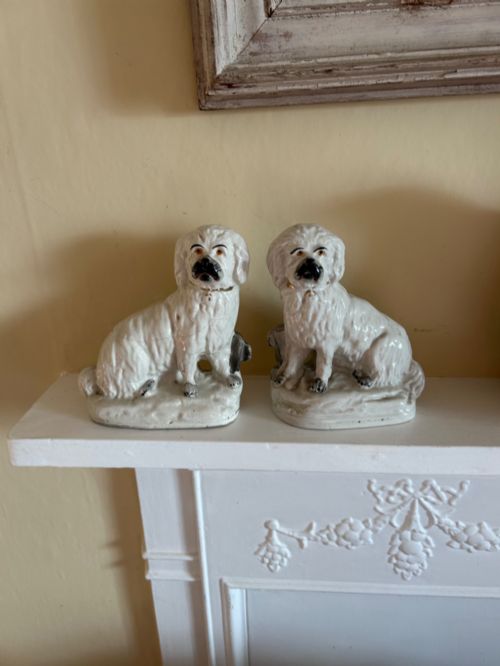
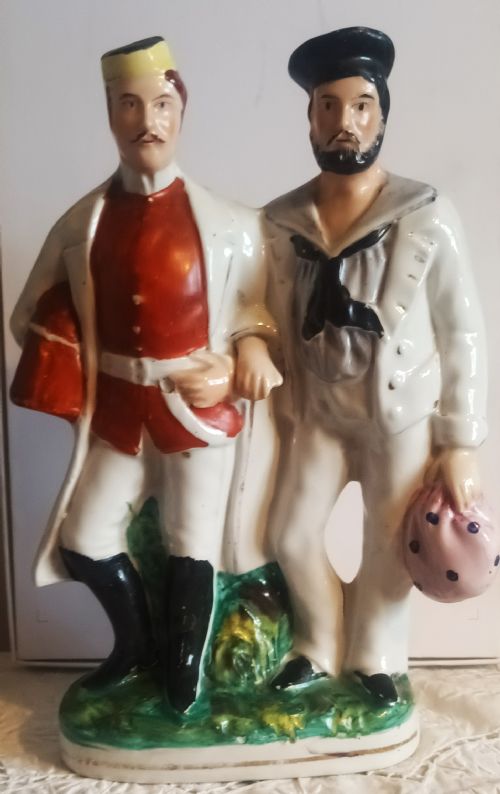
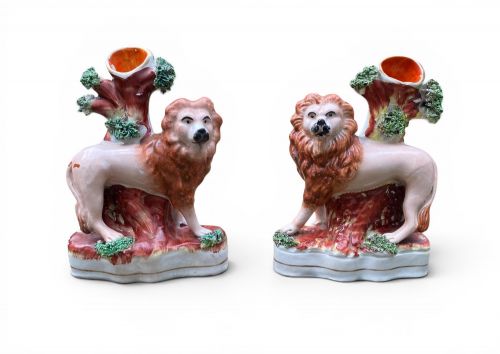
The selections span portrait figures of royals and actors, literary subjects, and popular animals including poodles, greyhounds, spaniels, and lions. Many appear as matched pairs intended for symmetry on mantelpieces or console tables.
Forms range from simple shelf ornaments and bookends to functional spill vases and quill holders. The output reflects both domestic British production and Italian majolica or Austrian manufacturing traditions.
Materials and methods
Many items received gilding or gold leaf highlights to accentuate collars, eyes, and clothing details. Copper lustre glazes provided metallic sheen on specific animal sculptures.
Firing took place in traditional kilns where pieces underwent multiple stages to set the ceramic body, underglaze colours, and final enamel decorations.
Nineteenth-century Staffordshire poodles often feature clay curls applied strand by strand using grated ceramic paste.
Judging the work
Quality rests primarily on the crispness of the moulding and the delicacy of the hand-painting, particularly around facial expressions and eyes. Better examples display careful brushwork rather than hasty factory decoration.
The weight of the ceramic body and the depth of the glaze also distinguish finer output from mass-produced wares. Original matched pairs with consistent glazing and minimal wear command higher regard among collectors.
John Bevington·Goldscheider·Wooley
The Victorian Pottery Statue Glossary
- Spill vase
- A hollow pottery figure incorporating a small cylindrical holder designed to store wooden tapers for lighting pipes or candles.
- Earthenware
- Porous ceramic pottery fired at relatively low temperatures, forming the standard body for nineteenth-century Staffordshire figures.
- Lead glaze
- A glossy coating containing lead oxide applied to ceramics to waterproof the body and impart a smooth, shiny finish.
- Majolica
- Opaque tin-glazed pottery noted for bright colours, originating in Italy and influencing nineteenth-century revival styles.
- Copper lustre
- A metallic glaze technique producing an iridescent, reflective copper-like sheen on the ceramic surface.
Victorian Pottery Statue: Frequently Asked Questions
Were these figures meant for display?
These ceramic figures served primarily as decorative ornaments for mantelpieces, sideboards, and drawing rooms throughout Victorian homes. Some variations, such as spill vases or quill holders, combined display with practical household use.
Pairs were specifically arranged to frame a clock or mirror at the centre of a fireplace mantel. Their bright enamel colours enlivened dimly lit Victorian interiors.
How should I clean my pottery figure?
Dust these ceramic pieces gently with a soft dry brush to prevent dirt accumulation in crevices and crazing lines. Avoid submerging antique earthenware in water, as moisture can penetrate through tiny cracks in the glaze.
Harsh chemical cleaners will damage delicate enamel paints and gold leaf highlights. Wipe surfaces lightly with a barely damp cloth only when necessary.
What subjects are most common?
Animal figures dominate the category, particularly poodles, spaniels, greyhounds, and lions, alongside exotic animals like zebras. Human subjects include theatrical characters, historical figures, literary heroes, and political portraits.
Many figures commemorate contemporary events, famous preachers, or royal milestones of the nineteenth century. Pair formats remain especially prevalent across both animal and human subjects.