

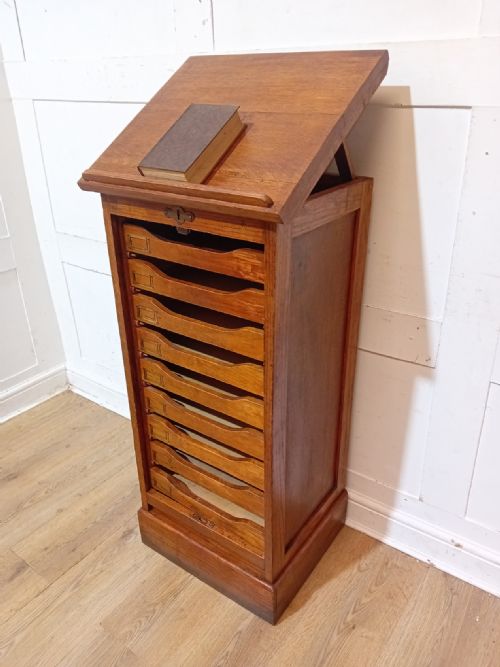
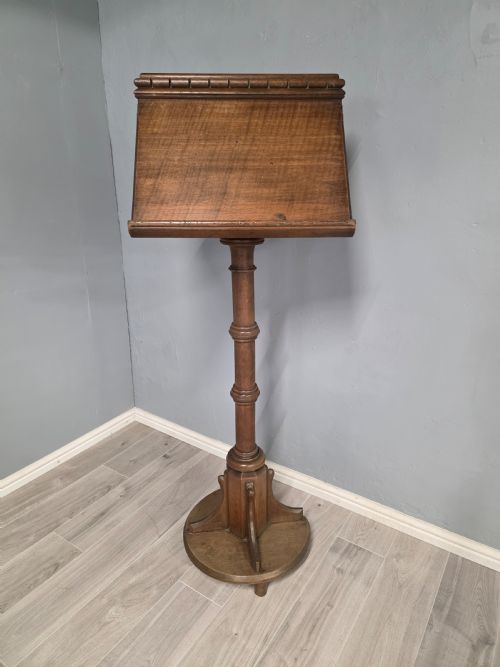


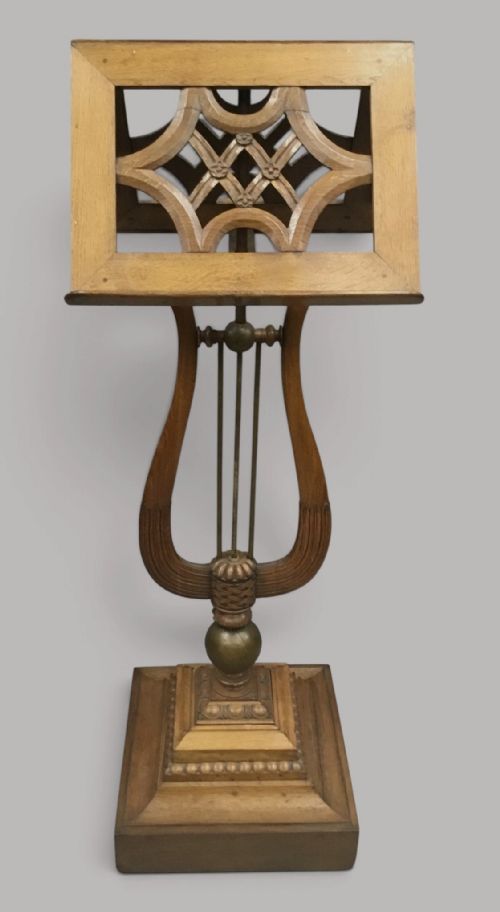


Victorian Oak Lectern
These robust victorian oak lectern pieces bring ecclesiastical presence and practical reading surfaces into domestic and institutional spaces alike.
Victorian Oak Lectern
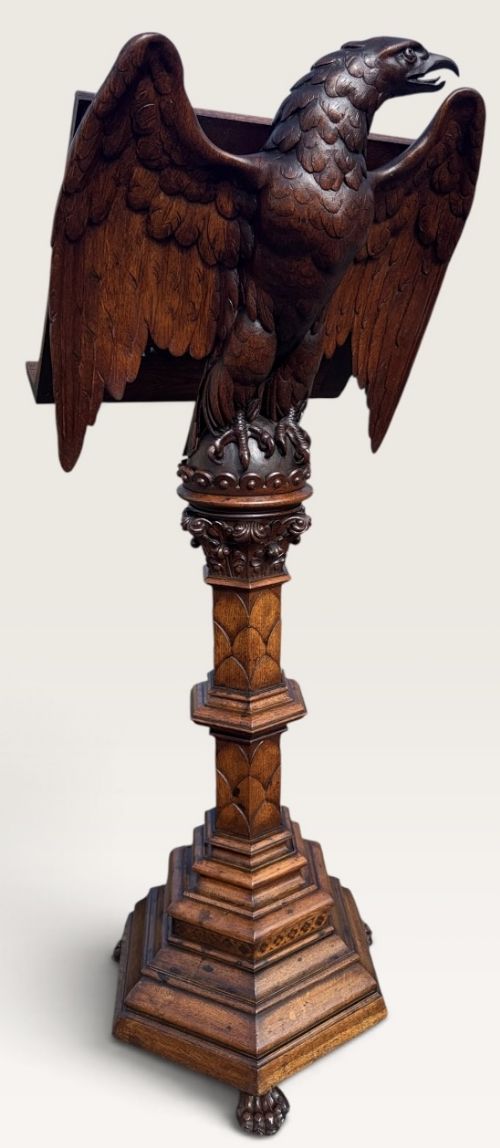
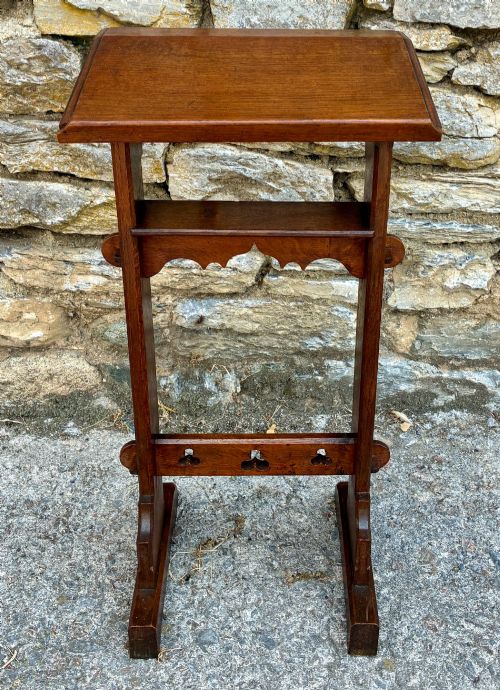
A victorian oak lectern is a sturdy book rest or reading stand originally built for churches, chapels, and grand libraries. These pieces range from simple table stands to towering floor-standing reading desks and elaborate carved figures.
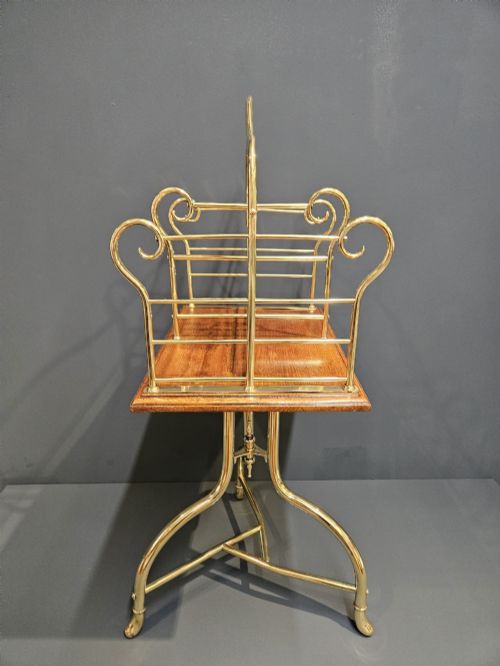
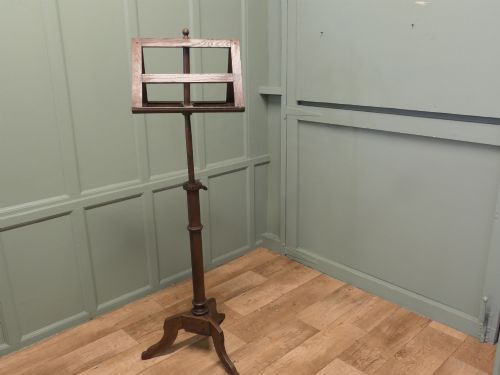
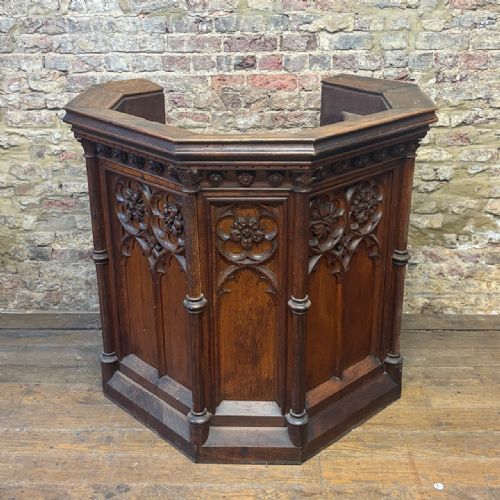
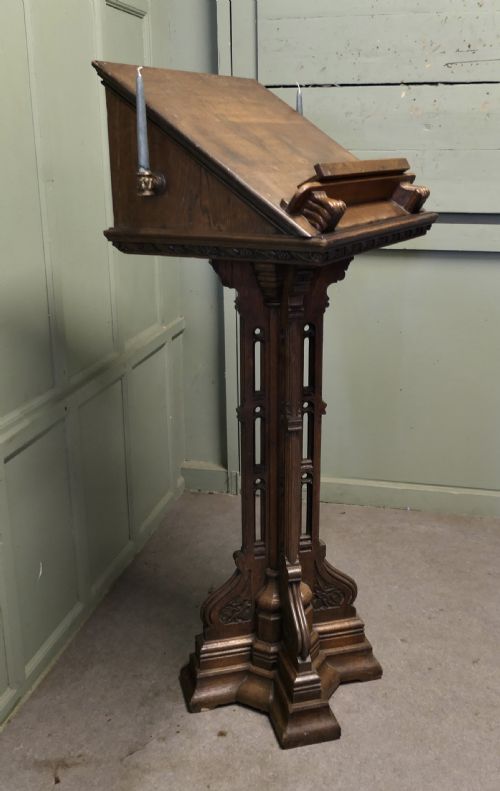
The versions met most frequently on this page include Gothic Revival church pieces, adjustable reading stands with brass work, and prayer desks. Form follows function closely, with angled book rests designed to hold large volumes securely.
Originating primarily from nineteenth-century ecclesiastical and domestic settings, these pieces utilise heavy timber to support heavy texts. Their survival reflects the enduring utility of solid wood furniture built for regular handling.
How they were made
Makers built these pieces primarily from solid oak, sometimes paired with cast iron frames or brass fittings to provide stability and adjustable movement. The timber selection ensured that the furniture could withstand heavy daily use in public buildings.
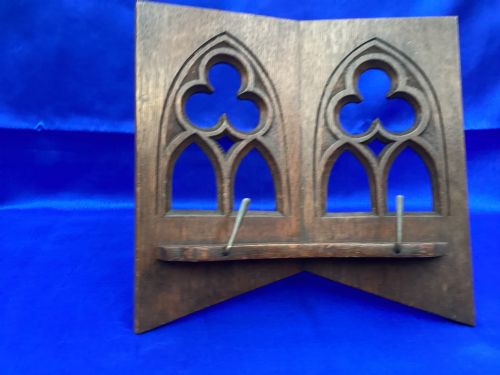
Construction techniques include deep relief carving, particularly in the Gothic Revival style, alongside functional joints designed to bear downward weight. Metal components such as screws and brackets allowed reading platforms to tilt or alter in height.
Victorian Oak Lectern Retail Price Guide 2026
Typical asking prices for victorian oak lectern among the pieces listed under this phrase on Sellingantiques today, from the lower quarter to the upper quarter. They describe what is for sale here now, not the wider market.
Listings demonstrate a strong presence of Gothic Revival design alongside functional industrial pairings of oak and cast iron.
What varies in quality
The standard of carving sets the better examples apart, with crisp detail and deep undercut foliage or figural work indicating skilled workshop production. Simpler utility pieces rely on clean proportions rather than ornamentation.
The complexity of the mechanism also defines the grade of the piece, where smoothly operating adjustable brass work or iron framing represents higher ambition than fixed wooden supports.
Carters Of London
The Victorian Oak Lectern Glossary
- Gothic Revival
- An architectural and decorative style drawing on medieval forms, featuring pointed arches and trefoils. This aesthetic heavily influenced nineteenth-century ecclesiastical furniture.
- Prie Dieu
- A small desk or prayer kneeler designed for private devotion, incorporating a sloping shelf for books. These items share construction traits with standard reading stands.
- Ecclesiastical
- Relating to the Christian Church or its clergy, describing items originally commissioned for house of worship interiors. Much of the surviving oak furniture originates from these contexts.
- Duet stand
- A music or reading stand designed to accommodate two people reading simultaneously, often featuring dual sloping surfaces. These present an unusual double configuration compared to standard single lecterns.
Victorian Oak Lectern: Frequently Asked Questions
How were lecterns used originally?
These stands served primarily in churches and chapels to hold large service books, Bibles, or hymnals at a readable angle for speakers and congregations. They provided a stable raised surface for heavy bound volumes.
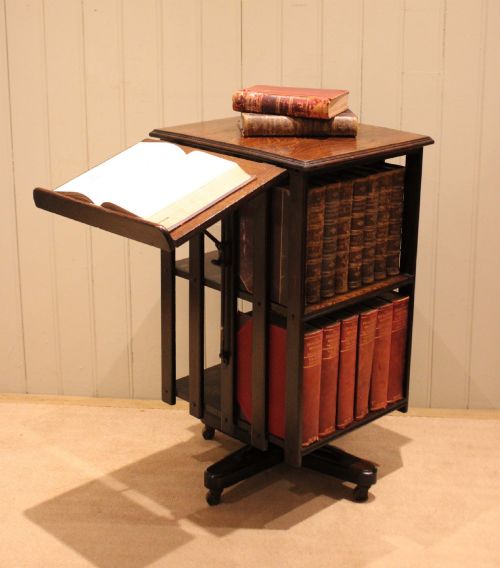
In domestic settings, similar stands functioned in libraries or studies to support reference books, newspapers, or personal journals during extended periods of reading.
Where does the oak come from?
The timber used in these pieces is predominantly British or European oak, selected for its density and strength.
Carpenters favoured mature hardwood that could take deep carving without splitting and support heavy downward pressure from massive book bindings.
Are all lecterns adjustable?
Many standing and table models feature fixed angles designed for standard reading heights, while others incorporate metal brackets or screws to alter the slope.
Adjustable examples often combine oak reading surfaces with cast iron or brass mechanisms to allow movement without weakening the overall structure.
How do I fit one into a modern room?
Tabletop versions sit comfortably on sideboards, desks, or hall tables to display open books or art volumes. Floor-standing models require adequate clearance to serve as functional reading points or architectural accents in a study.
The dark timber tones pair well with neutral walls and traditional or eclectic interiors where solid wood provides grounding texture.