




Victorian Kidney Shape Table
A Victorian kidney shape table offers an elegant curved silhouette designed to fit comfortably against the body while writing or dressing.
Victorian Kidney Shape Table
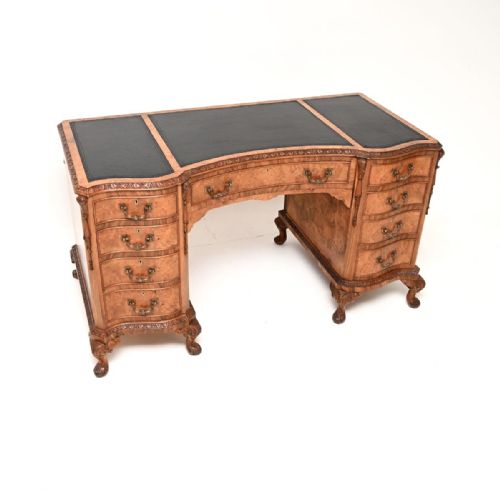
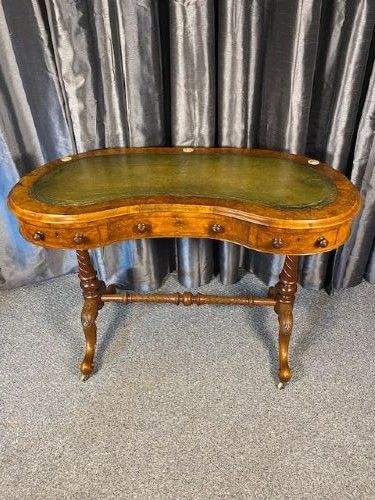
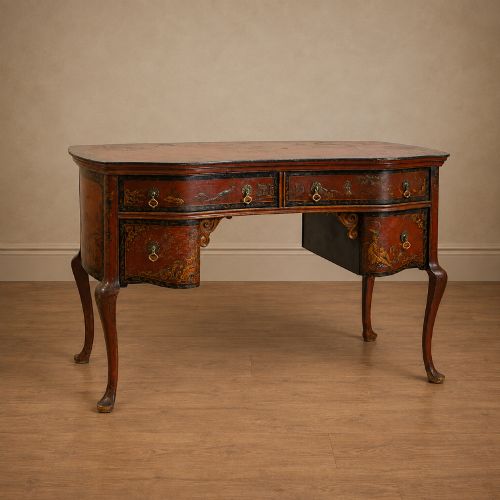
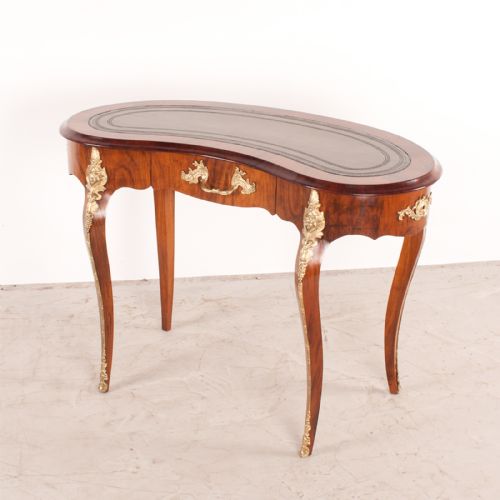
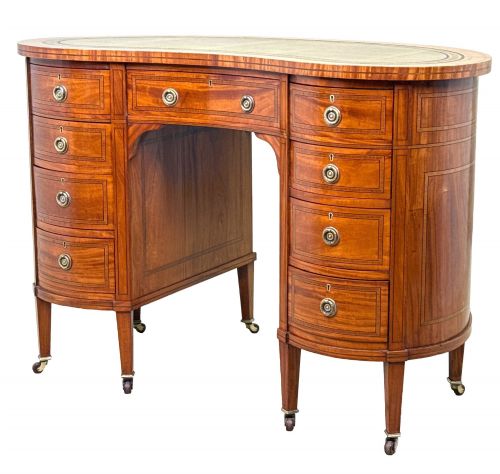
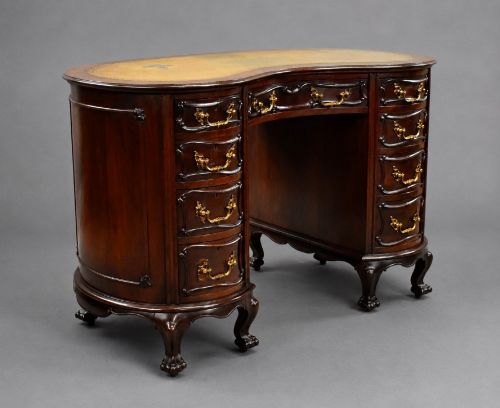
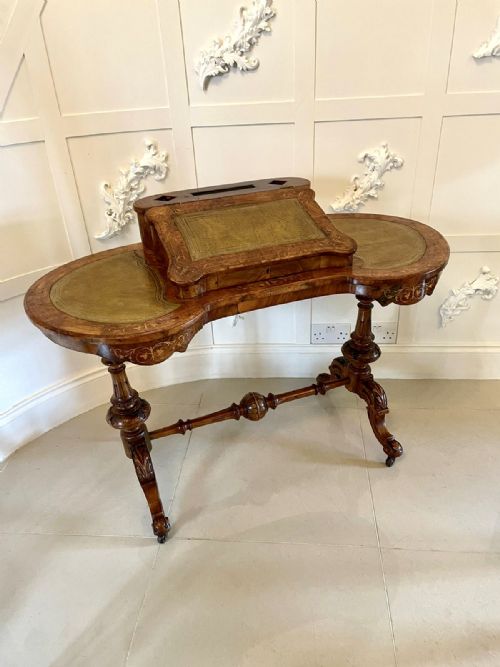
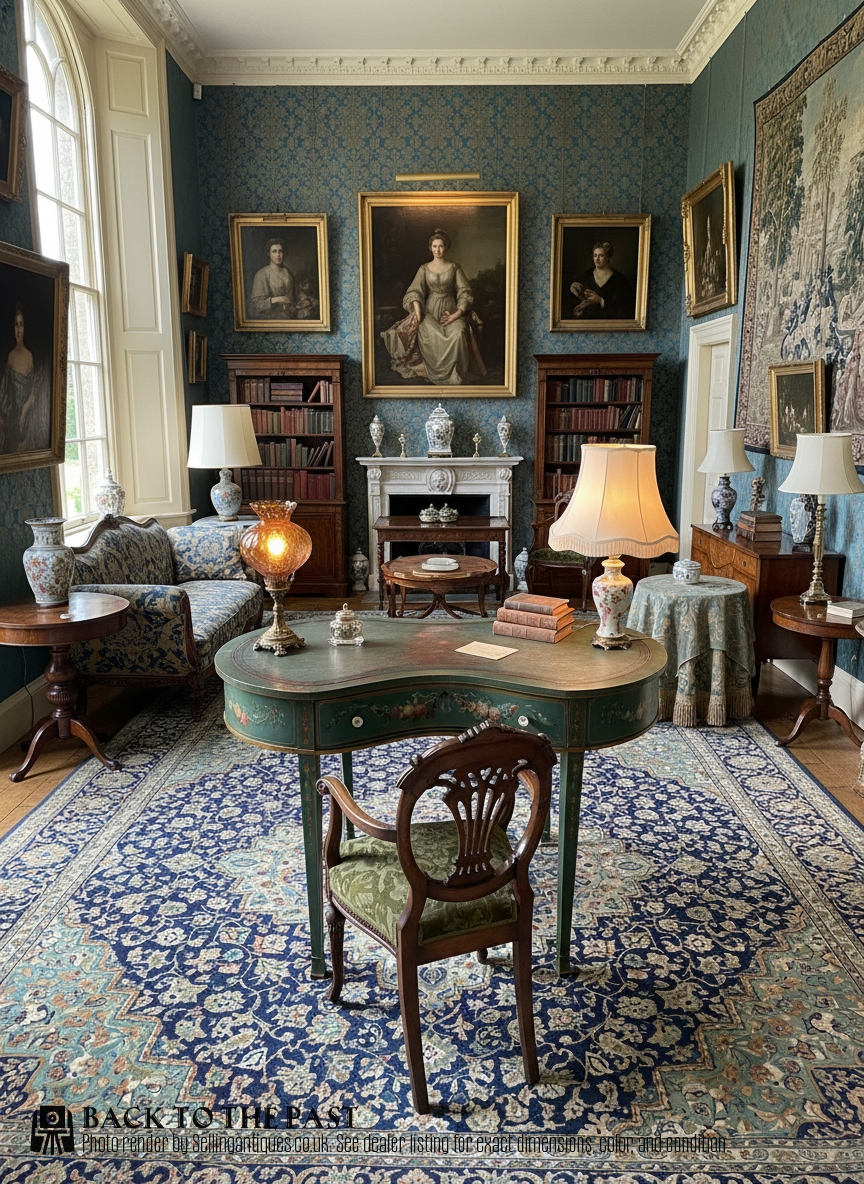
A Victorian kidney shape table functions primarily as a refined writing desk, side table, or dressing table created during the nineteenth century. The curved concave front defines the shape, allowing the user to sit close to the centre while drawers or surfaces curve around the sides.
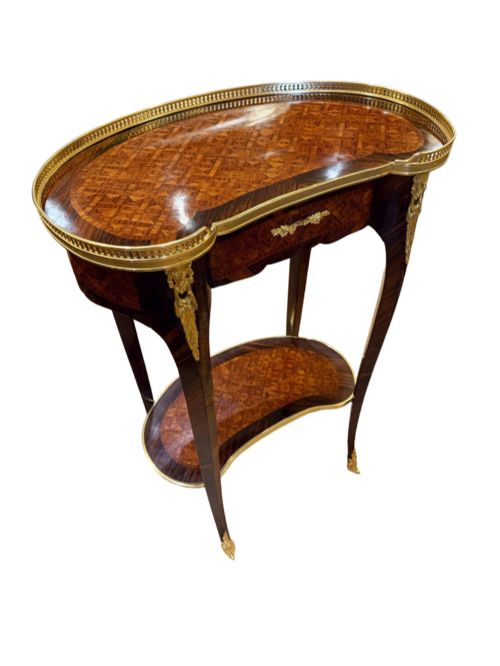
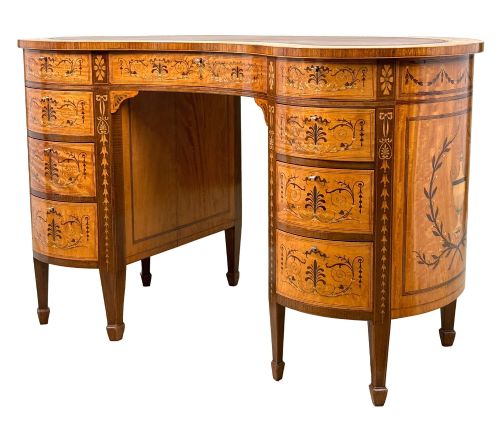
Burr walnut, mahogany, and rosewood dominate the surviving examples, often enriched with delicate marquetry or parquetry inlays. Most pieces stem from the Victorian period and the late nineteenth century, reflecting revivals of French and Sheraton styles alongside Edwardian adaptations.
Materials and Techniques
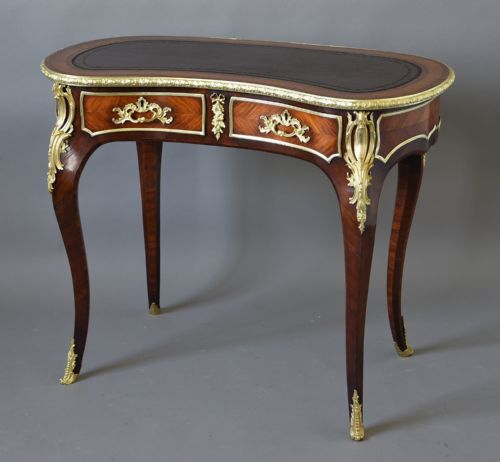
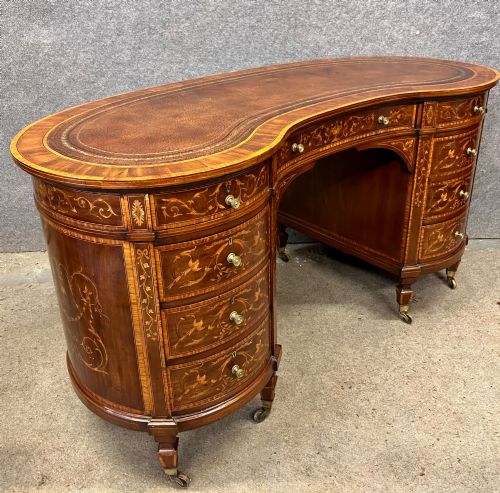
Cabinet makers utilised richly figured timbers such as burr walnut, satinwood, and kingwood, frequently applying crossbanding to accentuate the distinctive curved outline. Brass mounts, leather writing inserts with gilt tooling, and intricate marquetry floral patterns completed the construction of finer writing tables.
The sweeping kidney silhouette required precise bending of rails and careful veneer work to follow the concave radius without splitting. Freestanding library tables received polished timber finishes on the reverse, allowing placement in the middle of a room rather than flat against a wall.
Listings show a strong preference for burr walnut and mahogany across nineteenth-century examples.
Judging Quality
The distinction between standard commercial output and superior craftsmanship rests in the selection of veneer and the crispness of the inlaid details. Richly figured burr walnut and carefully matched satinwood indicate higher workshops, whereas plain mahogany surfaces often point to simpler domestic utility.
Structural harmony defines the better examples, where the curve feels natural and the proportions remain balanced rather than cramped. Original leather inserts, well-fitted dovetailed drawers, and refined mounts elevate an individual piece above mass-produced alternatives.
Edwards & Roberts·Wolfe & Hollander·Williams and Gibton·Gillows
The Victorian Kidney Shape Table Glossary
- Crossbanding
- A border technique where thin strips of veneer are laid across the grain to frame a central panel. This method provides a neat geometric edge to curved tabletops.
- Marquetry
- Elaborate decorative patterns formed from fitted pieces of various coloured woods and veneers. It appears frequently on Victorian writing desks and occasional tables.
- Parquetry
- Geometric wood mosaic work used to create repeating patterns on table surfaces. It showcases the precision of the cabinet maker.
- Ormolu
- Gilded bronze mounts applied to furniture for decorative accent. Makers utilised these metal fittings to emulate French eighteenth-century designs.
- Kneehole
- The recessed central space beneath a desk designed for the user's legs. Tables featuring this layout often include a central drawer above the opening.
Victorian Kidney Shape Table: Frequently Asked Questions
Where were these tables used?
These graceful pieces served primarily as ladies' writing desks, boudoir dressing tables, or decorative side tables in principal reception rooms.
Their compact footprints allowed them to sit comfortably in windows or corners where rectangular furniture appeared too bulky.
How do I care for leather writing surfaces?
Original leather inserts require gentle treatment with appropriate wax or specialist leather balms to maintain flexibility and prevent cracking over time.
Avoiding direct sunlight preserves both the leather and the delicate gilt tooling applied along the edges.
Are these desks suitable for daily work?
Many Victorian writing desks accommodate modern laptops and paperwork quite comfortably, provided the kneehole height matches your chair.
Freestanding versions work particularly well away from walls, offering a polished appearance from every viewing angle.
How do I distinguish Victorian from Edwardian pieces?
Victorian examples generally feature heavier timbers like burr walnut and rosewood with deeper colour tones and rich grain patterns.
Edwardian interpretations often lean towards lighter satinwood finishes, painted decorations, and more delicate Sheraton revival influences.