
Victorian Indian Carved Table
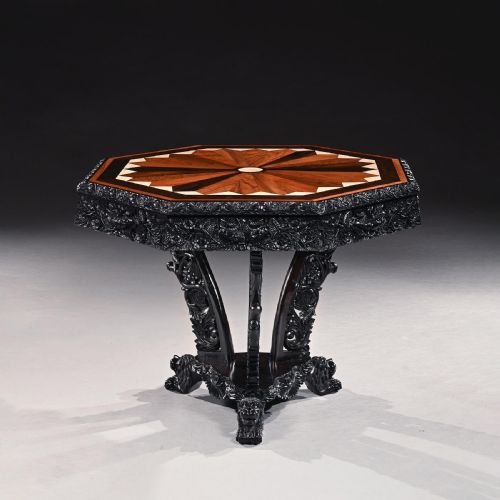
These pieces are a victorian indian carved table, combining dense botanical relief work with exotic hardwoods to anchor a traditional interior scheme.
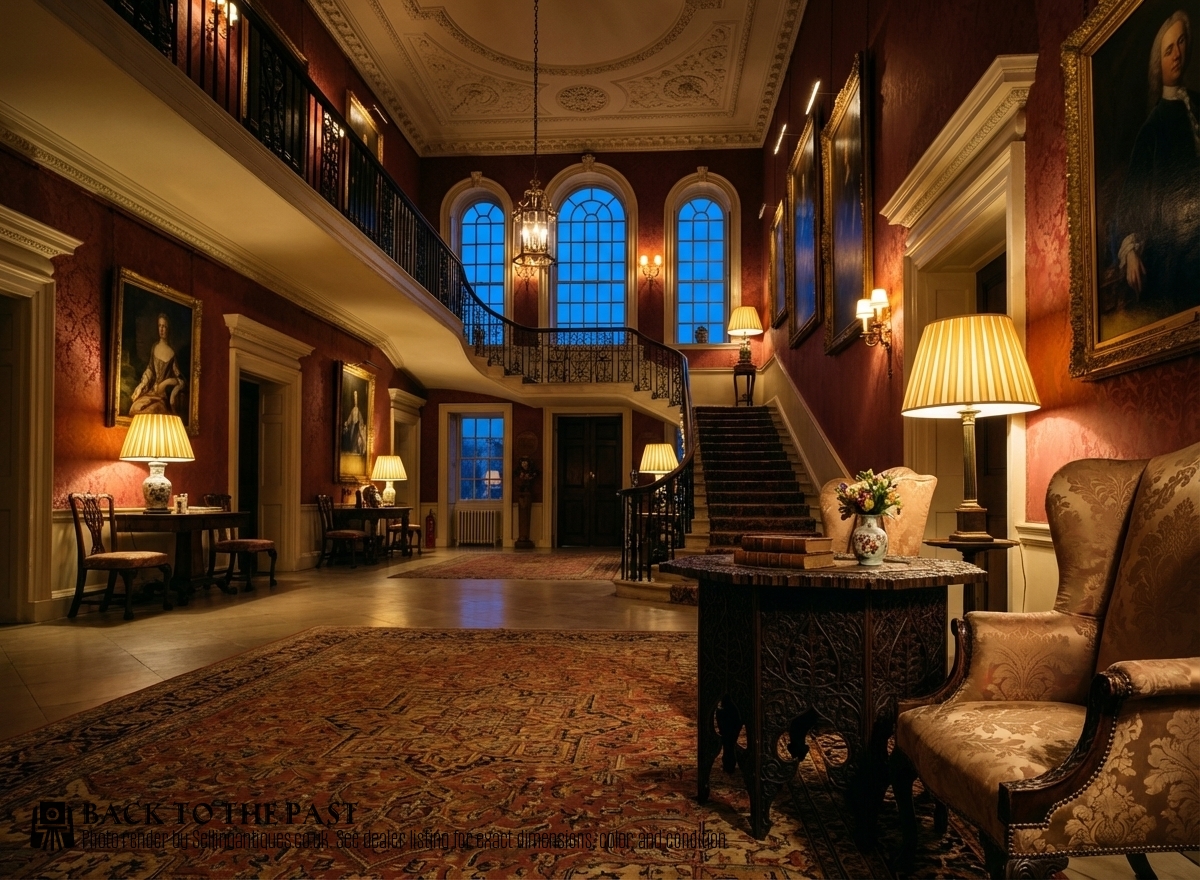
Victorian Indian Carved Table
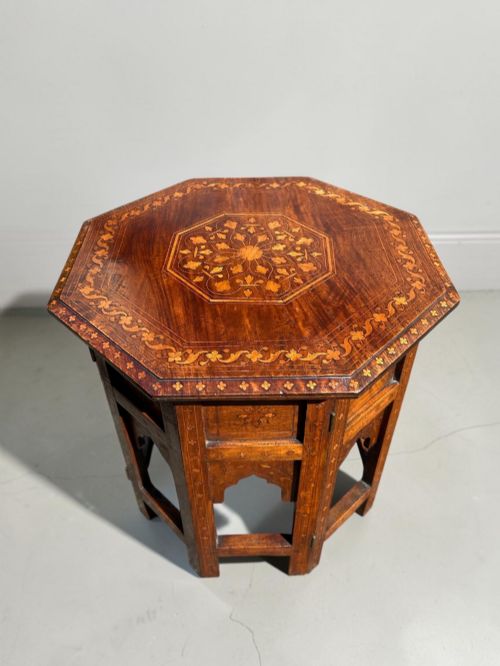
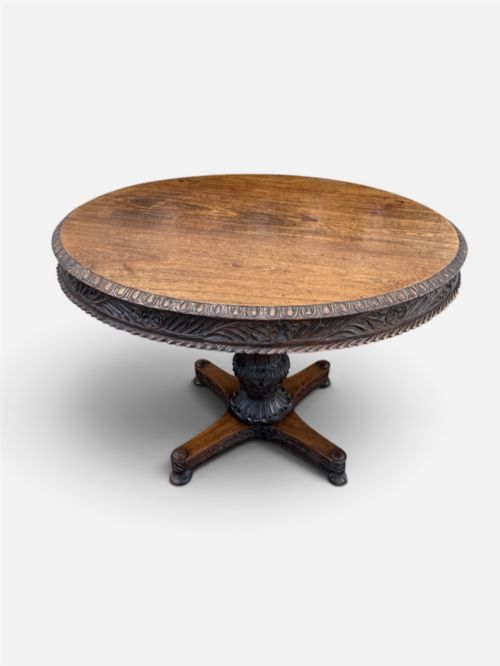
A victorian indian carved table spans several distinct forms including octagonal occasional tables, circular centre tables, and folding camp furniture created during the nineteenth century. Makers in regions such as Hoshiarpur and the Bombay Presidency produced these items for both domestic use and the colonial export market.
The material palette relies heavily on dense tropical timbers like padauk, rosewood, teak, and ebony, which took intricate chisel work without splitting. These woods provide the dark, uniform ground necessary for complex surface carving and geometric inlay.
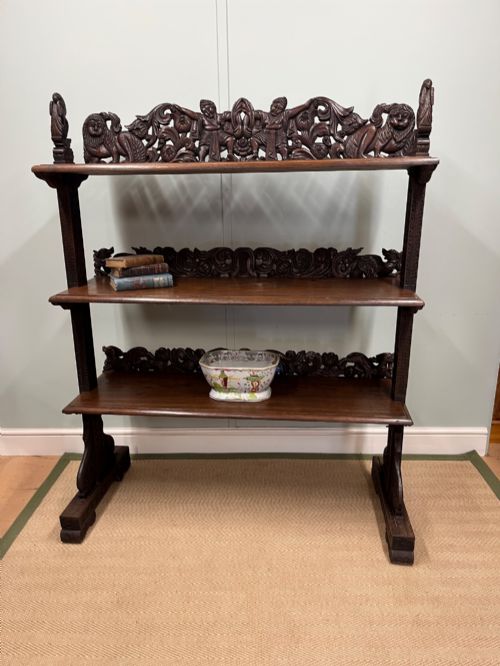
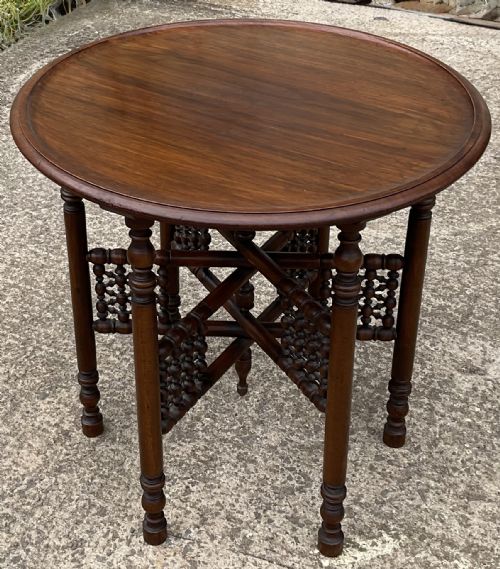
Octagonal and circular occasional tables dominate the selection, often featuring folding bases or removable tops designed for easy transport. Side tables, console tables, and tiered buffets also appear frequently across the Victorian and Edwardian periods.

Materials and Technique
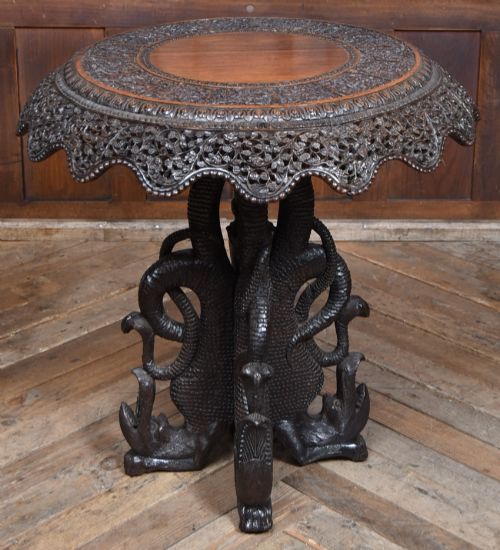
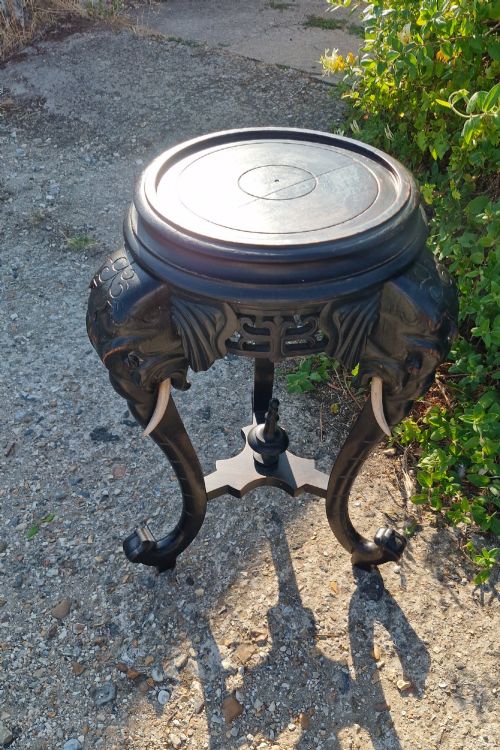
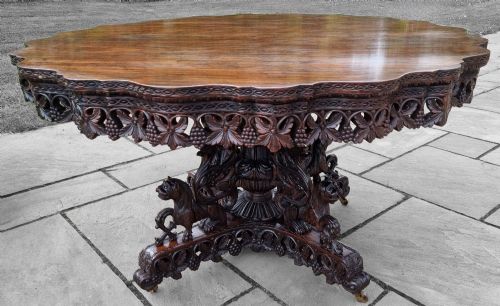
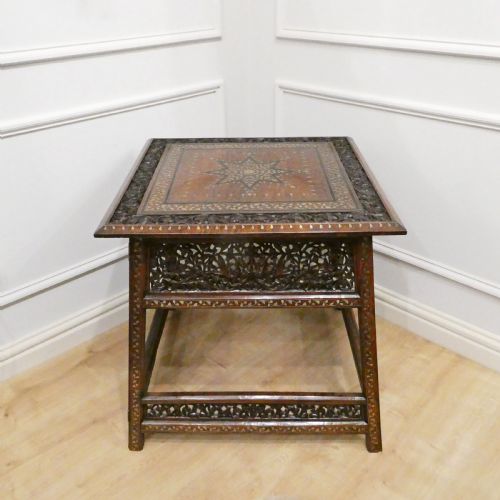
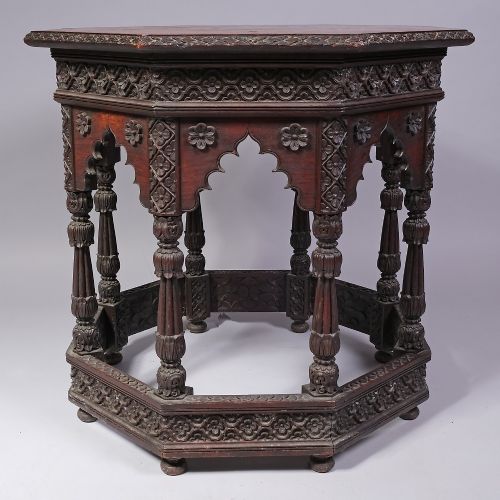
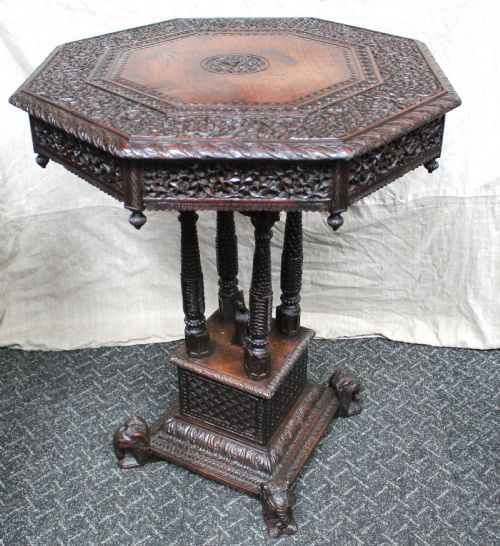
Craftsmen utilised hand chisels and gouges to carve deep relief foliage, scrolling dragons, and figurative elephant motifs directly into solid padauk, rosewood, and teak. The timber was left unpolished or lightly waxed to display the natural grain beneath the dense surface ornamentation.
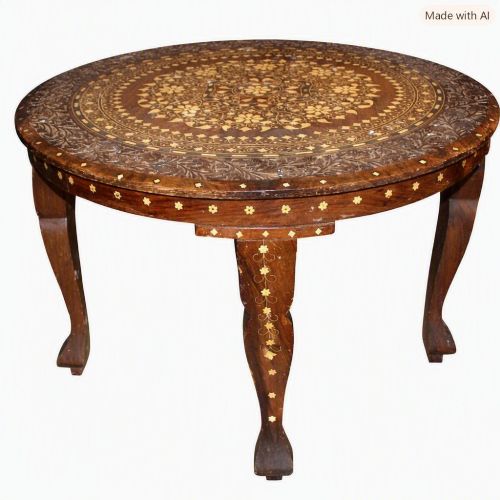
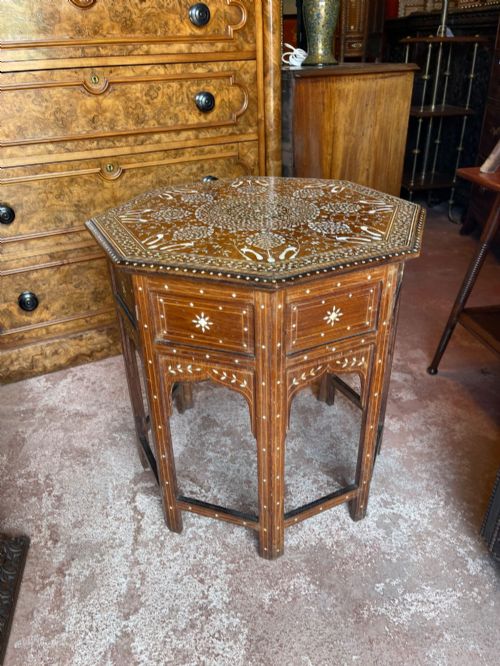
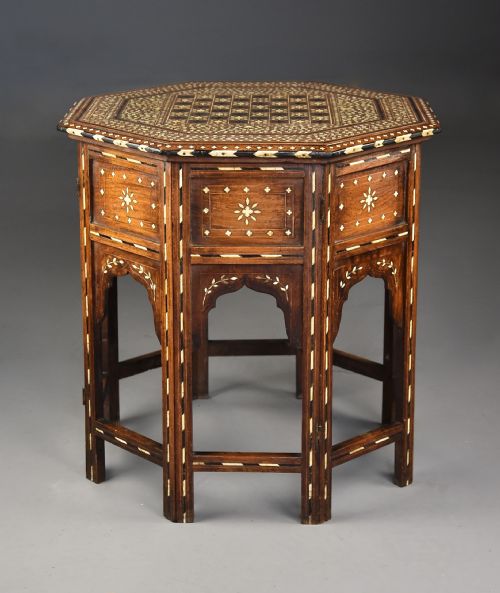
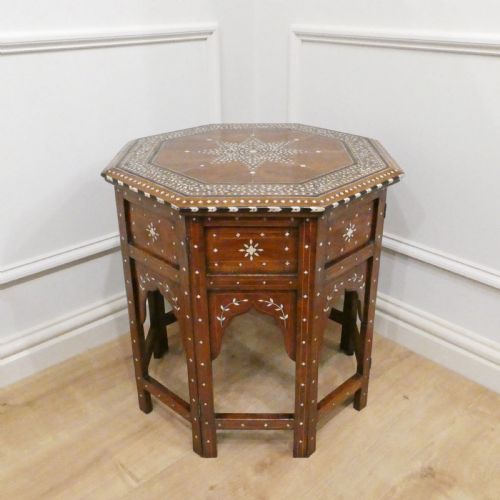
Inlay work forms a major component of the construction, utilising contrasting materials such as bone, brass, and mother-of-pearl set into geometric channels across the wood. Hoshiarpur pieces are particularly known for this meticulous wire and micro-mosaic inlay technique.
Listings feature teak, rosewood, padauk, and ebony combined with bone and brass inlay across the Victorian period.
Assessing the Carving
The integrity of the inlay determines the standing of a piece, with tighter joints and complete bone or brass sections separating finer workshop production from simpler output.
Liberty And Co
The Victorian Indian Carved Table Glossary
- Hoshiarpur
- A city in Punjab renowned for intricate woodwork. Tables from this centre feature dense geometric patterns inlaid with brass wire and bone.
- Padauk
- A heavy tropical hardwood with a reddish-orange hue that darkens with age. It provides a stable base for deep relief carving.
- Tilt top
- A mechanism allowing the table top to pivot vertically on its pedestal. This enabled easy storage against a wall when not in daily use.
- Elephant table
- A low or occasional table supported by carved elephant figures or incorporating tusks into the base structure.
- Teapoy
- A small pedestal table originally designed for holding tea caddies. In colonial contexts, the term expanded to describe various small occasional tables.
Victorian Indian Carved Table: Frequently Asked Questions
How do I identify a Hoshiarpur table?
Hoshiarpur tables are identified by their folding octagonal frames and dense geometric patterns. The surfaces feature intricate inlay work using bone or brass wire set into dark hardwood.
These pieces often display interlocking panels that collapse without metal hinges. The overall effect is architectural rather than purely botanical.
What woods were used for these tables?
Carpenters utilised dense tropical timbers capable of holding microscopic detail without chipping. Padauk, rosewood, teak, and ebony appear most frequently across the inventory.
These hardwoods naturally resist humidity and insect damage while providing a dark background for carved scrollwork.
Are tilt top tables stable?
Tilt top tables rely on a wooden catch or peg mechanism beneath the surface to secure the top to the pedestal. When locked properly, they offer adequate stability for everyday lamp placement.
Over time, the pivot mechanism can develop play, so gentle handling prevents unnecessary wear on the central block.
Where were these tables made?
Production occurred across various regions of the Indian subcontinent during the nineteenth century. Major hubs included Hoshiarpur in the north, the Bombay Presidency, and workshops in Burma.
Each region developed distinct decorative vocabularies, ranging from geometric bone inlay to deep-relief botanical carving.