
Victorian Glass Box
When choosing a victorian glass box, you select a small vessel designed to hold trinkets, jewellery, and personal items securely on a dressing table.
Victorian Glass Box
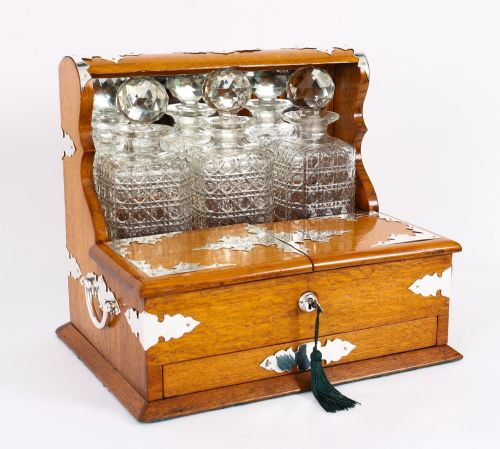
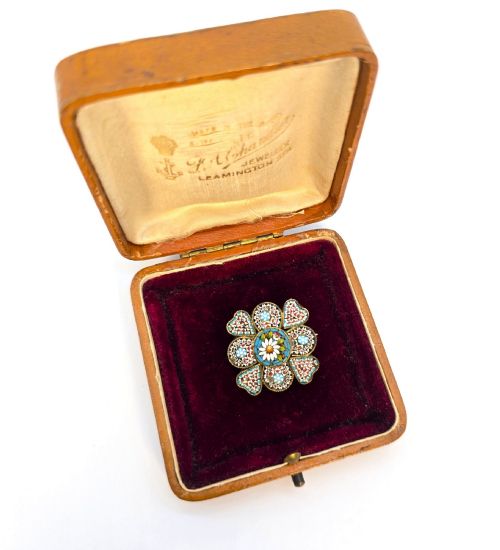
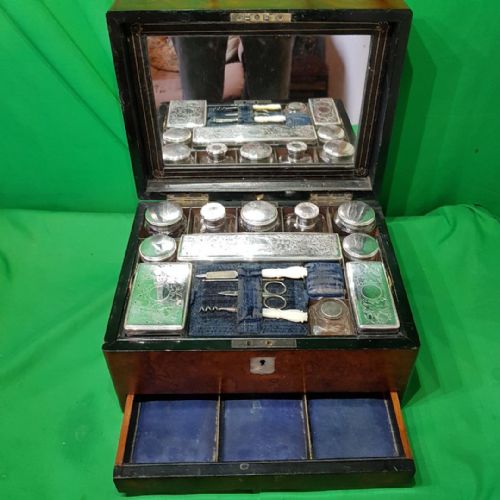
A victorian glass box serves primarily as a decorative container for dressing tables and boudoirs, holding small valuables such as rings, pins, and visiting cards. The pieces appearing in this category span compact pill boxes and larger jewellery caskets.
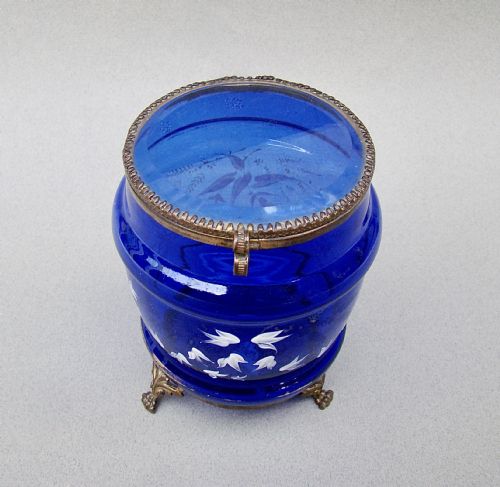
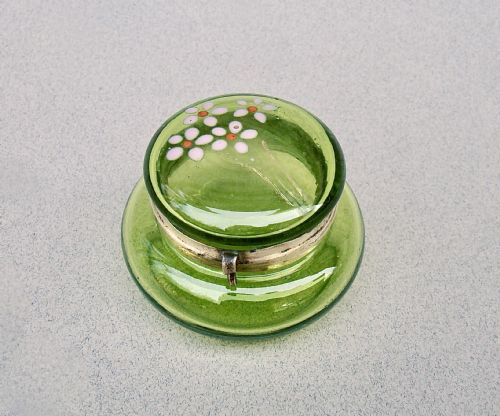
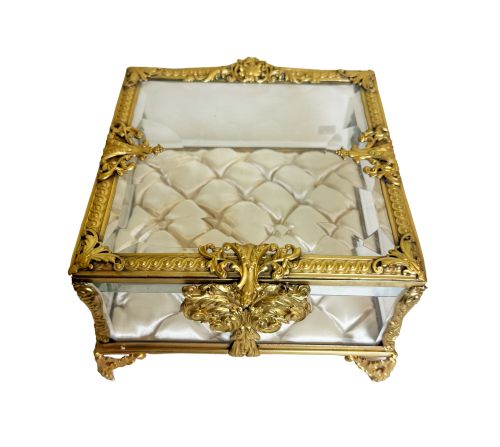
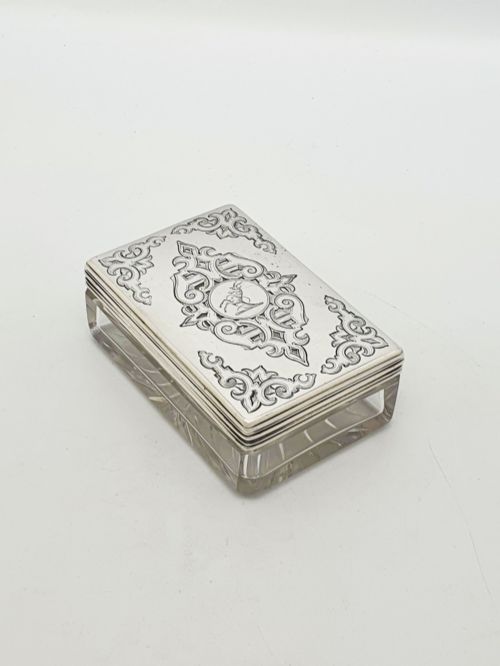
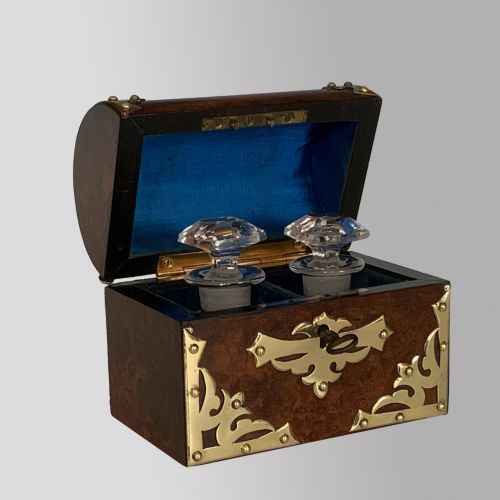
The prevailing form on this page pairs blown or cut glass bodies with metal frames, hinges, and mounts. Makers frequently utilised coloured glass, including Bristol blue, cranberry, olive green, and uranium glass.
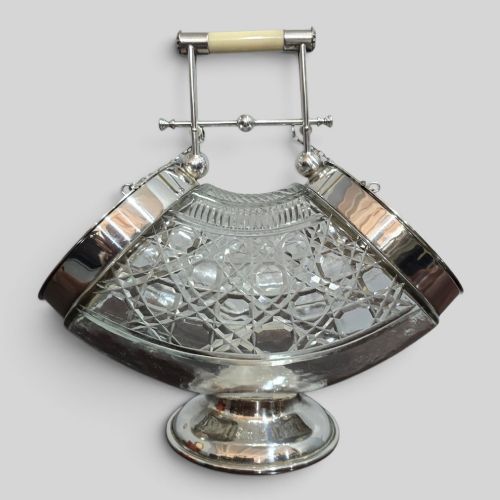
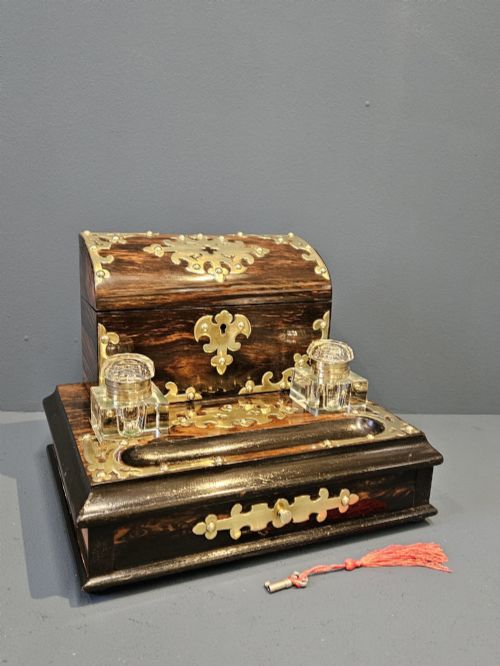
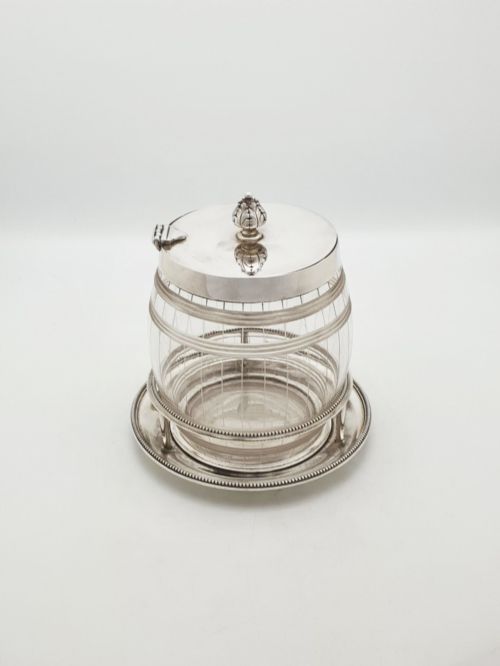
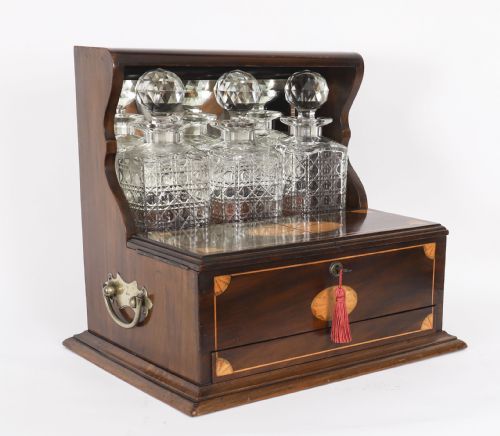
Beyond standalone trinket boxes, the broader selection encompasses glass biscuit barrels, desk accessories, and stationary boxes incorporating glass elements. These household objects reflect the Victorian taste for combining utility with display in domestic interiors.
How they were made
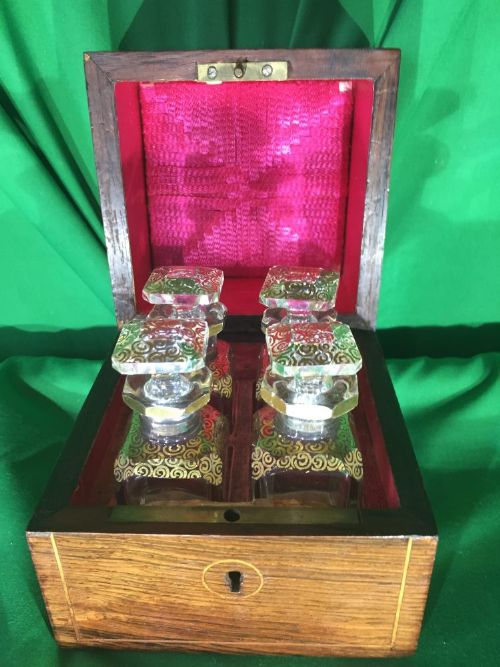
Glass bodies were produced through moulding, blowing, or heavy cutting, resulting in smooth surfaces or deep hobnail facets that caught the light. Artisans often applied enamel decoration by hand directly onto the exterior of the glass.
Metal mounts and frames relied on brass, ormolu, gilt bronze, or silver plate to secure the glass panels and form hinged lids. Internal fittings frequently involved velvet or silk linings to protect delicate contents.
Some Victorian glass boxes held scented patches designed to mask the less pleasant aromas of nineteenth-century city streets.
What varies in quality
The calibre of a piece depends on the weight and clarity of the glass, alongside the precision of the metal mounts. Thick, heavy crystal and finely chased ormolu frames distinguish better examples from simpler moulded glass in stamped metal.
Hand-painted enamel work displays distinct variations in execution, where detailed figures and crisp floral motifs elevate a box above routine decorative production. The original integrity of interior linings and the smooth action of hinges also influence overall standard.
Elkington·John Grinsell And Son·Baccarat
The Victorian Glass Box Glossary
- Ormolu
- Gilded bronze or brass mounts used extensively in furniture and decorative metalwork during the nineteenth century. This finish provides a bright, durable golden appearance.
- Mary Gregory
- A style of white enamel painting depicting silhouetted figures, children, or birds, typically set against coloured glass such as cranberry, cobalt, or green. The technique became popular during the late Victorian period.
- Baccarat
- A renowned French glass manufacturer known for producing high-quality crystal wares and decorative containers. Pieces attributed to this origin display exceptional clarity and weight.
- Biscuit Barrel
- A covered ceramic or glass jar designed to hold biscuits on the dining table, frequently fitted with a silver-plated swing handle and rim. They became staple Victorian dining accessories.
- Vinaigrette
- A small hinged box containing a perforated grill, originally holding a sponge soaked in aromatic vinegar. These portable items were carried in pockets or reticules during the nineteenth century.
Victorian Glass Box: Frequently Asked Questions
What did they use a glass box for?
Victorian households utilised these small caskets on dressing tables to store jewellery, hairpins, rings, and small keepsakes. They kept delicate personal items tidy while allowing them to remain visible.
Some smaller variations functioned as patch boxes or pill containers for daily use. Their decorative nature meant they were meant to be seen rather than hidden away inside drawers.
Are these boxes fragile?
While nineteenth-century glass possesses reasonable thickness, dropped items or heavy impacts will chip or shatter the material. The structural vulnerability often lies in the hinges and metal mounts rather than the glass itself.
Placement away from table edges prevents accidental knocks. Handling by the body rather than the lid preserves the integrity of the hinges over time.
How can I tell the period?
Dating relies on observing the casting style of the metal mounts, the shade of the glass, and any hand-painted enamel motifs. Late nineteenth-century examples frequently feature vibrant colours and specific decorative styles like Mary Gregory painting.
Hardware construction provides further clues, as nineteenth-century hinges and clasps differ noticeably from modern manufacturing methods. Consulting accompanying hallmarks on silver-plated mounts can also narrow down the date of production.