
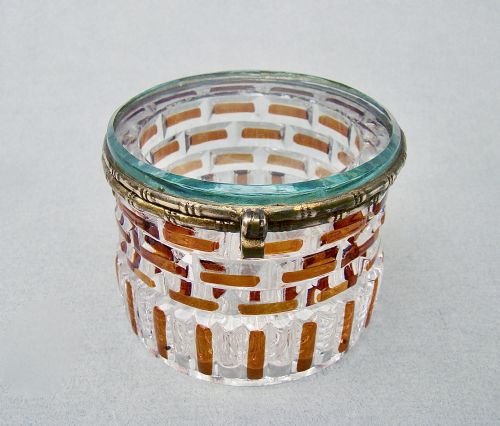
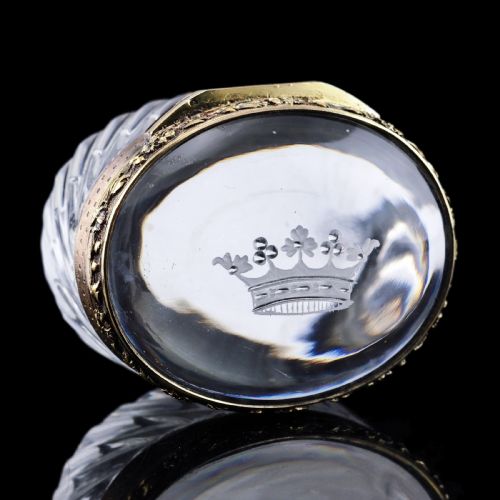
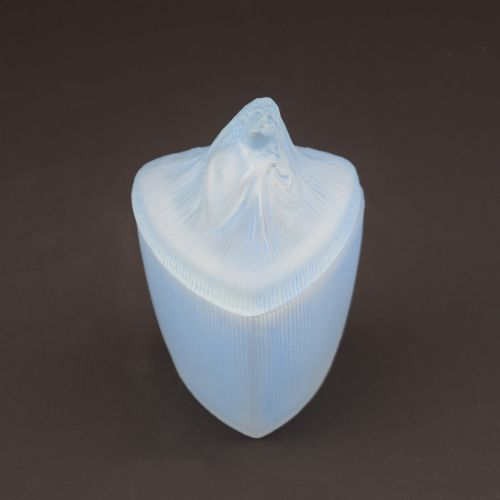
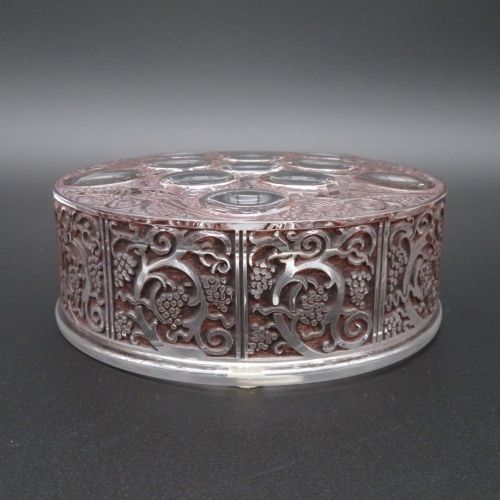


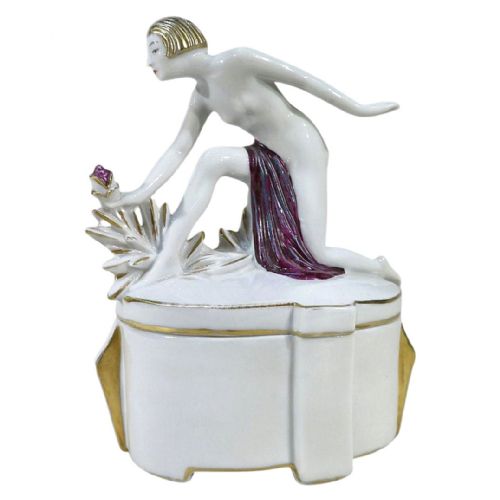


Antique French Vanity Jar
These antique french vanity jar pieces bring dressing table elegance into a modern room, offering decorative storage for small treasures.
Antique French Vanity Jar
An antique french vanity jar encompasses dressing table jars, powder boxes, trinket boxes, and lidded bowls used on nineteenth and twentieth century dressing cases. These items served a practical daily purpose for holding powders, pins, and cosmetics while ornamenting the dressing table surface.
The pieces on this page span from the nineteenth century through the Art Deco and Art Nouveau periods, including Victorian examples and French Belle Epoque designs. Forms range from simple glass vessels to elaborate dressing sets and covered bowls.
Glass, porcelain, and ceramic dominate the material selection, often mounted with silver, silver gilt, or brass. Many items combine materials, pairing frosted glass or enamelled porcelain with precious metal mounts.
What varies in quality
The distinction between standard and superior pieces rests on the execution of the materials, such as the weight and clarity of the crystal or the fineness of the porcelain body. Recognised glasshouses and ceramic factories like Limoges or Lalique introduce a higher level of artistic design.
Mount quality separates ordinary boxes from exceptional ones, particularly where silver gilt, vermeil, or heavy brass fittings show precise chasing and secure hinges. Hand-painted enamelling and detailed moulding further elevate the distinction of individual jars and boxes.
Materials recorded across the selection include silver, porcelain, brass, and frosted glass.
Rene Lalique·Limoges·Baccarat·Henri Lapeyre·Coty
The Antique French Vanity Jar Glossary
- Art Deco
- A design style from the nineteen-twenties and nineteen-thirties characterised by geometric forms and stylised motifs. This period produced many ceramic and crystal powder boxes.
- Art Nouveau
- An ornamental style prevalent around nineteen hundred featuring fluid, organic lines and natural forms. Pieces from this era often display delicate floral or figural elements.
- Vermeil
- Sterling silver plated with a layer of gold. It provides a rich golden appearance on vanity jars and covered bowls.
- Clichy glass
- Glassware produced in the nineteenth century near Paris, known for rich colours and enamelled decoration. These pieces appear frequently on antique dressing tables.
- Frosted glass
- Glass treated to have a textured, matte surface rather than a transparent finish. This technique creates a soft visual effect popular in twentieth-century vanity items.
Antique French Vanity Jar: Frequently Asked Questions
What were antique french vanity jars used for?
These jars held loose powders, creams, pins, and small personal items on dressing tables and inside dressing cases.
Their decorative lidded designs kept daily cosmetics and trinkets neatly contained while adding elegance to a bedroom interior.
How do I identify an Art Deco vanity jar?
Art Deco pieces typically date from the nineteen-thirties and feature geometric shapes, stylised figures, or clean modernist lines.
Common materials from this era include moulded crystal, ceramics, and frosted glass with simplified ornamentation.
Are these jars made of crystal or glass?
The selection includes both standard glass and high-clarity crystal, sometimes attributed to notable glasshouses like Baccarat and Lalique.
Crystal vessels generally offer greater weight and refractive brilliance compared to simpler glass pieces.
How do I care for silver mounted glass jars?
Clean the glass or porcelain body gently with mild soap and water, avoiding harsh abrasives near enamelled sections.
Polish silver or vermeil mounts sparingly with a soft cloth to preserve the metal finish without touching the surrounding glass.