




Enamelled Glass Jar
An enamelled glass jar combines coloured vitreous decoration with translucent or opaque vessels, most often found on dressing tables from the nineteenth and twentieth centuries.
Enamelled Glass Jar
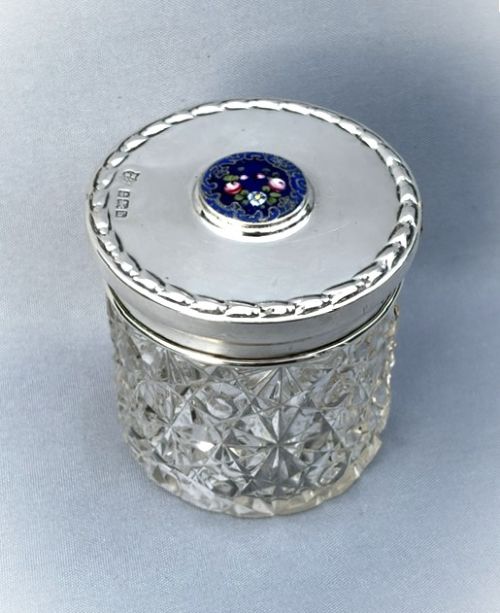
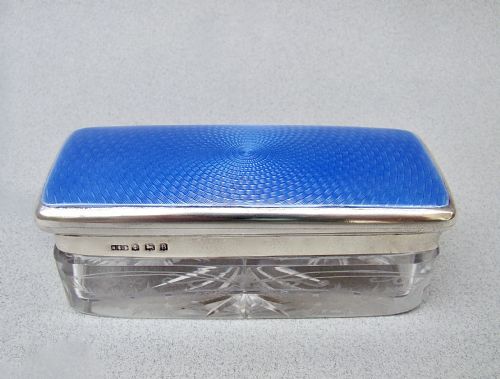
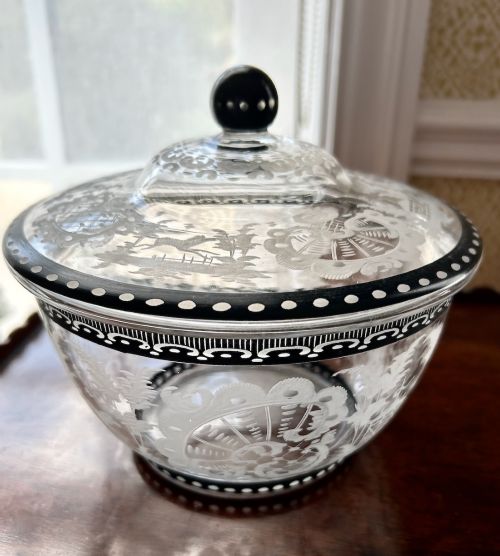
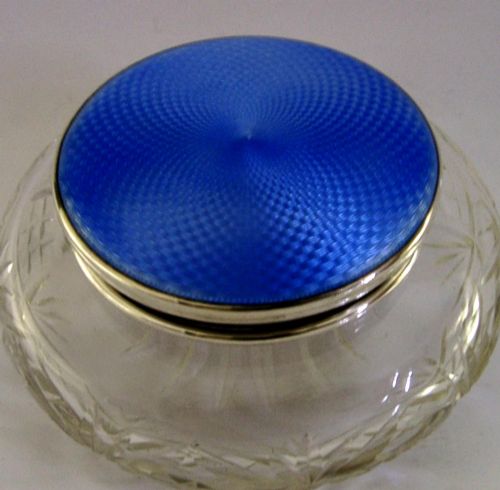
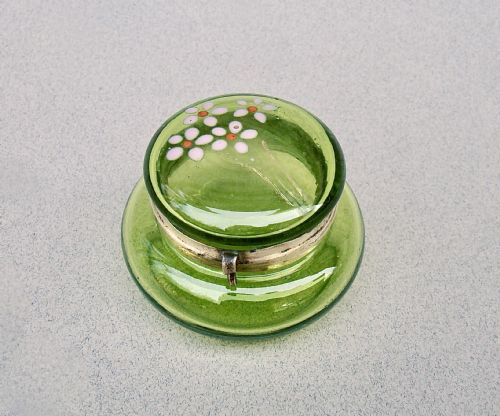
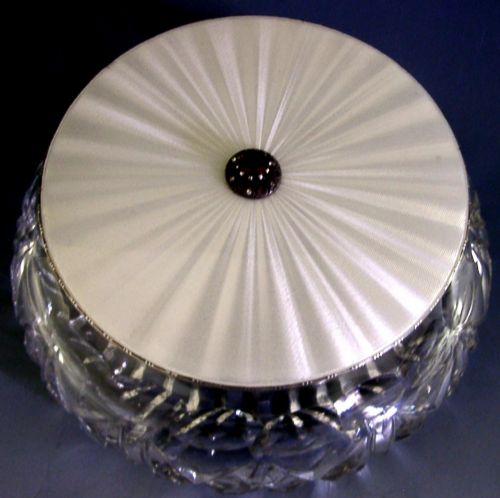
An enamelled glass jar encompasses vanity containers, dressing table pots, trinket boxes, and biscuit barrels created across the Victorian, Edwardian, and Art Deco periods. The most frequent examples on this page are silver-lidded dressing table jars and small trinket pots set with coloured or guilloche enamel.
Pieces originate from British workshops in Birmingham, Chester, and London alongside nineteenth-century French makers and continental houses. Forms range from heavy cut glass vessels and cranberry glass containers to opaline vases and apothecary jars.
The functional design serves domestic dressing spaces and display cabinets, utilising fitted metal collars and hinged lids. These items bridge decorative glassware and personal accessories through applied surface painting and metal mounts.
Materials and Technique
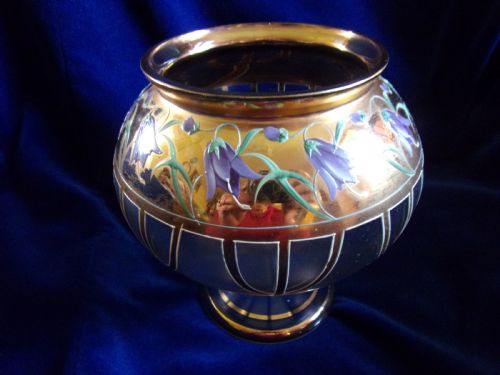
Vessels are formed from clear, cut, cranberry, green, blue, or opaline glass, sometimes combined with sterling silver, ormolu, and metal mounts. Surface decoration relies on enamel painted directly onto the glass or fused into engine-turned guilloche patterns beneath transparent coloured layers.
Gilding and gold leaf add linear borders or floral motifs, while engraved patterns provide texture beneath the surface glaze. Sterling silver lids and collars bear Birmingham or London assay marks that date the metal mounts precisely.
Historic dressing tables required dozens of matching pots, ensuring ladies kept their hairpins hidden behind brightly coloured enamel.
Quality and Distinction
The calibre of an enamelled glass jar rests on the crispness of the glass cutting and the complexity of the enamel work. Guilloche panels with fine engine-turned sunburst patterns beneath translucent enamel indicate superior manufacturing standards compared to flat painted surfaces.
Substantial sterling silver mounts and fully legible hallmarks signify better tier production. The weight of the cut glass vessel and the precision of the lid fit differentiate standard domestic wares from exceptional examples.
Henry Clifford Davis·Henry Perkins·Goldsmith's and Silversmith's Co.·Mary Gregory
The Enamelled Glass Jar Glossary
- Guilloche Enamel
- A decorative technique where metal is engine-turned with precise geometric patterns before being coated in translucent enamel. This method creates a shimmering background effect visible through the coloured glaze.
- Cranberry Glass
- A rich red-pink transparent glass coloured with gold chloride during production. It appears frequently in Victorian and Edwardian dressing table wares.
- Opaline Glass
- An opaque or semi-translucent pale glass developed in France and England during the nineteenth century. It provides a smooth solid background for enamel painted floral decorations.
- Ormolu
- Gilded bronze or brass mounts applied to nineteenth-century French glass jars and trinket boxes. These metal frames often feature cast decorative scrollwork or floral borders.
- Hallmark
- A series of stamped official marks on silver mounts indicating the maker, assay office, and year of testing. These stamps provide reliable dating for the metal components of glass jars.
Enamelled Glass Jar: Frequently Asked Questions
What is an enamelled glass jar?
An enamelled glass jar is a decorative container made from glass and adorned with fused vitreous enamel decoration. These vessels frequently feature fitted metal or sterling silver lids for dressing table use.
They combine the transparency or rich colour of glass with intricate surface painting or patterned guilloche panels. Collectors encounter various forms ranging from small trinket boxes to large biscuit barrels.
How were these jars used historically?
These containers served primarily on nineteenth and twentieth-century dressing tables to hold powder, pins, small trinkets, and cosmetics. Biscuit barrels held dry foodstuffs in domestic dining settings.
Many functioned as vanity items meant to be displayed openly on dressing trays alongside matching scent bottles and brushes. Their dual purpose combined everyday utility with decorative elegance.
How do I date a silver-lidded glass jar?
Dating relies heavily on the assay hallmarks stamped into the sterling silver mounts and lids. Letters correspond to specific assay offices such as Birmingham or London and particular years.
Style indicators like Art Deco geometric patterns or Victorian floral painting help narrow the era when hallmarks are absent or worn. Glass manufacturing techniques also provide clues to the period of origin.
How should I clean enamelled glass?
Cleaning requires gentle care using a soft damp cloth to avoid scratching the painted enamel or delicate glass surface. Submerging pieces with silver mounts in water can damage internal cements or discolour metal.
Harsh chemical solvents and abrasive polishes must be kept away from all enamelled areas. Professional care is recommended for antique items with fragile surface gilding.