


Victorian Flatback Pottery Figure
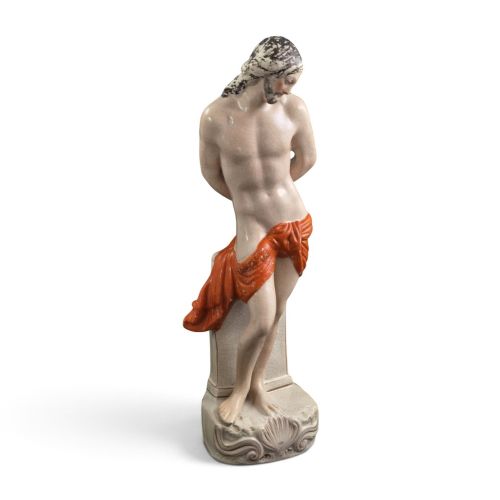
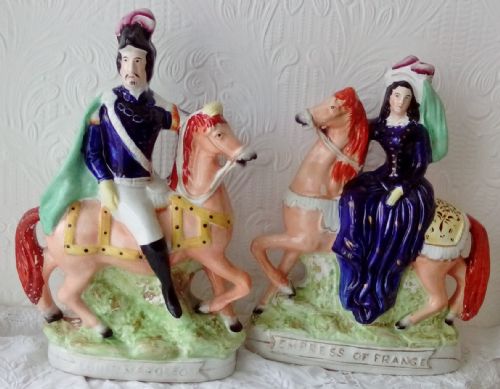
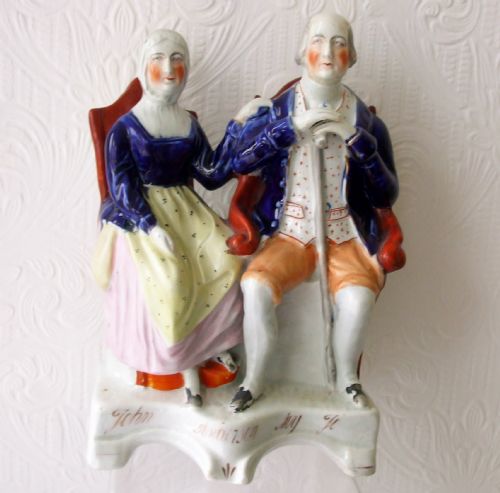
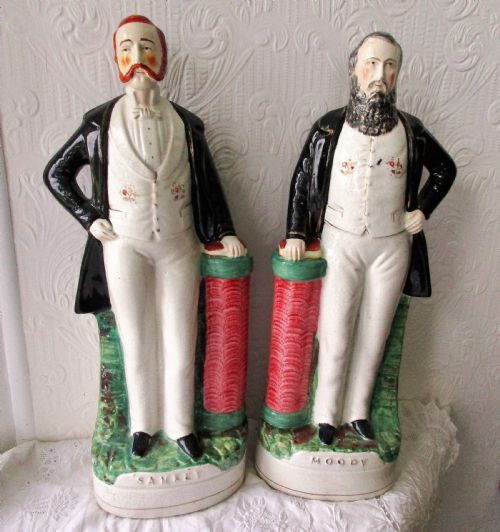
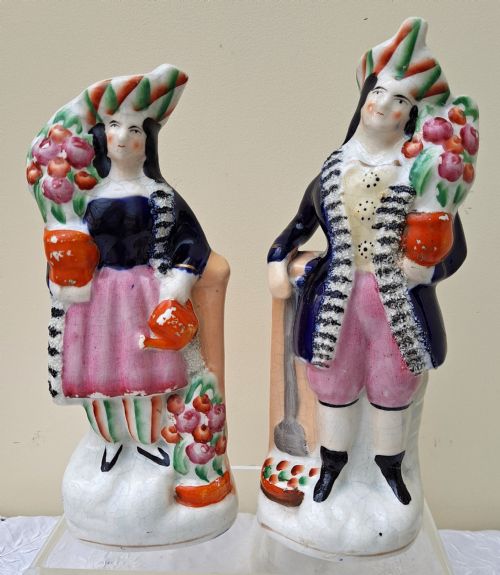
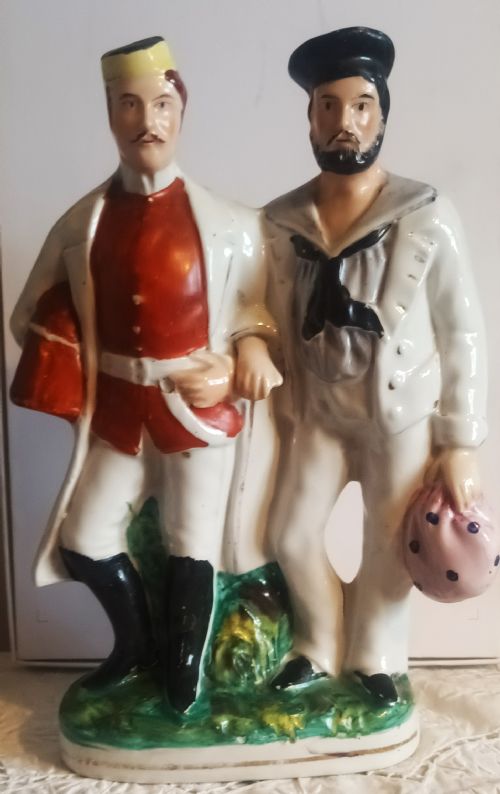
These victorian flatback pottery figure pieces are mantelpiece ceramics designed for display from the front, bringing historical portraits and rustic scenes into the home.
Victorian Flatback Pottery Figure
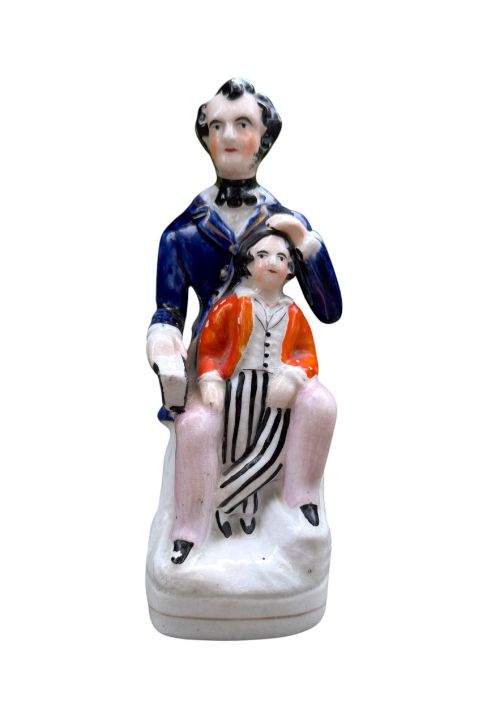
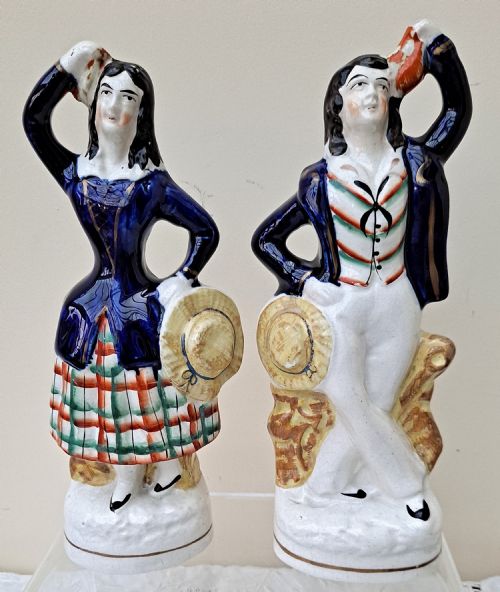
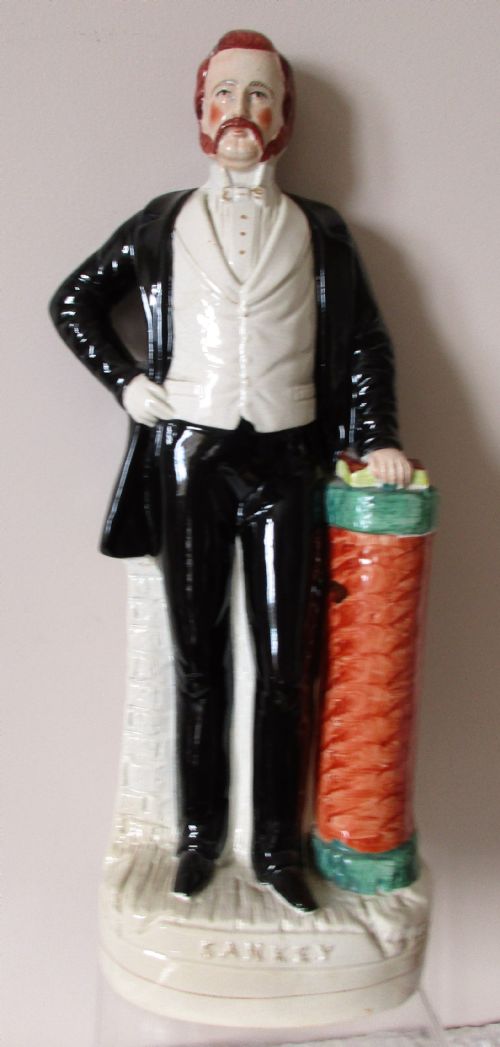
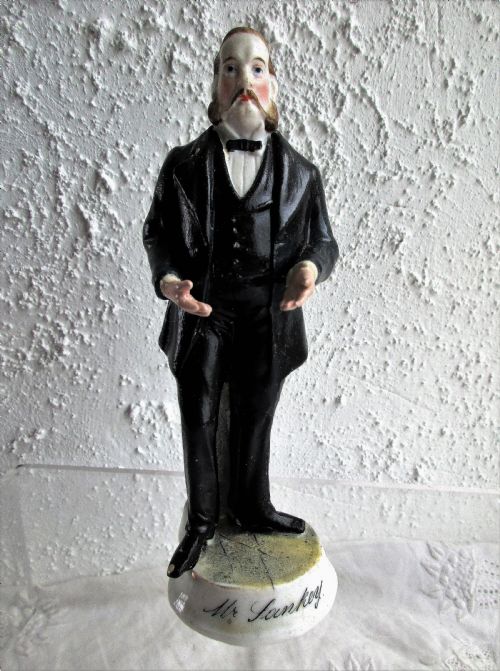
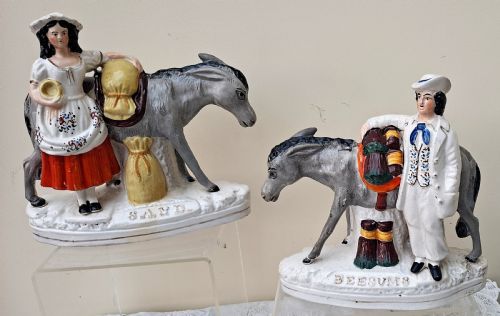
A victorian flatback pottery figure is typically modelled with a detailed front and a mostly unglazed or plain reverse, designed to sit neatly against a wall on a mantelpiece or shelf. The selection includes portrait subjects, literary characters, royalty, and pastoral groups.
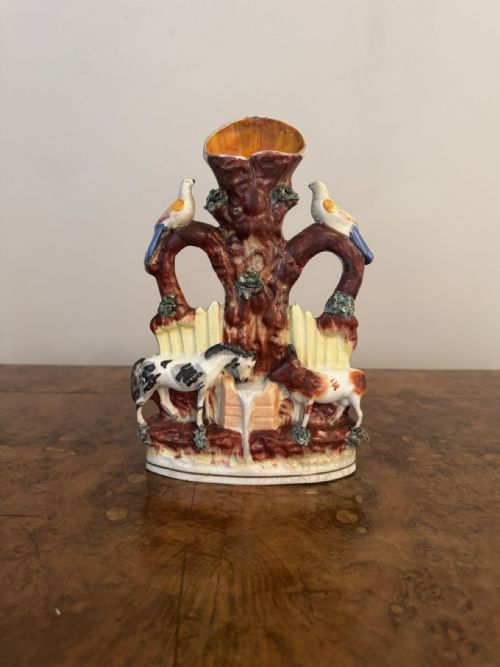
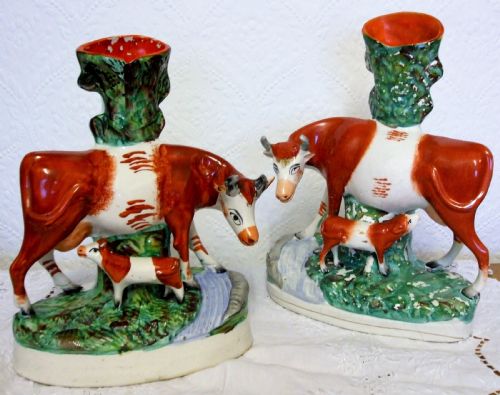
The objects span the nineteenth century and reflect the popular culture of the period through depictions of actors, soldiers, animals, and architectural models such as castles and cottages. Common formats range from single figurines to balanced pairs and functional spill vases.
How They Were Made
Potters shaped these earthenware pieces using press moulds, joining front and back sections before applying hand-painted enamel colours and metallic gilt highlights. A transparent lead glaze provides the characteristic surface shine across the ceramic body.
Firing took place in kilns where the pigments fused beneath the glaze, resulting in the robust finish typical of nineteenth-century Staffordshire production.
Among the menagerie of zebras, cows, and deer, a stray zebra stands out as an exotic nineteenth-century farmyard guest.
What Varies in Quality
Proportion and scale play a role, as larger or more complex groups involving multiple figures and animals demand greater technical skill in the kiln to prevent warping.
The Victorian Flatback Pottery Figure Glossary
- Flatback
- A ceramic figure modelled with a finished front and a flat, unglazed or minimally decorated rear designed for placement against a wall.
- Spill vase
- A hollow cylindrical holder incorporated into the ceramic design, intended to store wooden spills used for lighting fires.
- Earthenware
- A porous pottery body fired at lower temperatures, requiring a glaze to achieve an impermeable surface suitable for domestic display.
- Lead glaze
- A glossy coating containing lead oxide that vitrifies during firing, giving these figures their characteristic reflective sheen.
Victorian Flatback Pottery Figure: Frequently Asked Questions
Why are the backs flat?
Potters shaped these figures to stand against cottage mantelpieces or walls where space was limited, saving materials and kiln room by leaving the reverse plain.
This construction method focused all decorative effort on the front view where viewers would see it.
What is a spill vase?
A spill vase combines a decorative figure with an integrated hollow tube designed to hold thin tapers for lighting pipes or candles.
These combination pieces served a practical household function alongside their role as mantel ornaments.
How do I identify subjects?
Makers often named subjects directly in the clay base or front lettering, referencing contemporary news, royalty, theatrical stars, or folklore.
Costume details and accompanying animals or props help link unlabelled pieces to historical events and popular stories of the nineteenth century.
Where were they made?
Production centred primarily in the Staffordshire potteries region of England, where numerous workshops turned out moulded earthenware for domestic markets.
These regional potteries supplied households across Britain with affordable portrait figures and decorative ornaments.
Can I group them as pairs?
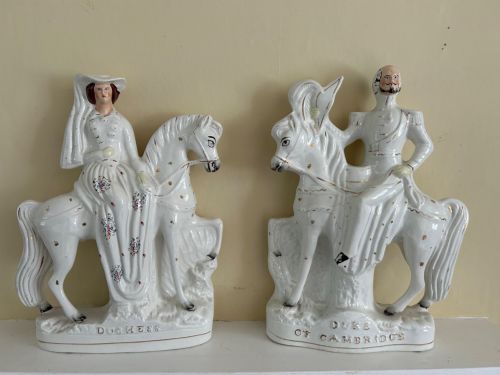
Many figures were sold as matching pairs representing couples, companion animals, or symmetrical historical and theatrical scenes.
Arranging them together reflects how Victorian households originally displayed decorative ceramics on their mantelpieces.