
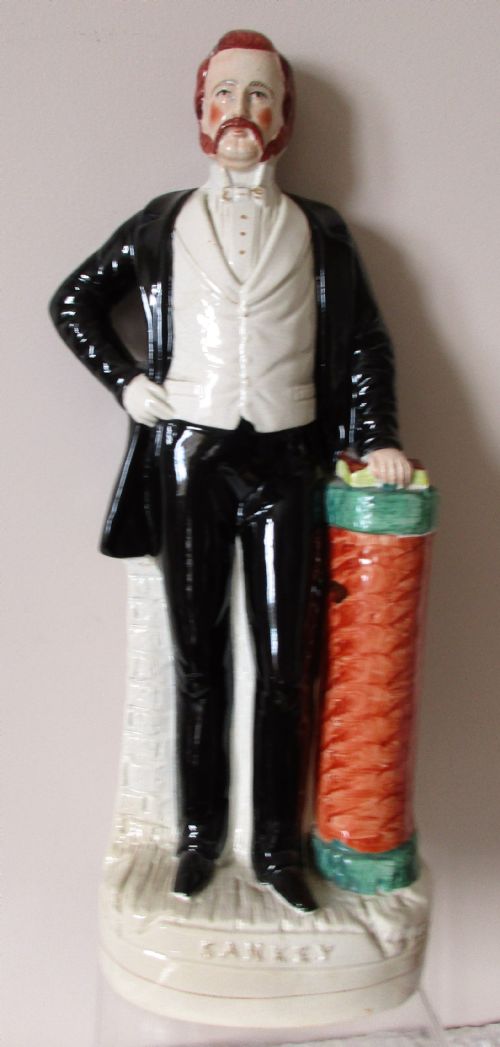
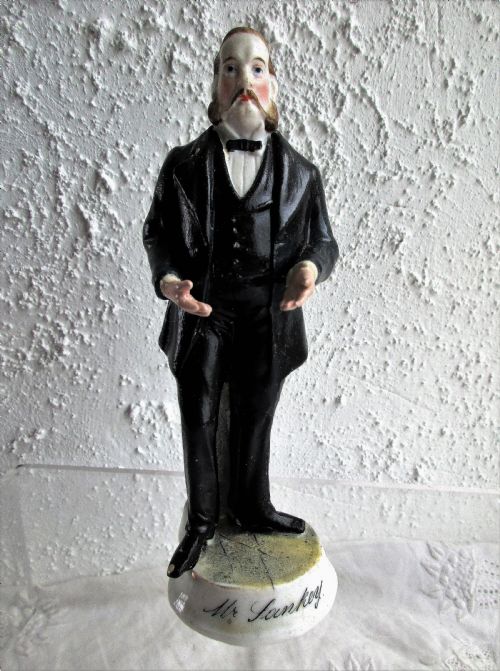


Victorian Staffordshire Portrait Figure
These Victorian staffordshire portrait figure pieces capture royalty, preachers and performers from the nineteenth century in earthenware and glaze.
Victorian Staffordshire Portrait Figure
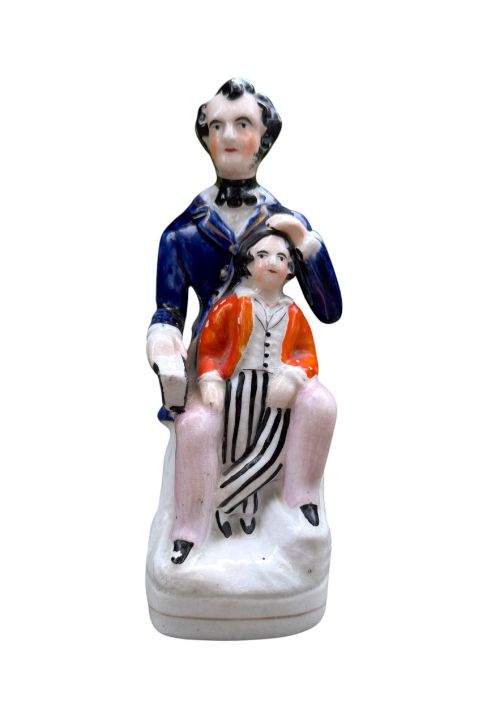
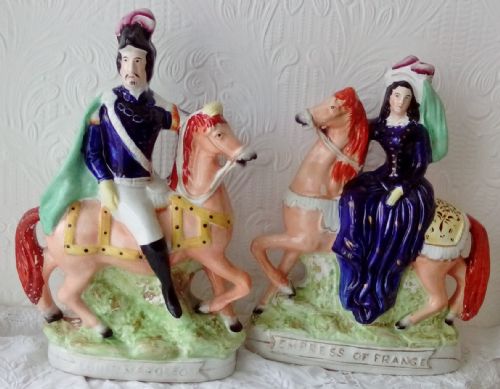
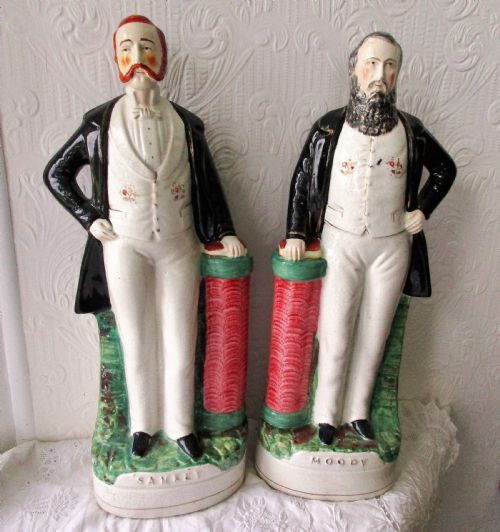
A victorian staffordshire portrait figure represents a recognizable public identity, from royalty and military commanders to actors and evangelists. Buyers will most frequently encounter flatback earthenware figures depicting figures like Queen Victoria, Napoleon III, or revivalists such as Moody and Sankey.
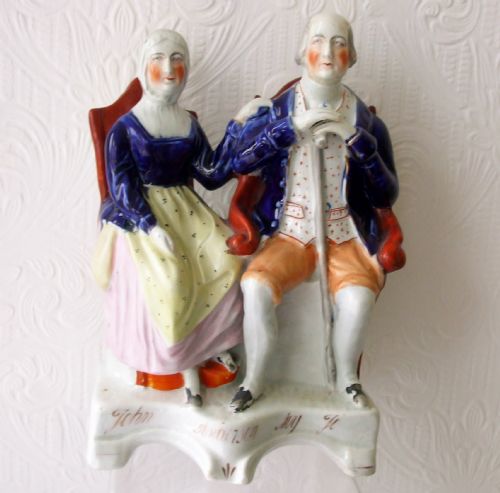
These ceramic pieces served as mantelpiece ornaments in nineteenth-century homes, offering ordinary households a way to display their political loyalties, theatrical interests or religious devotion. The subjects range from solo portraits to royal family groups and theatrical scenes.
The aesthetic sits firmly within Victorian folk art, combining mass production methods with hand-painted details. Makers drew inspiration from newspaper illustrations, theatrical prints and royal events to shape public demand.
Materials and Method
Potters shaped these objects using earthenware clay, frequently forming the pieces in press moulds before applying a lead glaze. The results were then decorated with enamel paint and occasional touches of gilt.
Porcelain appears alongside earthenware in select examples, providing a finer alternative body for the figures. The glaze layer protects the underlying ceramic and gives the surface its characteristic nineteenth-century sheen.
One Benjamin Franklin figure arrived on shelves permanently misidentified as George Washington.
Assessing Quality
The complexity of the composition also distinguishes the output, with multi-figure groups or theatrical subjects demonstrating greater ambition than simple solo portraits. Scale matters too, as larger figures demand more skill from the potter to prevent distortion during firing.
The Victorian Staffordshire Portrait Figure Glossary
- Flatback
- A figure moulded with a finished front and a plain, unglazed or minimally glazed back designed to sit flush against a wall or mantelpiece.
- Earthenware
- A porous type of ceramic fired at a lower temperature than porcelain, forming the primary body for these nineteenth-century figures.
- Lead glaze
- A glossy coating containing lead compounds applied to the ceramic surface to waterproof the earthenware and brighten the colours.
- Enamel paint
- Opaque pigments applied over the fired glaze and subjected to a secondary low-temperature firing to fix the colours.
- Gilt
- A thin layer of gold applied as a decorative accent to highlights, lettering or costume details on the ceramic.
Victorian Staffordshire Portrait Figure: Frequently Asked Questions
Who are these figures usually depicting?
The subjects include British and European royalty, military heroes from nineteenth-century campaigns, religious figures, and actors in famous theatrical roles. Public events and news of the day directly inspired the selection of characters.
Collectors often group them by theme, gathering royal families or military commanders together to reflect how Victorian households originally displayed them.
Why are some figures called flatbacks?
Makers designed flatbacks with unadorned, flat rears because these ornaments stood on mantelpieces or shelves against a wall. This saved on materials and labour during production.
Earlier pieces were sometimes finished fully in the round, but the flatback format became standard as domestic display habits changed.
How can I tell the period?
Dating relies on the historical subjects commemorated, the style of the earthenware body, and the characteristics of the enamel palette and glaze. Figures depicting events from the mid-nineteenth century generally date from that era.
Changes in costuming and naming conventions on the bases also provide clues to the approximate decade of manufacture.
How should I display them?
These pieces suit mantelpieces, bracket shelves, and glazed cabinets where their bright enamel colours can catch the light. Placing them out of direct sunlight helps protect the painted surfaces.
Stability is important due to the weight of the earthenware, so sturdy horizontal surfaces work best for display.