

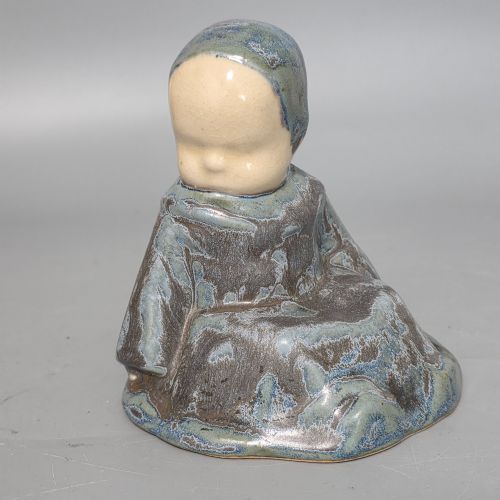
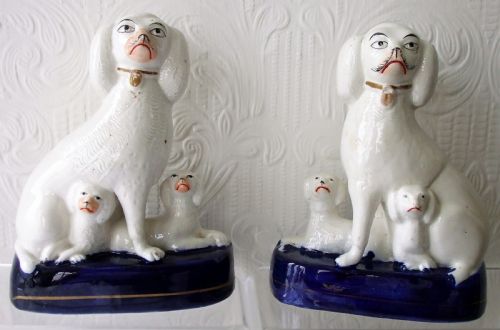


Blue Glazed Pottery Figurine
A blue glazed pottery figurine brings character and colour to a mantelpiece, drawing collectors to Victorian portrait figures, animals, and Dutch Delftware.
Blue Glazed Pottery Figurine
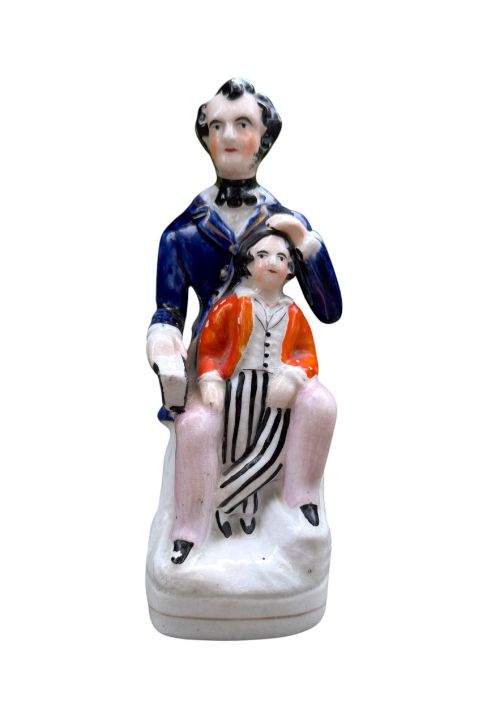
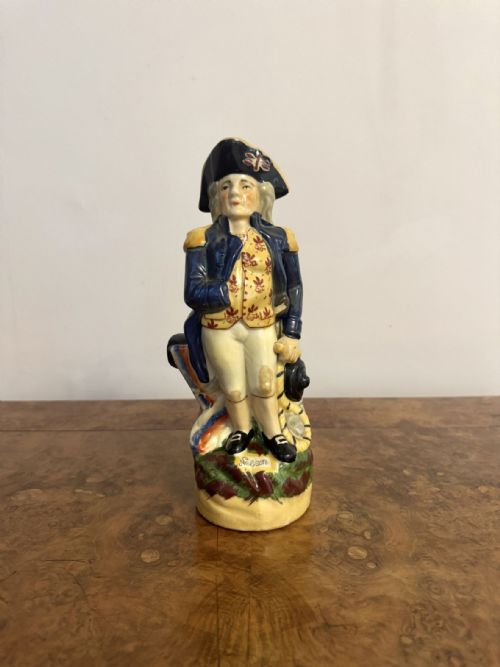
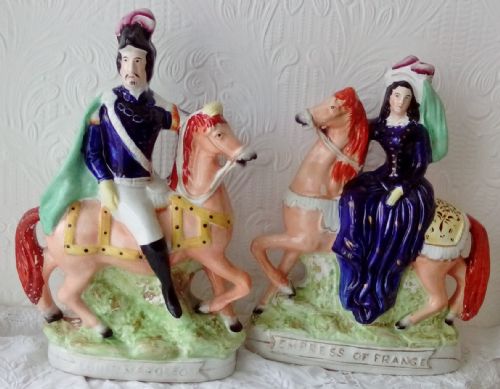
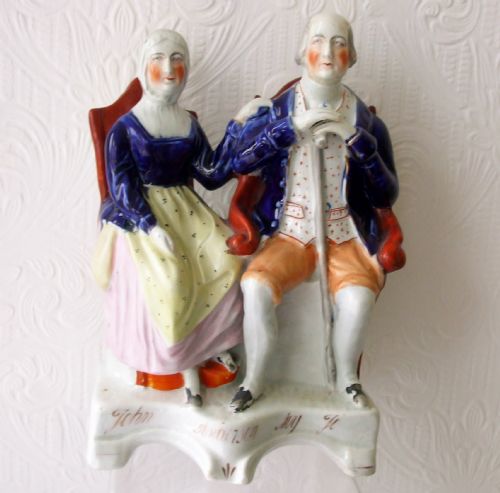
A blue glazed pottery figurine encompasses a diverse range of ceramic sculpture, from Victorian Staffordshire portrait groups and animal studies to Dutch Delftware and Chinese monochrome figures. The Victorian Staffordshire flatback is the form most commonly encountered, depicting royalty, naval heroes, literary subjects, and domestic animals against a characteristic arched back.
Makers produced these pieces across the eighteenth, nineteenth, and early twentieth centuries, employing earthenwares, stoneware, and faience. Figures often served functional roles beyond simple display, functioning as spill vases, inkwells, quill holders, and toby jugs.
Geographic origins span English potteries, Dutch workshops, and Asian kilns, resulting in distinct regional interpretations of glaze and form. Staffordshire works rely heavily on cobalt blue details and enamel paint, whereas Dutch Delftware utilises tin glazes in deep blue and white hues.
Manufacturing methods and materials
Potters shaped these figures using press moulding and slip casting in earthenware, stoneware, or ceramic bodies. Artisans then applied liquid glazes, including lead glazes and tin glazes, to waterproof the porous clay and provide a glossy surface.
Workers decorated the glazed surfaces using enamel paint and occasionally gold leaf accents, fixing the colours through secondary kiln firings. Cobalt oxide served as the primary agent for achieving the rich blue tones seen across the wares.
Periods represented range from the eighteenth century through the Victorian era up to the nineteen-thirties.
Factors influencing quality
The stability of the glaze and the purity of the clay body further separate ordinary utilitarian models from finer cabinet pieces. Even glaze coverage without excessive pooling or crawling distinguishes the work of more accomplished potteries.
Pieter Verburg·Berthe Savigny
The Blue Glazed Pottery Figurine Glossary
- Flatback
- A ceramic figure modelled with a finished front and sides while the reverse remains unglazed and flat, designed to stand against a wall. These pieces were popular in Victorian parlours for mantelpiece display.
- Spill vase
- A hollow cylindrical holder attached to a figure, intended to hold wooden spills used for lighting pipes and candles. They combine practical household utility with decorative sculptural form.
- Toby jug
- A pottery jug shaped as a jovial, full-bodied seated figure, usually wearing a tricorn hat. They often feature deep blue glazes and hold a mug or jug of beer.
- Faience
- European tin-glazed earthenware produced with an opaque white or coloured glaze, frequently associated with Dutch and French pottery traditions. It provides a smooth ground for painted decoration.
- Prattware
- English earthenware characterised by low-relief moulding and specific underglaze colours, typically blue, ochre, brown, and green. The technique dates primarily to the late eighteenth and early nineteenth centuries.
Blue Glazed Pottery Figurine: Frequently Asked Questions
How were spill vases used?
Spill vases incorporated a small cylindrical container directly into the sculptural design of the figurine. Victorian households used these receptacles to hold wooden spills, which were thin strips of wood utilised for transferring fire from the hearth to lamps, candles, and pipes.
Potters combined this domestic utility with figurative modelling, creating ornaments that were both decorative and functional.
What distinguishes Delftware figures?
Delftware figures rely on a porous earthenware body covered in an opaque tin glaze, which provides a smooth white background for cobalt blue painting. This technique originated in the Netherlands and draws inspiration from imported Chinese porcelain.
Artisans often painted animals and human subjects freehand before applying a clear lead overglaze and firing the piece. The resulting palette is predominantly blue and white.
How do I date a Staffordshire figure?
Dating a Staffordshire figure involves examining the style of the clothing, the type of clay, the palette of the enamel paints, and the presence of a flat back. Earlier eighteenth-century models tend to be hollow-cast with fine detail, while mid-nineteenth-century flatbacks often feature bold cobalt blue highlights and title inscriptions.
Potters frequently stamped model numbers or titles on the underside, though many pieces remain unmarked.