



Victorian Flatback Ornament
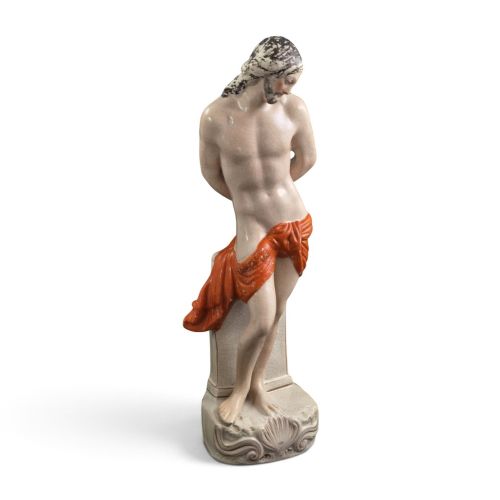
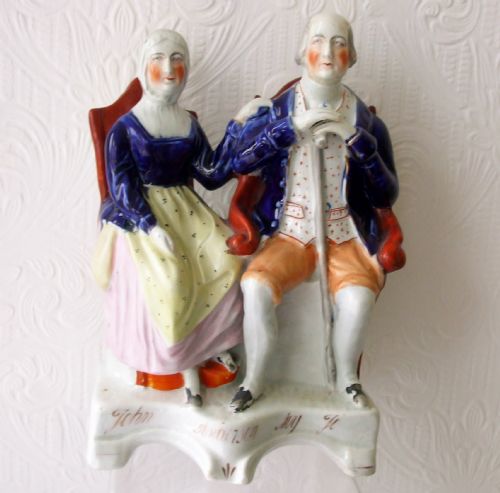
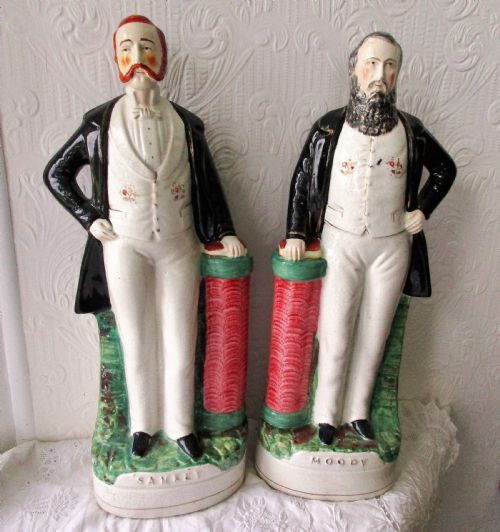
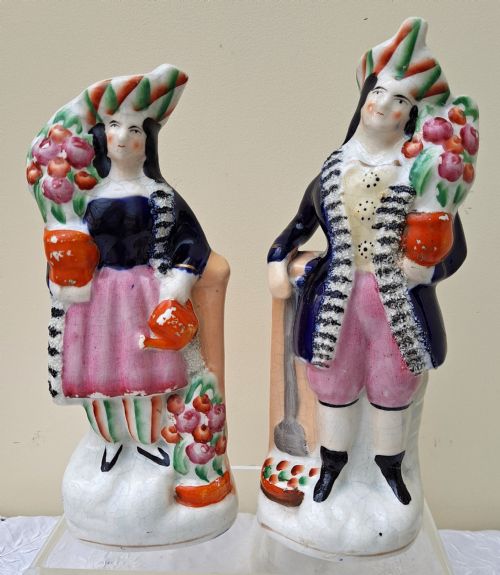
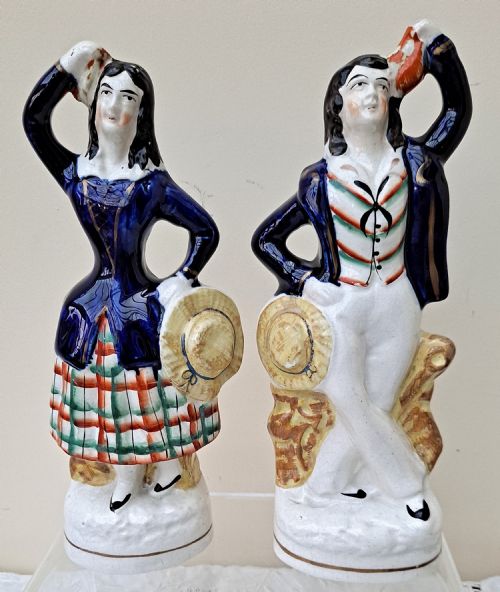
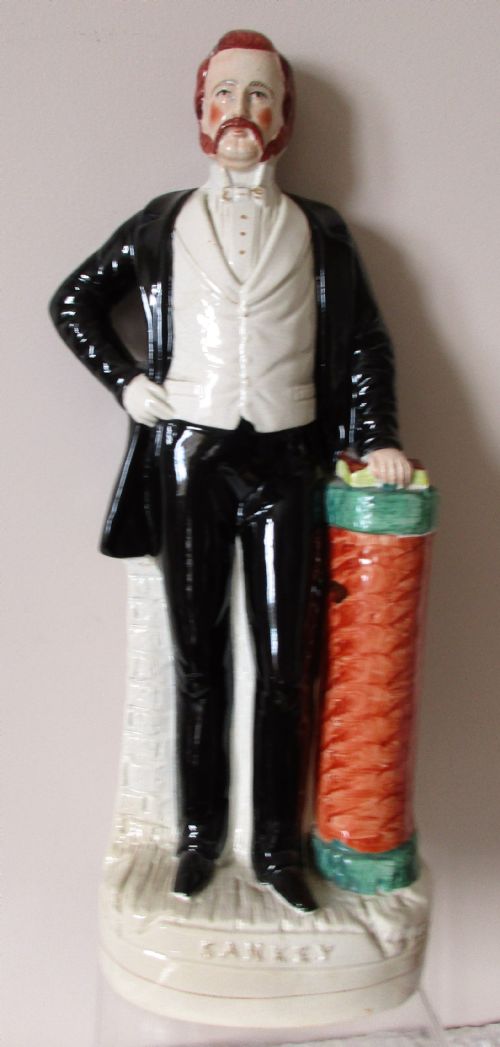
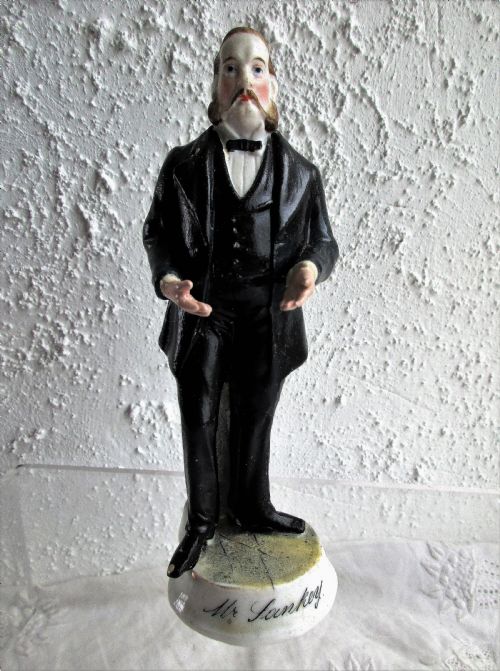
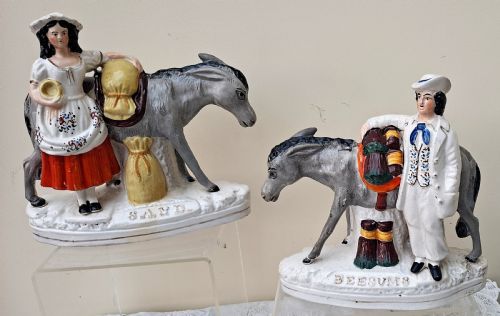
These Victorian flatback ornament pieces are moulded earthenware figures designed to face a room from a mantelpiece.
Victorian Flatback Ornament
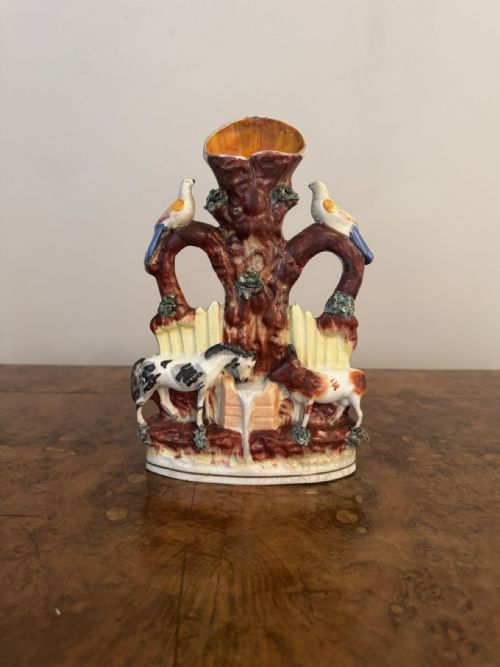
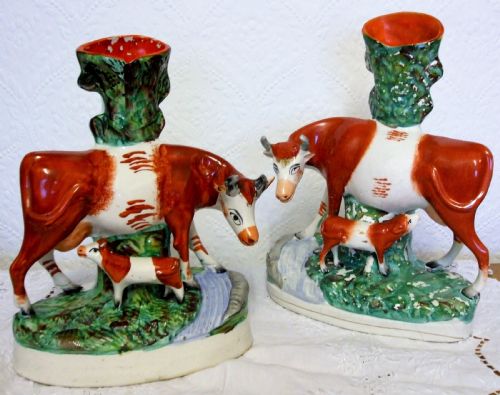
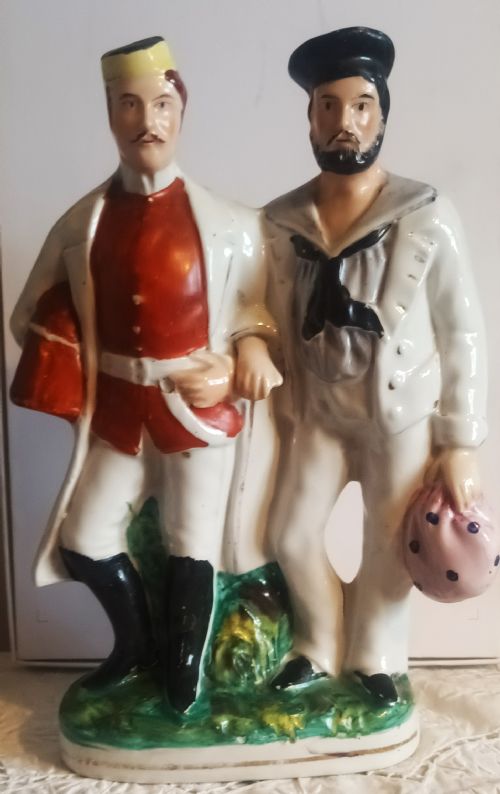
When you search for a victorian flatback ornament, you encounter earthenware portrait figures, theatrical groups and spill vases designed to sit against a wall. These ceramic pieces depict royalty, military leaders, literary characters and pastoral scenes modelled by Staffordshire potters during the nineteenth century. Most examples found here take the form of hollow-backed figures glazed in bright enamel colours.
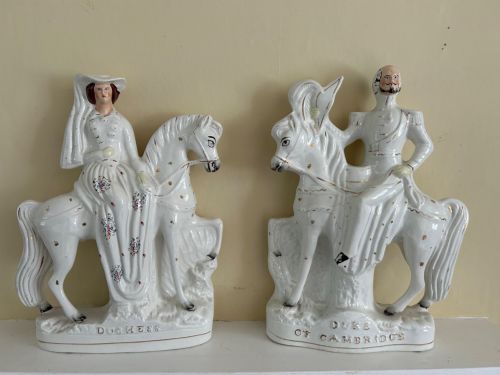
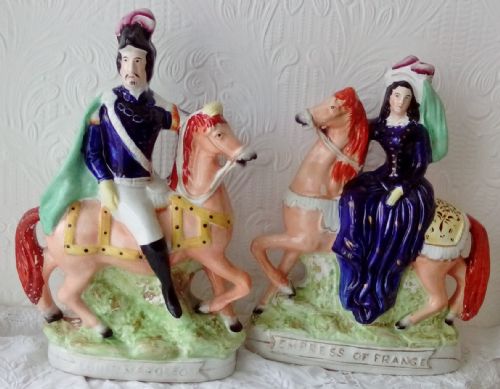
The common versions on this page include pairs of figures, architectural cottages and equestrian subjects dating from eighteen fifty to nineteen hundred. Potters produced these ornaments for middle-class mantelpieces where only the front and sides needed decoration since the reverse remained unglazed and flat. Subjects range from current news events such as the Crimean War to traditional rural couples and animals.
How they were made
Potters shaped these figures using press moulds where earthenware clay was pressed into two halves and joined together before firing. Artisans then applied lead glaze over the ceramic body to create a smooth surface ready for decoration.
Victorian Flatback Ornament Retail Price Guide 2026
Typical asking prices for victorian flatback ornament among the pieces listed under this phrase on Sellingantiques today, from the lower quarter to the upper quarter. They describe what is for sale here now, not the wider market.
Listings feature earthenware materials across periods spanning from eighteen forty to nineteen hundred.
What varies in quality
Quality rests principally on the crispness of the moulding and the confidence of the hand-painted enamel decoration. Superior examples display sharply defined facial expressions, clean lettering on the bases and carefully controlled glaze application without excessive pooling.
Later or mass-produced items often exhibit blurred mould lines, hasty brushwork and dull glaze surfaces that lack the depth of earlier mid-nineteenth-century pieces. The balance of the modelling and the proportion of the figures further distinguish finer workshop output from standard commercial output.
The Victorian Flatback Ornament Glossary
- Flatback
- A ceramic figure modelled fully in the round at the front while the reverse is left flat and partially unglazed. This construction saved weight and material for pieces intended to stand against a wall.
- Spill vase
- A hollow cylindrical holder attached to a pottery figure designed to hold wooden spills for lighting fires. These functional elements form an integral part of many pastoral and animal compositions.
- Earthenware
- A porous pottery body fired at lower temperatures than stoneware or porcelain. It served as the standard medium for nineteenth-century Staffordshire figure production.
- Enamel paint
- Vitreous pigments applied over a fired lead glaze and fixed with a secondary low-temperature firing. This technique allowed makers to achieve bright surface colours on ceramic figures.
Victorian Flatback Ornament: Frequently Asked Questions
What is a flatback figure?
A flatback figure is a ceramic ornament moulded with a detailed front and a flat, unglazed back. This design allowed the piece to sit flush against a mantelpiece or shelf.
Potters created these hollow forms to economise on material while ensuring the decoration faced the room.
Where were these ornaments made?
These ornaments originated primarily in the industrial towns of Staffordshire during the Victorian era. Local potteries supplied domestic households with affordable figures depicting current events and popular culture.
Production relied on specialised workshops employing modellers and hand painters.
How do I identify periods?
Dating relies on costume details, historical events depicted and the style of lettering on the base. Early pieces often commemorate events from the eighteen fifties and sixties such as the Crimean War.
Later Victorian examples introduce different colour palettes and simpler moulding techniques.
How should I clean them?
Cleaning requires a soft dry brush to remove dust from crevices and painted surfaces. Water and harsh detergents should be avoided to protect fragile nineteenth-century enamel paints and glazes.
Gentle maintenance preserves the original pigment layer on the earthenware body.