

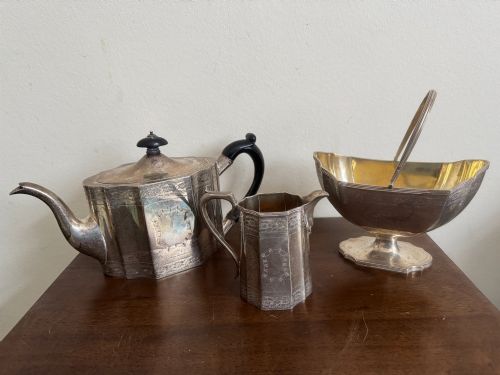
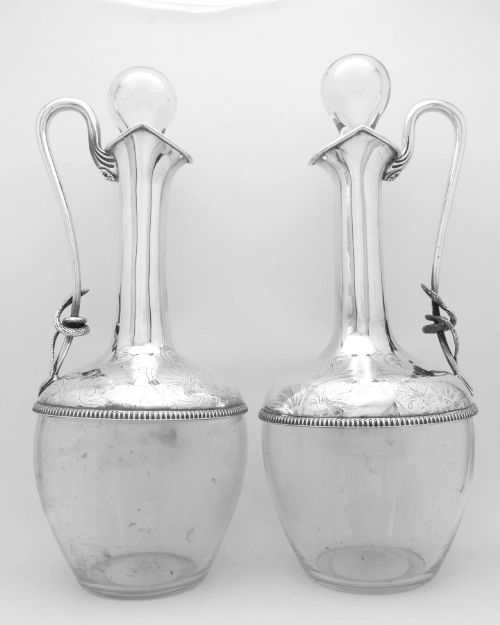


Victorian Engraved Silver Jug
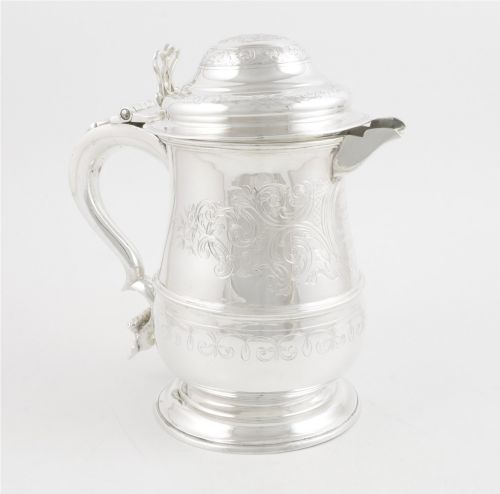
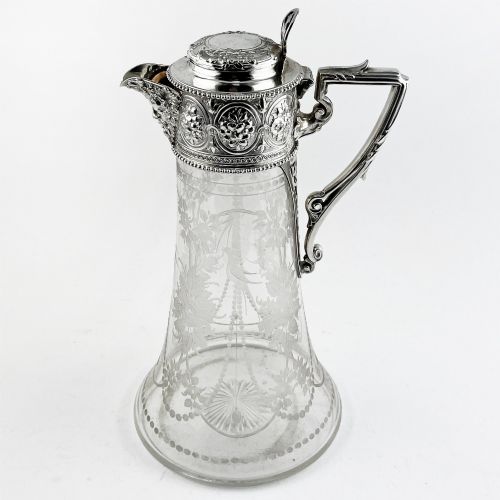
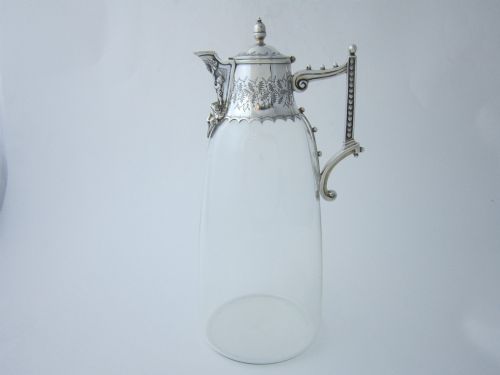
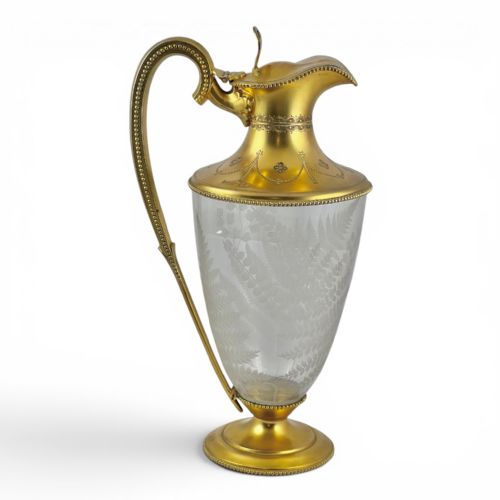
These pieces are a victorian engraved silver jug, combining cut glass bodies with chased metal mounts to serve wine at nineteenth century tables.
Victorian Engraved Silver Jug
A victorian engraved silver jug encompasses a range of serving vessels, most frequently claret jugs pairing a glass body with metal mounts, alongside cream jugs and wine ewers. The examples seen here predominantly date from the nineteenth century, spanning decades from eighteen sixty to nineteen hundred, with specific manifestations like claret jugs dominating the selection.
The forms extend from tall tapering decanters with hinged lids to pedestal cream jugs and sauce boats. Makers utilised cut crystal, etched glass, and plain glass alongside sterling silver and silver plate to construct vessels intended for dining tables and formal sideboards.
Materials and Technique
Makers combined silver or silver plate with glass, utilising techniques such as wheel-cutting, acid-etching, and hand-engraving to decorate the surfaces. Glass bodies often feature floral motifs, butterflies, pansies, and geometric patterns, while the metal collars, handles, and lids display chased or engraved ornamentation.
Silver components were cast or wrought, employing handles shaped as vines, serpents, or woven bands fixed to collars surrounding the glass necks. Plated items utilised old Sheffield plate or electroplate over base metal, whereas sterling pieces carried hallmarks for London, Sheffield, Glasgow, and Birmingham.
Victorian Engraved Silver Jug Retail Price Guide 2026
Typical asking prices for victorian engraved silver jug among the pieces listed under this phrase on Sellingantiques today, from the lower quarter to the upper quarter. They describe what is for sale here now, not the wider market.
Current listings feature materials ranging from sterling silver and silver plate to cut glass, etched glass, and bone.
Craftsmanship and Proportion
The distinction between standard items and superior examples lies in the depth and precision of the surface engraving upon both the metal mounts and the glass body. Crisp floral incisions, detailed naturalistic handles such as Bacchus masks or serpents, and heavy crystal bodies indicate higher tier manufacture.
Proportion and structural integration determine overall excellence, ensuring the metal collar fits the glass neck seamlessly without excess solder or misalignment. Weight of the silver and clarity of the cut glass separate utilitarian vessels from presentation pieces.
Asprey and Co. Ltd·Padley Parkin And Staniforth·Boardman Glossop And Co·Robert Hennel
The Victorian Engraved Silver Jug Glossary
- Claret jug
- A specialised vessel designed for serving red wine at the dining table. They typically feature a glass body with a hinged silver or silver-plated mount and handle.
- Silver plate
- A manufacturing method involving a thin layer of silver bonded to a base metal. This technique allowed makers to produce ornate vessels at a lower cost than solid sterling.
- Cut glass
- Glass decorated by abrasive wheels cutting deep facets into the surface. It is frequently paired with silver mounts on nineteenth century ewers.
- Ewer
- A large jug with a wide spout and a decorative handle, historically used for pouring water or wine. Victorian versions often served as decorative wine flagons.
Victorian Engraved Silver Jug: Frequently Asked Questions
What is a victorian engraved silver jug used for?
These vessels were primarily utilised for serving claret and other wines during formal nineteenth century dining occasions. They sat upon the table or sideboard, combining pouring functionality with decorative display.
Smaller examples functioned as cream jugs or milk jugs for tea service. Their design reflected the Victorian appetite for elaborate tablescapes and social entertaining.
How do you clean an antique silver jug?
Cleaning requires a soft cloth and a gentle silver polish formulated to remove tarnish without abrading the metal surface. Care must be taken around engraved areas where polish can accumulate in the recesses.
Glass bodies should be washed separately in warm soapy water using a bottle brush if necessary. Immersion of mounted pieces in water is discouraged to protect the integrity of cements securing the glass to the metal collar.
How can I tell sterling silver from silver plate?
Sterling silver items usually display a set of hallmarks indicating the assay office, the maker, and the standard of purity. These tiny stamped symbols are typically found on the rim, collar, or base of the mount.
Silver plate lacks these official assay marks and may reveal the base metal underneath where friction has worn away the surface layer over decades of use.
Are these jugs safe to use for serving wine?
Most pieces remain structurally sound for serving wine or water, provided the glass and handle attachments are secure. Hand washing is essential to preserve the vintage materials.
Care should be exercised with nineteenth century glass and silver plate, as temperature extremes can stress the material. Many collectors choose to display them as decorative art objects rather than active tableware.