



Engraved Silver Creamer
An engraved silver creamer brings Georgian and Victorian craftsmanship to the tea table, offering tactile weight and refined domestic utility.
What They Are
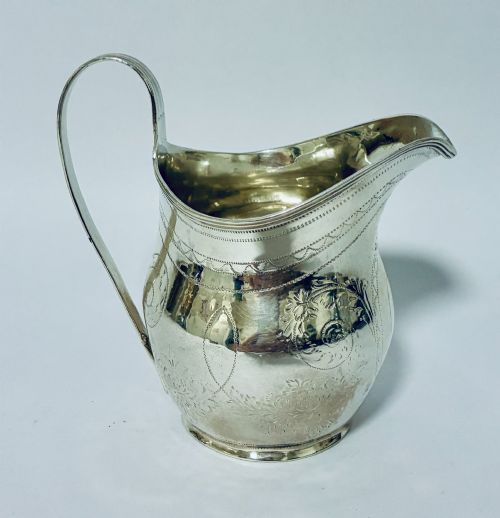
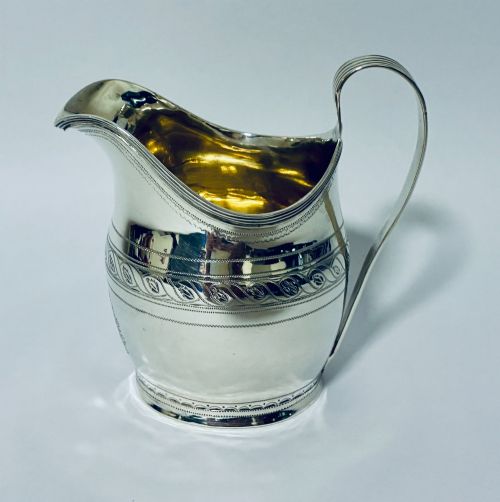
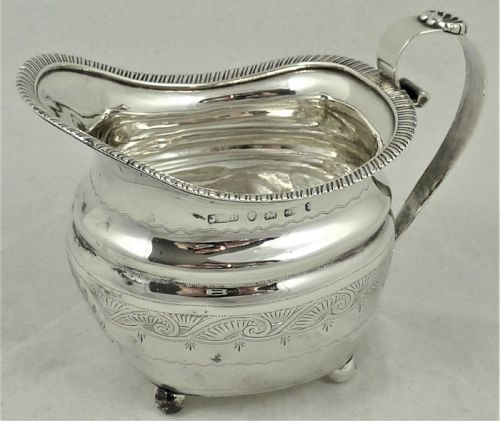
An engraved silver creamer is a small vessel designed for serving milk or cream during tea service, shaped as a jug or part of a matched tea set. These pieces originate primarily from the Georgian and Victorian eras, reflecting the domestic habits of those periods.
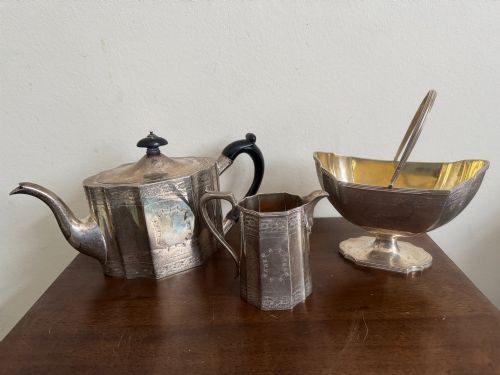
Makers produced these creamers as standalone tea accessories or components of larger tea sets. Each piece demonstrates the functional requirements of nineteenth-century hospitality.
How They Were Made
Silversmiths formed these creamers using solid sterling silver, shaping the metal through hammer work and soldering. Some interiors feature gold gilding or gold wash applied to protect the silver from dairy acids.
Decoration relied on hand engraving techniques such as bright-cut incision to create surface patterns. Certain handles incorporate materials like ebony to provide insulation against heat.
Retail Price Guide 2026
Typical UK retail prices for engraved silver creamer, calculated from the Sellingantiques database of over a million retail prices indexed since 2003. This retail price guide relies exclusively on Sellingantiques data; no external sources or auction records are used, so the figures do not describe the wider market.
Some nineteenth-century makers fitted these delicate creamers with ebony handles to save fingers from morning tea heat.
What Varies in Quality
Quality rests upon the crispness of the hand engraving and the gauge of the silver used in the body. Thicker walls and deep, precise bright-cut work separate superior items from lighter, simpler productions.
The integration of secondary materials like ebony handles and interior gold wash indicates higher workshop ambition. Maker attribution and documented provenance further distinguish the finer examples.
Robert Hennel
The Engraved Silver Creamer Glossary
- Sterling silver
- A standard alloy consisting of ninety-two point five percent silver by mass, with the remainder being copper. This metal composition provides the necessary durability for functional tableware.
- Bright-cut
- An engraving technique utilising faceted cuts that reflect light from different angles. It creates a sparkling, geometric border pattern popular on Georgian and Victorian silver.
- Gold wash
- A thin layer of gold applied to the interior surface of a silver vessel. This technique prevents milk from tarnishing the bare silver.
- Ebony
- A dense, dark wood used historically for handles on tea accessories. Its low thermal conductivity protects fingers from hot metal.
Frequently Asked Questions
What is an engraved silver creamer?
An engraved silver creamer is a small tabletop vessel made for serving milk or cream alongside tea. These items date primarily from the Georgian and Victorian periods and feature hand-cut surface decoration.
They appear as individual jugs or as part of larger tea sets. The use of sterling silver gives them substantial weight and durability.
How do I date a silver creamer?
Dating relies upon stylistic markers such as the presence of bright-cut engraving or specific handle shapes. Georgian examples often show different proportions compared to later Victorian pieces.
Assay office marks and maker stamps provide precise chronological clues when present. Comparing the overall form to documented periods clarifies the timeline.
Why do some creamers have gold inside?
The golden interior is a gold wash applied to protect the sterling silver from tarnishing. Dairy acids in milk can react adversely with bare silver over time.
This protective layer preserves the condition of the interior wall. It also adds a refined decorative contrast when pouring.
How should I care for antique silver?
Care involves gentle cleaning with appropriate silver polish to maintain the finish without removing fine engraving. Regular handling helps prevent heavy tarnish accumulation.
Storage in a dry environment protects against atmospheric corrosion. Avoid abrasive materials that can scratch the soft metal surface.