




Antique Sterling Creamer
An antique sterling creamer brings Georgian and Victorian weight to the tea table, shaped for pouring cream with small-scale grace.
Antique Sterling Creamer
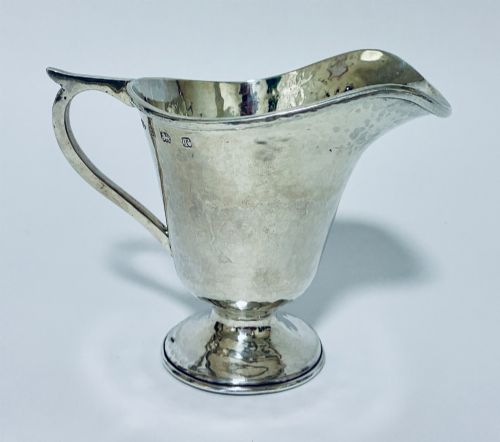
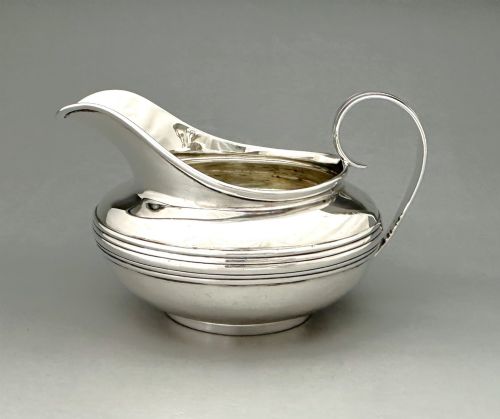
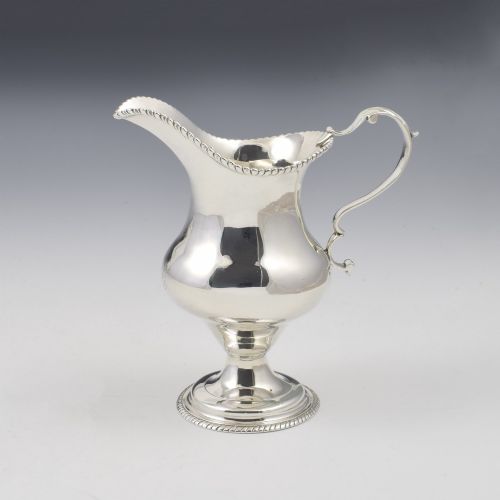
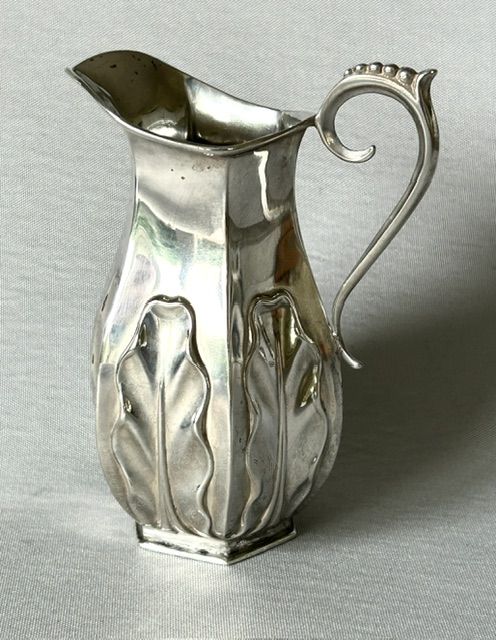
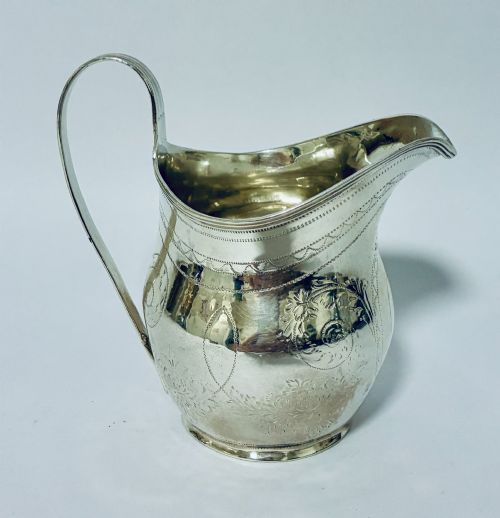
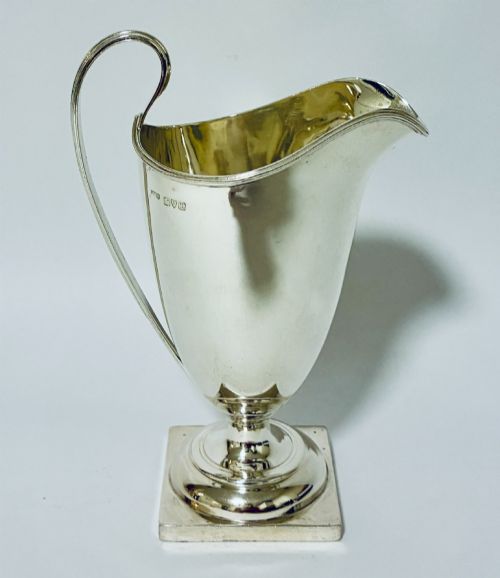
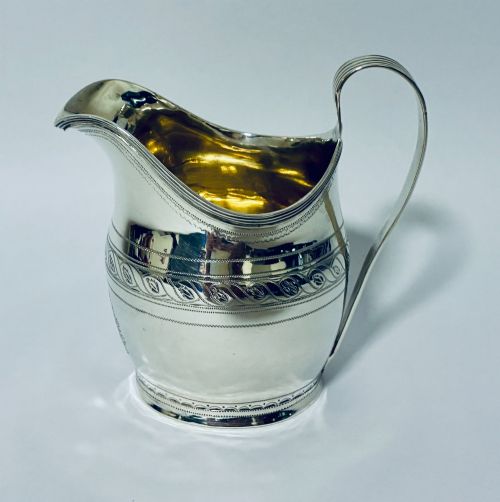
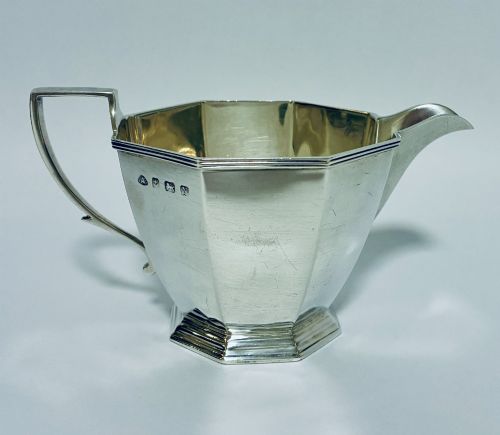
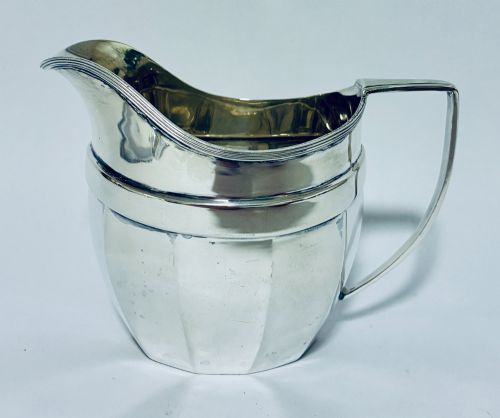
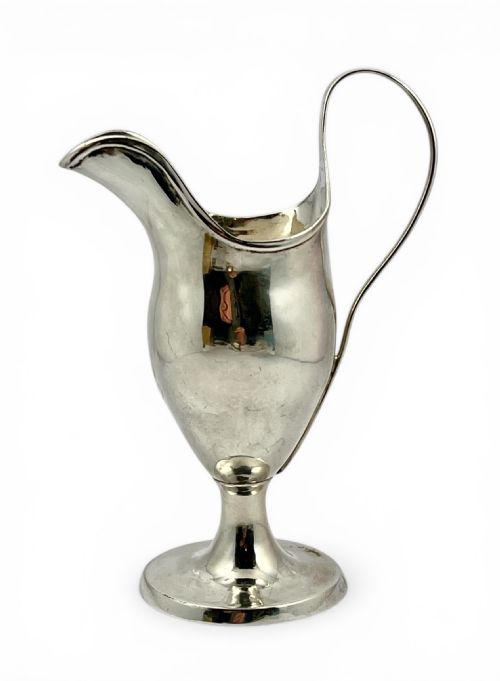
An antique sterling creamer is a small pouring vessel designed for milk or cream, appearing in forms ranging from helmet bodies to pedestal jugs and novelty cow shapes. Buyers searching for an antique sterling creamer most frequently encounter Georgian and Victorian examples, alongside later Arts and Crafts and George V variations.
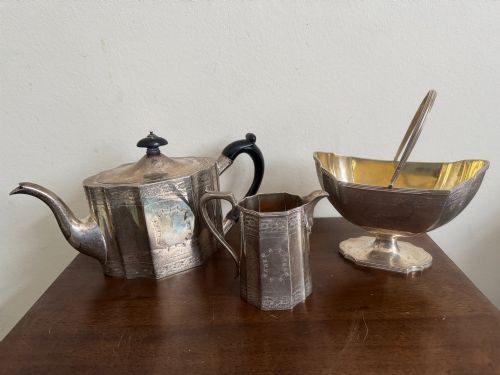
These vessels function as individual service pieces or as part of larger tea and coffee sets, matching the metalwork fashions of their respective decades. Surviving items include sparrow beak jugs, bright cut pieces and provincial Scottish or Irish makes alongside London-hallmarked work.
How they were made
Silversmiths formed these creamers primarily from sterling silver, shaping bodies through hammering and raising techniques, occasionally incorporating interior gold gilding known as silver-gilt. Some pieces combine the metal with contrasting elements such as ebony handles or Bristol blue glass liners.
Decoration relied on hand-engraved bright cut patterns, casting for handles and feet, and hallmarks struck directly into the metal to record the town, maker and year of production.
Listings span the 18th Century, Georgian, Victorian, and 1920 periods, utilising sterling silver, silver-gilt, ebony, and glass.
What varies in quality
Quality rests upon the crispness of the chasing and engraving, the structural integrity of the handle joints and feet, and the clarity of the maker marks and date stamps. Finer items display balanced proportions, substantial gauge metal that resists flexing, and careful finishing inside and out.
Standard commercial production utilises thinner metal walls and simpler stamped components, whereas top-tier examples from recognised makers show deliberate weight, precise spouts designed for clean pouring, and uncompromised surface preservation.
Stalker and Mitchison·James Gordon·John Emes·Peter and Ann Bateman·John Rawlings·George Unite·Robert Pringle and Sons·Joseph Craddock·Goldsmiths and Silversmiths
The Antique Sterling Creamer Glossary
- Sterling silver
- A silver alloy containing 92.5 percent pure silver and 7.5 percent other metals, usually copper, chosen for durability in tableware. This standard forms the baseline for British hallmarked silver.
- Sparrow beak
- A small 18th-century jug form featuring a distinctively pinched, bird-like spout projecting from a helmet-shaped or pear-shaped body. These early items are prized for their compact domestic scale.
- Bright cut
- An engraving technique using faceted V-cut grooves that catch the light to create geometric or floral borders. It appears frequently on late 18th-century silver.
- Silver-gilt
- Sterling silver coated with a thin layer of gold on the interior surface, protecting the metal from acidic dairy products. This treatment adds a warm yellow contrast to the white silver exterior.
- Hallmark
- A series of official marks stamped into precious metal indicating the maker, assay office, standard of purity, and year of assay. These stamps authenticate the origin of the piece.
Antique Sterling Creamer: Frequently Asked Questions
What is a sparrow beak creamer?
A sparrow beak creamer is an early 18th-century jug characterised by a short, pinched spout resembling a bird's beak.
These small vessels were produced during the Georgian period when tea drinking required modest quantities of milk.
How do I clean antique silver?
Antique silver requires gentle washing in warm soapy water followed by thorough drying with a soft cloth to protect the metal surface.
Avoid harsh abrasive dips that strip the natural patina accumulated over centuries of use.
What is a cow creamer?
A cow creamer is a novelty jug shaped like a cow with a hinged lid on its back for filling and milk pouring through the mouth.
These whimsical pieces appear in both 18th-century Georgian designs and later revival iterations.
How do I read silver hallmarks?
Silver hallmarks are stamped marks that identify the assay office, the purity standard, and the specific year of production.
Reference guides match these symbols to historical records to date each piece accurately.