
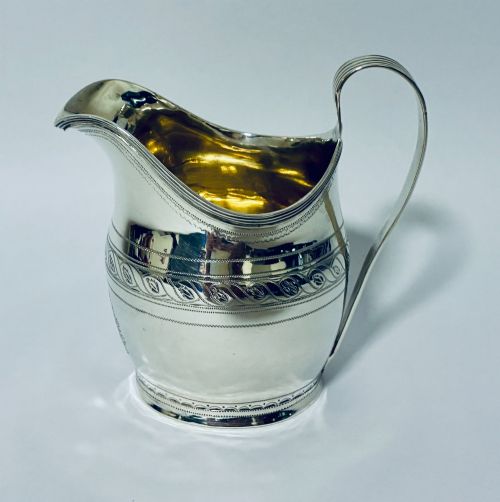
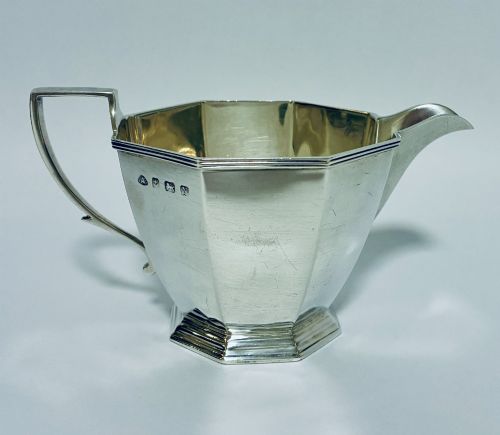


Silver Gilt Creamer
These silver gilt creamer pieces bring brilliant golden warmth to the tea table, offering substantial weight and classical form for daily service.
Silver Gilt Creamer
A silver gilt creamer is a small vessel designed for pouring milk or cream, rendered in precious metal with an interior or exterior wash of gold. These objects appear in forms such as cream jugs, milk jugs, and creamers, often arriving alongside matching sugar bowls or forming part of larger tea and coffee services.
The selections found here span from the Georgian and Victorian eras into Edwardian periods, alongside pieces dating around nineteen thirty. Makers utilised styles ranging from classic Georgian lines through William IV proportions and Edwardian refinement to the clean geometry of Art Deco.
Most examples meet the eye as traditional cream jugs with handles and pouring spouts, standing independently or joining tea services. Buyers encounter both sterling silver foundation pieces and silver plated or electroplated nickel silver alternatives finished in gold gilt or gold wash.
How they were made
Makers constructed these creamers using sterling silver, copper, or electroplated nickel silver as a base metal. Workers then applied a gold gilt, gold wash, or silver-gilt layer to the surface, creating a rich golden finish that protected the underlying metal from tarnishing.
The construction involved careful forming of spouts and handles, with silversmiths hammering, casting, or plating the metal to achieve the desired shape. Sheffield plating techniques appear on specific nineteenth-century pieces, fusing silver over a copper base before gilding.
Materials documented across the selection include sterling silver, silver plate, gold wash, copper, and electroplated nickel silver.
What varies in quality
The distinction between tiers rests upon the primary metal and the depth of the gilding. Sterling silver foundations with thick gold wash represent a higher standard than electroplated nickel silver versions with thin surface treatments.
Execution of detail in handles and pouring spouts separates standard production from finer craftsmanship. The preservation of the original gold gilt surface across interior bowls and exterior walls dictates the desirability of each piece.
Joseph Craddock
The Silver Gilt Creamer Glossary
- Silver-gilt
- Silver that has been coated with a thin layer of gold. This technique protects the silver underneath while providing a rich golden appearance.
- Gold wash
- A superficial layer of gold applied to the interior or exterior of a silver vessel. It prevents the metallic taste of silver from affecting dairy products.
- Sheffield plated
- A method of fusing a thin sheet of sterling silver to a thicker copper core. This technique predates modern electroplating.
- Electroplated nickel silver
- A base metal alloy of copper, nickel, and zinc coated with a thin layer of silver. It provided an affordable alternative to solid sterling silver during the nineteenth and twentieth centuries.
- Hallmarked
- Official stamps struck into precious metal indicating the purity standard, the assay office, and the date letter. These marks verify the authenticity and origin of the piece.
Silver Gilt Creamer: Frequently Asked Questions
What is a silver gilt creamer used for?
These vessels served to hold and pour cream or milk during formal tea and coffee service. The internal gold coating protected the silver from the acidic properties of dairy.
Today, collectors utilise them on dining tables or display them within cabinet collections alongside related teaware.
How do I clean a silver gilt creamer?
Cleaning requires warm water, mild soap, and a soft cloth to protect the delicate gold wash layer. Abrasive polishes will strip the thin gilding from the surface.
Standard silver dips should be avoided entirely, as chemical immersion damages the gold layer applied over the silver base.
How can I tell Georgian pieces apart?
Georgian items display distinct hand-hammered construction, heavier proportions, and specific hallmarks associated with the reigns of the eighteenth and early nineteenth centuries. Their handles and feet often feature cast rococo or neoclassical motifs.
Later Victorian and Edwardian examples introduce machine assistance, lighter gauges, and different decorative conventions typical of those decades.
Are all silver gilt creamers solid silver?
Many examples consist of sterling silver, but others utilise Sheffield plate, copper, or electroplated nickel silver beneath the gold finish. Hallmarks and weight help distinguish solid precious metal from plated alternatives.
Checking the base and interior surfaces reveals the underlying material once the gilding wears thin.